
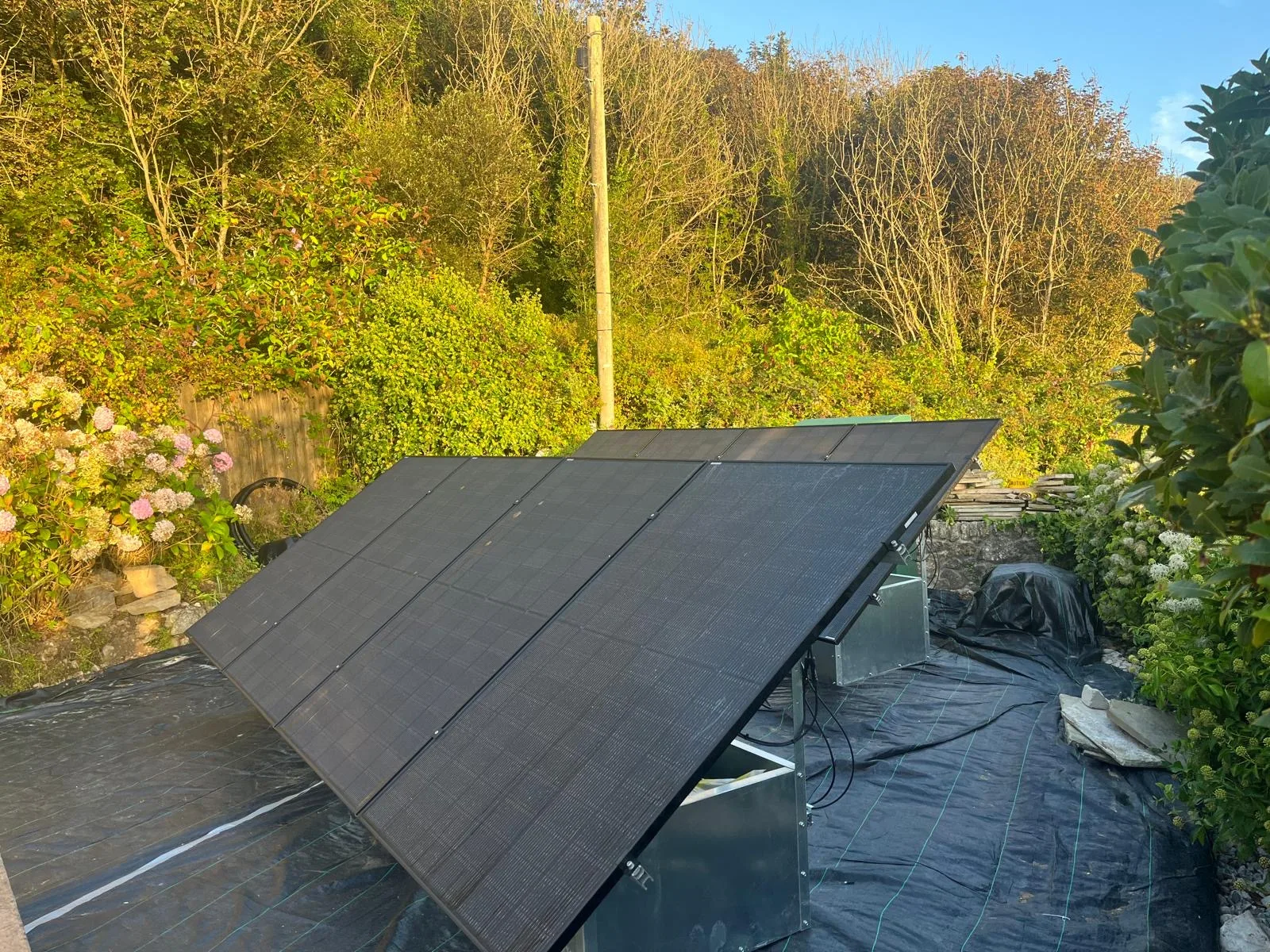
3.44 kW GSE Ground-Mounted SolarEdge System
Installation of a 3.44 kW ground-mounted solar system in a Cornwall garden, using eight 430 W Trina panels, SolarEdge optimisers and GSE mounting frames designed for an exposed coastal site.
This Cornwall project involved the installation of a 3.44 kW ground-mounted solar PV system in a customer’s garden. The system comprised eight 430 W Trina solar panels installed on GSE ground-mount frames, with SolarEdge optimisers fitted to every panel.
The site is exposed and located within 100 metres of the sea, so the preparation of the ground, selection of the mounting arrangement and management of the external cabling were all important parts of the work. GSE tubs designed for exposed locations were used and filled with sand to provide the specified support for the array.
As well as installing the panels and mounting system, the project included a new base for a GRP enclosure. This enclosure houses the new fuseboard and SolarEdge inverter, keeping the electrical equipment together in a suitable external cabinet. The result is an accessible ground-mounted arrangement designed to be straightforward to maintain and clean.
Preparing the garden for the ground-mounted array
The installation began with preparation of the designated area in the garden. The ground was prepared using 803 material, which was compacted to form a firm and level base for the GSE mounting frames.
A membrane was then laid over the prepared area before the frames were positioned. This created a defined surface beneath the array and allowed for the customer’s future landscaping plans. The customer intends to cover the area with pebbles at a later date, so the groundwork and membrane were arranged with that next stage in mind.
Careful preparation was particularly relevant because this was a ground-mounted system rather than a conventional roof installation. The frames, tubs and panels all needed to be set out within the garden while retaining practical access around the equipment for cleaning and ongoing maintenance.
GSE mounting system for an exposed coastal site
The eight Trina panels were supported by a GSE ground-mount system. The installation used GSE tubs filled with sand, following the mounting design intended by GSE for an exposed site within 100 metres of the sea.
The mounting frames were assembled and arranged across the membrane-covered base. The tubs provide the weighted foundation for the inclined panel supports without changing the customer’s longer-term plan to finish the surrounding area with pebbles.
This approach created a low-level solar array within the garden. Its ground-mounted position provides direct access to the face of the panels, making the system easier to inspect, maintain and clean than panels installed in a less accessible location.
Eight Trina solar panels with SolarEdge optimisation
The completed array has a total stated capacity of 3.44 kW and uses eight 430 W Trina solar panels. Each panel was fitted with a SolarEdge optimiser as part of the installation.
The optimisers form part of the SolarEdge system and were installed at panel level before the DC cabling was routed back towards the inverter equipment. Keeping the panel installation, optimisers and cable route coordinated was an important part of assembling the complete ground-mounted system.
The main equipment installed for the solar PV system included:
- Eight 430 W Trina solar panels.
- SolarEdge optimisers fitted to all eight panels.
- GSE ground-mount frames and weighted tubs.
- A SolarEdge inverter.
- A new fuseboard for the installation.
- A GRP enclosure and purpose-prepared base.
- Galvanised cable tray for the DC cable route.
External enclosure and electrical equipment
A base was installed for the GRP enclosure, which was used to house the new fuseboard and SolarEdge inverter. Bringing this equipment together within the enclosure provided a practical location for the principal electrical components associated with the array.
The cabinet installation required the incoming DC cabling from the panels to be routed neatly from the array to the SolarEdge inverter. The enclosure also keeps the equipment accessible for future inspection and maintenance without placing it among the panel frames themselves.
As this equipment is installed outside in a coastal garden setting, the physical arrangement of the cabinet, support base and cable route formed an important part of the overall project rather than being treated separately from the mounting work.
DC cable management and frame earthing
The DC cables were mounted on galvanised cable tray between the ground-mounted array and the associated equipment. This provided a supported and clearly defined route for the solar cabling across the external installation.
The metal frames were also earthed using a main bonding conductor. This electrical work was completed alongside the mechanical assembly of the GSE frames, installation of the panel-level optimisers and connection of the inverter and new fuseboard.
Using a dedicated cable tray helped keep the cabling organised around the array and away from the prepared ground surface. It also supports the practical, maintainable layout required for a garden-based system where the panels and surrounding area remain readily accessible.
A practical and maintainable solar installation
The completed arrangement provides the customer with a 3.44 kW ground-mounted solar PV system without requiring the panels to be fitted to a roof. The garden location offered space for the eight-panel array, while the low-level frame arrangement makes the panel surfaces easy to reach for cleaning.
The compacted 803 base, membrane and sand-filled GSE tubs provide the prepared foundation for the mounting structure. The installation also allows the customer to add pebbles over the area later, completing the planned finish around the array without changing the main solar mounting arrangement.
From the panel-level SolarEdge optimisers and galvanised DC cable tray to the bonded frames and GRP equipment enclosure, the work covered both the mechanical and electrical requirements of the installation. The project was delivered as an MCS-certified solar PV system in Cornwall.