
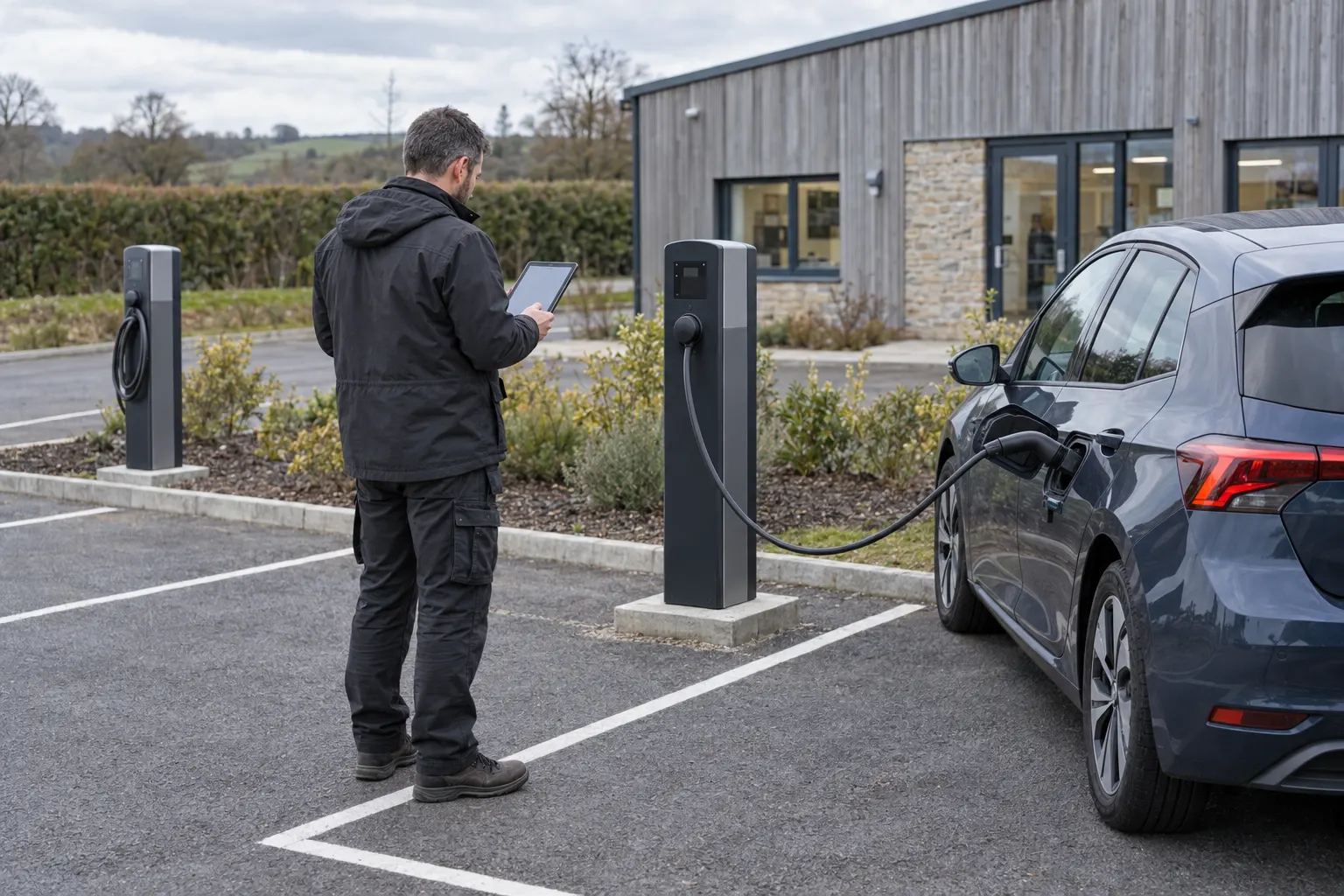
Commercial EV charging without internet can work, but keeping power available and keeping a charging service usable are different things. A charge point may remain capable of supplying a vehicle while app access, payments or reporting are unavailable.
For a workplace, holiday park or leisure site, ask more than whether a charger has an offline mode. The test is whether the right drivers can start and finish sessions, with the controls and records the business needs, when the connection fails.
Why connectivity matters to a commercial charging service
An internet outage is not a power cut. The charger’s electrical supply, its link to a remote platform and any local control network are separate things to check.
A Charge Point Management System (CPMS) uses an internet connection to monitor status, identify approved users and collect transaction and energy-use data. Losing that link can restrict the service even if the charging equipment still has power.
When specifying commercial EV charging, describe the outage service you need alongside normal operation. Staff access, visitor payments and remote oversight may have different priorities.
Agree which functions can wait for reconnection and which cannot, subject to any operator duties. That gives suppliers an operating requirement to demonstrate, rather than leaving the site to discover default behaviour after installation.
What the offline requirement does and does not guarantee
Regulation 7 of the Electric Vehicles (Smart Charge Points) Regulations 2021 requires covered equipment to remain capable of charging if it loses communications network access. The rules cover relevant private domestic and workplace charge points sold in Great Britain, with public and rapid charge points among the exclusions.
The government’s smart charge point compliance guidance explains that the regulations do not prescribe how the charger must operate while disconnected beyond retaining that capability. This is not a guarantee that apps, payments or every other feature will work normally. Nor should the rule be assumed to cover every older installation.
Ask what the supplier means by EV charger offline mode for the particular model, configuration and platform. Temporary outage resilience is not proof of suitability for permanent use without internet.
For a site with no dependable connection at all, ask the supplier to confirm the intended long-term operating model in writing. That should cover user access, records, support and whether any functions still require periodic connectivity.
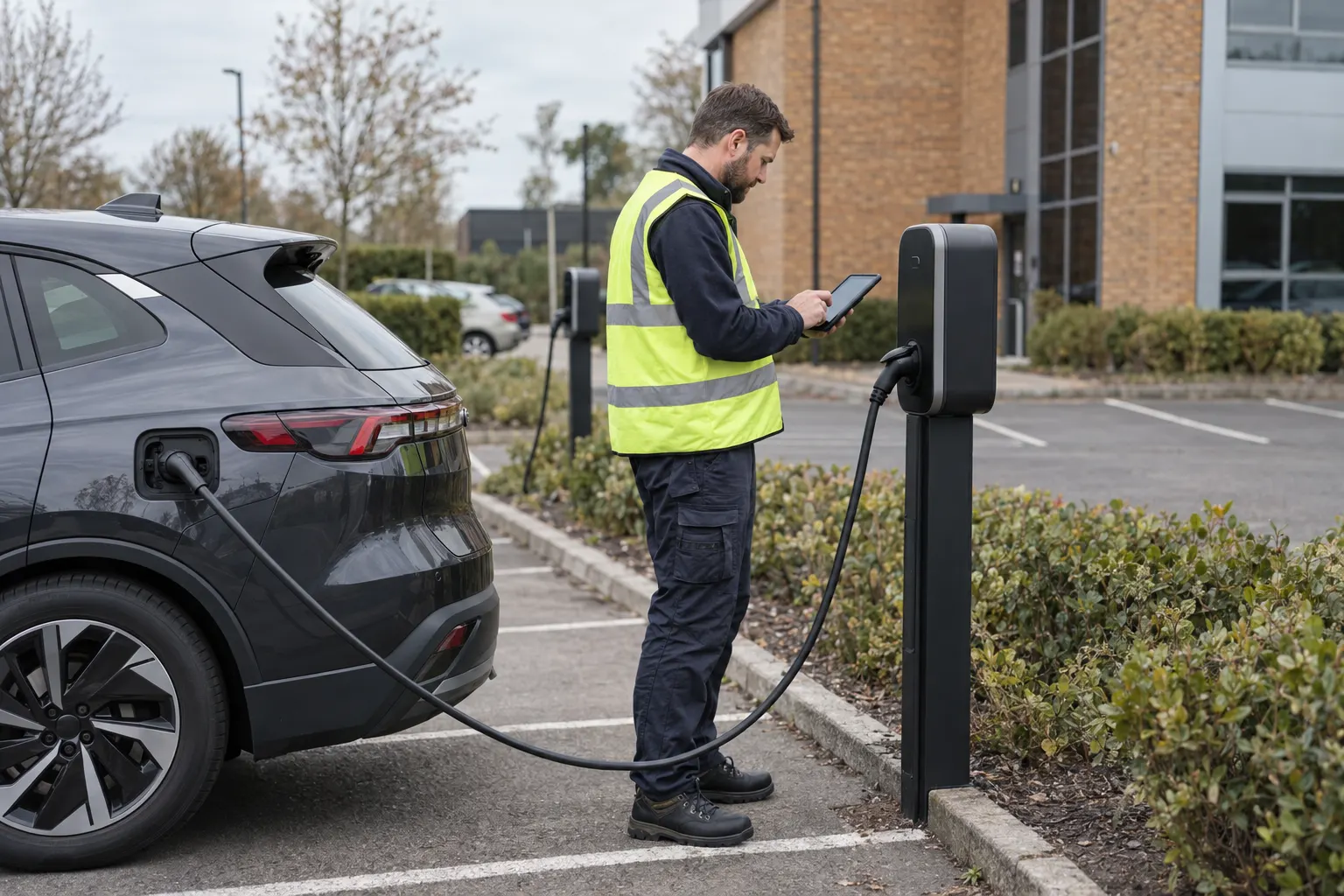
Which functions may depend on the charger’s network connection?
Starting sessions and taking payment
Ask separately about a session already under way and a new session. A charger might continue supplying energy but be unable to authorise another user. An RFID access card or fob is not automatically an offline solution: confirm whether users can be authorised locally or must be checked through the remote platform.
App access and payment approval may have their own connectivity needs. Ask whether the driver’s phone needs a connection as well as the charger, and which access methods remain available during an outage.
Load controls, monitoring and records
Confirm whether load limits are enforced locally, whether a controller depends on a local network, and what safe fallback is specified if each communications link fails. Do not assume losing internet access and losing a local control connection have identical consequences. The answer should cover the site’s electrical limits, not just the charger’s screen message.
Also establish whether energy and session records are stored during an outage, how much can be retained and what uploads afterwards. A blank dashboard does not prove that no energy has been delivered.
For paid or departmental charging, ask whether offline sessions can still be allocated to the correct user, vehicle or cost centre. Energy delivered and a usable billing record are different requirements.
Check connectivity at the parking bays, not just inside the building
On a multi-building or rural site in Cornwall, proposed bays may be some distance from reception. Check commercial charge point connectivity at those bays rather than assuming the connection matches the office.
Ask the supplier to assess the arrangement the chargers would actually use: a wired network, Wi-Fi or mobile service. A phone showing signal bars is not proof of reliable service for the proposed charger, antenna position and network.
Where an EV charger faces weak mobile signal, confirm a supported alternative before committing. Record who provides and manages the connection.
If a backup connection is proposed, ask whether it covers only a failed network link or also changes what happens when the management platform is unavailable.
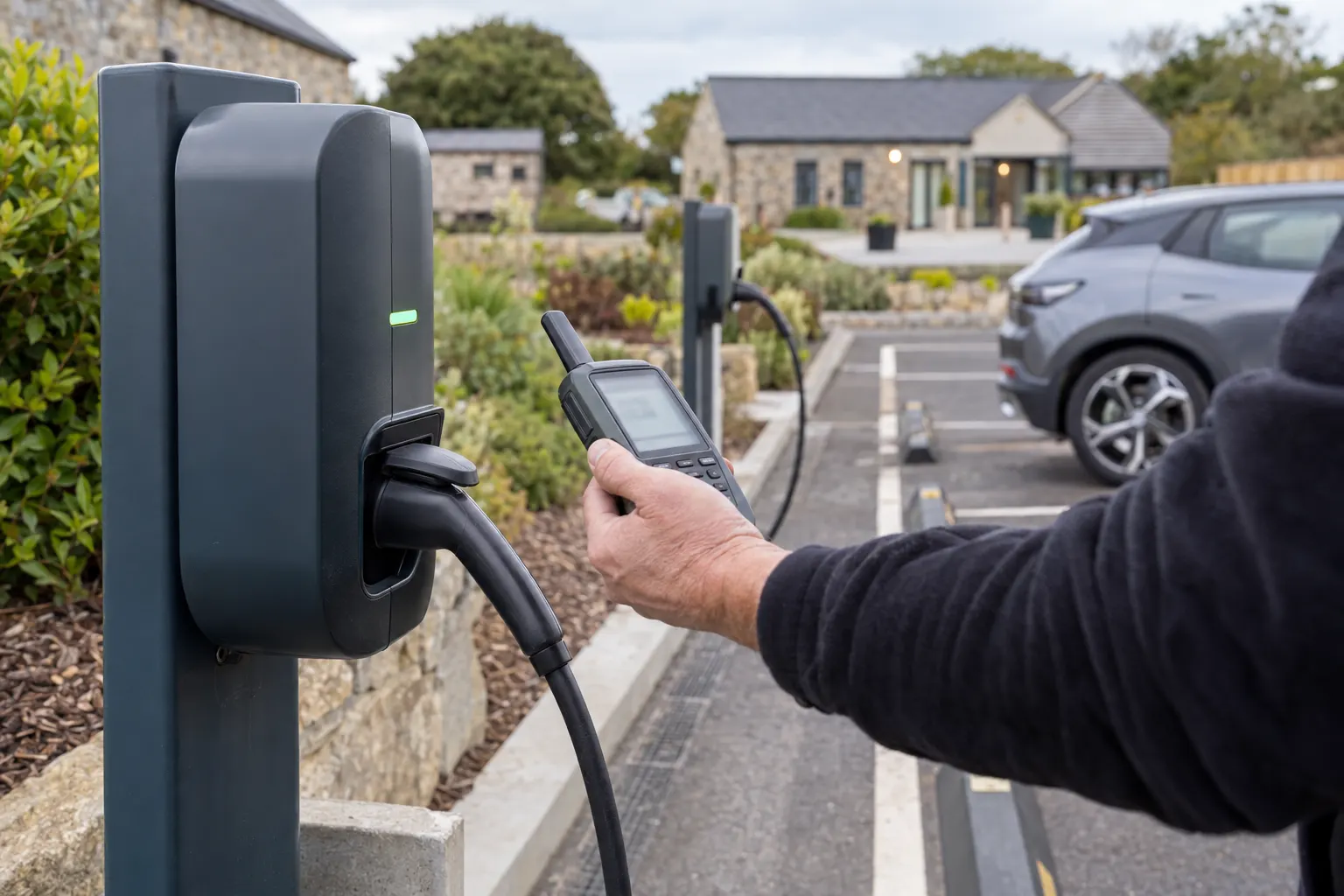
Questions to ask about outage behaviour before selecting a system
Ask for written answers tied to the proposed equipment and platform, rather than accepting a general claim that the system works offline:
- What must be configured in advance for offline access, and who manages approved users?
- What happens to an existing session, new session requests and site load limits during each type of communications failure?
- Does reconnection happen automatically, or is authorised support needed?
- How are delayed session records and any charges reconciled after reconnection?
- Are any ongoing connectivity, platform or support charges required?
- Will the supplier demonstrate the agreed outage behaviour safely at handover and leave a written record?
Have the supplier demonstrate the configured service, not just the hardware. Ask what a user sees during an outage and what the operator can recover after reconnection. An existing session continuing is not proof that a new user can start one.
Keep those answers with the quotation and handover documents, so the promised behaviour can be checked against the installed setup rather than a generic product brochure.
Public, guest and workplace chargers need different checks
For a workplace EV charger without internet, dependable access for an authorised staff group may be the priority. A visitor arriving for the first time may instead need a usable payment route and help without a working app.
Publicly accessible charge points have a separate regulatory regime, including free-to-use points. Guest charging needs assessing against the actual access arrangements rather than automatically being labelled private or public. Ask the proposed operator to check current government guidance on public charge points for your access model and their duties; do not treat the private-workplace offline rule as a public charging guarantee.

Include connectivity and fault escalation in handover arrangements
Handover should leave the site team with a plain-language outage procedure, verified operating settings and clear contacts for charger or platform support, the network provider and electrical fault finding. An offline alert alone is not a complete diagnosis.
Agree who takes the first report and who coordinates other providers. Record the charger identifier, time, visible message and whether the difficulty affects one user or several bays. Pass those observations to the agreed support contact rather than trying to diagnose the installation yourself.
Include driver instructions that remain available without an app and agree who updates them if settings or the platform change. Staff should follow the agreed reporting process, not open equipment, bypass controls or alter load limits.
To discuss EV charging and outage planning for your site, call Maenporth Electrical Ltd on 01326 250297. Based at Maenporth, we serve Falmouth, Penryn and wider Cornwall.