
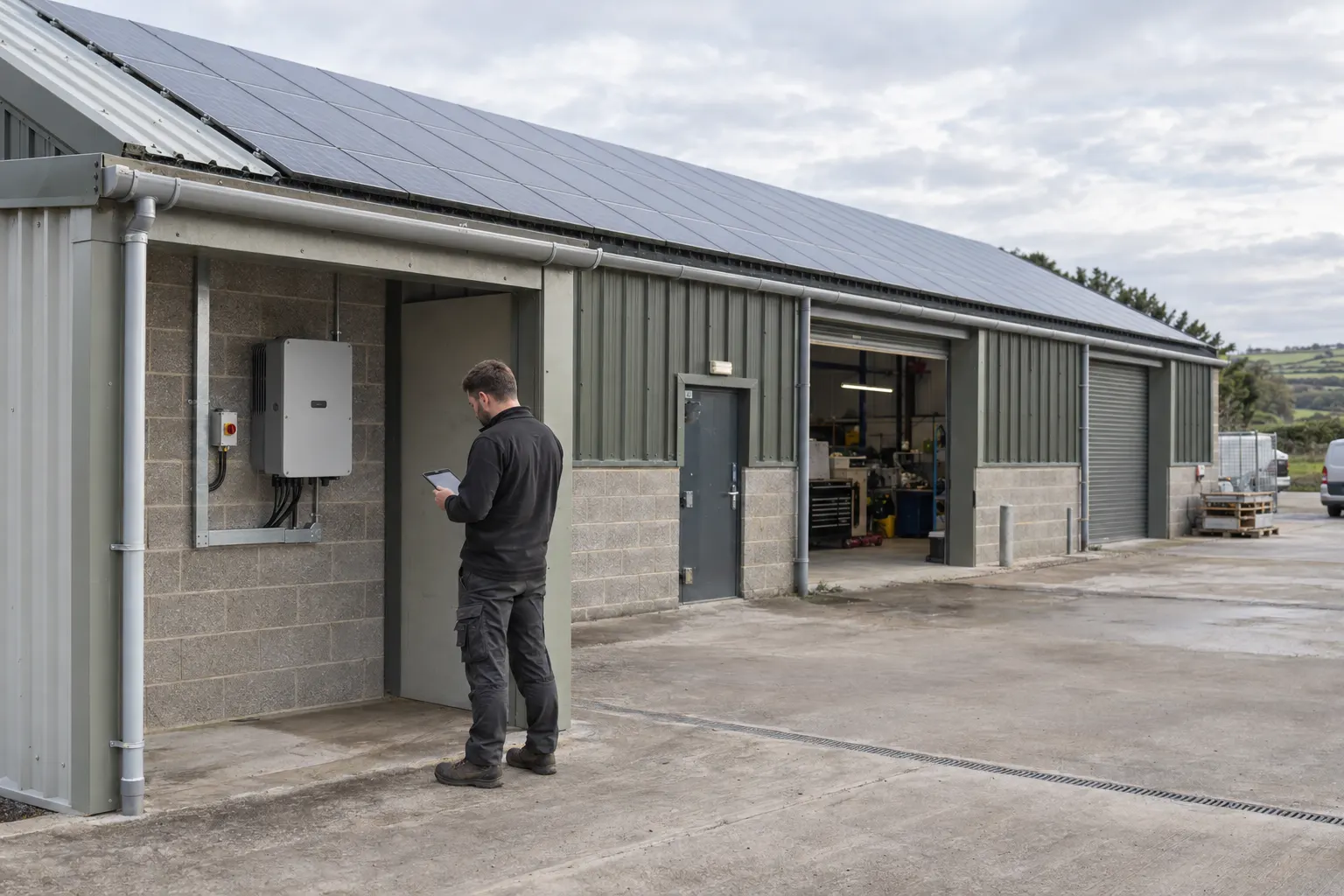
A failed or repeatedly faulting inverter does not automatically mean your solar panels need replacing. Equally, a new unit with the same headline power rating is not automatically a suitable swap. Commercial solar inverter replacement starts with diagnosis, compatibility and the existing grid connection, not an equipment order.
For a factory, holiday park or larger rural site, the decision is whether to repair, replace the inverter alone or investigate wider changes. Establish what can stay, what needs checking and how the work will affect operations before committing.
Confirm the inverter is actually at fault
A fault code, reduced generation or missing monitoring data is a reason to investigate, not proof of inverter failure. Targeted electrical fault finding should distinguish an internal equipment fault from an issue elsewhere in the array, cabling, site supply or monitoring.
Before you replace a commercial solar inverter, ask whether repair is a supported option and whether the underlying cause has been identified. If repair is offered, clarify its scope, any warranty and the availability of future support.
Repeated faults deserve investigation, not an assumption that a new unit will solve them. Age alone is not a sufficient replacement specification.
What to gather for an assessment
- Inverter make, model and rating, plus fault messages or repair history.
- Panel details, array layout and string records, where available.
- System diagrams and monitoring or generation records.
- Details of any optimisers, batteries and export controls.
- Original distribution network operator (DNO) connection documents and export arrangements.
Missing records should be flagged for investigation, not filled in by assumption. Site staff can gather documents; electrical inspection, isolation, testing and reconnection belong with competent professionals.
Check compatibility with the existing array and controls
Checking solar inverter compatibility with existing panels means more than matching a kW figure. Ask the contractor to compare the proposed equipment with the installed array, not simply the old inverter’s catalogue description.
That assessment should cover panel and string details, voltage and current limits, how strings connect to the inverter’s inputs, and the site’s AC supply configuration. If the records are incomplete, resolving those gaps belongs in the work scope.
Optimisers, batteries, communications equipment and export controls need separate consideration. Confirm that retained components will work with the replacement and identify any required changes. Do not assume that a different model will support the existing battery or monitoring platform.
Future storage plans are worth raising during the assessment, but keep them separate from an urgent replacement decision. Ask which later additions the proposed inverter can support and what extra equipment or design work they would need.
On a multi-inverter system, establish which shared controls or communications depend on the unit being changed. Ask for a written compatibility assessment identifying what can be retained, what must change and any checks still needed before equipment is ordered.

Review the original DNO connection and export arrangements
Start with the original connection documents and compare them with the proposed equipment. DNO connection requirements for a replacement solar inverter depend on the installation and proposed changes, not just whether a quotation says “like-for-like”.
National Grid’s G99 connection guidance explains that a PV installation’s generation rating is based on the inverter’s continuous steady-state rating. Keeping the existing panels therefore does not, on its own, establish that the connection arrangements are unchanged.
Do not assume that every like-for-like replacement requires a new G99 application, or that none do. The Energy Networks Association’s G99 material includes a specific example involving one replacement inverter in a pre-G99 multi-inverter system; it is not a universal ruling.
Check that the documented arrangement matches the site as it stands, including all generating equipment, not just the faulty unit. Missing or outdated records should be identified early, rather than discovered when commissioning is due.
Ask the contractor to confirm the applicable route with the DNO before committing to the work. Where prior authorisation is required, obtain it before starting. Review the proposed rating, export controls, storage and protection arrangements, and retain the written outcome. An unchanged export limit is not a substitute for checking the equipment and connection conditions.
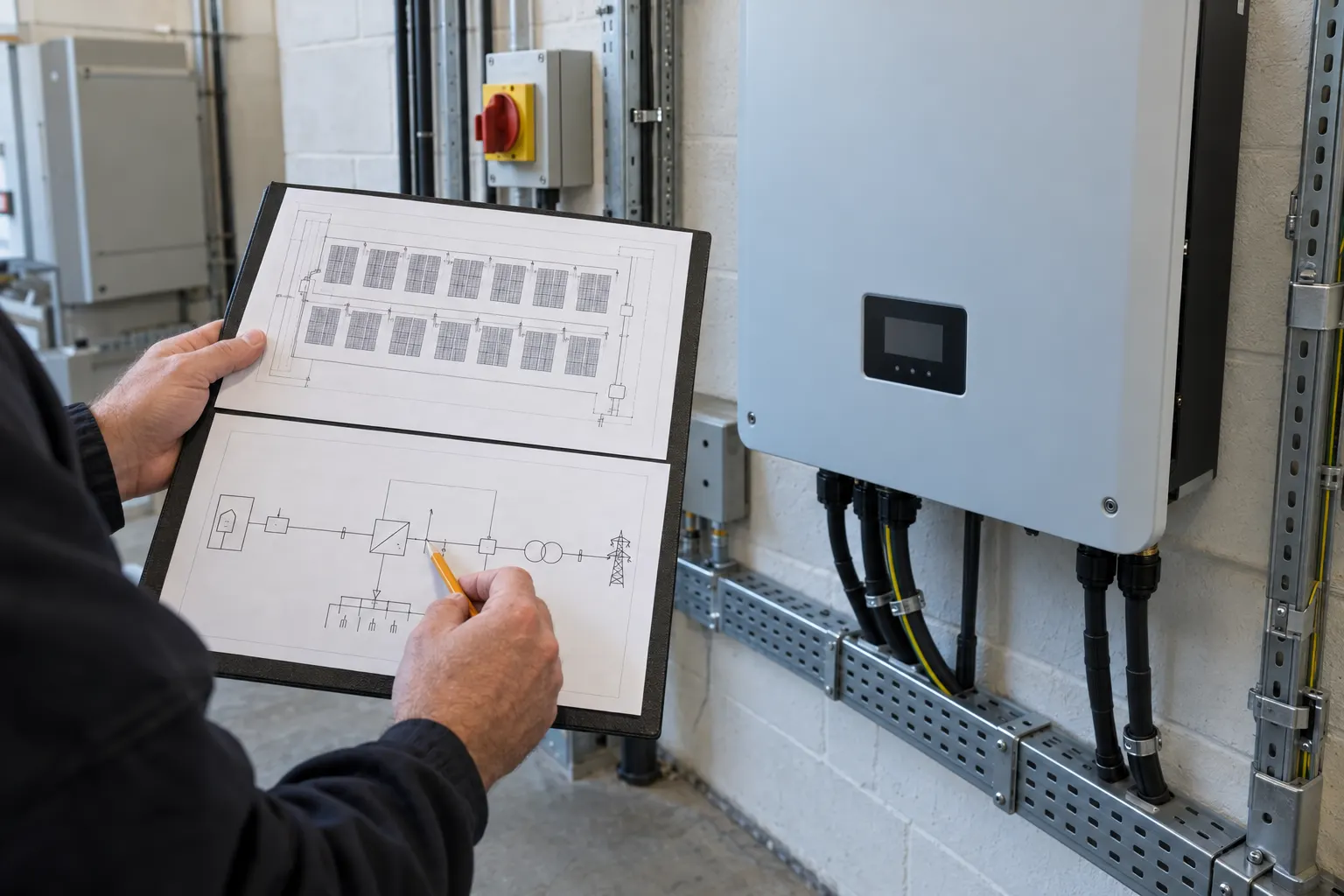
Assess AC-side protection, access and operational downtime
An inverter-only proposal still needs to consider the electrical installation around it. Ask for the AC cabling, protective devices, isolation arrangements, earthing and any interface protection to be assessed for suitability with the proposed equipment.
Establish whether the planned work interrupts only PV generation or also affects operational circuits. Agree the isolation arrangements and outage window with the site manager rather than assuming the business can operate normally throughout.
If there are several inverters, ask which parts of the system can remain available during the work. That depends on the electrical arrangement and safe working plan; do not assume unaffected units can simply be left running.
Equipment location, handling routes, working space and any specialist access requirements also affect the scope. For a factory or holiday park, programme necessary interruptions around production or guest operations where practicable.
A meaningful price should distinguish the inverter itself from associated electrical work, access, commissioning and DNO administration where needed. Compare the whole scope, not a supply-only equipment price.
Commission the system and update monitoring and records
Solar PV inverter replacement is not complete simply because the unit starts. Commissioning should check the installed system and its controls, with results documented. Agree who will carry out that work and show the site team that monitoring is reporting correctly.
Ask for a handover pack that includes:
- Replacement equipment details, serial numbers and warranty information.
- Updated diagrams, relevant settings and inspection, test and commissioning results.
- Confirmation of export-control operation where fitted, plus relevant DNO correspondence.
- Monitoring access details and confirmation that generation data is being reported.
Clarify whether historical monitoring data will remain available, who receives fault alerts and who will review performance after the change. Keep earlier fault and generation records alongside the new documents so future investigations have context.
On a multi-inverter site, identify the replacement clearly in the monitoring platform and diagrams so future fault reports point to the right unit.
Pass the updated information to whoever manages ongoing solar maintenance. Follow-up should reflect the equipment guidance and site conditions, rather than an assumed universal inspection interval.
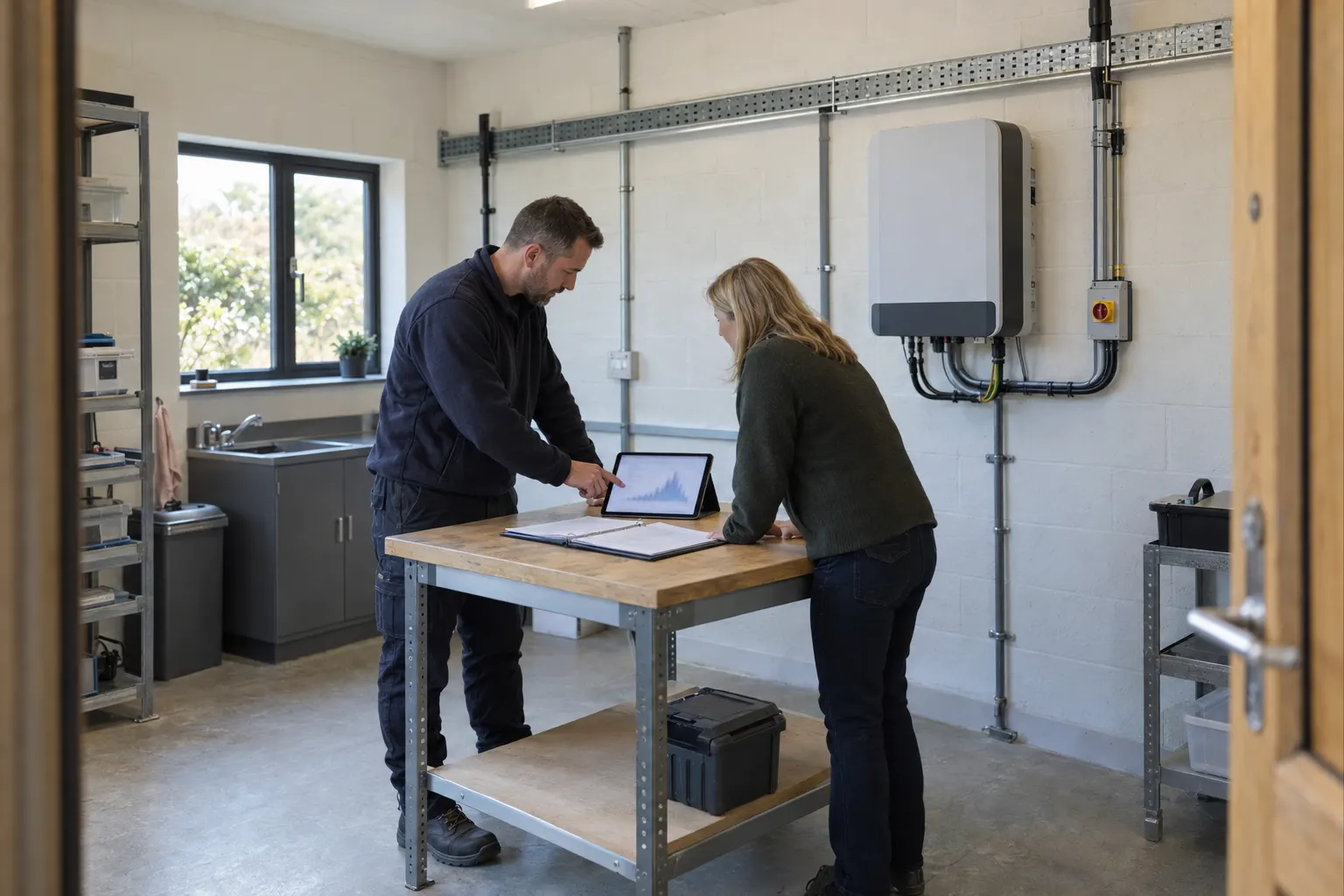
Decide when an inverter-only replacement is not enough
Keep repair, inverter-only replacement and a wider system review as separate options. A supported repair may be worth assessing where the fault is clearly identified. Replacement alone is a route to consider when the array and electrical infrastructure can be retained, compatibility is established and the connection position is resolved.
A wider review is appropriate if testing finds defects elsewhere, essential controls cannot be retained, or planned storage or generation changes alter the original design. That does not automatically mean replacing all the panels.
Base the decision on documented condition, future site plans and the complete work required, not a universal inverter lifespan or an assumption of automatic savings.
To discuss commercial solar inverter replacement, call Maenporth Electrical Ltd on 01326 250297. Based at Maenporth, we serve Falmouth, Penryn and wider Cornwall. Have the inverter details and any fault, array and DNO records ready if available.