

A new circuit in a business unit and electrical work within a building conversion do not necessarily follow the same approval route. For a Falmouth business, the first question is what the whole project involves, not simply whether the address is commercial.
Building Regulations for commercial electrical work in England sit alongside workplace safety duties and electrical certification. Understanding that distinction helps you ask for the right decision and paperwork before work starts.
Does commercial electrical work need Building Control approval?
Not automatically. Not every commercial electrical alteration needs a separate Building Control application. The decision depends on whether the proposal is building work or a specified material change of use under the Building Regulations, and on the requirements that apply.
This is different from asking whether Part P applies or which electrical certificate the contractor should provide. A single job may involve more than one of these questions.
Building Control approval for commercial electrical work should therefore be addressed during scoping. Where a wider project already has a submission, establish whether the electrical work is covered by it and what evidence is expected. Do not assume a separate application is always necessary, or that no further checks are needed.
Part P and commercial premises
Part P is not a blanket approval scheme for workplaces. Its defined scope includes low- or extra-low-voltage installations in or attached to dwellings, certain common parts, and some buildings or associated land supplied from a source within or shared with a dwelling.
A shop with a flat above, or a workshop supplied from a source shared with a house, therefore needs its actual arrangement checked. The business use, tenancy boundary or postal address alone cannot settle applicability. Equally, a standalone commercial building is not automatically brought within Part P because it is a workplace.
If Part P applies, ask which compliance and notification route is appropriate for the proposed work. Being within its scope does not mean every alteration follows the same process.
Being outside Part P does not remove workplace electrical-safety duties. Employers must keep installations and equipment safe, with appropriate inspection and testing of fixed wiring by a competent person to identify deterioration that could lead to danger.
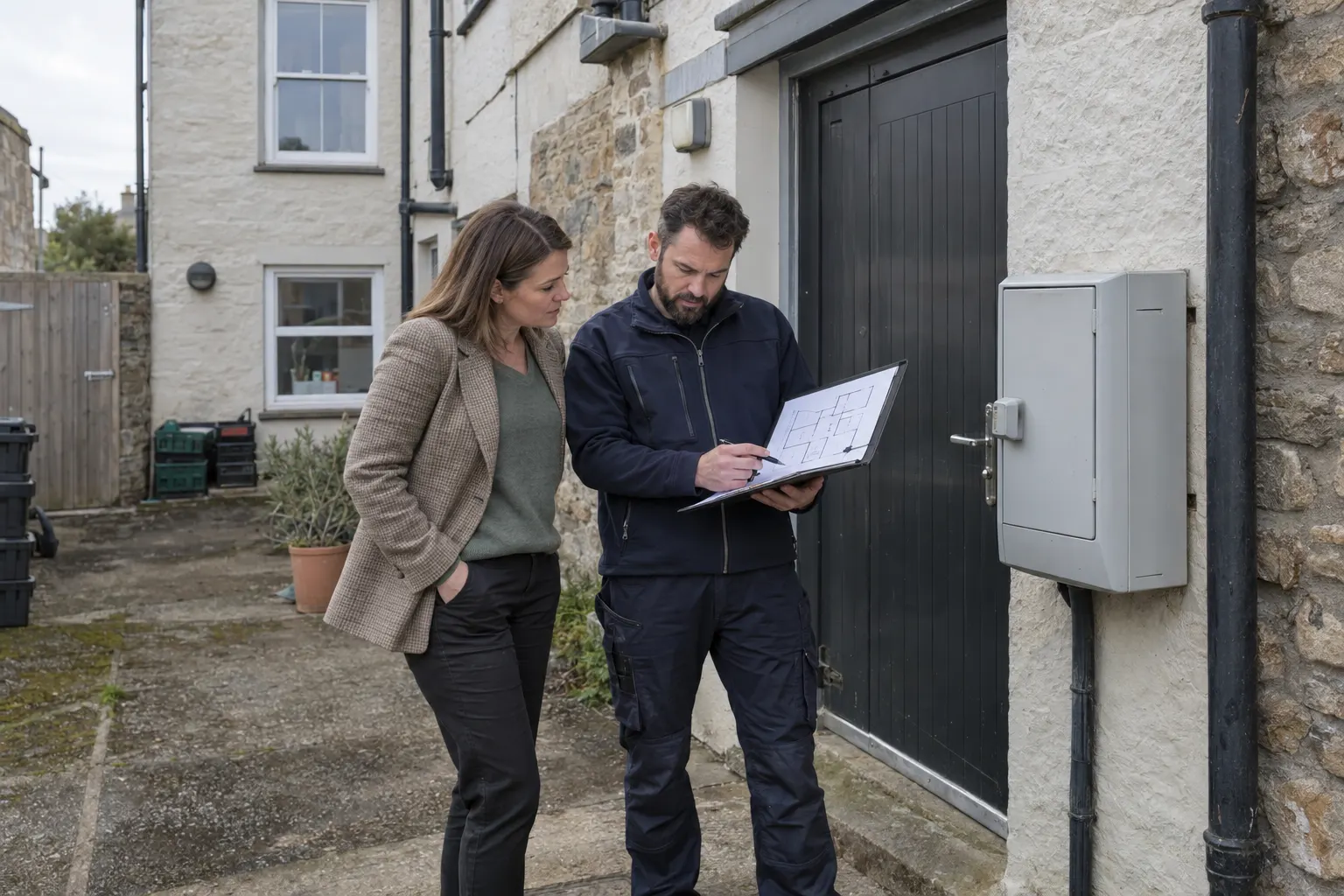
When the wider building project changes the answer
Check the whole scheme, not just the electrical quotation. New construction, an extension or a specified material change of use may involve requirements beyond Part P. Electrical design may need to support the project's fire-safety or energy-efficiency requirements.
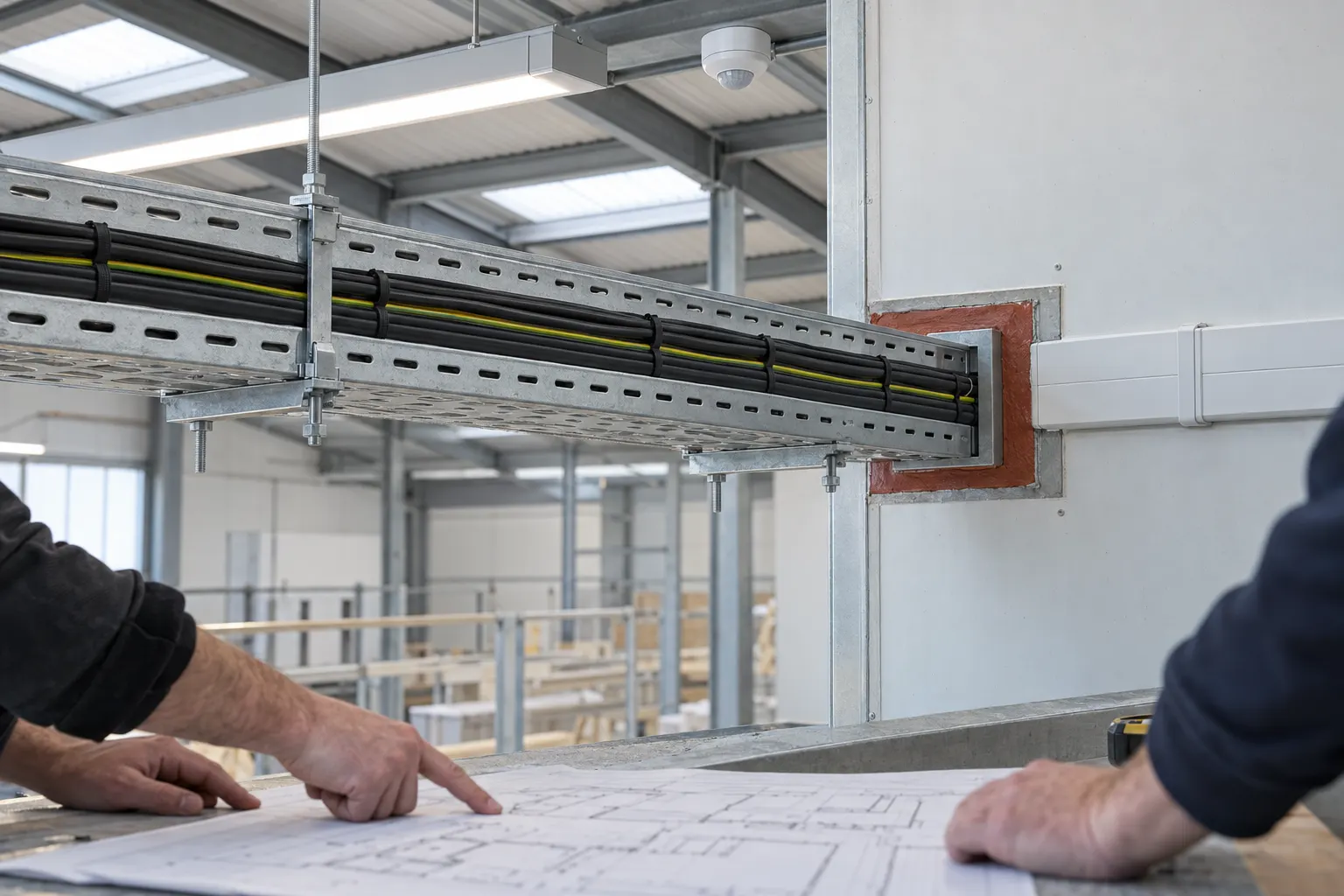
For example, agree how proposed cable routes interact with the building's fire-safety design, and whether lighting changes affect the energy-efficiency assessment. These are coordination questions for the project team, not evidence that every cable or light fitting needs its own application.
For a fit-out, this approval check belongs alongside planning the wider commercial electrical refurbishment, rather than being left until the electrical work is complete.
Cornwall Council's guidance on making a Building Control application identifies Full Plans as the route for non-domestic work requiring an application. A Building Notice cannot be used for non-domestic buildings. This explains the route when approval is needed; it does not mean every electrical call-out needs an application.
As at 6 October 2026, the 2026 Part L guidance has been published, but the associated changes generally commence for non-higher-risk work on 24 March 2027, subject to transitional arrangements. Confirm the applicable edition for your project rather than treating publication as the start date.
Electrical certificate versus Building Control approval
These documents answer different questions. Agree what is required at the start, rather than accepting an unspecified promise of a sign-off.
Building Control approval and completion
Building Control documents relate to compliance with the Building Regulations for the building work within their scope. Approval of proposed plans is not the same as completion documentation for finished work. Establish what evidence is needed and who will obtain it.
Electrical installation certification
The appropriate installation certificate records the electrical work and its inspection and testing. It does not, by itself, establish that Building Control approval has been obtained or that every other permission for the project is in place.
Agree this documentation before work starts, including how the final scope and any exclusions will be recorded. Retain it with the site's other electrical records.
An Electrical Installation Condition Report
An EICR records the assessed condition of an existing installation at the time of inspection, within its stated scope and limitations. It is not a substitute for certification of new work, nor a replacement for any Building Control process that applies.
Planning permission, listed-building consent and lease or landlord consent are separate again. Permission under one regime does not automatically satisfy another.
What to confirm in a mixed-use or rented Falmouth property
For commercial electrical alterations in Falmouth involving rented or mixed-use premises, establish the relationship between the business installation, any dwelling and shared areas. Ask the landlord or managing agent for available records; the contractor should verify the relevant arrangement rather than infer it from the shopfront or lease plan.
Agree who can authorise work affecting shared services and who will liaise with Building Control. Check access arrangements where the work involves areas outside the tenant's control.
If the landlord already has approval for a larger scheme, ask whether your proposed alterations are included. Changes to a tenant's fit-out should not be assumed to fall within that approval. Landlord consent to carry out work remains a separate question from Building Regulations compliance.

A practical pre-start check for Falmouth businesses
Before seeking a firm programme for the work, assemble enough information to answer these questions:
- What is the full scope? Describe the electrical work alongside any extension, conversion or wider refurbishment.
- Is a dwelling involved? Have the supply arrangement and any shared areas checked; do not rely on the business address.
- Does Building Control need to be involved? Confirm the application route and whether an existing submission covers the work.
- Which requirements apply? Establish relevant guidance editions and any transitional arrangements with the project team and Building Control.
- Who provides the evidence? Name the people responsible for submissions, any required inspections, electrical certification and completion records.
- What other permissions are needed? Check planning, listed-building and landlord or lease requirements separately where relevant.
If the boundary is unclear, give Cornwall Building Control a concise description of the premises, proposed work and known supply arrangement before work starts. A general description of commercial electrics is not enough to decide the route.
Keep a written record of the agreed scope and approval route with the project information. If the scope later changes, ask whether that decision still holds before proceeding on the original assumption.
For work within a wider fit-out, use these answers alongside our guide to planning a commercial electrical refurbishment to prepare a coordinated brief.
Planning commercial electrical work in Cornwall? Maenporth Electrical Ltd is based at Maenporth, serving Falmouth, Penryn and the wider county. Call 01326 250297 to discuss the proposed electrical work and the information needed to scope it.