
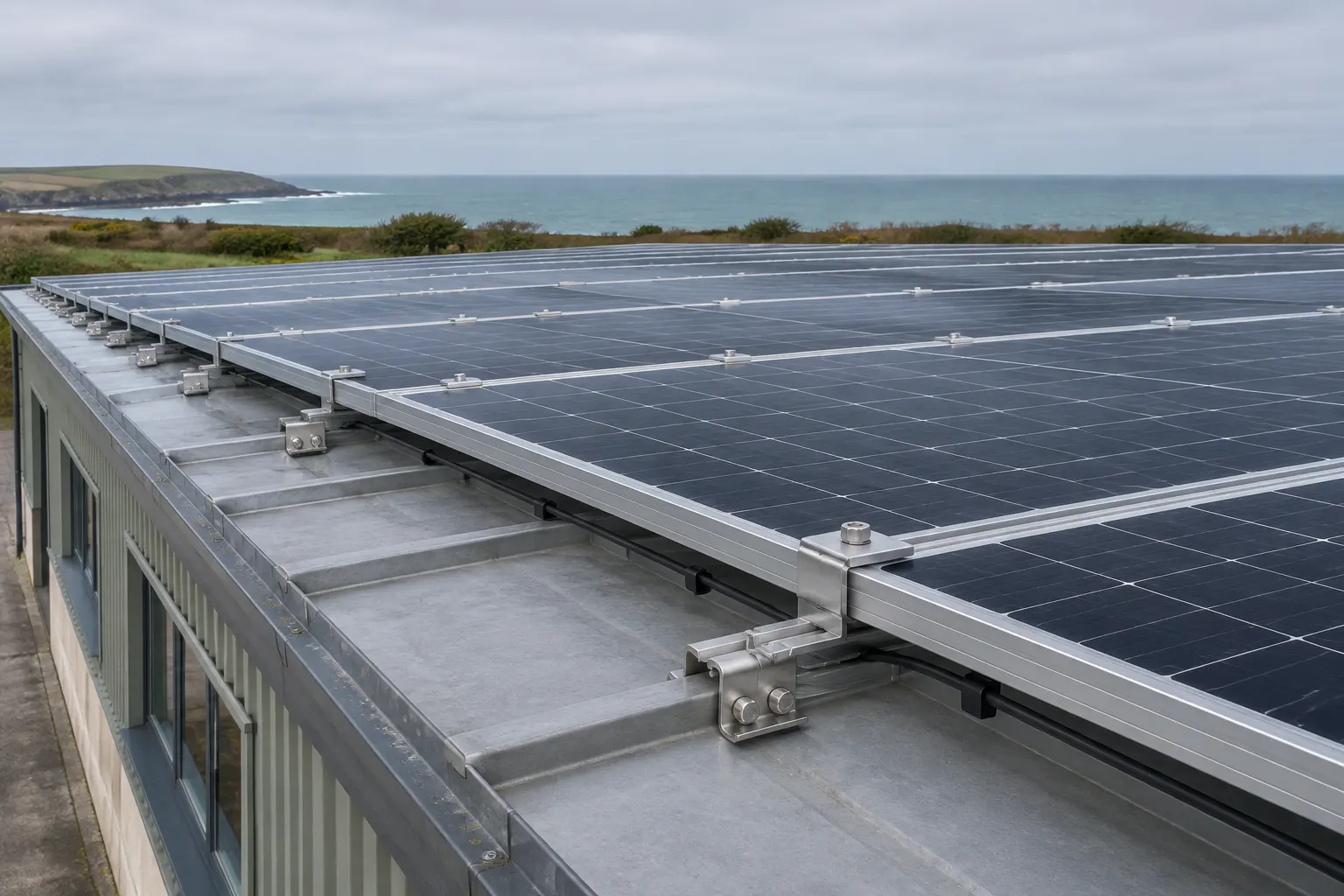
Salt-mist-tested panels do not make a coastal solar installation corrosion-proof. On an exposed commercial roof, the rails, fixings, electrical connections and outdoor equipment also need to be specified for the conditions they will face.
For a Cornwall holiday park, factory or larger rural site, coastal solar PV corrosion is therefore a specification decision, not simply a question about panel choice. Before approving a quotation, ask what has been assessed, which evidence supports each component and what the warranty actually covers.
How salt air can affect the wider PV system
Salt deposits combined with moisture can promote corrosion. The potential effects extend beyond module frames to mounting rails, fasteners, electrical connectors, inverter electronics and electrical panels.
Where dissimilar metals meet in damp conditions, galvanic corrosion can also develop. Compatibility at joints matters, as well as the finish of each separate component.
The practical concern is not just appearance. Deterioration can affect supports and electrical connections, so normal generation figures alone do not establish that an installation remains sound. Equally, visible staining does not tell a site manager how far deterioration has progressed.
What IEC 61701 salt-mist testing actually covers
The IEC 61701:2020 module salt-mist testing standard describes test sequences for PV modules. It also links test-method selection to the atmosphere a module will face in service.
That makes it useful evidence when considering solar panels and salt air. Ask for documentation tied to the exact module model, identifying the test method used and the manufacturer's assessment of suitability for your site.
There is no single salt-mist level to prescribe for every coastal site. A test claim needs to be read against the expected atmosphere and supporting manufacturer documentation, rather than used as a universal buying rule.
It does not assess the complete installation: roof attachments, rails, site-installed connections, switchgear and inverter enclosures need separate consideration. The standard is not a universal UK legal requirement. A module test result is not a whole-system salt-proof guarantee.
Keep testing and warranty evidence separate. A product may have salt-mist test documentation while its warranty has conditions about the installation environment or maintenance. Ask for the applicable terms and a written response where the site's exposure is not clearly covered.
A panel warranty should not be assumed to cover separately supplied mounting or enclosures. Keep each product's terms with the equipment schedule, including any changes agreed before installation.
Which other components need environmental evidence
A commercial proposal should name the equipment being supplied and explain how its selection addresses the environment. Check these groups separately.
Mounting, fixings and bonding
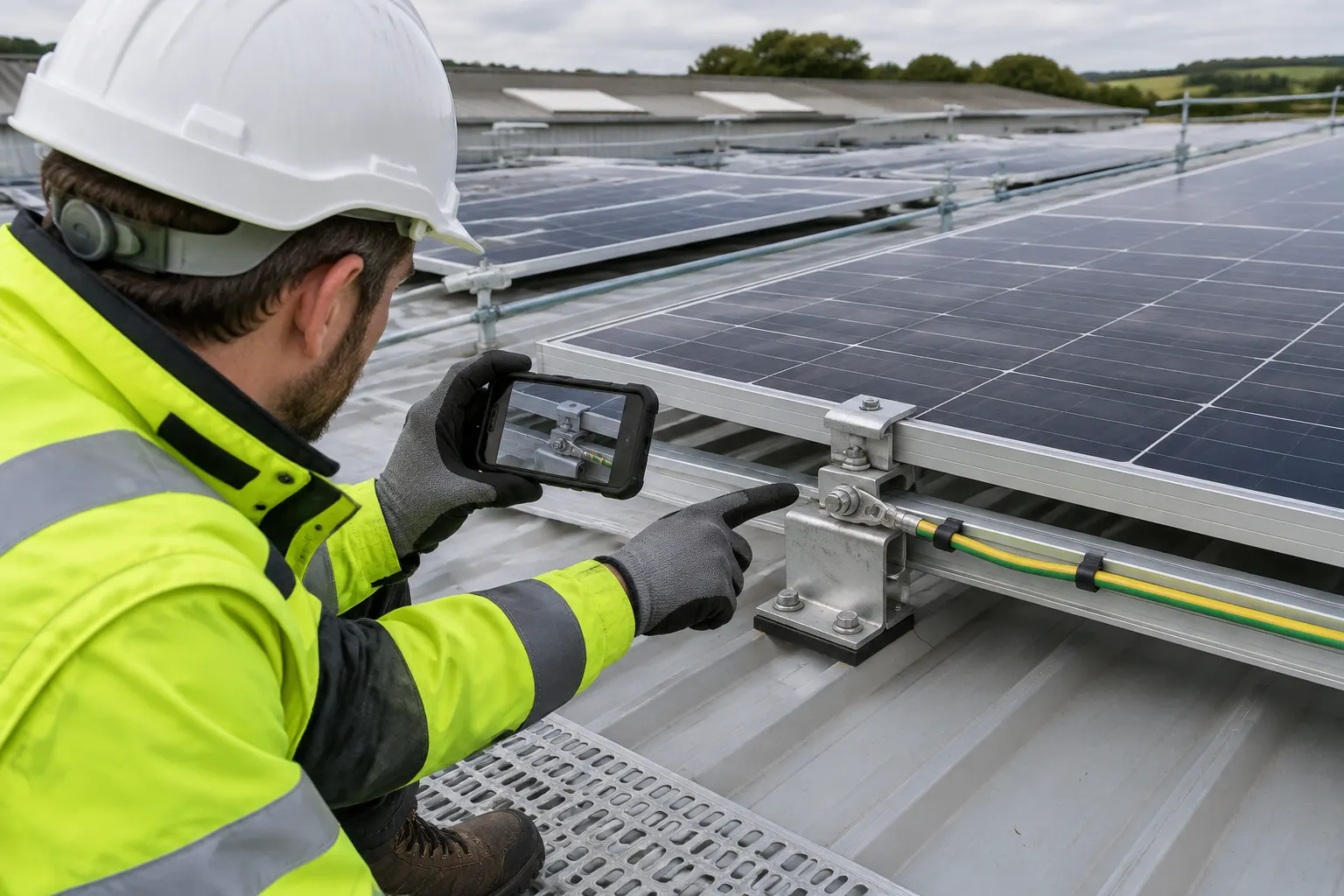
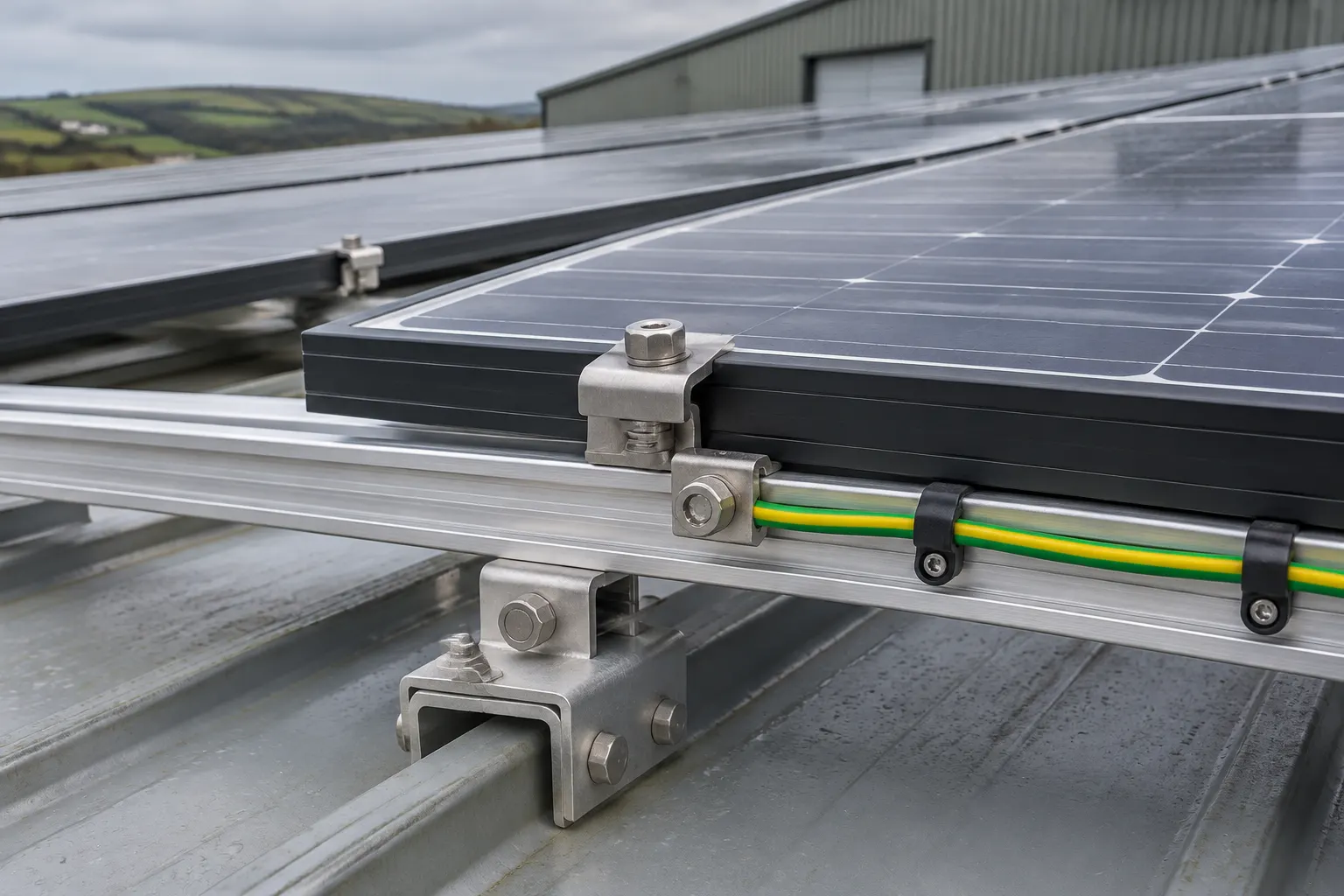
To address solar mounting corrosion, the specification should identify rail, bracket and fastener materials or protective finishes, plus evidence that their combination suits the assessed exposure. Include roof interfaces and bonding connections, rather than treating everything outside the panels as standard hardware.
Ask how bonding connections are made with the chosen mounting materials, and whether the relevant manufacturer specifies particular connection details or compatible accessories. A single corrosion-resistant component does not establish the suitability of every joint: the assembly and its interfaces need consideration.
A proposed change of fixing or mounting component should be checked against the same exposure assumptions. Structural concerns need appropriately qualified assessment.
Connections and outdoor enclosures
Connectors, cable entries, DC switch-disconnectors and inverters need their own environmental suitability evidence. Ask for confirmation that the proposed installation follows the relevant manufacturer's instructions. Outdoor DC switch-disconnectors should be selected for the exposure at their installed position, not only their electrical rating.
Solar inverter enclosure corrosion deserves its own assessment. Ask how the proposed position and enclosure specification address the actual exposure. A generic “outdoor” or “marine-grade” description is not a substitute for product-specific evidence.
Ask for the enclosure and its cable entries to be considered together. The proposed accessories, installation arrangement and location should be covered by the suitability evidence, not left as unspecified site details.
Two quotations may both name salt-mist-tested panels yet differ in their mounting systems and outdoor equipment. Compare the complete specification, not just panel wattage and headline warranty length.
Assess exposure rather than relying on distance from the sea
There is no universal distance-from-sea threshold that establishes a PV system's corrosion suitability. A map pin cannot capture the conditions around each array or item of outdoor equipment.
Consider wind-blown salt, humidity, recurring dew, shelter, local airborne pollutants and the site's history. Give the designer any relevant records or observations of corrosion affecting existing equipment; these inform, but do not replace, a technical assessment.
Describe where each part will be installed, not only where the building sits. A roof array, a wall-mounted isolator and an inverter inside a building may experience different conditions. Exposure information should therefore follow the component schedule, rather than becoming a single coastal description for the site.
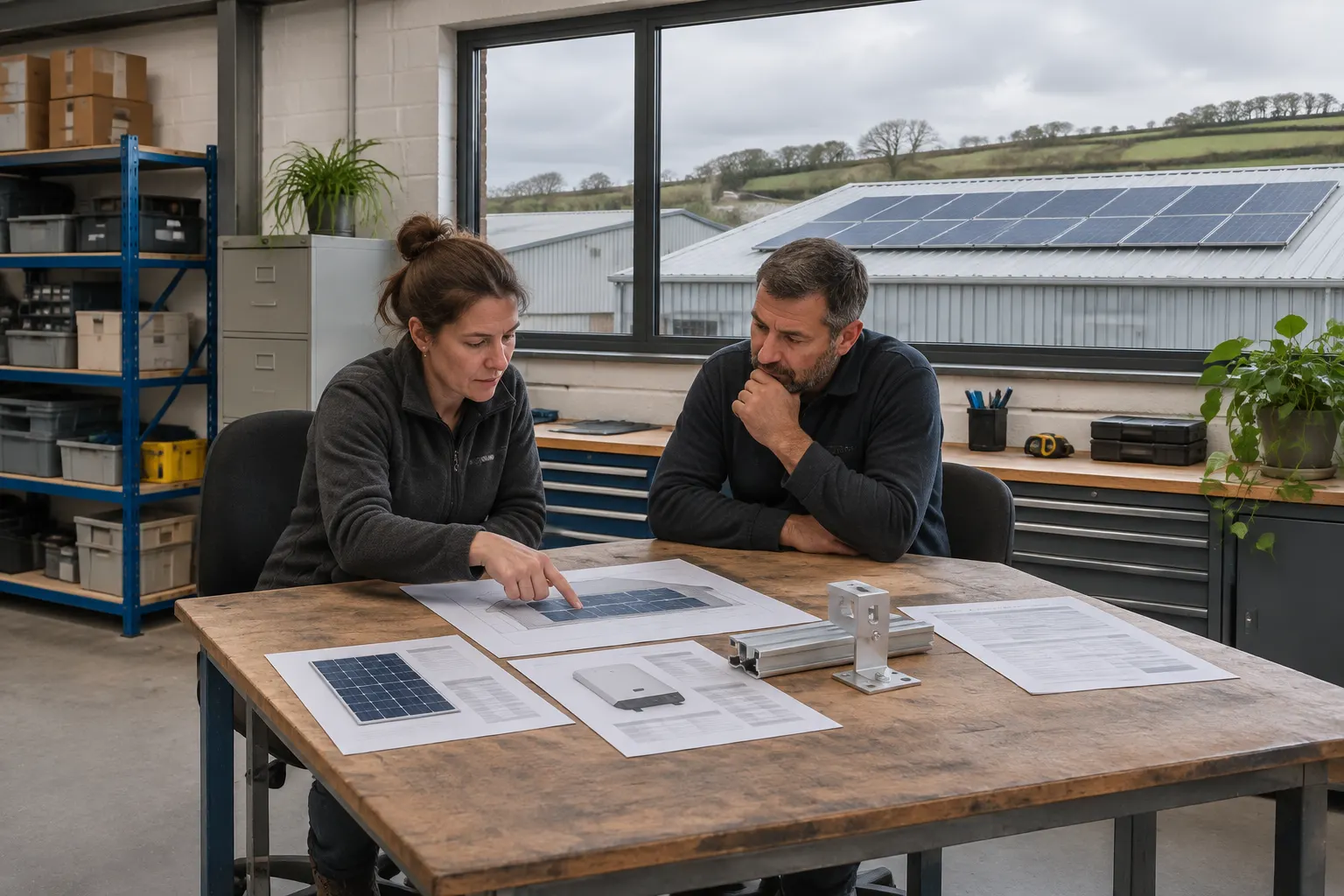
For commercial solar in coastal areas, exposure assumptions should be recorded in the brief. Bring them into the discussion about solar PV for your premises before equipment is selected, rather than accepting a general assurance that it is suitable for Cornwall.
Questions to ask before approving the specification
Ask the supplier to make the following clear in writing:
- Equipment identity. Are the exact module, mounting, connector, switching and inverter products identified, with the relevant environmental evidence?
- Exposure assumptions. Which site conditions have informed the choices, and are any equipment locations dependent on particular shelter or protection?
- Warranty conditions. What coastal restrictions or exclusions apply to each product, and what inspection, cleaning or record-keeping conditions are attached?
- Product substitutions. How will any substituted products be checked for equivalent suitability before they are approved?
- Inspection and access. What does the manufacturer require, how will safe access be provided, and who will retain the records?
- Site records. Will the component schedule, exposure assessment, test evidence and warranty terms be supplied together, including any agreed substitutions?
Resolve any gap between the proposed equipment, assessed exposure and warranty wording before ordering. That is more useful than a headline assurance of a “coastal-ready” system.
When an existing installation needs a competent review
Visible deterioration of supports or enclosures, damaged seals, recurring faults or unexplained changes in generation justify a competent review. These signs do not prove corrosion is responsible. A competent assessment, with testing where appropriate, is needed to establish the cause and condition.
Do not open PV equipment, disturb connectors, climb onto roofs or attempt cleaning or corrosion treatment to investigate. Electrical checks belong with competent PV/electrical professionals, with structural or specialist corrosion input where needed.
Coastal solar PV maintenance should reflect equipment instructions, exposure and condition. BS EN IEC 62446-2:2020 addresses maintenance of grid-connected PV systems, with periodic inspections helping determine appropriate intervals; it is not a universal annual-service rule.
Arrange solar maintenance services around those needs rather than a generic timetable.
Maenporth Electrical Ltd is based at Maenporth and serves Falmouth, Penryn and wider Cornwall. Call 01326 250297 to discuss a coastal PV specification or concerns about an existing installation.