
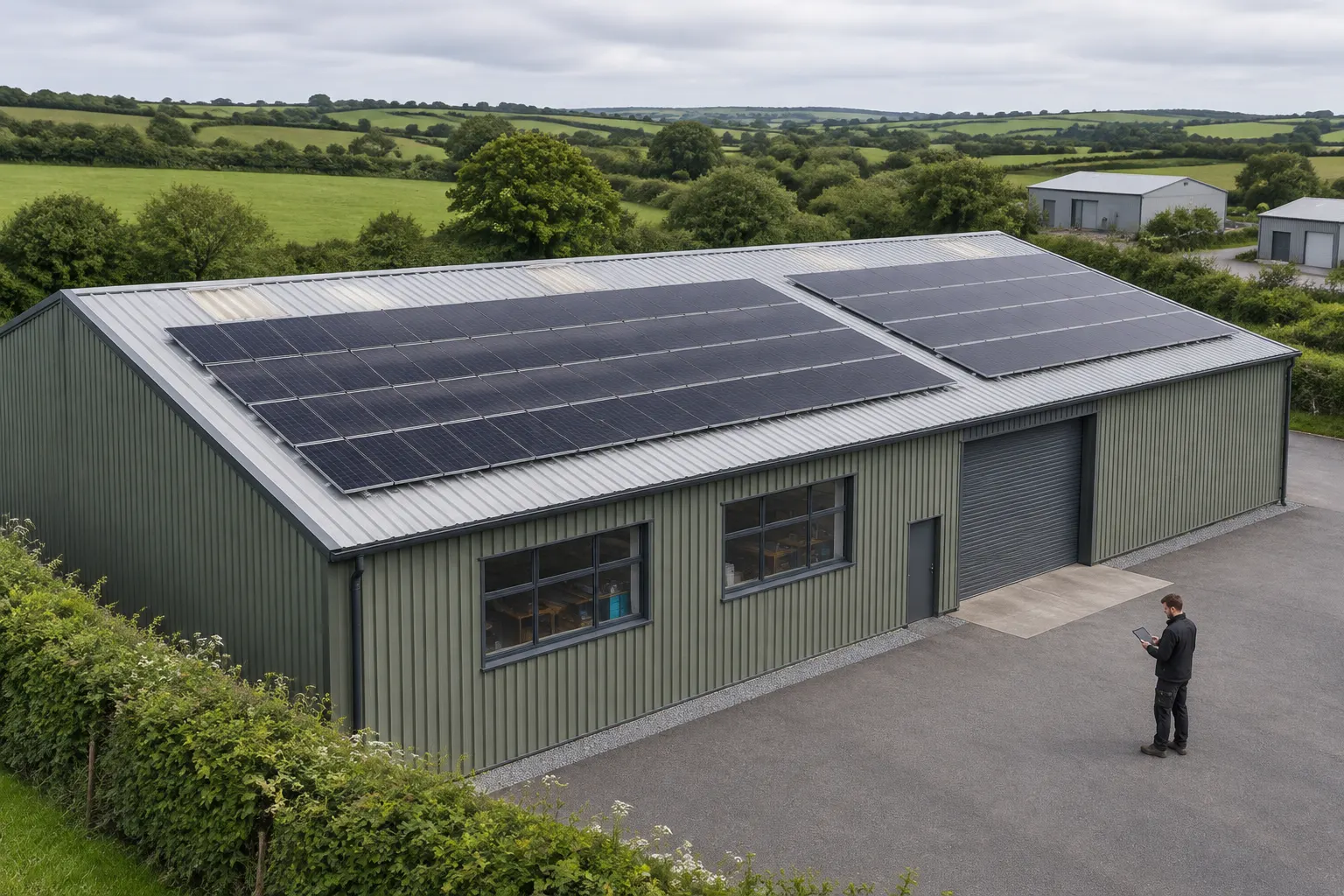
A commercial solar maintenance schedule should distinguish three things: routine site observations, professional inspection and testing, and action when a fault appears. Putting an annual service date in the diary does not, on its own, define an adequate maintenance plan.
There is no universal statutory requirement for every business to have an annual solar PV inspection. The useful question is what your installation needs, who will check it and what justifies the interval.
Maintenance is a duty, but frequency is site-specific
The Electricity at Work Regulations require electrical systems to be maintained as necessary to prevent danger. HSE guidance explains that inspection and, where necessary, testing are essential parts of preventive maintenance. Frequency is a judgement for the dutyholder, informed by practical experience and manufacturers’ guidance.
The IET likewise says inspection intervals should reflect the equipment, its use and operation, maintenance quality and external influences. Recommended initial intervals are guidance, not legal deadlines. Manufacturer instructions, insurer conditions and maintenance agreements also need checking.
Separate routine observations from competent PV work
Safe observations for site staff
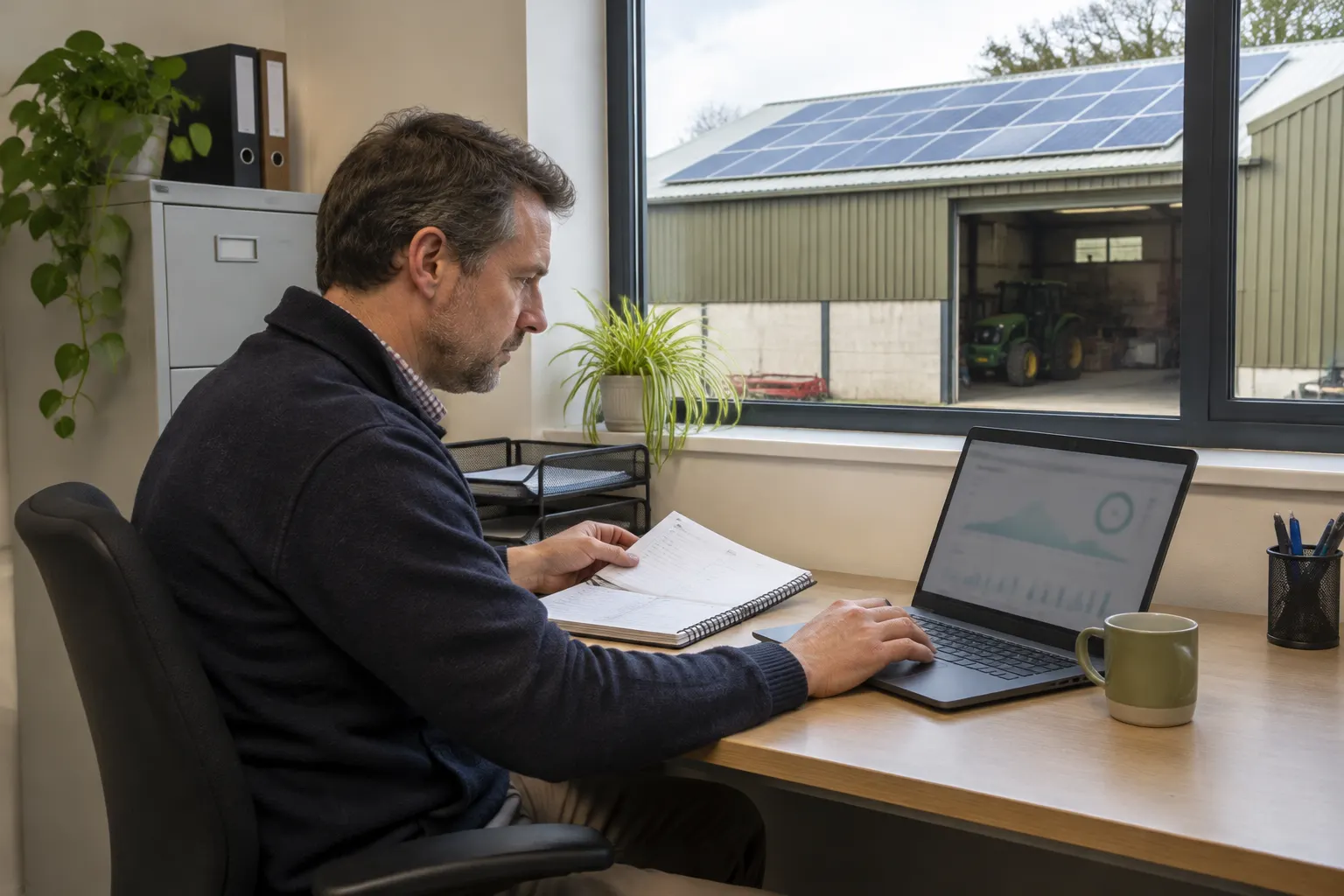
For site staff, routine checks should remain non-invasive: review recorded generation and monitoring alerts, and note visible damage or unusual soiling from a safe ground-level position. These are observations, not permission to climb onto roofs, open equipment or attempt electrical isolation or testing.
A defined professional scope
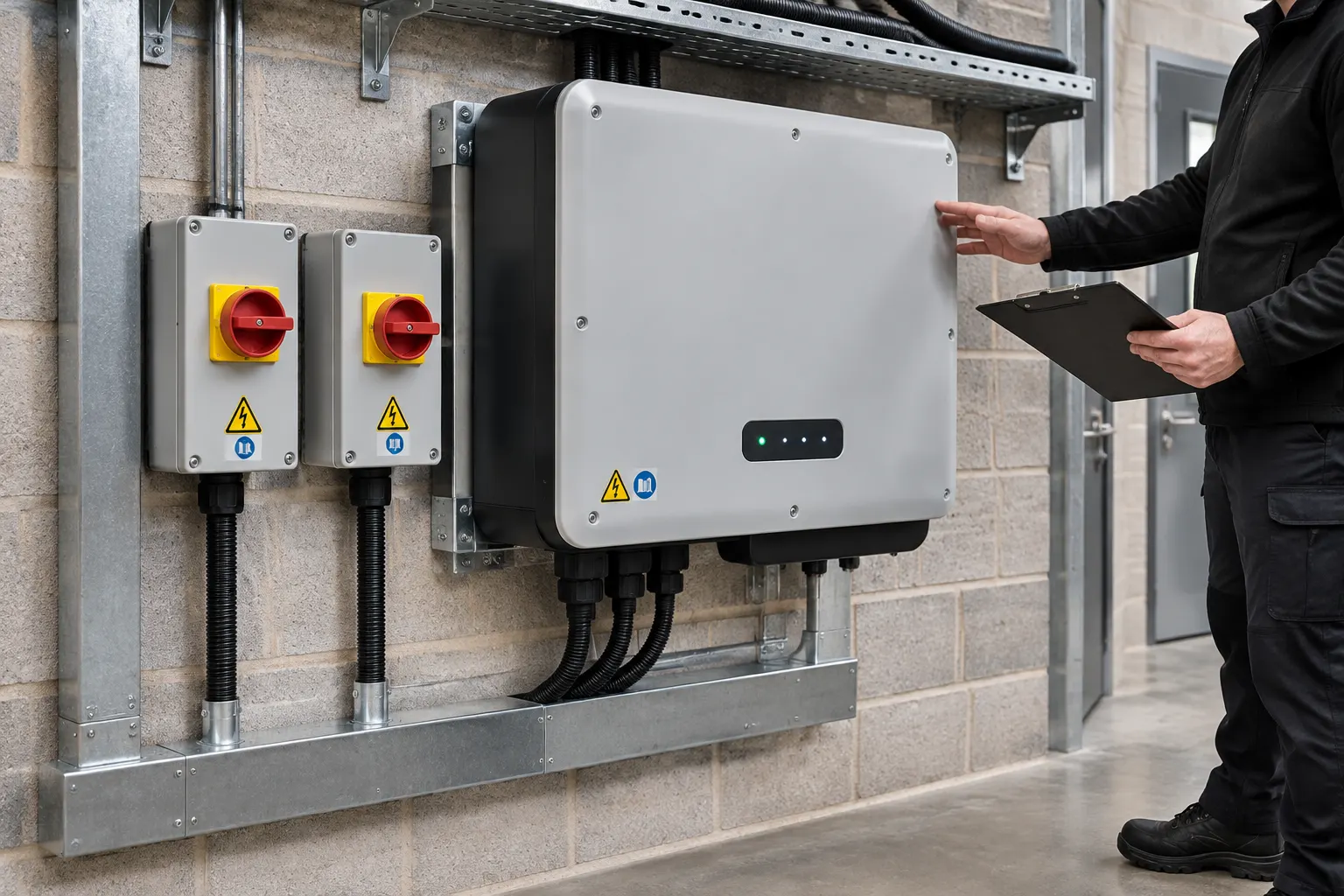
For professional commercial solar PV maintenance, agree a written scope. Depending on the installation, this may include condition checks on isolators, connectors, cabling and labels, inverter fault-log reviews and appropriate electrical tests. Do not assume every visit includes every possible test.
When comparing solar maintenance services, provide the array rating, inverter details, handover documents, previous reports and any current alerts. Explain whether monitoring information is available and flag restricted access. Confirm whether access equipment and any justified diagnostic work are included or priced separately.
Repeated alarms, unexplained performance changes or visible damage should prompt a professional review rather than wait for the next scheduled visit.
How often to service commercial solar panels
For relevant grid-connected PV systems on permanent buildings up to 50 kWp DC, Appendix F of MIS 3002 Issue 6.0 provides an advisory commercial and industrial schedule:
- Monthly customer checks of recorded generation and visible condition, limited to safe ground-level observations.
- An annual intermediate contractor visit.
- A full contractor visit every two years.
These are different levels of check, not interchangeable descriptions of an annual service. Monthly observations are not electrical testing by site staff. The schedule is not law or a universal MCS requirement, and system size can affect frequency.
There is also a separate MIS 3002:2025 standard. With the MCS scheme transition running through 31 March 2027, confirm which version applies before adopting those intervals as a benchmark.
Ask how intermediate and full visits relate in the proposed plan, what each covers and how additional work is authorised. The timetable alone does not define the service you are buying.
Larger arrays need a different starting point
Do not simply copy a smaller-system timetable onto a larger installation. Solar Energy UK’s rooftop operations and maintenance guidance recommends system-specific tasks and frequencies, referring larger systems to IEC 62446-2 and SolarPower Europe guidance.
IEC 62446-2 covers preventive, corrective and performance-related maintenance for grid-connected PV, including worker safety and both rooftop and ground-mounted systems. Agree the equipment covered, inspection and testing scope, monitoring arrangements and responsibilities before fixing dates.
The plan should cover the whole PV installation, not just the modules, and make any exclusions clear.
Adjust the interval to your site conditions
Commercial solar inspection frequency should reflect what the site actually experiences. For Cornwall’s factories, agricultural premises, quarries and leisure sites, useful factors include:
- Exposure and soiling. Consider coastal exposure, nearby dust, vegetation and bird activity where present.
- Equipment and layout. Review the array’s size, equipment types, manufacturer instructions and access needs.
- Previous findings. Recurring alarms, deterioration, repairs or changes to the installation may justify reviewing the interval.
- Operational changes. New processes, building work or changed site use can alter maintenance priorities.
- Contractual conditions. Check relevant warranty, insurer and maintenance-contract requirements rather than relying on a generic timetable.
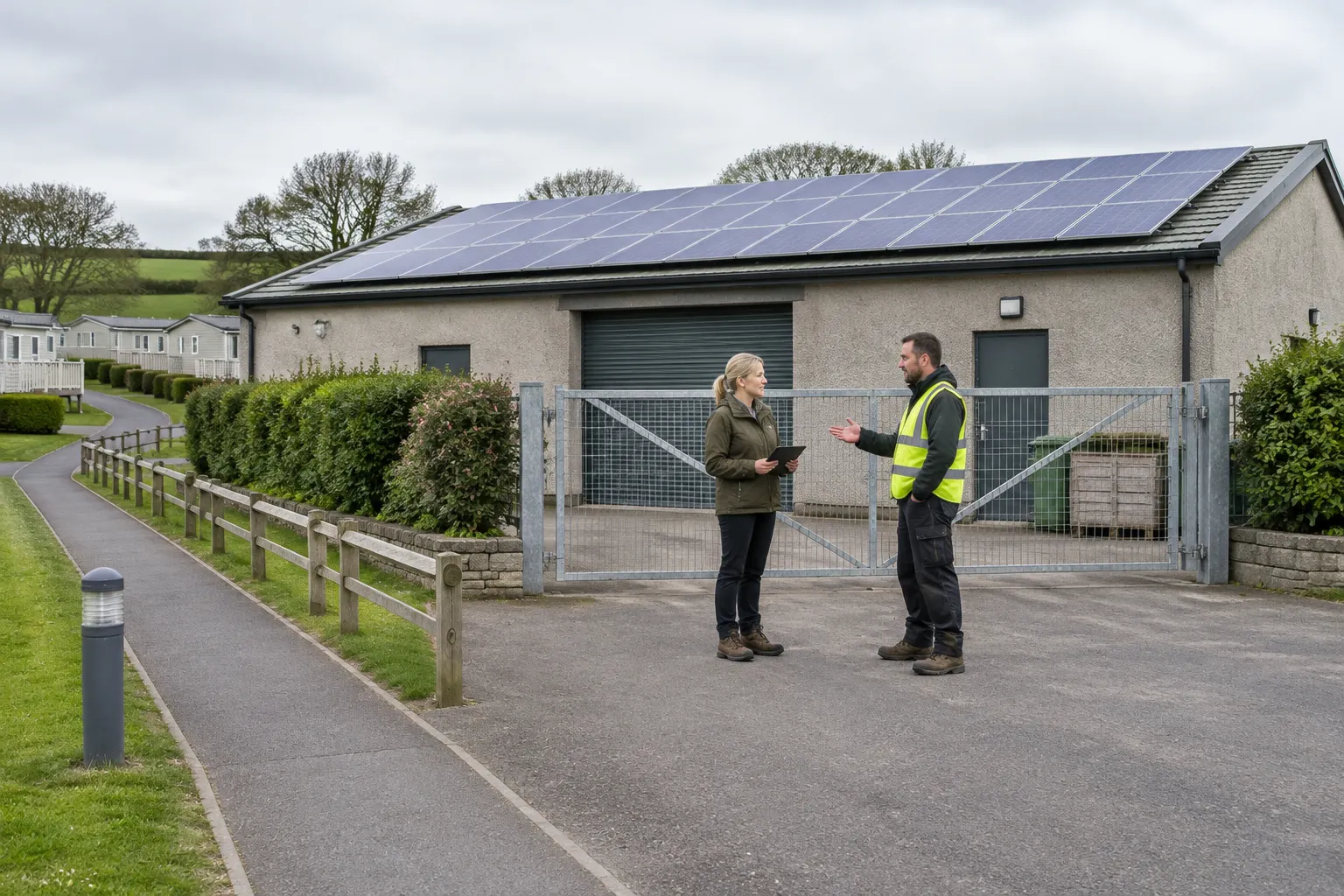
A coastal holiday park and a sheltered inland workshop may have similar array ratings but different exposure and operating patterns. Record why the interval is appropriate and define what would trigger an earlier review.
Storm damage, nearby building work or a newly reported defect can justify an earlier assessment. A calendar date should never be a reason to delay reporting a concern.
Cleaning should also be condition-led. There is no universal cleaning interval, and cleaning is not a substitute for electrical inspection. Agree whether it is justified and how it can be done safely.
If the maintenance history is incomplete
If you have taken over an array without reliable records, ask a competent PV contractor to review the available documents, condition and known faults. Missing records do not prove the installation is unsafe, but they limit what can be assumed about previous maintenance. Agree what initial inspection and testing are needed to establish a documented baseline, rather than simply booking a visit a year ahead.
Plan safe access around a working site
Commercial solar panel inspection and testing needs competent people and suitable working arrangements. Before booking, agree roof-access provisions, any necessary shutdowns, access to equipment and separation from staff, visitors and vehicles.
A factory shutdown, farm operating pattern or holiday park’s quieter period may offer a sensible maintenance window. However, a suspected unsafe condition should not be left until the off-season merely for convenience.
Make access limitations explicit before the appointment. If part of the installation cannot be reached safely, the report should identify that limitation rather than imply that the whole array has been inspected.
Coordinate the visit with wider planned electrical maintenance where useful, while keeping the PV scope explicit. An electrical installation condition report (EICR) for the premises does not automatically include a full PV-specific inspection and test; agree and document that scope separately.
Keep findings, repairs and the next review date together
Keep the system’s handover documents, monitoring history, inspection reports and repair records together. HSE describes records as useful for monitoring condition; they help the next contractor understand what has changed and what remains outstanding.
The report should make clear what was inspected, any limitations, recommended actions and priorities, and the next review date. Name who reviews monitoring alerts and who follows up remedial work.
For each recommendation, record who will arrange the work and the target timescale. Keep confirmation of completed repairs alongside the original finding, and pass the record on if site management changes.
The aim is a schedule you can explain: safe routine observations, a defined professional scope and intervals justified by your installation, not an unexplained yearly appointment.
To discuss a commercial solar maintenance schedule for your existing installation, call Maenporth Electrical Ltd on 01326 250297. We serve Falmouth, Penryn and wider Cornwall.