

The Cornwall Climate and Energy Action Plan 2026–2030 includes planned engagement with large industrial and commercial energy users. For quarry, factory and holiday park operators, it is worth following—but it is not a new electrical compliance deadline or a confirmed funding offer.
The useful distinction is between Council ambitions, proposed support and decisions about an individual installation. They are connected, but they are not interchangeable.
At Maenporth Electrical, our reading is practical: use the plan to inform preparation, while keeping investment decisions tied to your site’s needs and verified opportunities.
What Cornwall’s 2026–2030 Climate and Energy Action Plan covers
Cornwall Council describes a 2026–2030 plan with four missions, 50 actions and eight priority actions. These are divided between Council-level work and Cornwall-wide activity.
That distinction matters. A target for the Council’s own operations or assets should not be presented as a target imposed on every private business. Equally, a Cornwall-wide action can identify a direction for collaboration without creating a requirement for every local operator.
The Council’s 2026–2030 action plan is the key document for understanding what is proposed. For large sites, relevant provisions include engagement with energy users, investigation of rooftop-solar mechanisms and support activity. These are policy actions, not an electrical design brief.
When reading an action, check who is expected to act, what is proposed and what stage it describes. Engaging with a sector and investigating a mechanism are different from opening a scheme or adopting a standard. That distinction is important when preparing a non-domestic decarbonisation budget.
What the plan says about large industrial and commercial energy users
Action 36, scheduled for 2026–2030, calls for engagement with large industrial and commercial energy users to understand their energy use and decarbonisation plans.
For large energy users in Cornwall, this is a reason to prepare a clear account of current consumption, intended operational changes and barriers to delivery. It does not confirm an individual project, an agreed technical solution or a funding award.
Treat any future approach according to its stated purpose. A request to understand demand is different from a technical survey, a funding application or approval to proceed with works.
Before proposing equipment, operators should understand what consumes energy, when demand occurs and which activities cannot tolerate interruption. Any future engagement will be more useful if those questions have already been considered.
On a multi-building site, be clear which meters, buildings and activities any figures cover, including whether different occupiers are involved. Otherwise, site-wide demand can become confused with the case for changing a single roof, building or process.

What the named sectors mean for working sites
The action specifically names extractive industries, tourism, food and drink, and manufacturing. For site operators, this puts process-driven businesses and visitor sites explicitly within the engagement scope.
From an electrical planning perspective, that can mean asking different questions:
- Quarries and extractive sites: how do plant loads, machinery changes and available shutdown windows affect the options?
- Tourism and holiday parks: how do seasonal occupancy and changing facilities affect when electricity is needed?
- Food and drink: how do refrigeration, processing and production schedules shape energy use and continuity requirements?
- Manufacturing: which processes drive demand, and what future equipment changes could alter it?
These are starting points for site planning, not findings about particular businesses. Industrial decarbonisation needs to reflect how each operation works, rather than treating sector labels as an equipment specification.
What business solar and support proposals do and do not promise
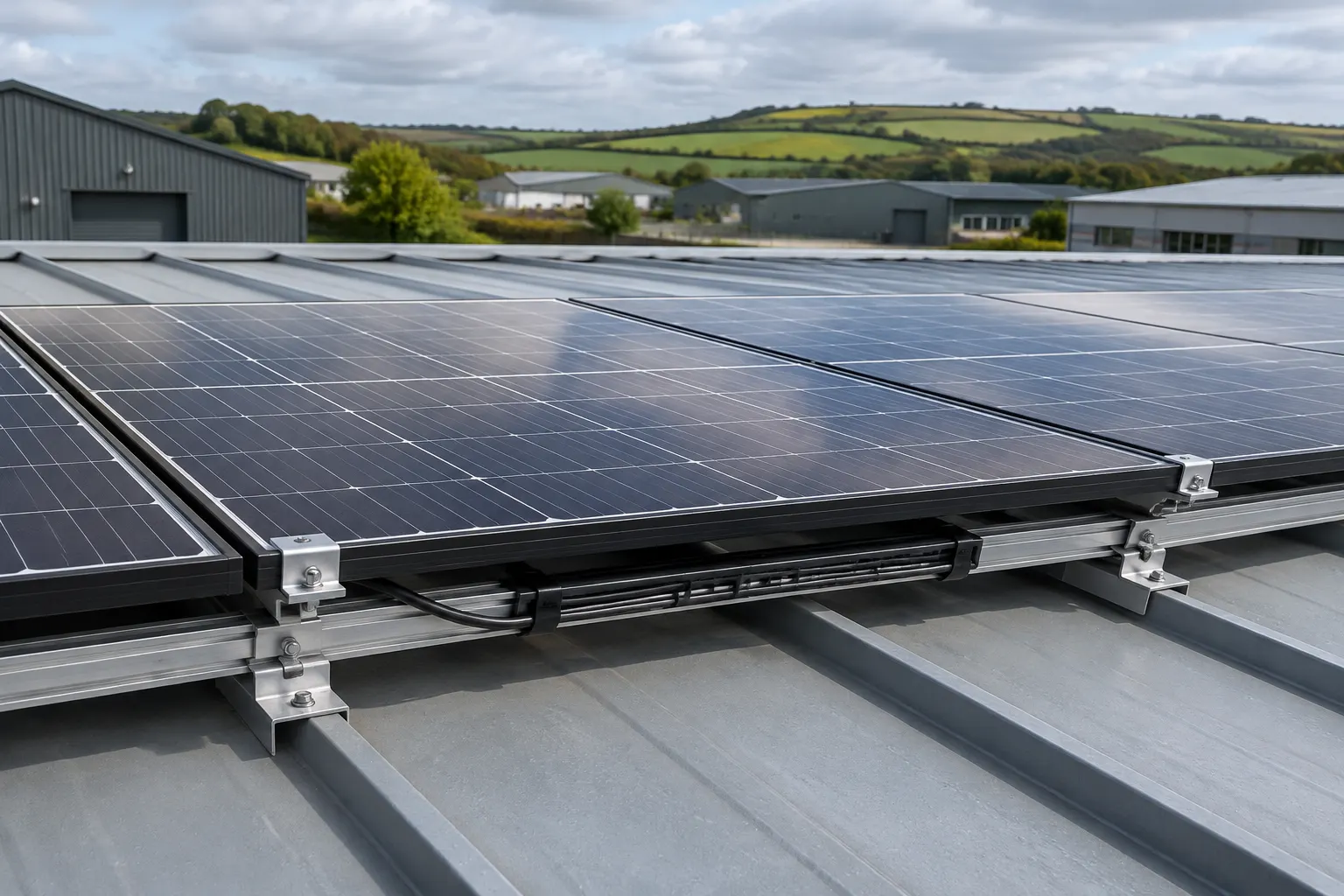
Action 5 proposes investigating mechanisms to increase rooftop-solar uptake by businesses as well as householders. The key word is investigating: this is not an announcement that a new incentive is available.
The action plan also describes collaboration and support for organisations, including raising awareness of funding opportunities. That does not establish that a particular applicant, roof or electrical project will receive financial support.
If an offer emerges, check the actual scheme terms, application status, eligible expenditure and any conditions about when work can start. Do not build a payback calculation around unconfirmed funding.
Business rooftop solar should also stand up to site-specific assessment. Questions include daytime consumption, roof suitability, the condition and capacity of the existing electrical installation, and connection or export constraints. A policy aim to increase uptake does not answer those questions for an individual building.
What the plan does not change for an individual site
The plan is not a new electrical or building-compliance requirement. Existing obligations and any permissions needed for proposed work must be checked separately.
Future building standards are not current rules
Its net-zero building standards action is framed as future Local Plan work, with adoption targeted for winter 2028/29. That is a policy timetable, not evidence that a new standard already applies to your existing site or a confirmed specification for a current project.
Network capacity remains a separate question
Strategic energy planning does not guarantee grid capacity at your location. New charging, process equipment and generation may raise different import or export questions.
National Grid Electricity Distribution’s capacity map is indicative and does not replace a formal connection application. Any connection requirements need to be established for the actual proposal. Neither a strategic ambition nor an indicative map is a connection offer or a confirmed project programme.
Keep three questions separate: does the policy support the idea, is funding confirmed, and can the site safely and practically accommodate it? A positive answer to one does not settle the others.
What site managers can prepare before future engagement
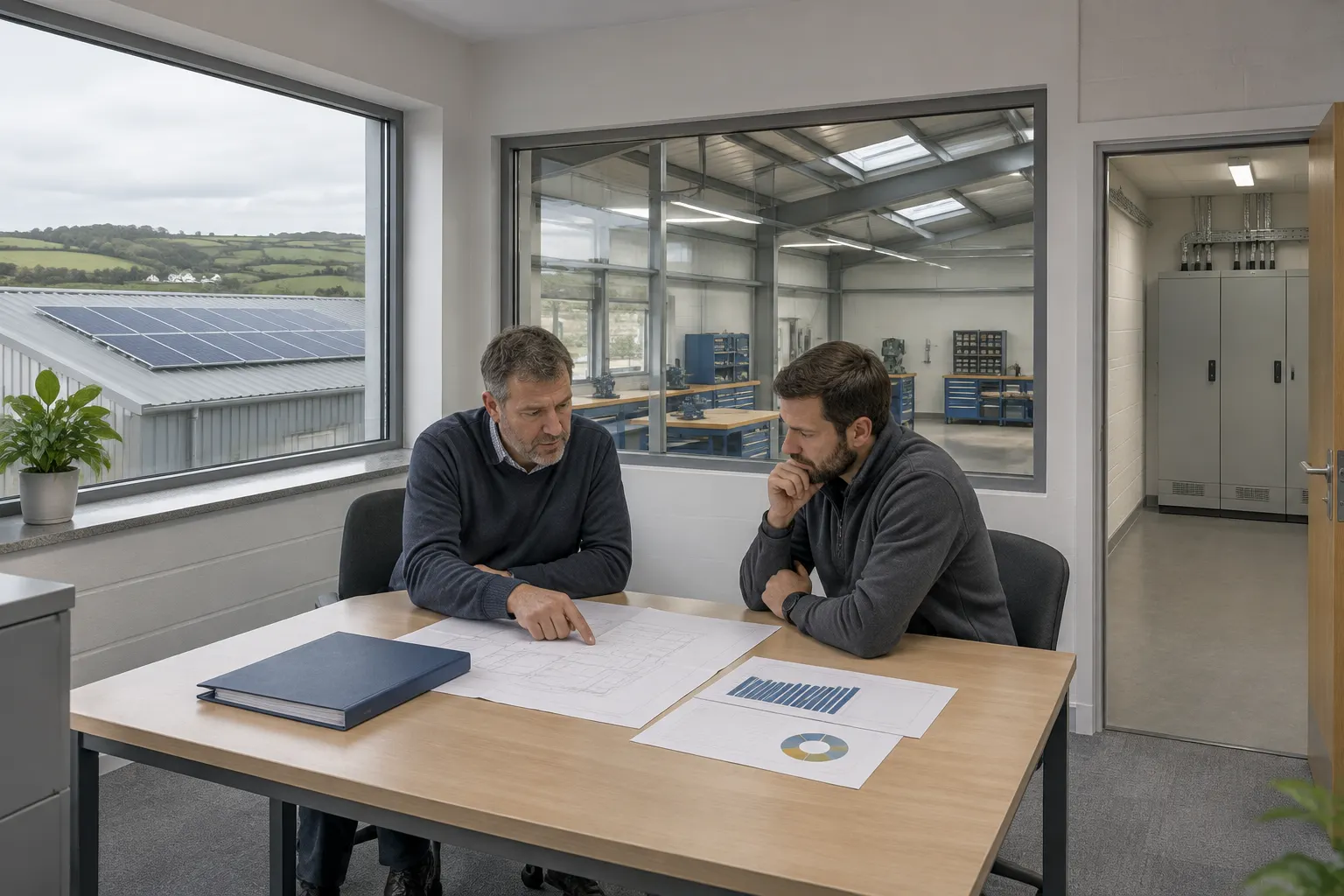
Preparing for the business energy transition need not start with choosing hardware. A short site energy brief can make conversations with the Council, advisers or electrical contractors more productive.
For each proposed change, record its purpose and likely timing before choosing a product. Reducing running costs, replacing unreliable equipment and enabling expansion may overlap, but they are not necessarily the same project.
- Current use: gather bills and available interval data, noting seasonal peaks, operating hours and changes in production or occupancy. Identify the relevant meter or building.
- Electrical baseline: locate existing drawings, test records and asset information. Flag missing records for professional review rather than assuming spare capacity.
- Planned changes: record machinery, heating, charging or generation proposals, including likely timing, operational priorities and which ideas are not yet approved.
- Constraints: identify shutdown windows, landlord permissions, roof questions and known connection issues that need specialist assessment.
- Commercial assumptions: separate confirmed budgets from possible grants, and identify who will verify scheme rules before commitments are made.
This is desk-based preparation, not a request to inspect live equipment or alter an installation. Electrical assessment and design belong with competent professionals.
For help turning site priorities into an electrical scope, contact Maenporth Electrical on 01326 250297. Based at Maenporth, we serve Falmouth, Penryn and wider Cornwall.