
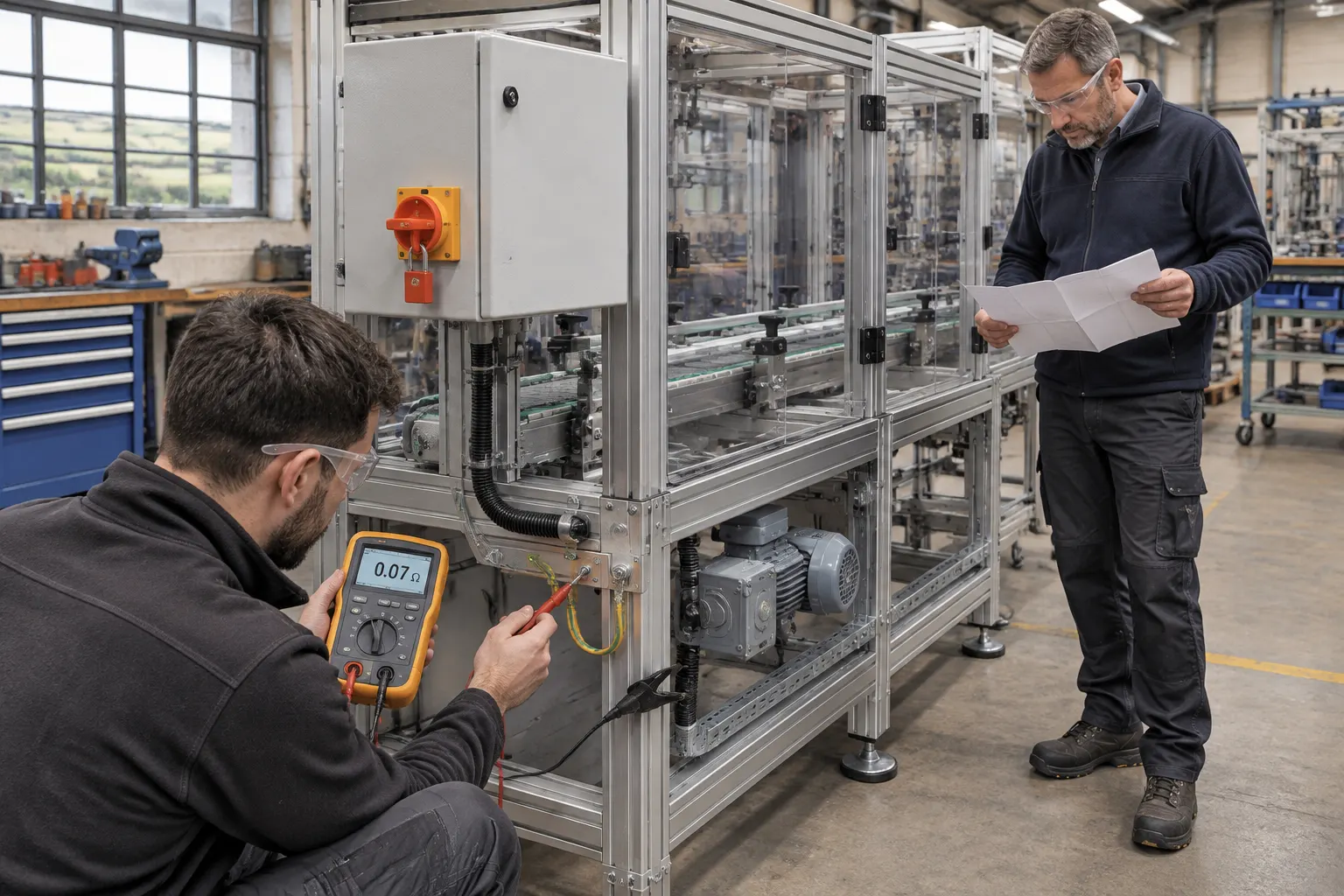
Electrical testing after machinery reassembly does not automatically mean repeating every test completed at manufacture. The right scope depends on what was disconnected, the machine’s condition, its safety functions and any changes to the receiving supply.
A successful start-up is not proof that protective bonds or safety-related controls remain effective. For factory managers and maintenance leads, the aim is to establish what has been disturbed and who will provide the evidence needed before the machine returns to use.
First establish what the move involved
Start by distinguishing simple repositioning from disconnection and dismantling. The Health and Safety Executive (HSE) guidance on the Provision and Use of Work Equipment Regulations (PUWER) says a move without dismantling, reassembly or fixing in place is not normally reinstallation. Supply suitability and possible damage still need consideration.
Under PUWER Regulation 6, where safety depends on installation conditions, inspection is required after assembly at a new site or location, before use, to establish correct installation and safe operation.
The inspection may range from visual examination to more detailed checks and testing. Its depth should reflect the equipment, its use and the risks, rather than a fixed package for every moved machine.
Disconnecting only the incoming supply is different from splitting a machine into sections and separating motor, protective bonding and control connections. Whether a PUWER inspection after machinery relocation is needed depends on the circumstances, not simply the distance moved. A move within the same factory can still involve reassembly at a new location.
A complete electrical retest is not automatic
HSE’s woodworking machinery guidance considers a machine tested after manufacture, dismantled for transport and then reassembled. It focuses on establishing that the machine’s designed-in safety precautions remain satisfactory, rather than automatically repeating every original test.
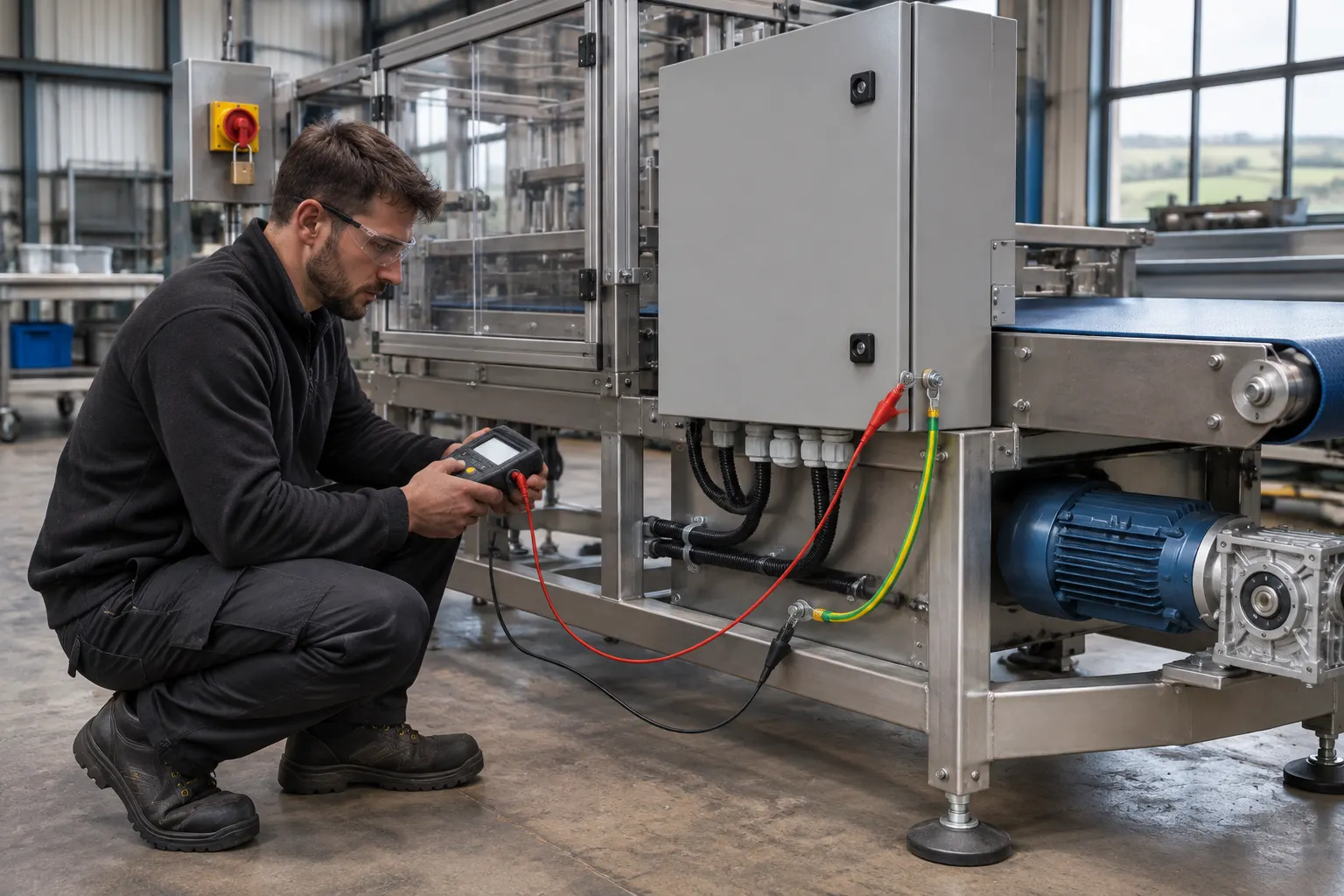
The example identifies a separated and reconnected earth bond as something it may be reasonable to test. Safety-related control connections may also call for functional testing. It is woodworking-specific guidance, not a universal test schedule for industrial machinery.
Equally, limiting the work to obvious reconnections is not a safe blanket rule. Damage, uncertain condition or modifications may justify wider testing, including a complete retest where appropriate. A competent person should scope electrical testing after a machine move using manufacturer guidance, available records and what actually happened during the move.
The person setting the scope should also explain what previous evidence can still be relied upon. Manufacturer test results are useful background, but they do not establish the condition of connections that have since been disturbed.
Identify disturbed connections and safety functions
Before commissioning electrical checks after machine reassembly, gather drawings, previous results and the installer’s record of what was disconnected or changed. If that information is incomplete, flag it when agreeing the scope.
Include any reported transport damage or temporary repairs in the brief. Damaged cables or an enclosure that no longer fits properly may mean the job is more than reconnection; the condition needs assessing before the test scope can be settled.
Protective bonding and electrical connections
The review should identify separated protective earth bonds, reconnected supplies, motor circuits, control wiring and sections removed from the machine. These help the competent person determine where inspection and testing should focus.
Earth bonding checks after machinery reassembly are particularly relevant where a frame or enclosure was separated. A connection looking complete is not evidence that its protective function has been restored.
Safety-related controls
Machine safety circuit testing may be needed where reassembly affected guard interlocks, emergency stops or safety-related control connections. Seeing a motor run is not proof that these functions operate as intended.
These checks need people competent in the particular electrical and machinery-safety systems, working to an agreed safe method. They are not operator trial-and-error checks.
Separate the receiving supply from machine checks
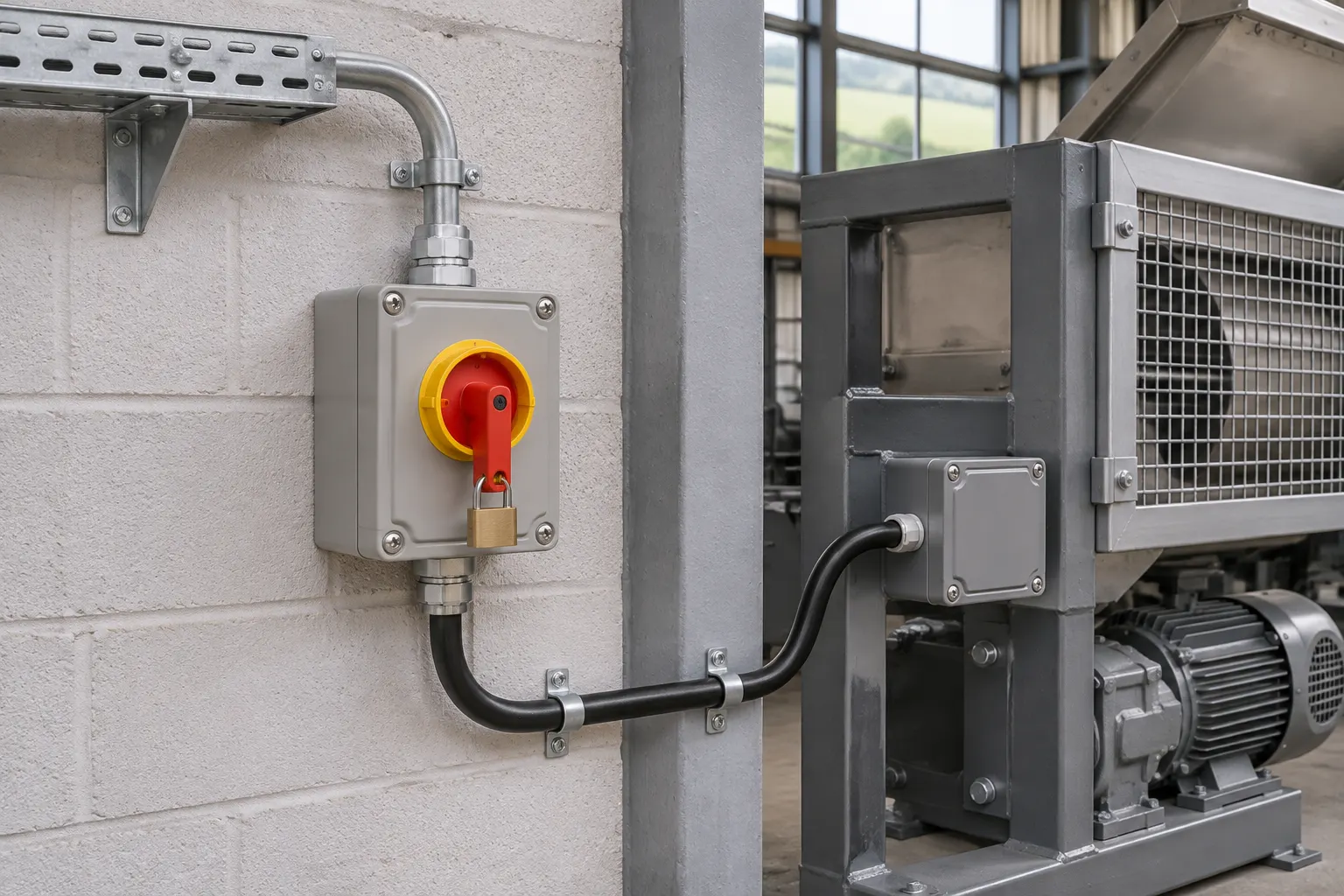
Three scopes need clear ownership: the receiving site’s electrical installation, the machine’s electrical system and its wider safety functions.
The receiving circuit may need inspection, testing or alteration to suit the relocated equipment. Treat plant and machinery electrical supplies as a distinct part of the work, rather than assuming the machinery installer has covered the building wiring.
On a multi-contractor move, ask each party to state where its work starts and ends. Establish who covers the connection between the building supply and the machine, and who assesses safety-related controls. Avoid leaving an interface unassessed because two contractors each assume it belongs to the other.
An electrical installation condition report (EICR) for the premises, a portable appliance testing (PAT) label or one generic test result does not prove that every machine safety function is satisfactory.
Regulation 4 of the Electricity at Work Regulations requires electrical systems to be constructed and maintained, so far as reasonably practicable, to prevent danger. That overarching duty does not make site-circuit testing and machine checks interchangeable.
Know when the scope must widen
A move may coincide with replacement controls, altered guarding or integration into a production line. That is no longer just a question of whether disconnected conductors have been reconnected correctly.
For example, incorporating a standalone machine into a linked line can change how safety-related controls interact with surrounding equipment. The assessment should address the changed arrangement, not merely confirm that the moved machine operates on its own. That may need specialist machinery-safety input.
Changes to design, function or safety need assessment. HSE says substantial modifications introducing significant new risks or replacing control methods can require a wider machinery-safety review. Ordinary reconnection does not automatically make the equipment a new machine.
Power presses and lifting equipment may have separate requirements. Identify these early so electrical work, mechanical checks and specialist machinery-safety assessment are coordinated rather than treated as one generic sign-off.
Agree the records and release decision before restart
Set out the scope and exclusions before booking the work. Reconnection, electrical inspection and machinery-safety assessment are different deliverables. Allow time for remedial work and further checks if defects are found, rather than making the planned production start depend on an assumed approval.
For industrial machinery recommissioning, the employer or site dutyholder should agree who assesses each scope, who reviews the results and who authorises return to use. The handover should bring those separate findings together.
Useful records should identify:
- The machine, location and extent of dismantling or alteration.
- Drawings and previous records used, with gaps or assumptions identified.
- The agreed inspection and test scope, including boundaries and exclusions.
- Results, defects, remedial work and any outstanding restrictions.
- Who completed each assessment and the basis for release.
Where a PUWER Regulation 6 inspection is required, its result must be recorded and kept until the next inspection. A single certificate cannot replace evidence covering the relevant supply, machine electrical system and safety functions.
If a safety-critical defect or an unresolved question about a safety function remains, keep the machine out of normal use until it is resolved through the agreed competent process.

Discuss the electrical scope before restart
For help with the site supply and electrical testing and compliance, call Maenporth Electrical Ltd on 01326 250297. Based at Maenporth, we serve Falmouth, Penryn and wider Cornwall.