
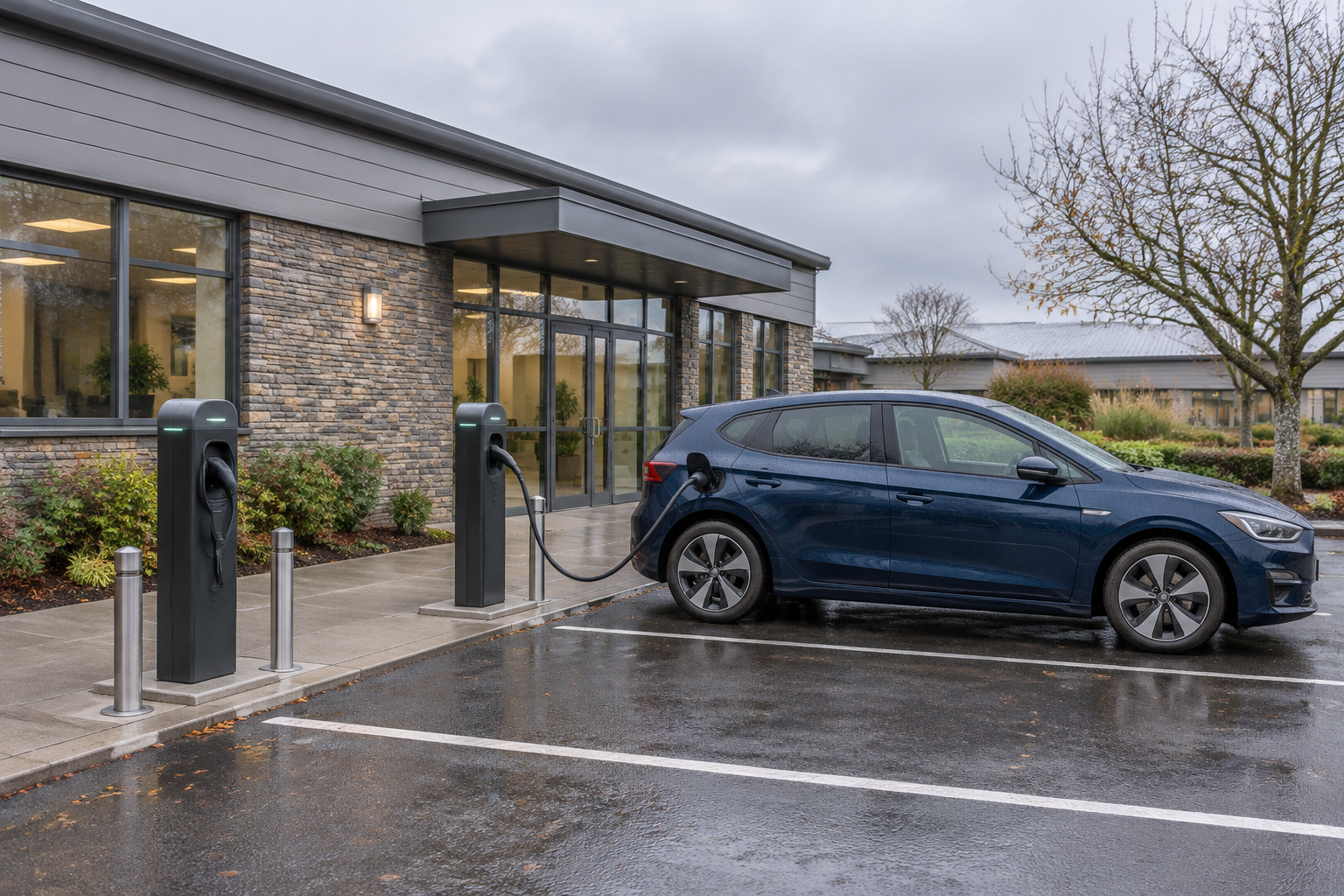
A lightly used charger, or one reserved for staff, is not automatically entitled to domestic electricity VAT treatment. Since 1 November 2026, HMRC has treated publicly accessible and workplace EV charging supplies as non-domestic for VAT and Climate Change Levy purposes.
For Cornwall workplaces, hotels and holiday parks, reviewing VAT on EV charging means more than changing a tariff. Establish who uses each charger, who makes the charging supply and who handles billing. This guide concerns charging electricity, not VAT on buying or installing the equipment. It summarises HMRC guidance at 13 November 2026; individual arrangements need tax advice.
What changed on 1 November 2026?
HMRC’s briefing on non-domestic EV charging confirms that the treatment applies to supplies made on or after 1 November 2026. Public and workplace charging supplies are standard-rated unless supplied to a charity for non-business purposes. The current standard VAT rate is 20%.
If you are using an older public-charging VAT explainer, check its date. The relevant rule here concerns supplies made from 1 November 2026, not simply when the charger was installed.
That is not a blanket instruction for every site host to add 20% to a customer tariff. The supplier, contract, VAT status and whether a taxable supply is being made all matter.
For example, a business may host chargers while a separate operator bills drivers. Hosting the equipment does not, by itself, identify who accounts for VAT on the charging supply. Establish the contractual roles before requesting a billing change.
These supplies are also non-domestic for Climate Change Levy (CCL) purposes. That does not establish the levy amount or the treatment of a particular bill. Ask the relevant provider or adviser which electricity supply their answer covers and how the classification is reflected in the billing arrangements.
Does low usage qualify for domestic relief?
No. The domestic-use small-supply or de minimis threshold does not apply to these EV charging supplies, regardless of quantity. Low consumption is not a basis for treating an in-scope charging supply as domestic.
This matters for seasonal visitor sites and small staff schemes: the number of charging sessions is not the test. A quiet winter period does not establish domestic use.
Which workplace and visitor chargepoints are in scope?
HMRC’s public-access definition includes the general public or a section of it, including customers of particular premises. A customer-only charger at a hotel or leisure venue can therefore fall within that definition, even on privately owned land.
Workplace charging includes staff use at factories, offices and larger rural sites. Record employee and contractor access clearly rather than assuming that restricted access makes the electricity domestic.
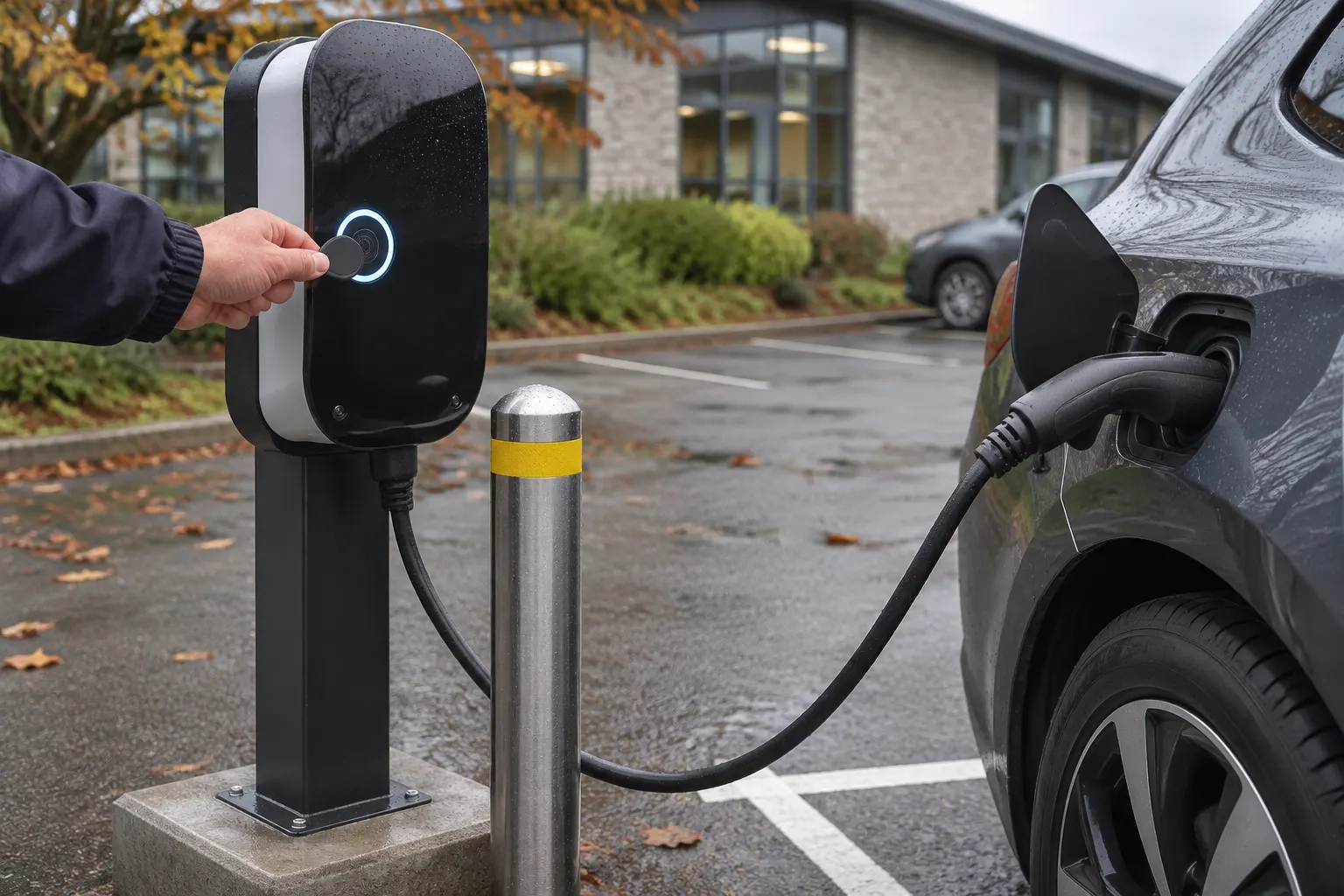
An app, key fob or permission from reception can control access without settling the VAT position. When discussing EV charging arrangements with an installer, describe the intended users as well as the number of bays.
At a mixed-use site, list the access rules for each chargepoint, not just the car park as a whole. Note whether use changes between employees, customers and private residents, including any seasonal changes.
Why the VAT test differs from public-chargepoint regulations
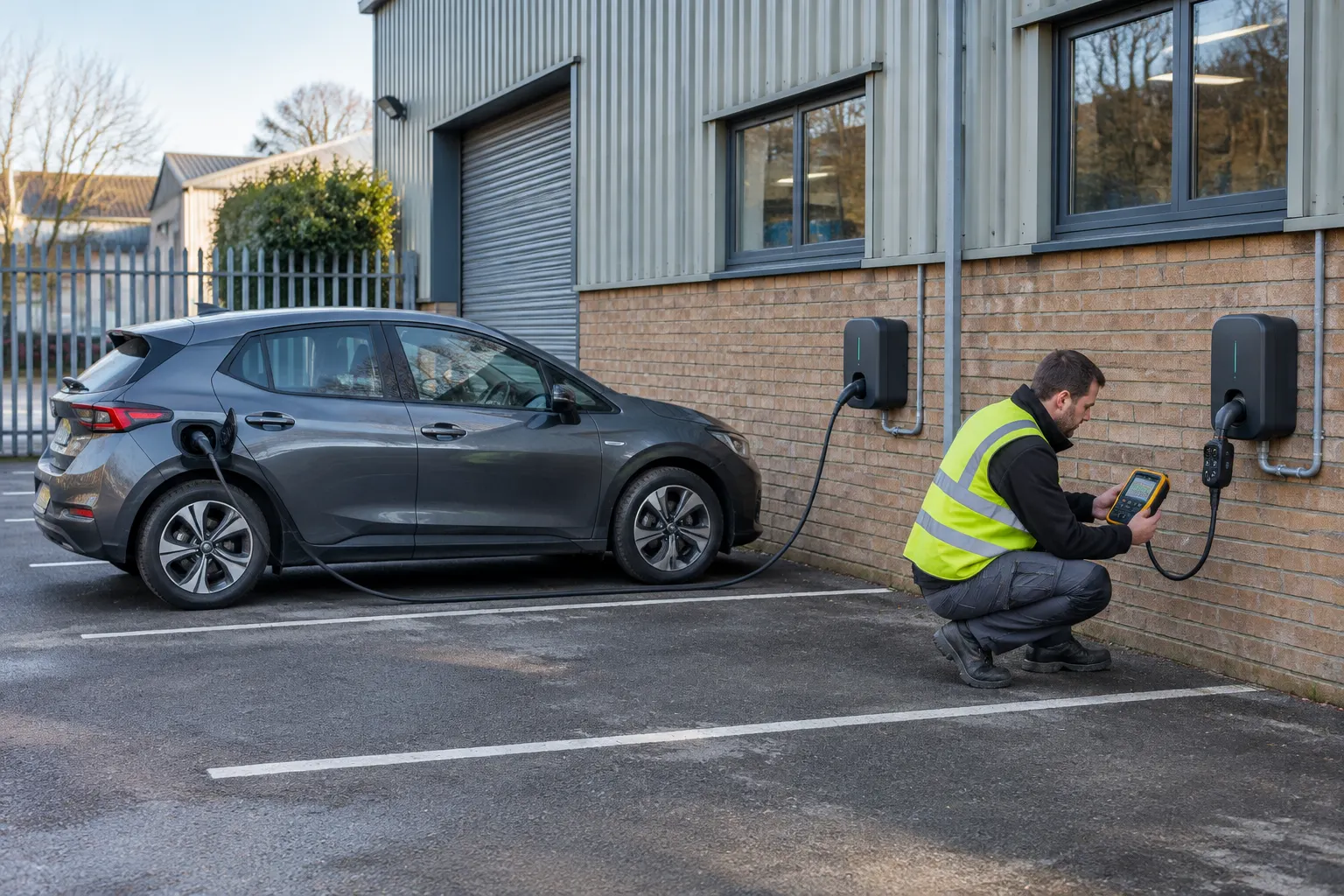
A workplace-only charger that is not available to the public can be outside the Public Charge Point Regulations 2023 while its electricity supply remains within HMRC’s workplace charging measure.
These are separate assessments. “Not a public chargepoint” is not a reason to assume domestic VAT treatment, and a VAT conclusion does not establish which public-chargepoint duties apply.
Keep the regulatory access assessment separate from the tax decision, so that changes in staff or visitor access can be reviewed against both.
What may still qualify as domestic use?
Electricity used for EV charging as part of a household supply may continue to qualify for domestic relief. A separate chargepoint restricted to private residential use may also qualify, depending on the arrangement.
At 13 November 2026, qualifying domestic electricity in Great Britain is temporarily zero-rated from 1 October 2026 to 30 June 2027. That temporary treatment does not extend domestic relief to public or workplace EV charging.
The charity exception is separate: HMRC specifies supplies to a charity for non-business purposes, not simply charging on charity-owned land.
Holiday parks and other mixed-use visitor sites
Staff, guests and permanent residents may have different access arrangements. Do not assume that overnight accommodation makes charging domestic, or label a shared charger domestic because it is beside a lodge or residential unit.
For VAT on EV charging at holiday parks and campsites, give your adviser the access and billing arrangements for each user group. Mixed guest, staff and residential use needs individual review.
A practical review for sites already charging staff or visitors
Before changing tariff settings, assemble a short factual pack for your accountant, chargepoint operator or energy supplier.
Make clear whether the query concerns charging electricity supplied to users or the site’s incoming energy supply. The energy supplier, charging operator and site host may not be the same party. A useful review covers:
- Actual access. Record who can use each charger, how access is controlled and whether the arrangement has changed. Include employees, contractors, customers and any private residents.
- Supplier and operator contracts. Identify who supplies charging to the user, who sets tariffs and who collects payment. Check the operator agreement rather than assuming the site host does all three.
- Responsibility for VAT. Obtain confirmation of who accounts for VAT on the charging supply, particularly where a separate operator is involved.
- Billing records. Have relevant invoices and charging records available so the adviser can check the treatment of supplies made on or after 1 November 2026. Include existing installation and metering information that explains which supply feeds each charging area.
- Separate or included charging. Explain if users pay separately, receive charging with another service or are not billed directly. Ask for the treatment to be confirmed rather than inferring it from the payment method.
- Tariff settings. Ask the party responsible for billing to check that displayed prices and invoices reflect the confirmed VAT treatment. Do not change a VAT setting on assumption alone.
- CCL treatment. Resolve the Climate Change Levy position separately with the relevant adviser or energy supplier; a VAT rate does not determine the levy.
Keep the confirmation with your charging records so a later operator or access change can be reviewed against the same facts.

Where electrical planning ends and tax advice begins
An electrical contractor can help document the installation, which supplies feed the chargers and how the site uses them. These facts support a tax review, but do not determine VAT or CCL treatment on their own.
Tax classification and accounting questions belong with your accountant and the relevant charging or energy provider. This guide does not cover input VAT recovery, VAT registration, employee benefits, CCL calculations or retrospective claims; raise those questions separately.
Maenporth Electrical Ltd serves Falmouth, Penryn and wider Cornwall. For help with EV charging or related commercial electrical work, call 01326 250297. We can discuss the electrical arrangements while your tax adviser confirms their treatment.