
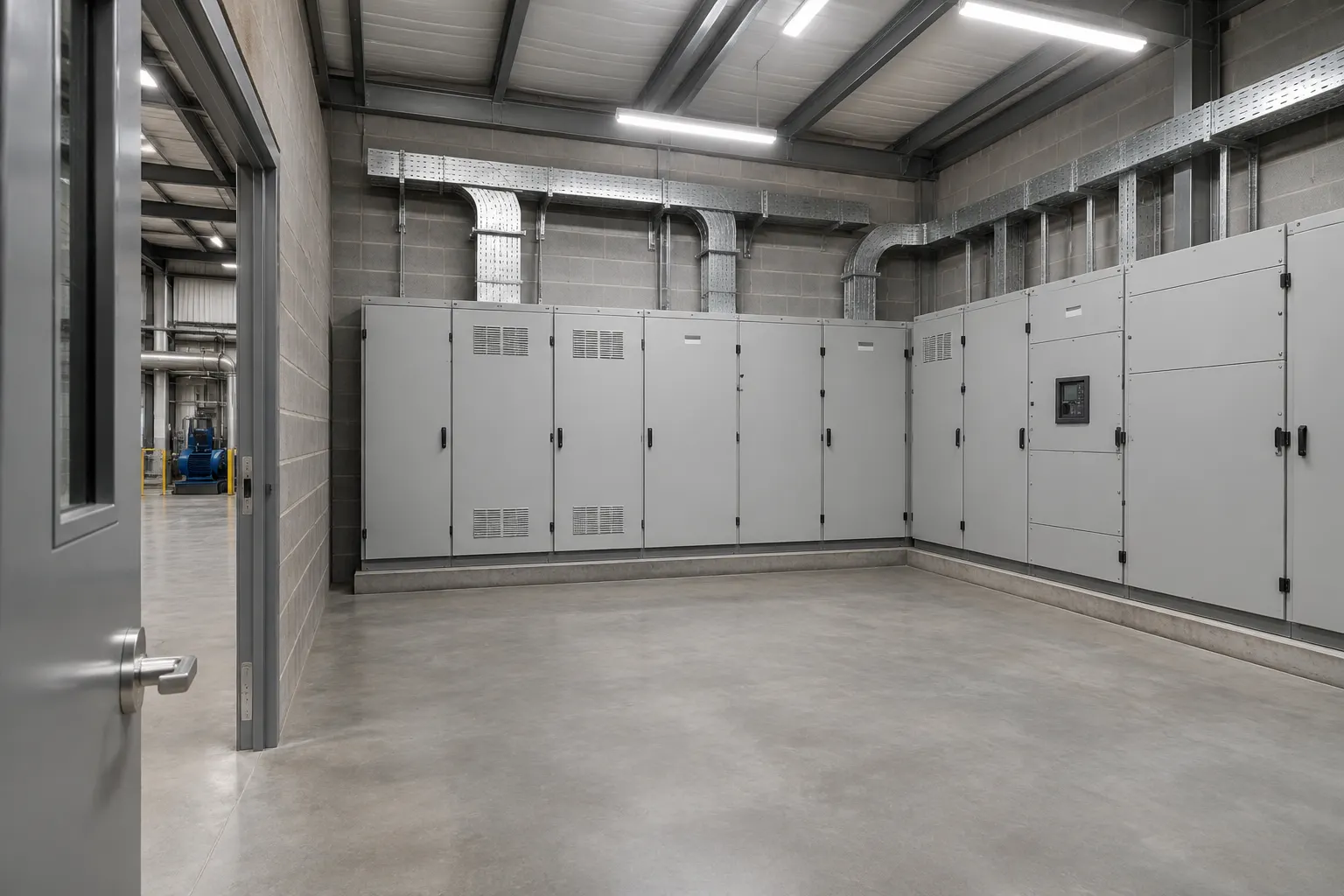
A commercial switchroom can gradually become an overflow store for packaging, tools or spare furniture. The problem often becomes obvious only when someone needs to inspect the equipment or reach a board quickly.
The practical starting point for commercial switchroom storage is simple: keep dedicated electrical rooms clear of general storage. However, an industrial high-voltage switchroom is not the same as a low-voltage distribution cupboard. The answer depends on the space, equipment and risks, rather than a blanket rule for every room containing a board.
Keep dedicated switchrooms clear of general storage
HSE’s Keeping electrical switchgear safe guidance, published in its second edition in 2015, is aimed at industrial and commercial owners or operators of high-voltage switchgear. Its routine-inspection advice includes checking that a substation or switchroom is clean, tidy and not being used for storage.
That supports a clear no-general-storage policy for those spaces. Access should be restricted according to risk; an unlocked door is not permission to enter. That high-voltage guidance is not a blanket legal ban on storage in every low-voltage cupboard.
A dedicated switchroom is not an ordinary electrical cupboard
Identify what the space actually is before deciding what to do:
- Dedicated switchroom or substation: a space provided for electrical equipment and its operation or maintenance, not an overflow stockroom.
- Low-voltage electrical cupboard: a cupboard containing distribution equipment, with its intended use and layout needing assessment.
- Board in a shared space: consider the surroundings and access needed for electrical work; the whole room is not automatically a switchroom.
A dedicated low-voltage switchroom should also be kept free of unrelated storage as a practical site-management policy. For an ordinary cupboard or shared room, assess the actual arrangement with competent electrical advice. Commercial electrical cupboard access still matters even where HSG230’s high-voltage scope does not apply.

How storage affects access, inspection and fire risk
Access and inspection
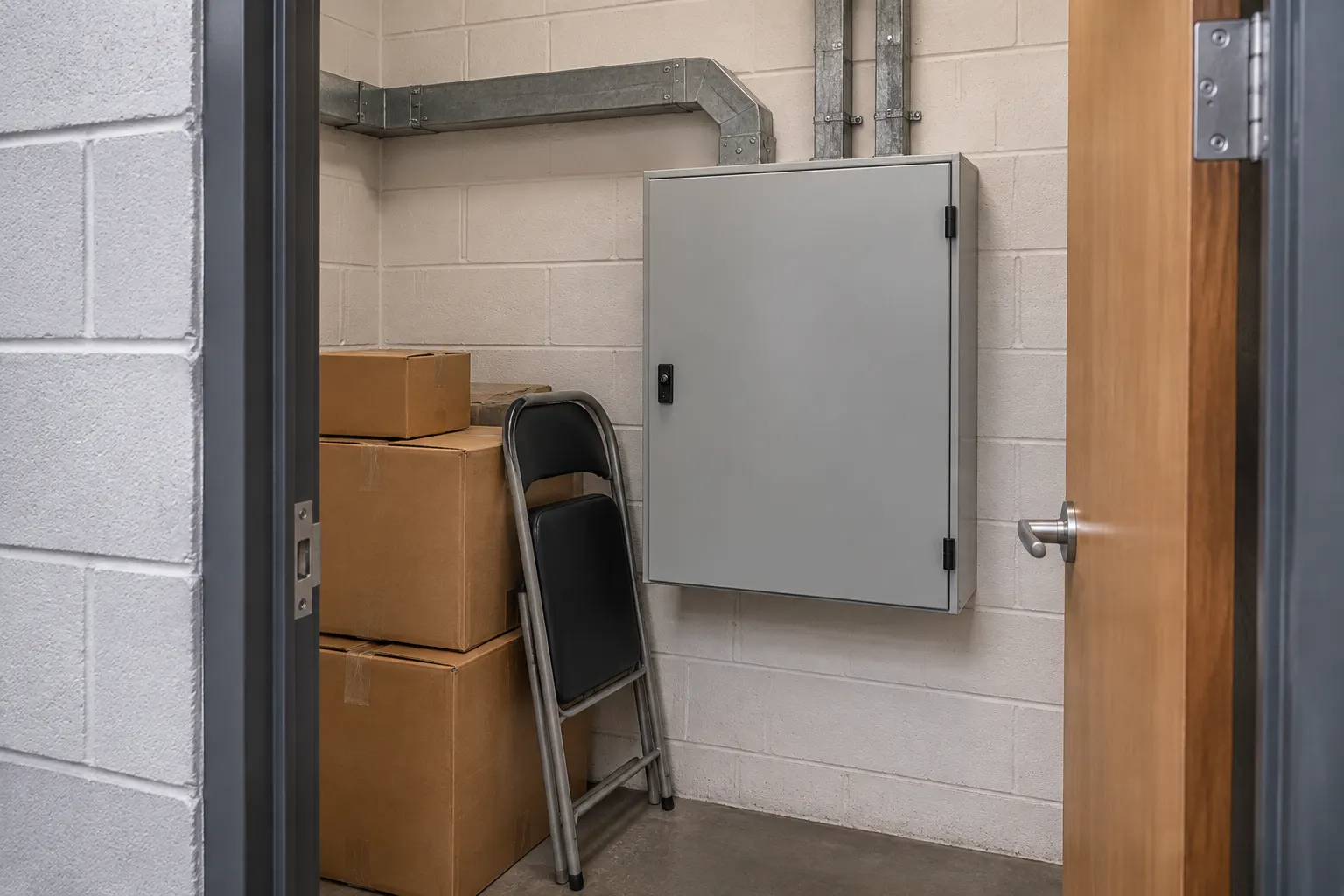
Boxes can obstruct doors, hide equipment or occupy the space an authorised person needs to inspect, operate or maintain a board. Even non-combustible items can make commercial switchboard access difficult. Clearing a narrow walking route is not necessarily enough for the work that may be required.
Combustible materials near electrical equipment
GOV.UK fire-risk guidance for offices and shops identifies combustible material too close to equipment that can become hot in normal use or under fault conditions as a potential fire cause. Cardboard, paper and spare furnishings therefore need attention. Their presence alone does not establish a breach; the arrangement needs consideration in the site’s fire-risk assessment.
What a site manager can check safely
Make observations only from places you are authorised to be. Do not enter a restricted switchroom unless authorised under the site’s procedures, and do not open equipment or remove covers for a housekeeping check.
- Approach and doorway: is the route clear, and can the door open without stock or furniture getting in the way?
- Working area: are stored items occupying space around the equipment or blocking access to it?
- Visibility and lighting: are boards hidden behind materials, or is failed lighting making access difficult?
- Condition: is water ingress, damage or another abnormal condition visible from your authorised position?
- Responsibility: is it clear who controls access and who receives reports about the room?
If danger is suspected, stop the check and follow the site’s escalation procedure. HSE advises that someone with the necessary knowledge and experience should investigate.
Does one clearance distance apply to every board?
No. Regulation 15 of the Electricity at Work Regulations 1989 requires adequate working space, means of access and lighting where work on or near electrical equipment may give rise to danger. It does not set a universal clearance measurement.
Switchroom working space and access must suit the equipment and the work involved. Ask the person responsible for the electrical assessment to confirm requirements for that location, rather than copying a dimension from another building. Figures in healthcare-specific guidance should not be treated as a general commercial rule.
Clear access also does not make electrical work safe by itself. For a separate look at planning work at the board, see our guide to arc flash risk assessment for commercial switchboard work.
What to do if the room is already used for storage
Start by telling the responsible site manager and stopping further storage being added. Establish whether it is a controlled electrical space and who is authorised to assess it. Do not send general staff into a restricted room to clear it.
Agree a safe removal plan with the responsible person. If items are touching equipment, obstructing access inside a controlled area or cannot be removed without approaching electrical equipment, seek competent advice before moving them. Resolve the obstruction without creating another risk.
Then provide a realistic alternative storage location. On holiday parks, leisure premises and larger rural sites, seasonal stock can otherwise drift straight back. Record who owns the housekeeping check and include the space in routine site checks. Any changes to access arrangements should preserve the controls needed for electrical safety.
Where a shared cupboard has been assessed as suitable for another use, record what is permitted and what must remain clear.
Housekeeping does not replace inspection or maintenance
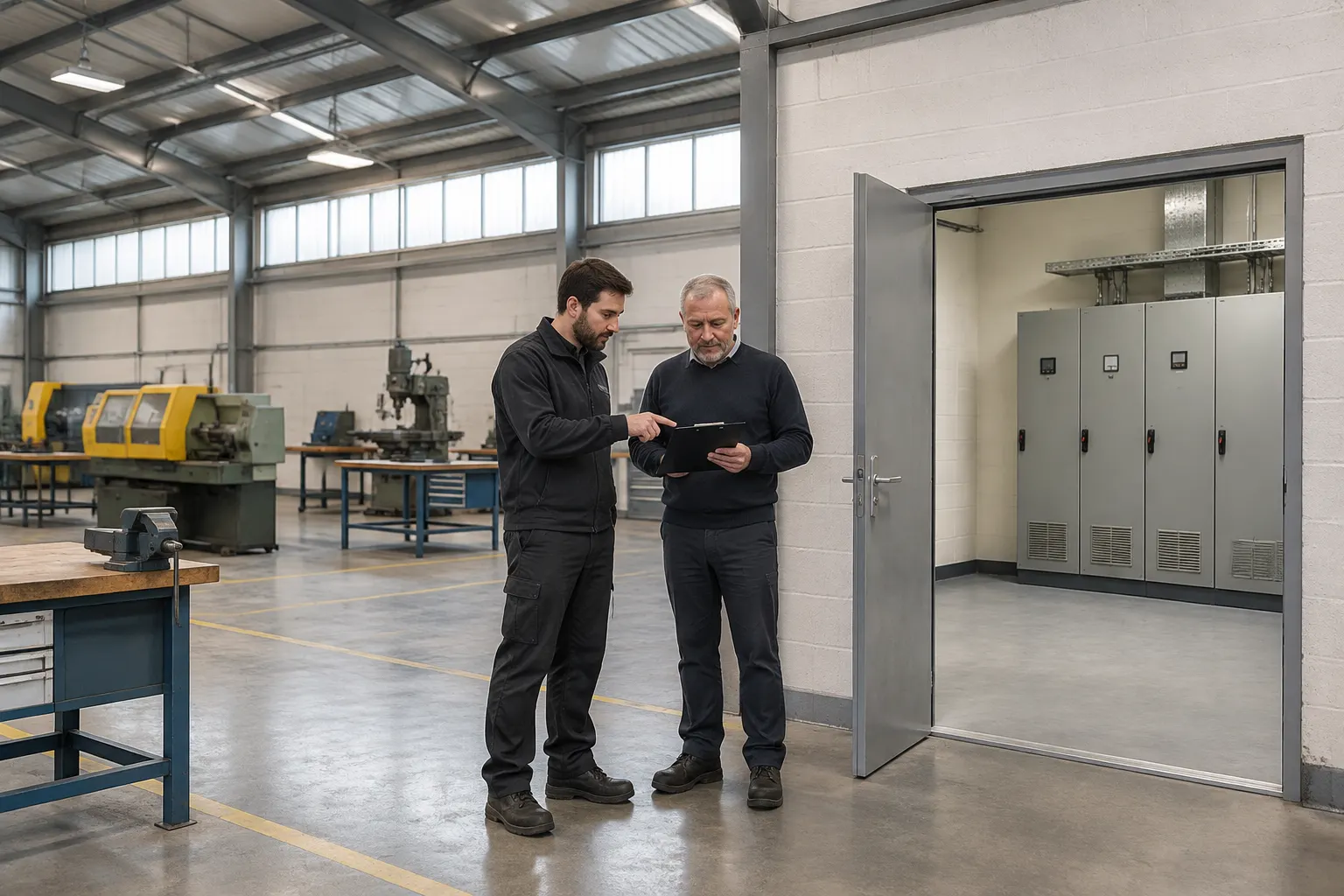
A tidy room says little about the electrical condition of the equipment inside it. Removing boxes does not establish that switchgear is safe or replace inspection and planned maintenance.
Use the review to confirm who is responsible for maintenance, whether reported defects remain open, and whether the site’s fire-risk assessment needs revisiting. Keep housekeeping actions and electrical follow-up as separate recorded tasks, so clearing the room is not mistaken for resolving a fault.
For help reviewing access around commercial electrical equipment or planning appropriate inspection and maintenance, speak to Maenporth Electrical about our commercial electrical services. We serve Falmouth, Penryn and wider Cornwall. Call 01326 250297 to discuss your site.