

LED lights tripping a circuit breaker as a whole bank switches on can look puzzling, especially when the fittings use less electricity than the lights they replaced. LED driver inrush current is one possible explanation, but a switch-on trip is not enough to diagnose it.
If lighting fails in a workshop, warehouse or holiday-park building, the priorities are safe conditions, a clear record of what happened and competent fault-finding. Do not repeatedly reset the device to see whether it will hold.
Start with the trip pattern and the device that operated
Record whether the trip happened immediately at switch-on, after the lights had been running, or when another load started. Note whether one group or several areas lost power. Separate the first event from anything that happened afterwards so the contractor has a clear sequence.
The protective device matters because different devices respond to different conditions:
- MCB: a miniature circuit-breaker provides overcurrent protection against conditions such as overload and short circuit.
- RCD: a residual current device detects an imbalance associated with some electrical faults. Residual-current protection alone is not overcurrent protection, and an RCD does not detect every fault.
- RCBO: combines residual-current and overcurrent protection. A trip does not, by itself, tell you which function operated.
Use existing circuit records or labels visible without removing covers. Report the actual label wording rather than describing every device as ‘the main breaker’. If you cannot identify the device safely, leave that to the electrician.
How LED driver inrush affects grouped lighting
An LED driver can briefly draw more current at energisation than during normal running. This transient demand is inrush current. When many fittings switch on together, their combined starting demand can be significant even though the steady load is modest.
BEAMA’s March 2021 guide to circuit-breaker selection for LED lighting explains that both peak current and pulse duration matter, and that inrush characteristics vary between driver manufacturers. It is technical guidance, not legislation; selection still needs relevant manufacturer data and applicable installation requirements.
A timer, contactor or occupancy control may bring a whole group on together. Record what normally triggers the lights, but do not alter the controls to reproduce the trip.
Note whether the event followed an ordinary daily switch-on or restoration of supply after an interruption. That context helps the contractor understand which loads may have energised together.
Why running wattage is not enough
A low total lighting wattage describes normal operation, not the brief demand at energisation. That is why nuisance tripping after an LED upgrade needs investigation rather than an assumption that the existing protection must be faulty.
There is no universal maximum number of LED fittings per circuit. MCB and RCBO compatibility for LED lighting depends on the actual drivers, protective-device model, switching arrangement and installation conditions. BEAMA also warns against applying one protective-device manufacturer’s selection guidance to another manufacturer’s devices.

Keep other possible causes in view
An immediate trip may be consistent with inrush, but it can also occur with an electrical fault. A delayed trip, wet-weather pattern or problem affecting only one lighting group is useful evidence, not a diagnosis.
Possible causes include damaged fittings or cables, a failed driver, overload, moisture-related faults, residual-current operation or a switching or control fault. Losing sockets or other equipment as well as lights may indicate shared protection has operated; it does not prove the lights caused it.
If residual-current protection operated, the electrician needs to investigate that function rather than assume a high switch-on current explains everything. Calling the problem ‘nuisance tripping’ should never imply that the circuit is safe.
What site staff can record safely
Collect information available from normal use, maintenance records and external labels. Do not deliberately recreate the fault.
- When it happened, whether the lights were previously off or already running, and what switched them on.
- Which lighting groups and other equipment lost supply.
- Whether this is the first occurrence or an intermittent problem, using existing incident records.
- Any recent LED replacements, control changes, building work or reported damage.
- Fitting and driver details from invoices, schedules or handover documents, rather than by opening a luminaire.
- Any observed link with rain, damp conditions or other equipment starting.
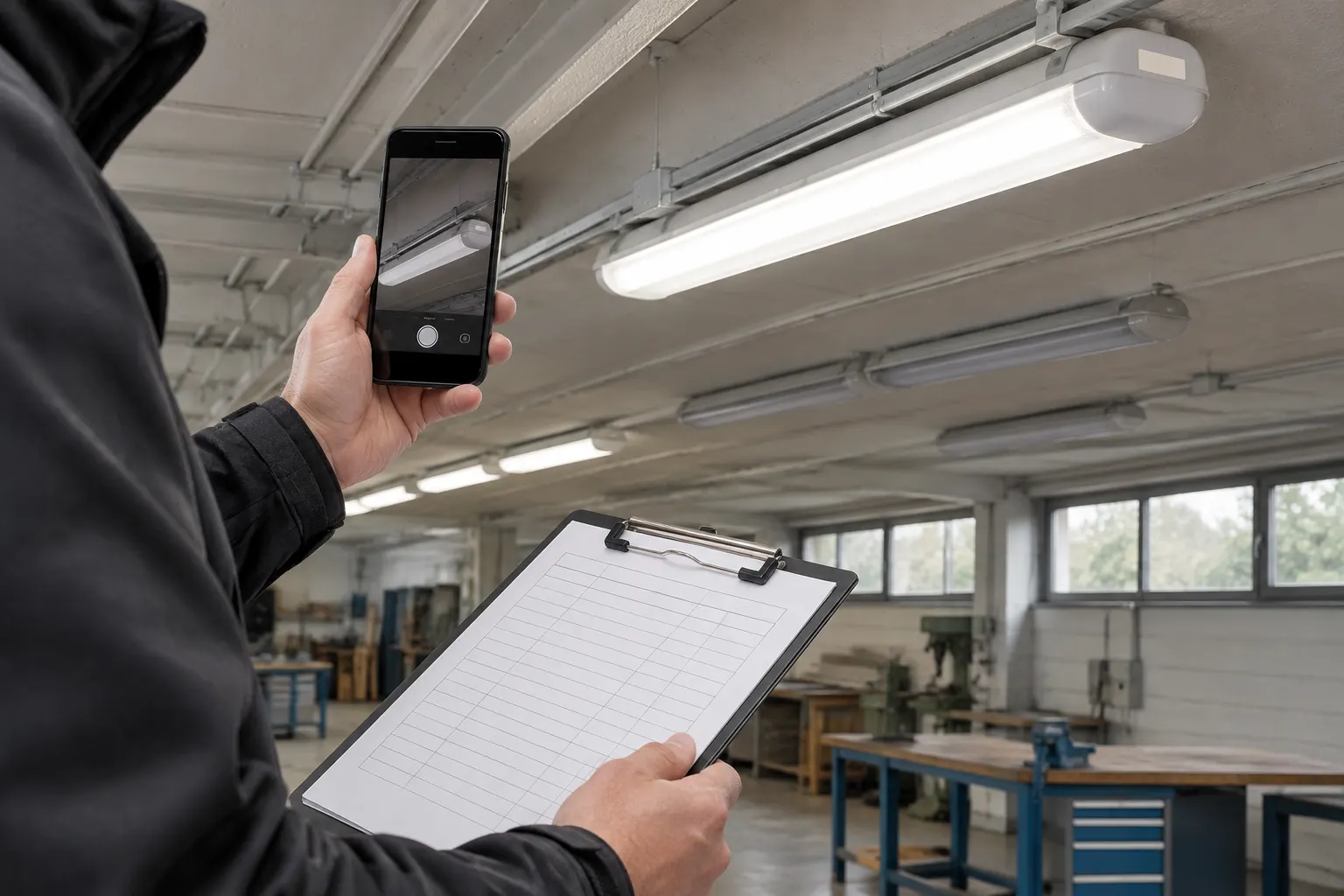
- Photos of accessible external labels and the affected area, taken from a safe position.
Keep covers closed; do not access high-level fittings or attempt electrical measurements. If there is smoke, a burning smell, visible damage or suspected water ingress, follow the site’s electrical emergency arrangements and keep people clear. Collecting fault information must not take priority over immediate safety.
An incomplete checklist is not a reason to delay reporting a fault or put someone at risk collecting information. Tell the contractor which details are unknown so safe access and any necessary shutdown can be planned.
What an electrician should verify before changing protection
A focused electrical fault finding visit should start by confirming the device involved and investigating the cause, not by choosing a different breaker.
Checks should cover circuit condition, connected loads, driver details, how many fittings energise together, the switching arrangement and relevant manufacturer compatibility data. Circuit-breakers are selected primarily to protect wiring and provide fault protection, not simply to tolerate switching. A proposed change must retain the protection required by that installation; stopping the trip is not, by itself, proof of a safe solution.
Possible remedies depend on the findings. They may involve repairing faulty equipment or revising lighting grouping and controls, rather than changing protection. These are installation decisions for a competent contractor.
Ask how the remedy will be verified under the site’s normal switching arrangement, not just with one fitting connected. Keep the cause found, supporting information, final equipment details and any remaining limitations with maintenance records, so later replacements can be assessed against the same evidence. An intermittent problem is not explained merely because the lights stayed on during a visit.
Agree any shutdown and safe access requirements beforehand so the checks can be carried out without pressure to restore an unverified circuit.
Do not fit a higher-rated device, change its trip characteristic or bypass an RCD to keep the lights on. HSE stresses correctly rated protection and competent work on fixed installations.
Manage the work area while normal lighting is unavailable
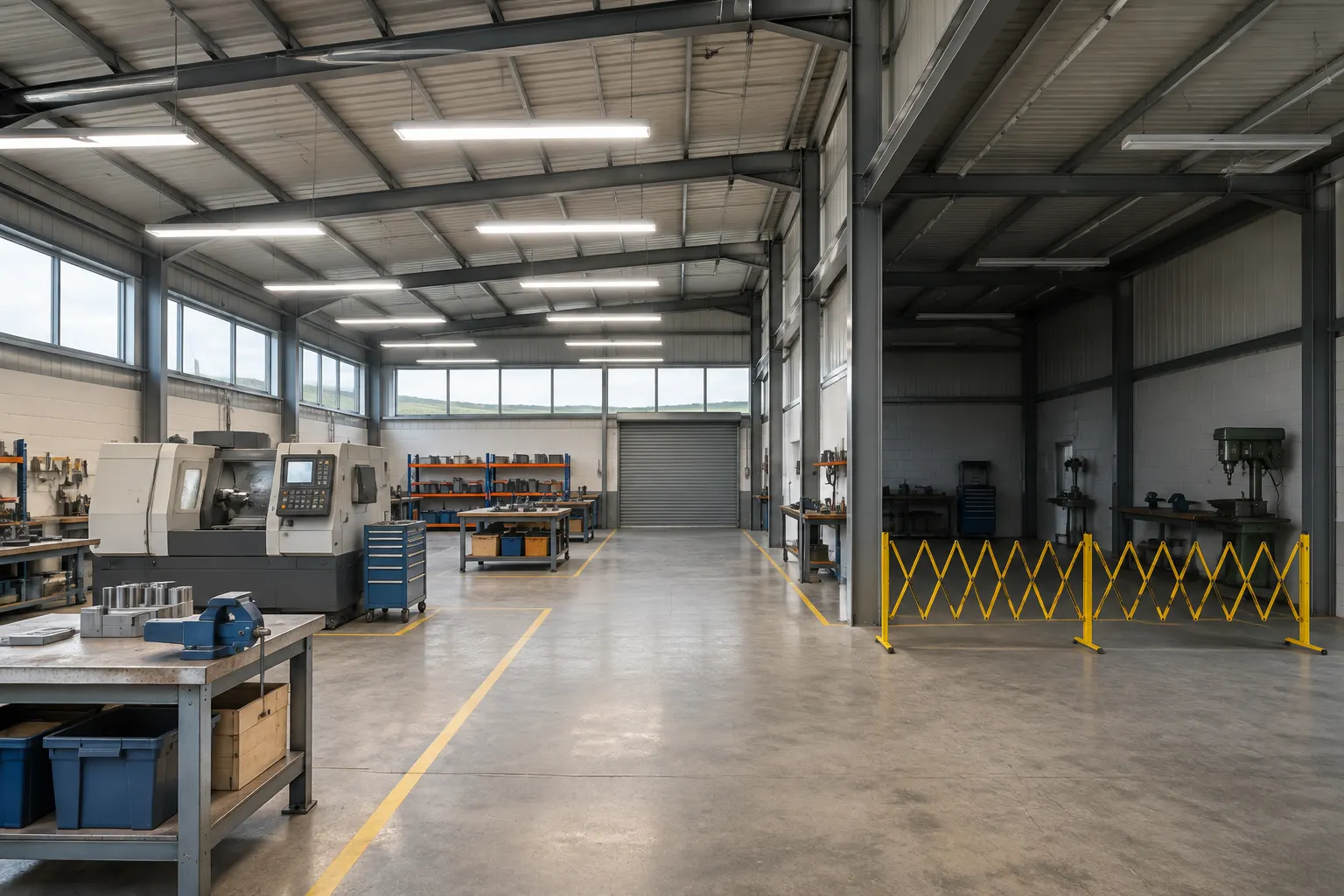
A shared RCD trip can remove lighting alongside other equipment, creating risks around steps, moving machinery and traffic routes. Do not assume that emergency lighting makes normal work safe.
Apply the site’s risk assessment: stop affected tasks or restrict access where adequate lighting cannot be maintained. Any temporary lighting needs to suit the conditions without introducing trailing-cable or other hazards. Plan investigation and restoration around safe isolation and activities that must remain stopped.
For holiday parks or leisure premises, think beyond staff who know the building: visitors may be unfamiliar with steps and routes. In workshops, consider visibility around machinery before authorising activities to continue.
Arrange a lighting fault investigation
For commercial lighting fault finding in Cornwall, call Maenporth Electrical Ltd on 01326 250297. Based at Maenporth, we serve Falmouth, Penryn and the wider county. Tell us which areas lost lighting and what happened at switch-on.