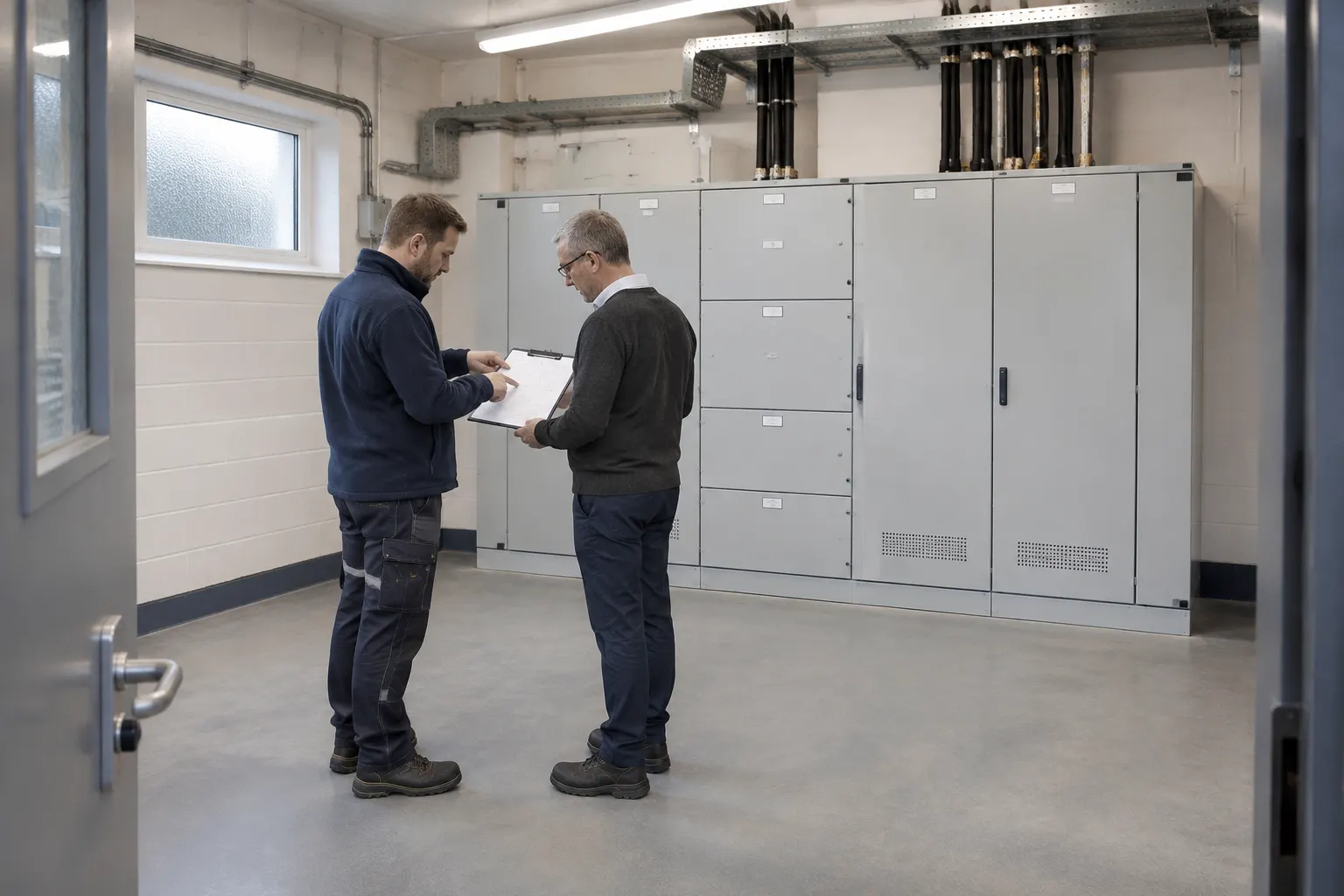
An arc flash risk assessment should examine a particular task on a particular electrical system. Routine operation of a closed switchboard is a different question from testing that exposes live conductors. Neither the supply voltage nor an inspection report on its own settles the risk.
For a site manager, the useful questions are which task is proposed, what has changed and what evidence supports the controls. That is a different exercise from simply arranging routine switchboard maintenance.
Why low-voltage switchboards can present an arc-flash hazard
An arc flash occurs when electrical current arcs across a gap, releasing intense heat and light. HSE guidance identifies serious burns and eye injury from electrical arcing; arcing and overheating can also lead to fire or explosion.
Arc flash hazards at work are not confined to high-voltage equipment. Fault level, protection, equipment condition and the task being performed all matter. A closed or tidy enclosure is not evidence that every switching task is safe.
A review needs to consider both the chance of an arc occurring during the task and the consequences for anyone exposed.
UK duties require a site-specific assessment
The Electricity at Work Regulations 1989 set duties on preventing electrical danger, maintenance, work near live conductors and competence. The Management of Health and Safety at Work Regulations 1999 require employers to make a suitable and sufficient risk assessment.
Those duties do not automatically require every commercial board to have a separate quantitative arc-flash study, a particular arc-flash label or a prescribed PPE category.
The IET’s UK guidance on arc-flash hazards explains why US practices should not simply be treated as UK legal requirements. The assessment and controls must fit the site, equipment and work.
A useful review sets out which boards, tasks and operating conditions it covers, what has been verified and which uncertainties remain. An assessment for one activity is not blanket permission for another.
When tasks and system changes should prompt a review
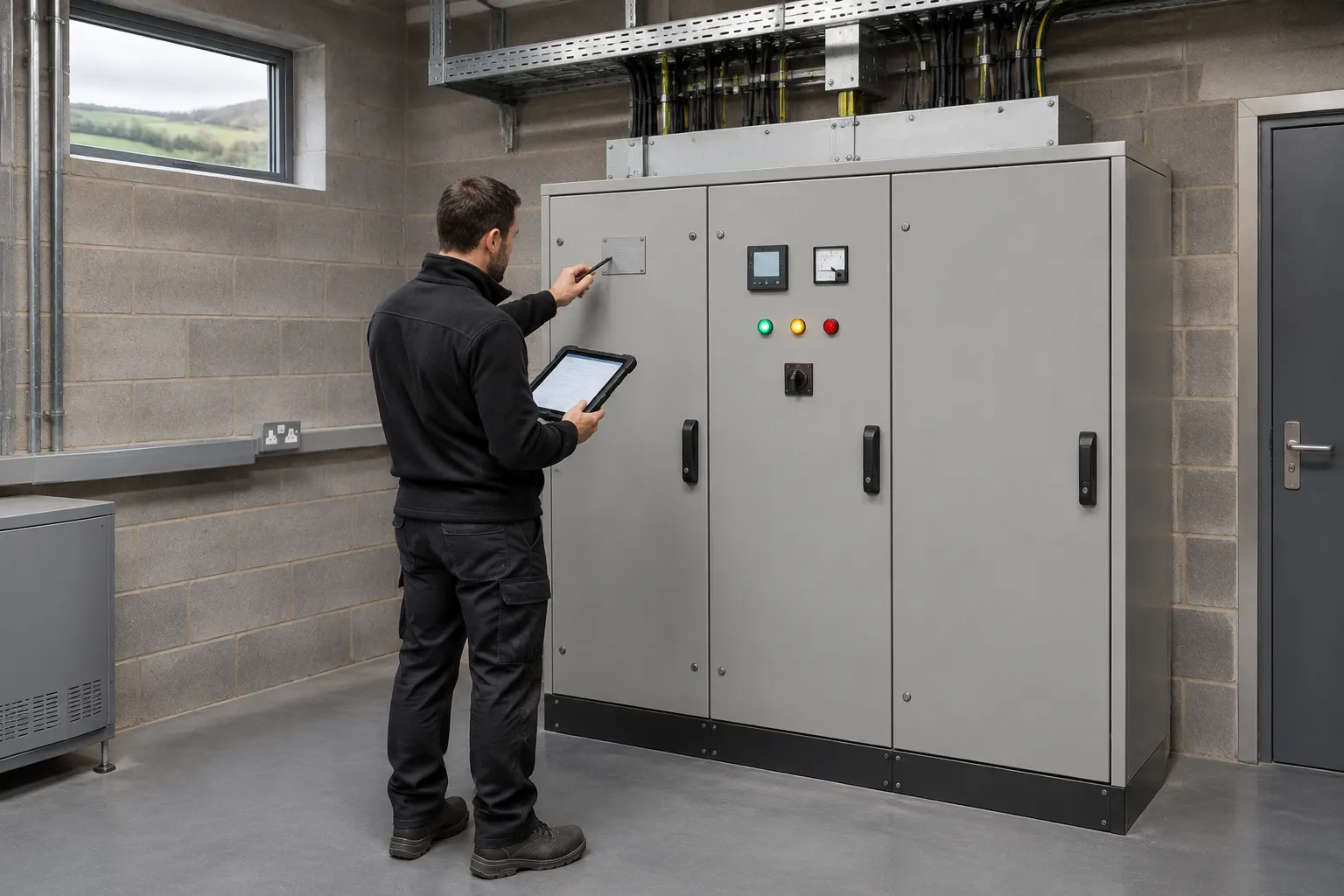
Review the assessment if there is a significant relevant change or reason to suspect it is no longer valid. There is no universal arc-flash review interval for every site. Raise planned changes before work starts. Useful prompts include:
- Changes to supply or protection arrangements, including alternative supply configurations.
- Testing involving live parts, work near exposed conductors, or circuit-breaker insertion or removal.
- Switching older or poorly maintained equipment.
- Reported damage, overheating, contamination or a fault that calls existing assumptions into question.
A holiday park changing its standby arrangements, for example, should not assume the old assessment covers every new operating state.
These are prompts for competent review, not automatic proof that a full incident-energy study is required. Suspected equipment defects also need attention; a study is not a repair.
What an arc flash risk assessment needs to consider
The electrical system
The reviewer considers voltage, available fault level, how the protection operates, equipment design and condition, and relevant supply configurations. How quickly protection clears a fault can affect exposure. Missing diagrams or uncertain protection information are limitations to address, not reasons to assume the risk is low.
The task and people
Switching with compartments closed is not the same task as testing near exposed live parts. The assessment considers what could initiate an arc, who could be exposed, working arrangements and whether the task can be completed with the equipment dead.
The work description should be specific. A request to attend a switchboard says little about whether the visit is a closed-door visual review, routine switching, fault investigation or testing. Each puts different demands on the assessment and safe system of work.
An electrical installation condition report (EICR), an asset register and records from planned electrical maintenance can inform this review. None automatically amounts to an assessment of arc-flash exposure during a particular task.
Controls start with dead working and safe isolation
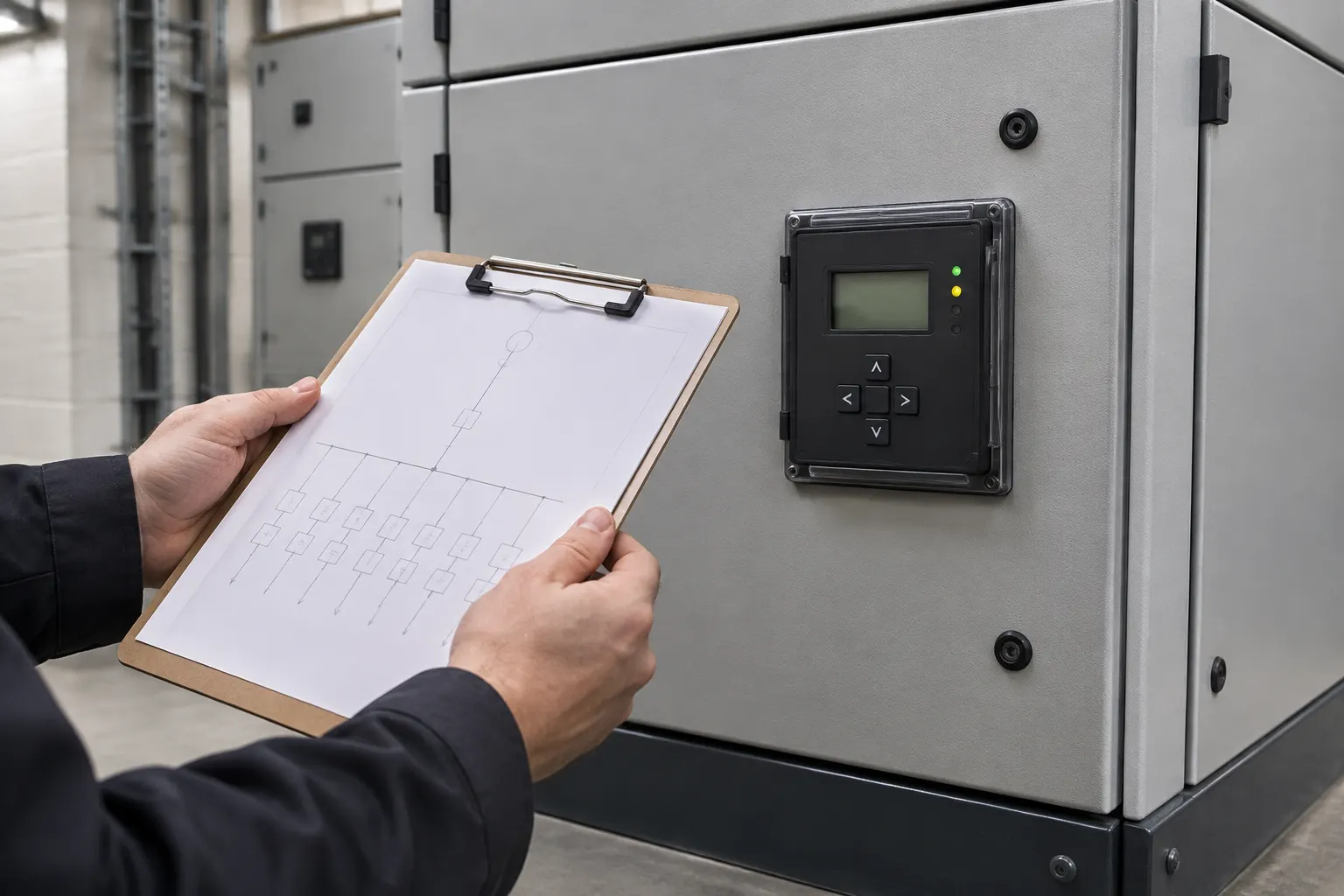
The starting point for safe working around commercial switchboards is work on equipment made dead and suitably isolated. Live work is subject to strict legal conditions; avoiding business disruption alone does not justify it.
All relevant supplies must be considered, not just the normal mains connection. Establishing and verifying safe isolation is work for competent electrical personnel. Agreeing a shutdown window early, especially on an occupied holiday park or leisure site, can reduce last-minute pressure to keep equipment live.
If the proposed method appears to require live work, ask first whether the task, design or operating method can change. Any remaining live-work proposal still needs competent assessment against the legal conditions and suitable precautions.
Live switchgear safety also involves equipment condition, suitable design and protection measures, access arrangements, procedures and competence. PPE addresses residual risk; it cannot replace prevention or make unjustified live work acceptable.
When a specialist incident-energy study can help
A task-based assessment asks what could go wrong and how exposure will be prevented. A specialist arc-flash incident-energy study uses system and protection data to estimate potential thermal exposure under stated conditions.
An incident-energy calculation does not, by itself, establish the likelihood of an arc during a task. It complements the wider review of condition, work and controls. The result does not itself justify live work.
Such analysis may help where system complexity, different operating configurations or potential consequences call for a more detailed evaluation to select controls. Whether it is needed is a site-specific judgement for a suitably competent reviewer, not something decided by board size or voltage alone.
Ask which equipment and operating states are included, which inputs are verified or assumed, and how limitations affect the recommendations. Confirm who will carry out the analysis and their relevant competence. Its findings apply to the configurations modelled; later supply or protection changes may require the conclusions to be revisited.

A practical brief for the reviewer
Gather the information the site already holds. A useful initial pack includes:
- Existing single-line diagrams showing supplies and main distribution.
- Switchboard identification, location and available manufacturer documents.
- Fault-level information and recorded protection details or settings.
- Inspection, maintenance and fault histories, including outstanding defects.
- Normal and alternative supply arrangements, including known interconnections.
- The proposed tasks, who will carry them out and realistic shutdown opportunities.
Do not open switchgear, take live readings or alter settings to fill gaps. Tell the reviewer what is missing or uncertain so that verification and any further investigation can be properly scoped.
Explain what must remain operational and which shutdowns are possible. This helps distinguish the risk review from any additional survey work or specialist analysis needed.
After the review, ask for an action plan separating any restrictions, missing information, remedial work and specialist analysis. Agree who will address each item and what needs resolving before the proposed task can proceed.
For help planning commercial electrical work around your switchboards, speak to Maenporth Electrical Ltd on 01326 250297. Our commercial electrical services cover Falmouth, Penryn and wider Cornwall. Describe the proposed task, any known defects and recent supply changes when you get in touch.