

Variable speed drive harmonics can affect equipment beyond the motor a drive controls. If another machine starts tripping after a drive upgrade, it is reasonable to investigate the shared supply, but that sequence does not prove harmonics caused the fault.
For a factory manager, the useful question is whether distortion is significant, where it comes from and whether it explains the symptoms. An industrial power quality assessment should establish that before anyone specifies filters or changes equipment.
How a drive can affect the wider factory supply
A variable-speed drive (VSD) is an electronic converter that controls motor speed and torque. Its input electronics can draw current in a distorted waveform rather than a smooth sine wave. Components at multiples of the supply frequency are known as harmonics.
Harmonic currents interacting with the impedance of the supply network, transformers and cables can distort the voltage seen by other equipment. This is a supply-side issue, not simply a problem confined to the drive's motor output.
The effect depends on drive design, operating load and supply characteristics. A drive can function normally while contributing harmonic current; its presence alone does not establish a harmful problem.
The same drive arrangement can have a different effect on a different supply. Drive rating alone is therefore not enough to judge the impact on neighbouring loads. That shared electrical path is why an investigation may extend to industrial distribution systems, not just the machine reporting a fault.
Warning signs are clues, not a diagnosis
Possible clues include unexpected heating of transformers, cables or capacitors, nuisance trips, flickering lighting, false instrument readings or erratic sensitive equipment.
These symptoms overlap with other factory power quality problems. Voltage dips, supply imbalance, transients and drive-specific faults need consideration too. Overheating or repeated trips require prompt attention under the site's safety procedures, whatever the suspected cause.
Timing helps build the evidence. Note whether the problem coincides with particular machines or combinations of loads, and whether other equipment is affected at the same time. A fault confined to one machine presents a different starting point from several unrelated loads behaving erratically together.
Recurring unexplained faults, symptoms across several loads or a clear change after plant alterations are reasons to broaden the investigation, not reasons to order harmonic filters.

How an assessment separates harmonics from other faults
A competent engineer should compare the fault history with production activity and distinguish a drive-specific fault from a disturbance affecting the wider supply. Monitoring needs to capture relevant operating conditions, not only a quiet period when most plant is off.
Both current and voltage distortion matter. A current-distortion percentage on one drive feeder does not, by itself, show what voltage disturbance reaches another machine or establish the source of a fault.
A short spot reading may miss an intermittent event, while a general distortion figure does not establish whether a trip coincided with a voltage dip. The monitoring approach should be selected for the reported problem.
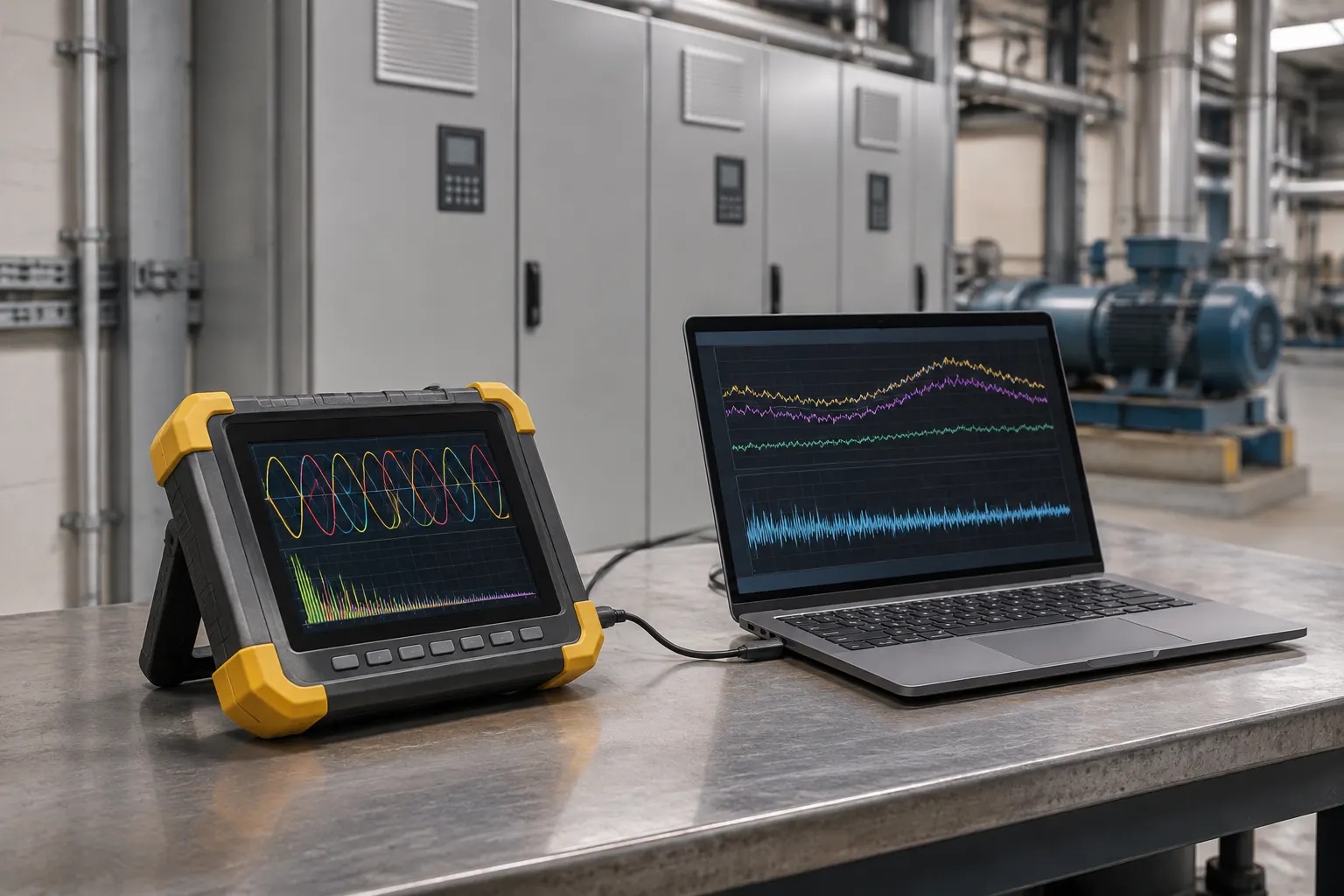
Harmonic monitoring for industrial sites should also consider background supply conditions and other non-linear loads. All instrument installation, measurement and panel access must be undertaken by competent electrical personnel.
What a useful factory power quality assessment should cover
Drive data and operating patterns
Record drive models, ratings and available manufacturer harmonic data, together with the machines they serve. The assessor needs to understand which drives run together, how loading changes and what changed before faults appeared.
Manufacturer data helps define expected behaviour, but it should be matched to the actual drive configuration and supply conditions. A catalogue figure is not a measurement of the whole factory.
Measurement points and system context
The measurement plan should relate to the question being investigated. It may need to compare the incoming supply, relevant feeders and affected equipment, rather than relying on a convenient reading at a single board.
Assessing VSD harmonic distortion also means reviewing current and voltage results in context, including individual harmonic components as well as overall distortion. Available drawings, protection arrangements, transformers and existing power-factor-correction capacitor banks all help explain the system.
A useful report should state what was monitored, which operating conditions were captured, what remains uncertain and why any further work is recommended. It should distinguish confirmed findings from hypotheses and identify whether the next step is an equipment-level check, broader monitoring or a network discussion.
When the DNO connection process may matter
A proposed drive installation or significant change to existing plant may need a network harmonic assessment. This depends on the equipment and connection circumstances; it is not a rule that every VSD needs distribution network operator (DNO) approval.
ENA Engineering Recommendation G5 Issue 5 describes a staged process for assessing relevant harmonic or resonant equipment connections. Its purpose is to manage distortion that could affect other users of the public network as well as the site making the connection.
The network operator considers impact at the relevant point of common coupling on the public network, not automatically at every internal factory board. G5 planning levels are therefore not a universal pass/fail test for every measurement inside a site.
G5 states that its harmonic limits are not governed by statute; the connection agreement provides the enforcement framework.
If new drives or other changes raise connection questions, clarify the DNO's requirements before equipment selection is finalised. An internal fault investigation and a network connection assessment answer different questions.
Why mitigation should follow the evidence
Possible measures include a different drive design or selection, changes to the electrical system and appropriately designed filtering. None is an automatic answer to an unexplained trip.
Existing power-factor-correction capacitors need particular attention because their interaction with the supply system can produce resonance and amplify particular harmonics. Unassessed capacitor or filter changes can therefore be the wrong response.
Managing variable speed drive harmonics starts with site measurements, manufacturer information and engineering review. A proposal should explain which measured issue the change addresses and how success will be checked, rather than promising to remove every power-quality problem.
After changes, retesting should cover representative operation and check both distortion and the original symptoms. A better reading at one location is not, on its own, confirmation that the operational problem has been resolved.

What factory managers can prepare before a review
Gather existing records rather than attempting electrical tests:
- Dates, times and alarm or trip records for each incident.
- What was operating, including simultaneous loads and production schedules.
- Recent drive replacements, additions or changes to other electrical plant.
- Available drive manuals, equipment schedules and single-line drawings.
- Previous inspection, monitoring and maintenance reports, including capacitor-bank information.
Leave enclosure access and instrument connection to competent personnel. Agree any access restrictions and production constraints before a visit.
Agree at the outset whether you are commissioning fault diagnosis, a review of a proposed drive addition or a network connection study. Make clear what findings and recommendations you need, and which tasks require specialist input.
Maenporth Electrical Ltd provides industrial electrical services across Falmouth, Penryn and wider Cornwall. Call 01326 250297 to discuss the symptoms and appropriate next steps, including whether specialist assessment is needed.