
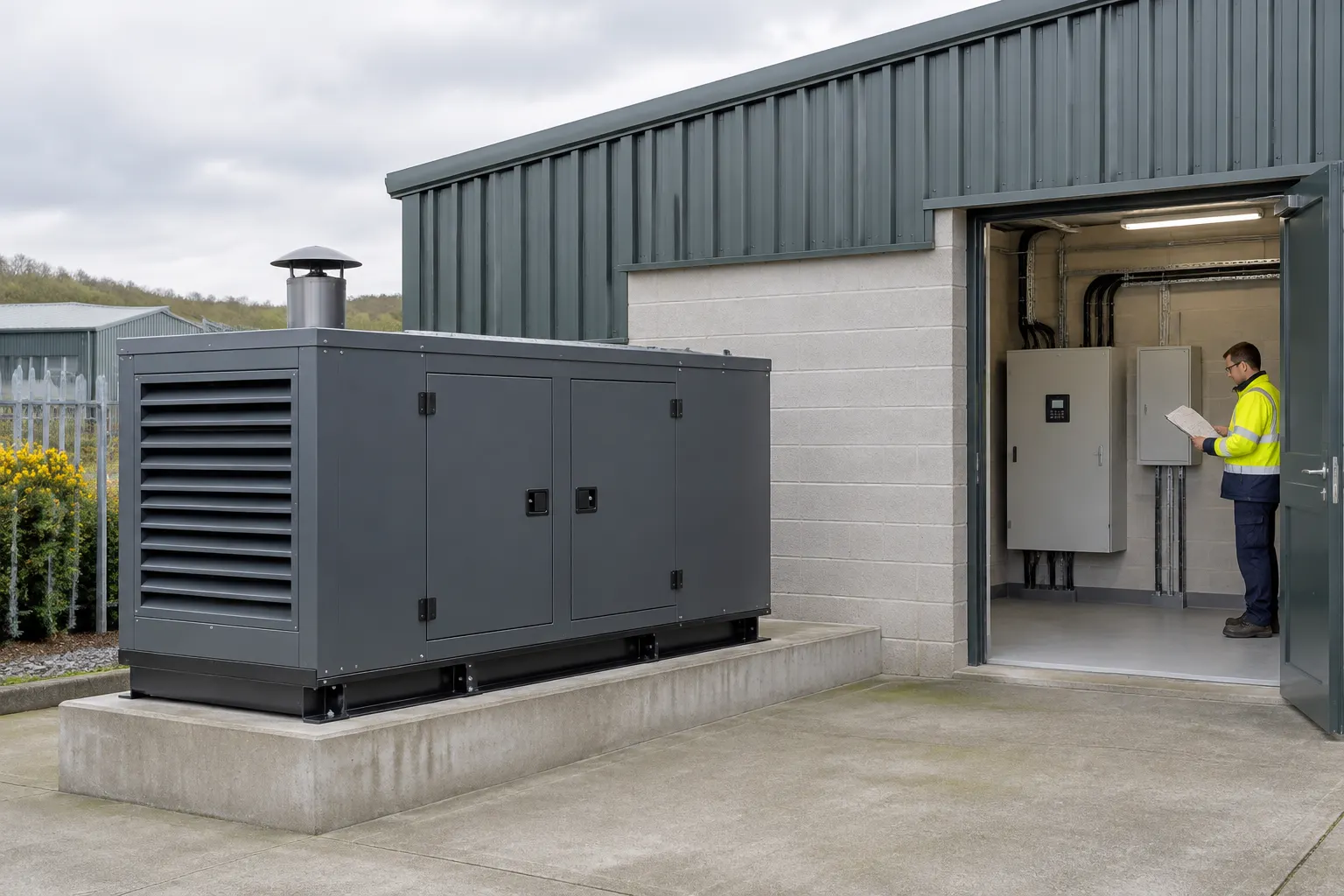
Commercial standby generator testing should answer a practical question: if the normal supply fails, will power reach the equipment your site relies on? A generator starting successfully is useful evidence, but it is not the same as proving the changeover and distribution path.
For a factory, quarry, holiday park or larger rural site in Cornwall, the distinction matters. The test brief should identify which loads must remain available, how interruptions affect operations and what the proposed test will actually demonstrate.
What each type of standby generator test demonstrates
HSE's guidance on the reliability of utilities says a generator-only test is insufficient if auto-start and distribution switchgear are untested. That guidance addresses COMAH/high-hazard sites, not a blanket schedule for every business. Its distinction is useful when defining what an ordinary commercial test does and does not cover.
Engine exercise
An exercise can show that the generator starts and runs under the conditions used. If it is started locally, that does not prove automatic starting. An unloaded run also leaves unanswered how the generator will perform at the load the site needs.
Generator load-bank testing
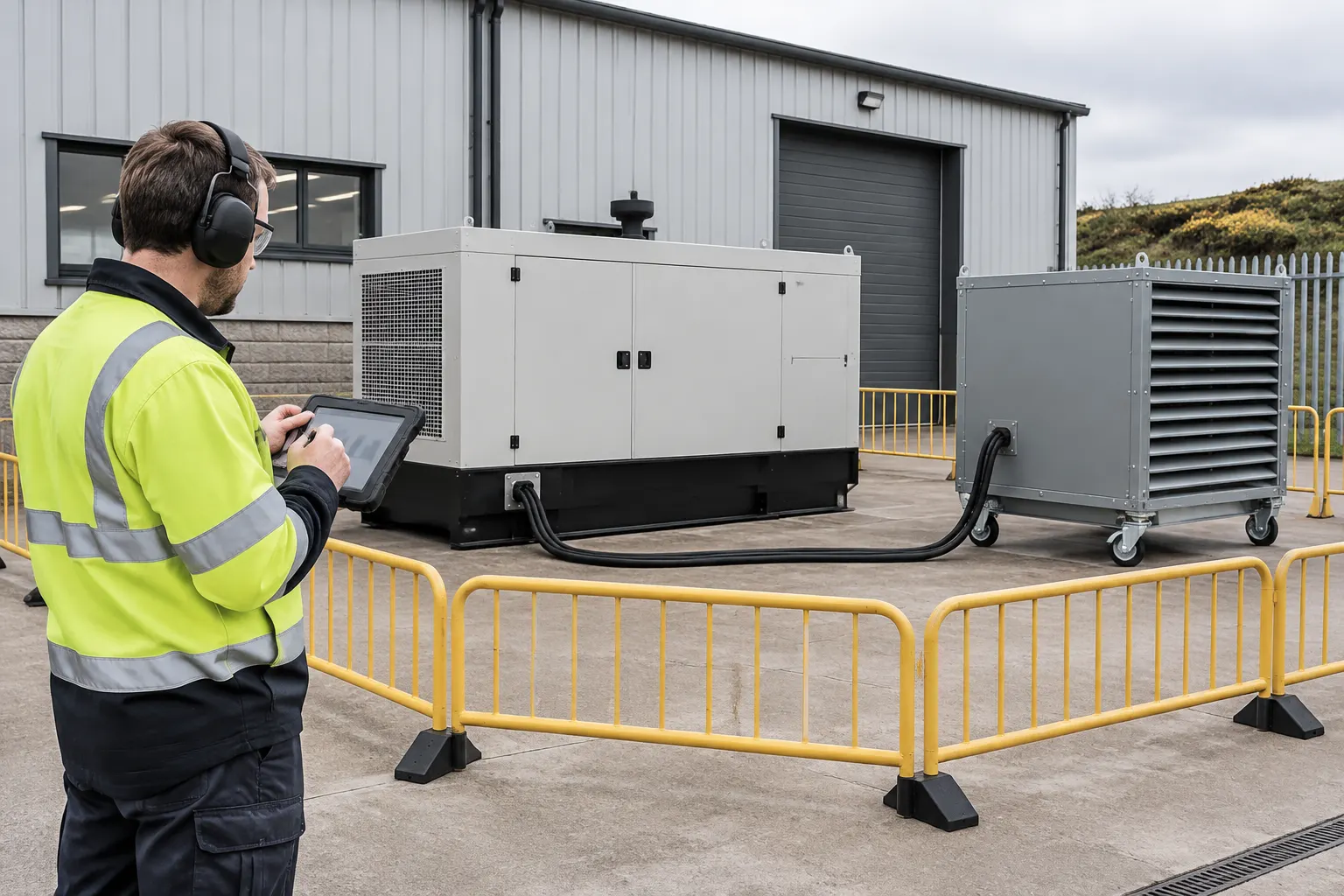
A load bank applies a controlled electrical load, allowing generator performance to be assessed against an agreed specification. Depending on the connection arrangement, it may bypass the site's changeover equipment and final circuits. Some arrangements include transfer; the report needs to say exactly which supply path was tested.
Changeover and automatic transfer switch testing
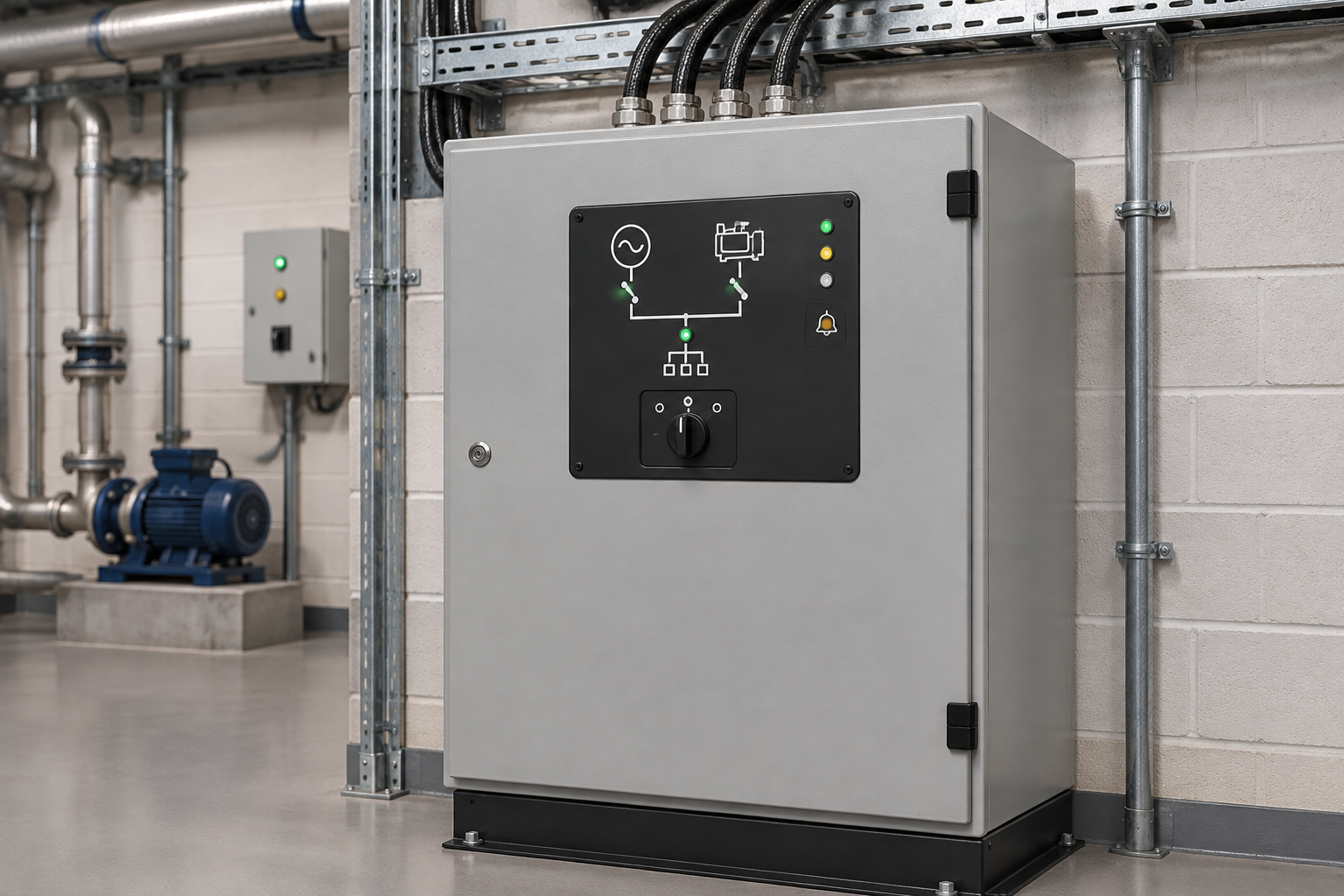
An end-to-end standby generator changeover test examines the installed start, transfer and distribution path to agreed loads, including return to normal supply. Where an automatic transfer switch is fitted, its operation is part of that scope. A successful switch operation alone does not prove that every critical circuit or process was supplied.
These tests can complement one another, but their names are not enough to establish coverage. Ask what initiated the start, where the test load was connected and which operational loads were observed. The installed design and recorded test arrangement decide what the result proves.
Trace the backup supply to the loads that matter
Start with an agreed critical-load list, not an assumption that everything in the building has backup. Identify the selected distribution boards and circuits, their controls and any dependencies needed for each load to function.
For a factory, decide whether backup is intended to keep controls alive, restart a selected process or support a complete production area. Those are different objectives. A brief that quotes only the generator rating will not distinguish them. Note loads deliberately excluded and equipment that needs operator intervention before it can resume.
For example, a backed-up pump still needs its control supply and an appropriate restart arrangement. On a holiday park, distinguish essential pumping duties from facilities that can tolerate an outage. The site's operational team needs to define those priorities.
Accurate drawings of industrial distribution systems help establish the route from generator to load. For critical-load backup power testing, agree how useful operation will be verified, rather than simply recording that voltage appeared at a switchboard.
Plan a controlled test around site operations and safety
A transfer test can interrupt supplies and affect people or processes even when it goes to plan. Competent people need a site-approved method, clear responsibilities and an agreed response if the system behaves unexpectedly.
Allow for staff, tenants or guests who may be affected, not just the tester's availability. Agree who can authorise the test, who can stop it and who confirms that the site is ready to resume normal operation. Plan the recovery if the intended transfer or return fails.
A quiet test window may reduce disruption but leave the generator serving much less than the intended outage demand. Record that limitation. If large loads are expected to restart together, the test specification should address that duty rather than treating a steady load-bank result as equivalent. The appropriate approach depends on the installed system.
The brief should settle:
- Which circuits are included or excluded, and the expected test load compared with normal operating demand.
- The operational impact of transfer and return, including acceptable interruption and equipment restart arrangements.
- Who is responsible for electrical switching, generator support, plant operations and communications with affected staff.
- How controls, alarms and any separately supported IT or communications will be assessed.
- The conditions for stopping the test, and contingency arrangements if the planned return to normal supply cannot be completed.
- Whether generator specialists are required for engine, fuel-system or load-bank work, separately from site electrical testing.
This is not a task for improvised mains-failure simulations or unauthorised switchgear operation. Where backup serves safety-related functions, identify the applicable sector and system requirements rather than treating it as ordinary standby power.
Record the scope, results, defects and retests
A meaningful record states what was tested, not just generator passed. Record the configuration, circuits included, load and duration, relevant measurements and alarms, and any start, transfer and return-to-normal observations. Note whether intended loads operated as required and which functions were not tested.
Record unexpected interruptions, unsuccessful plant restarts or alarms against the relevant circuit or function. Mark omitted items as untested rather than folding them into a general pass. State what remained unresolved when the site returned to service.
Separate generator defects from site electrical faults and controls issues. Give each action an owner, priority and any operational restriction. If a defect affected starting, transfer or supply to a critical load, agree a retest of that function after remedial work rather than relying solely on a repair note.
HSE describes records as useful for monitoring condition and maintenance effectiveness, although keeping them is not itself a requirement under the Electricity at Work Regulations. Check any separate record-keeping duties that apply to your site.
Set intervals from risk and equipment guidance
Regulation 4(2) of the Electricity at Work Regulations 1989 requires electrical systems to be maintained as necessary to prevent danger. It does not prescribe one weekly, monthly or annual standby-generator testing interval for every business.
HSE's maintenance guidance points to practical experience and manufacturer information when deciding the regime. Where inspection duties under the Provision and Use of Work Equipment Regulations (PUWER) apply, equipment, use, conditions, risk assessment and manufacturer recommendations inform scope and frequency. Outdoor exposure and a history of faults are relevant considerations.
Consider how long backup could be unavailable before the consequences became unacceptable. Use that alongside equipment guidance when reviewing the test regime and the urgency of defects.
Separate routine exercises from tests intended to demonstrate required backup availability. Their purposes and scope need not be identical. Review the regime after changes to loads, controls or distribution, and after defects reveal weaknesses. The maintenance plan should explain why each test is needed and what would trigger an earlier review.

Discuss your site's electrical testing needs
Based at Maenporth and serving Falmouth, Penryn and wider Cornwall, Maenporth Electrical can help with electrical testing and compliance and planned electrical maintenance. To discuss your site's electrical testing needs, call 01326 250297.