
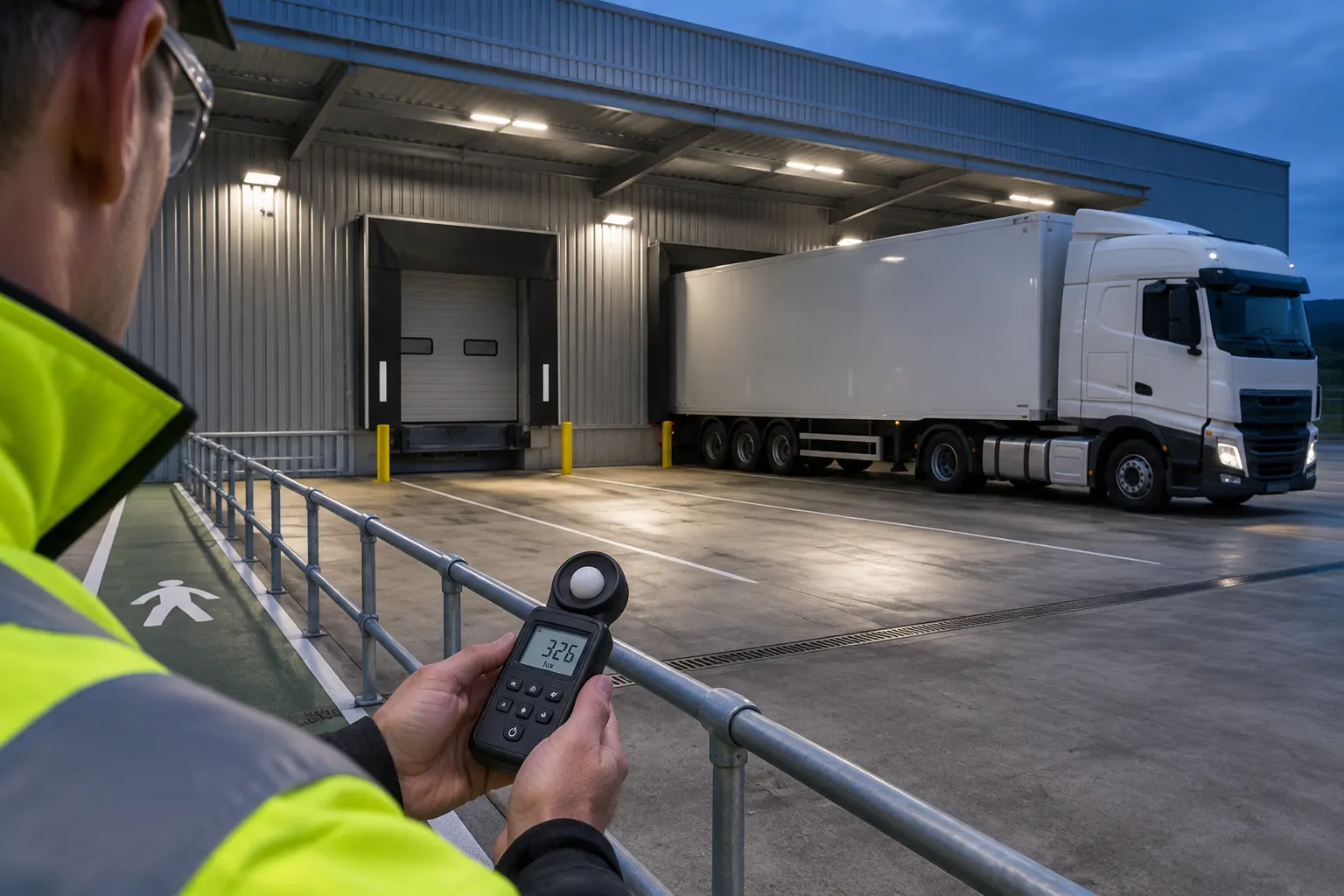
Loading bay lighting can look adequate over an empty yard yet leave a pedestrian route or the side of a trailer in shadow when a delivery arrives. A brighter fitting is not automatically the answer: the important question is where useful light reaches during the work.
For warehouse, factory and service-yard managers, a useful review starts with vehicles in their normal working positions. It should consider the driver’s view, people on foot and the change between building and yard, not just how bright the empty space looks.
Why an empty bay can hide a lighting problem
A tall vehicle can interrupt light from a wall, canopy, window or column. A bay that looks evenly lit before a delivery may then have a dark strip beside the trailer, an obscured walkway or a poorly visible dock edge. The same fitting can remain working throughout.
HSE’s workplace transport lighting guidance highlights vehicle obstruction, glare and changes between indoor and outdoor light levels. Judge the result against actual tasks and routes rather than the number of luminaires.
No universal loading bay lux figure
Where the Workplace (Health, Safety and Welfare) Regulations 1992 apply, Regulation 8 requires suitable and sufficient lighting. It does not set one universal lux figure for every loading bay. Application-specific design recommendations should not be presented as a single legal minimum.
A lamp replacement or LED conversion alone does not demonstrate that these operating needs have been met.
Identify the vehicle, pedestrian and task areas
Start with a simple plan showing each bay, approach, reversing area and pedestrian route. Mark where drivers leave their cabs, where warehouse staff cross the loading frontage and where people emerge through doors. These locations can matter more than the brightest patch in the yard.
Distinguish vehicle movement from close tasks such as reading labels or checking a load. Warehouse loading bay lighting needs to support both, but one broad wash of light may not serve every task.
Pedestrian route lighting in service yards deserves separate attention. Check whether walkways and crossing points remain recognisable when bays are occupied, including where people emerge from doors or pass between buildings.
Being able to see the ground is not the only test. Drivers need to recognise people and obstructions, while someone leaving a pedestrian door needs to understand where the vehicle route begins. Lighting does not replace pedestrian separation or safe reversing arrangements.
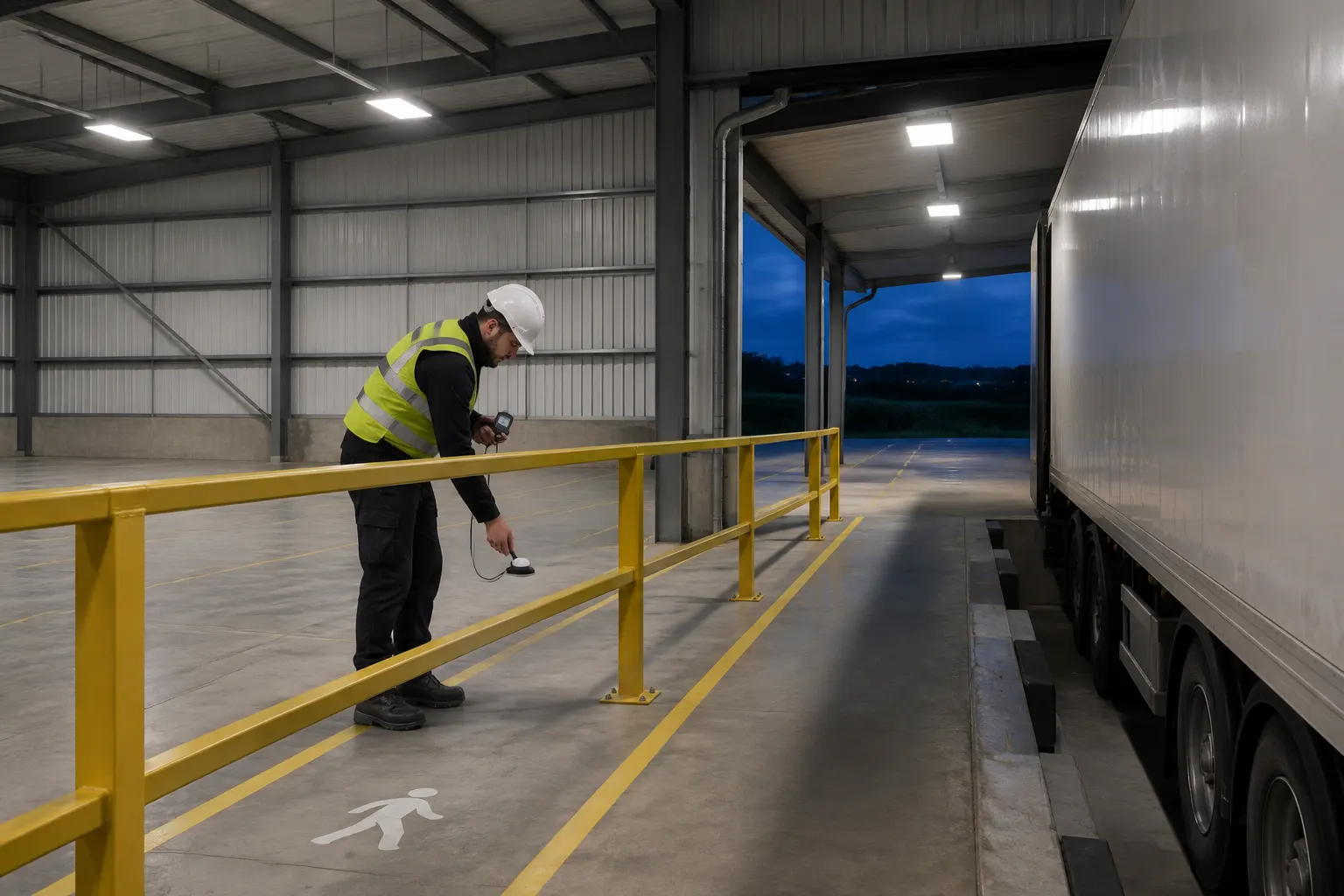
Position lighting so trailers do not mask useful light
HSE suggests considering positions above the spaces between vehicle bays rather than directly over their centres. This can help reduce obstruction by tall vehicles, but it is guidance to inform a design, not a layout rule for every site.
The review needs to account for vehicle height and width, adjacent occupied bays, canopies and parked containers. A different vehicle type may change the shadow pattern substantially. A solution should be assessed with those obstructions represented, not only against an empty-yard drawing.
If an upgrade is needed, the brief for commercial lighting services should describe those operating conditions, not simply request brighter replacement floodlights.
Ask for the proposal to explain which visibility problem each change addresses and how it will be checked once vehicles are in position. This makes it easier to distinguish maintenance work from a design change and compare options on a consistent brief.
Reduce glare at reversing approaches
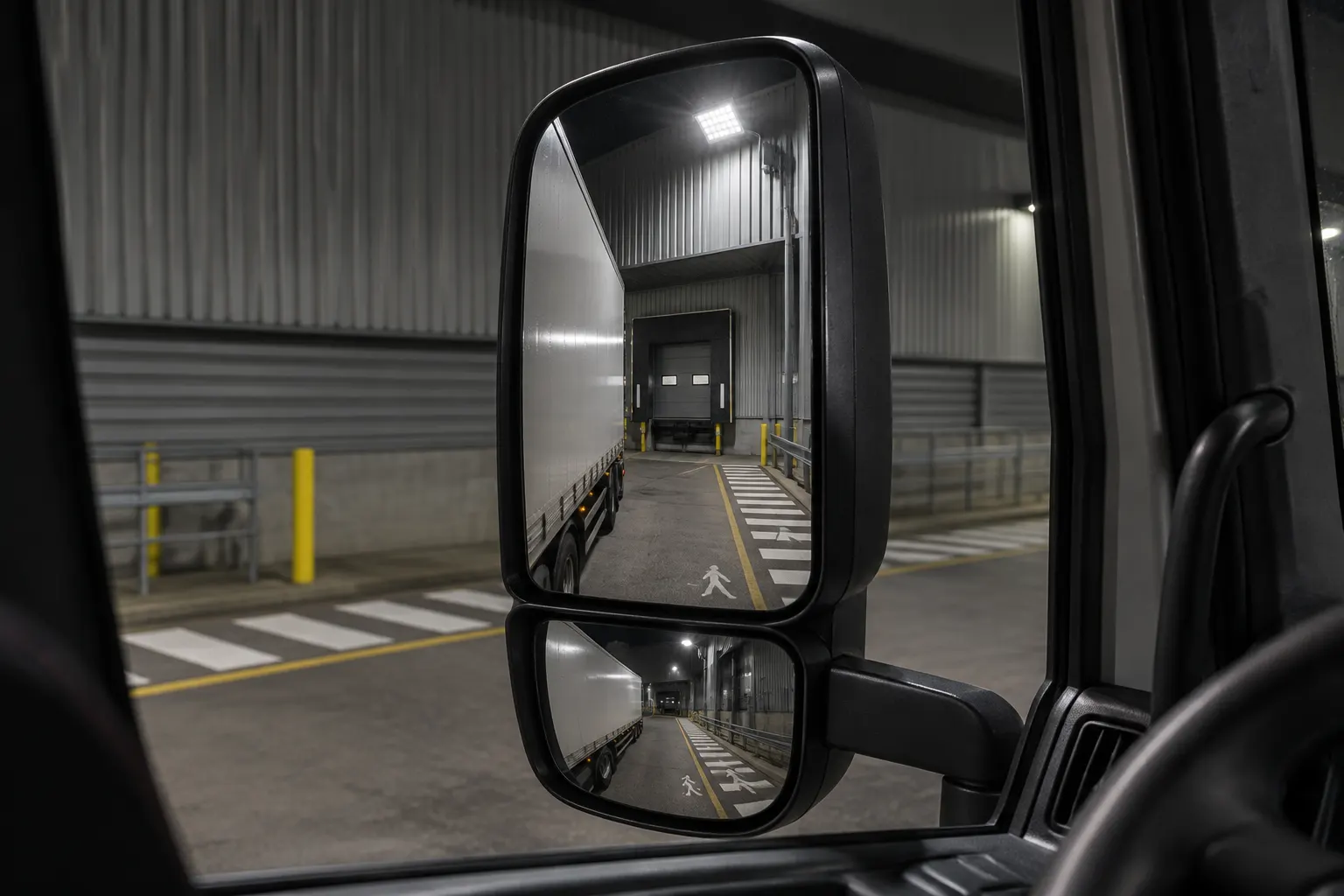
Lighting for reversing vehicles must help a driver see without shining directly into their eyes or creating glare in mirrors. A fitting that seems comfortable when viewed on foot can be troublesome from a raised cab or at a different approach angle.
Ask whether the reversing route, people and bay edges remain distinguishable throughout the manoeuvre. Include the normal mirrors or camera views in the review, but do not treat a clear CCTV image as proof that the driver’s view is adequate.
Increasing output without addressing direction may make glare worse rather than improve useful visibility. Report glare for competent investigation; re-aiming or altering fittings should not become an informal task for yard staff.
Manage the transition between warehouse and yard
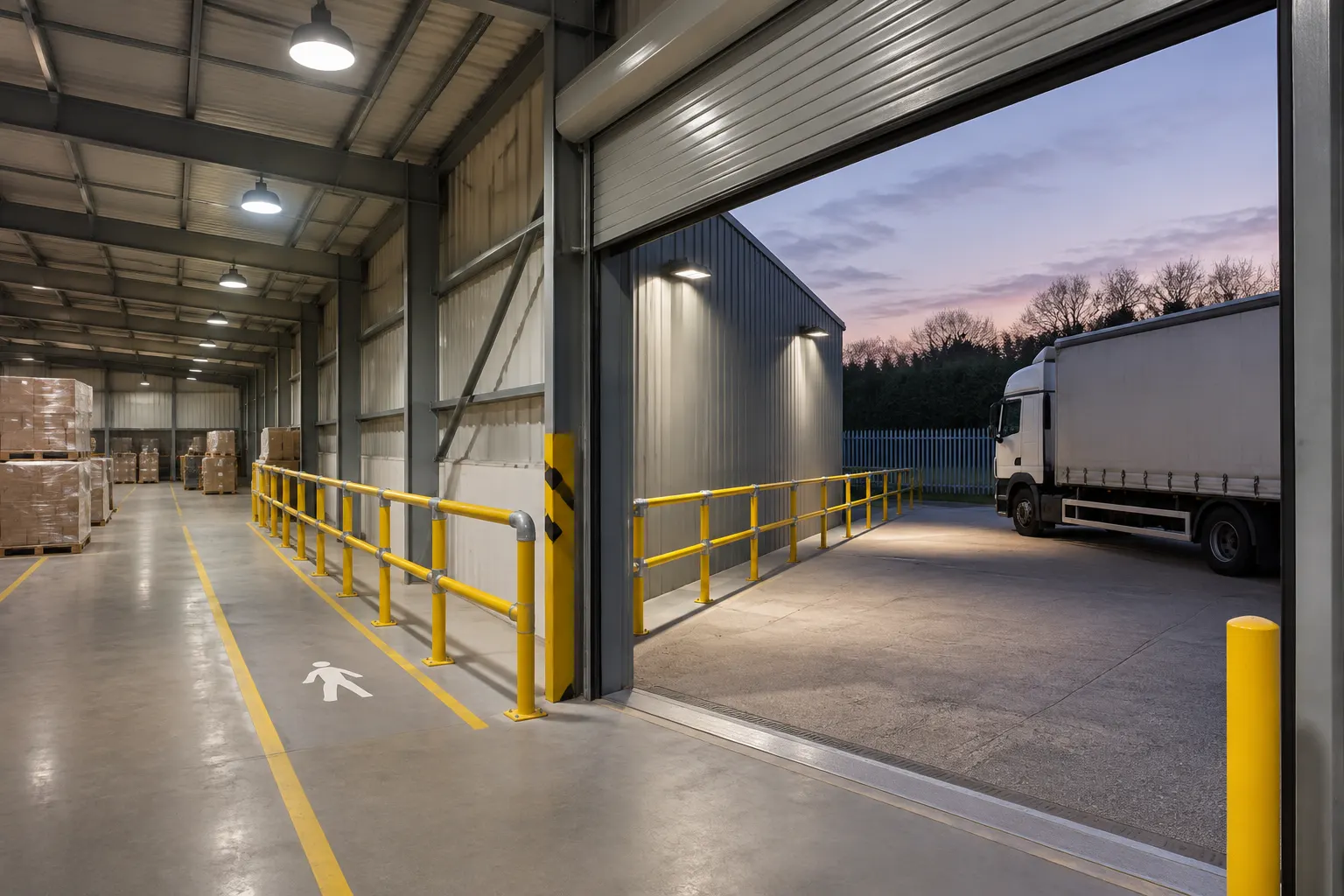
A bright interior opening onto a much darker yard can make it harder to pick out hazards at the threshold. HSE also notes that abrupt light-level changes can affect CCTV adaptation. The warehouse-to-yard lighting transition deserves its own review, particularly where vehicle and pedestrian movements meet at a doorway.
Consider the approach in both directions, with doors in their normal operating positions. Can people see the threshold and routes beyond it, rather than just the brightly lit opening? Where wider factory changes affect this interface, include it in the brief for factory electrical services.
Review visibility under representative operating conditions
For sites with early deliveries or late despatches, include those hours in the assessment brief. A daytime inspection is useful for the layout, but cannot show the night-time visibility that prompted the concern.
Arrange any observations through the site’s traffic-management procedures, from authorised safe positions. Do not enter reversing zones or put someone beside a vehicle to demonstrate a blind spot. A competent assessor should decide how to represent the operating conditions safely.
For a useful night-time loading bay lighting review, record:
- Typical vehicle sizes, occupied neighbouring bays and trailers or containers regularly parked nearby.
- Where shadows fall across pedestrian routes, crossing points, doors and working positions.
- Driver reports of glare, including the approach direction and vehicle involved.
- The indoor and outdoor conditions, door positions and lighting in use at the time.
- Tasks that are difficult to see, with a clear location and description rather than a general complaint.
When a lighting assessment is worthwhile
Recurring shadows, glare complaints or uncertainty at pedestrian crossings justify more than a like-for-like lamp replacement. Revisit the lighting when the usual vehicle size, bay arrangement or traffic route changes, even if every fitting still works.
A competent assessment can combine observations with appropriate measurements and propose changes to positioning, light distribution or equipment where needed. Agree how visibility will be checked afterwards, using the same representative conditions; approving an empty upgraded bay could miss the original problem.
Keep maintenance and external light spill in scope
Dirty lenses, failed fittings or new obstructions can change loading area lighting after an installation was designed. Include lighting condition in planned inspections and make faults easy to report by bay or location. Cleaning, repairs and access at height should be planned for competent personnel.
Record repeated failures or areas that become hard to see between maintenance visits, so the review addresses ongoing reliability as well as initial appearance.
More output is not always the right remedy. Any changes should keep light directed at the working area and account for neighbours and relevant local restrictions.
To discuss loading bay lighting at a site in Falmouth, Penryn or wider Cornwall, call Maenporth Electrical on 01326 250297. Have the usual vehicle types, operating hours and problem locations to hand.