
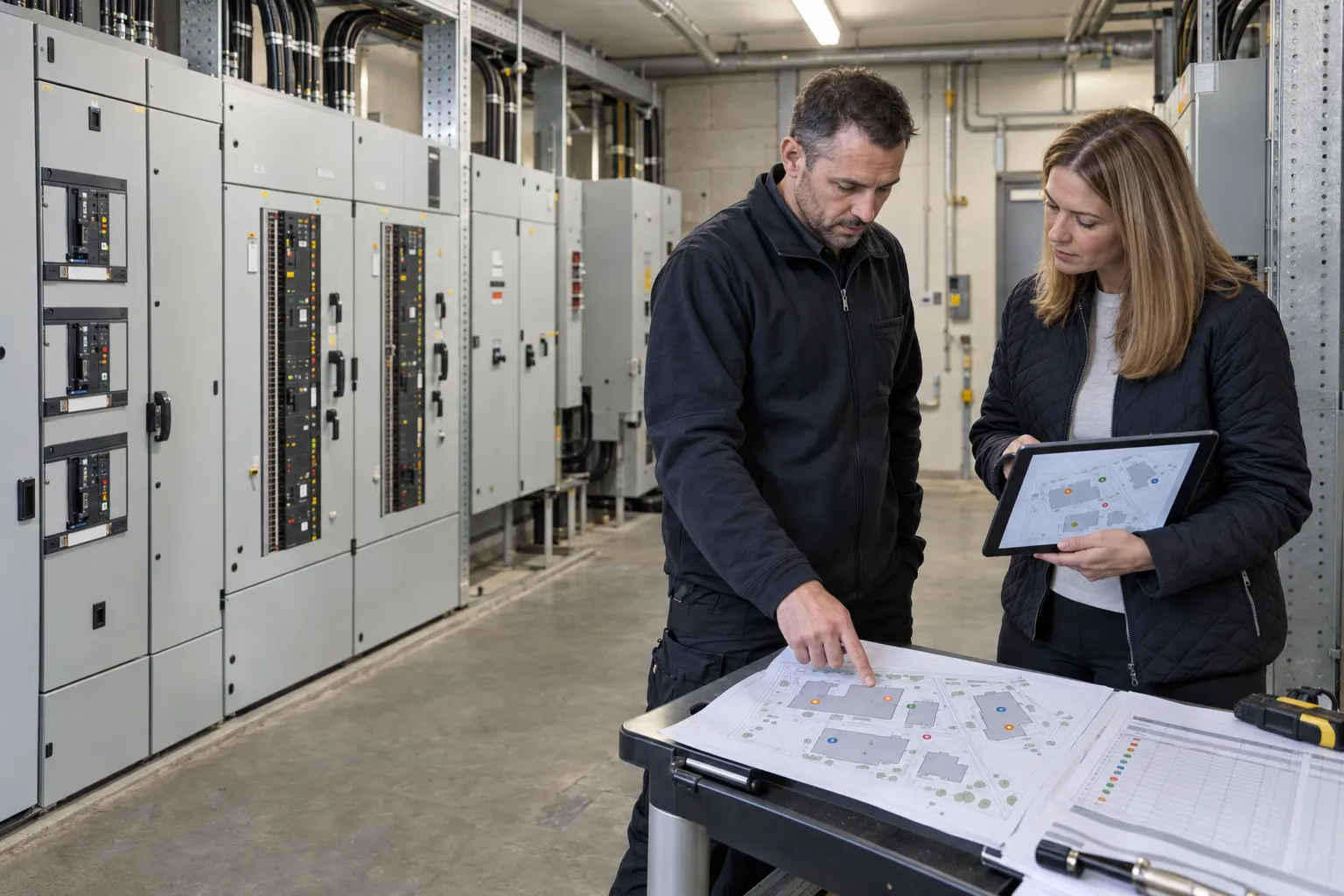
On a multi-building site, “the workshop board” may no longer identify one piece of equipment clearly. Labels, drawings and maintenance reports can use different names, leaving staff unsure which record belongs to which asset.
A practical electrical asset register connects fixed equipment to its location, supply and supporting records. For factories, holiday parks and leisure sites, its value is continuity: the next person should be able to find reliable information without relying on someone’s memory.
What a fixed electrical asset register is and is not
A commercial electrical asset register is an operational index of installed equipment. A controlled spreadsheet can be a sensible starting point, provided it has stable asset IDs, linked documents and a named person responsible for updates.
It is not an Electrical Installation Condition Report (EICR), an electrical certificate or proof that the installation is safe.
Regulation 4 of the Electricity at Work Regulations requires systems to be constructed and maintained, so far as reasonably practicable, to prevent danger. It does not prescribe a register. HSE guidance on electrical maintenance records explains how records help monitor condition and maintenance effectiveness, while noting that keeping them is not itself a legal requirement under these regulations.
Map the site and its electrical distribution first
Agree consistent names for buildings and areas, then connect the location plan to verified distribution information. A site plan shows where equipment is; a single-line diagram shows how the supplies connect.
A simple hierarchy can organise the register by site, building and asset. Keep that location structure separate from the supply relationships: a pump beside one building may be fed from another. Grouping records by building alone will not explain how the installation is connected.
For facilities managers, electrical distribution drawings should identify the source board and destination for each building supply, using the same asset IDs as the register. Give drawings a revision and date, with unconfirmed connections clearly marked. Retain previous names as aliases where needed, so older reports stay traceable.
Include alternative supplies, such as solar PV or standby generation, where present. Records are not a safe-isolation procedure: competent electrical personnel must verify supplies before work rather than relying on an old drawing.

Prioritise fixed assets that affect safety and operations
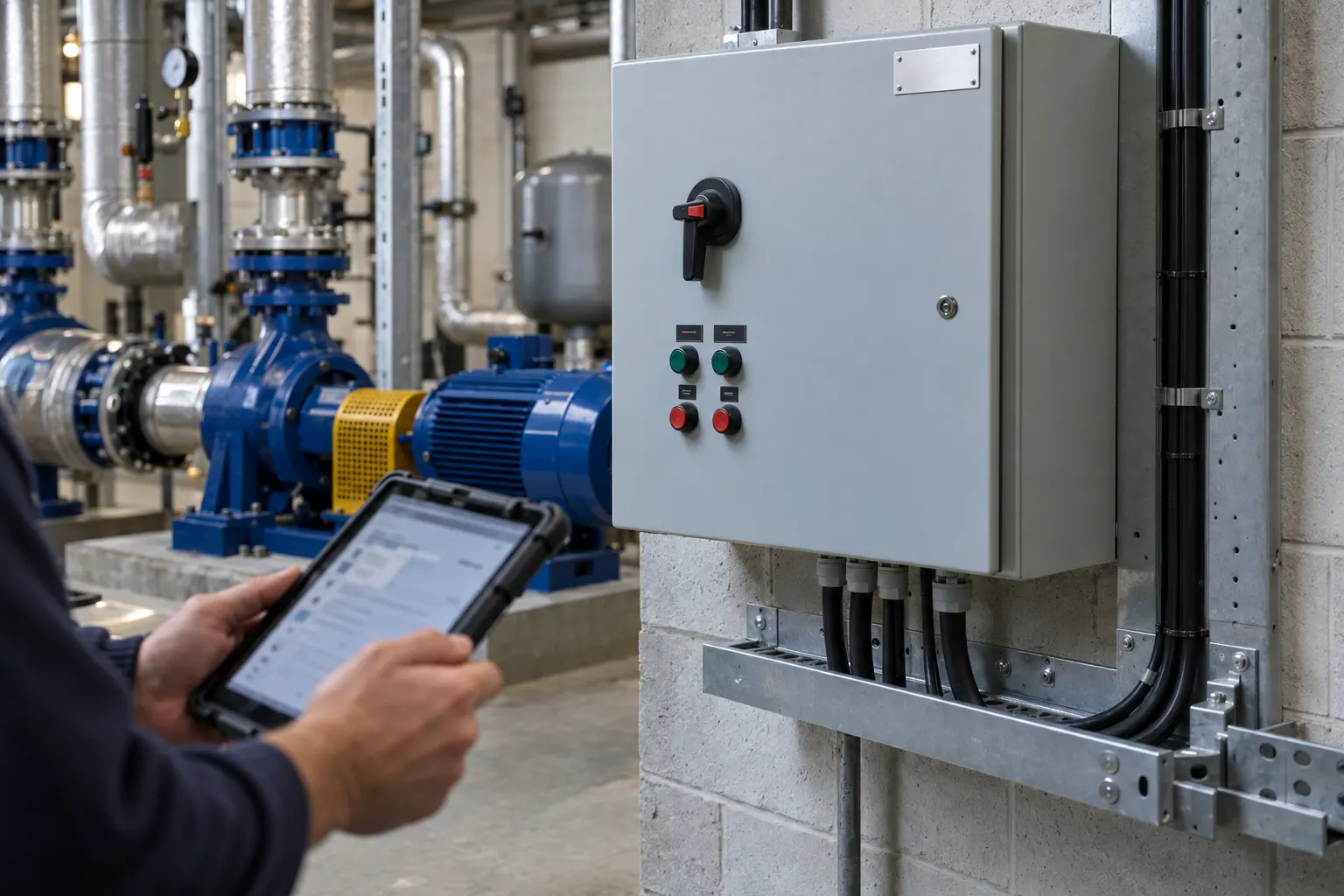
Start with incoming switchgear, main and building distribution boards, submains and fixed control panels. Then include significant fixed equipment such as pumps, ventilation systems, emergency lighting, EV chargers and renewable-energy equipment where installed.
Set a consistent level of detail. Give boards and significant equipment individual IDs; link to specialist schedules for systems containing many smaller items. Record ownership and maintenance boundaries, including the relevant contact where another organisation manages an asset.
For a holiday park, for example, pitch-distribution equipment and supplies to shared facilities may need separate entries. At a factory, a fixed control panel and the distribution board feeding it should remain distinguishable, even when one contractor maintains both. Agree these boundaries before collecting data.
Note the services each asset supports and the safety and operational consequences of failure. Equipment size or age alone should not determine its priority.
Record enough to identify, understand and maintain each asset
Use fields that answer practical questions, rather than collecting detail nobody will maintain. The following is a starting point, not a mandatory template:
- Identity and location: a unique, stable ID, equipment description, building and precise position. For example, B02-DB01 should refer to the same asset in every record.
- Equipment details: manufacturer, model, serial number, known installation date and relevant ratings or protection details verified by competent electrical personnel.
- Supply relationships: upstream source ID, the buildings or equipment served, and links to current distribution drawings.
- Condition and evidence: dated findings and test reports, who assessed them, and any limitations or unresolved questions.
- Maintenance and actions: work completed, next agreed action or review, responsible person, status and evidence of completion.
- Supporting information: manufacturer instructions, relevant certificates and photographs of equipment exteriors, with a record of who last checked the entry and when.
Keep detailed electrical switchgear maintenance records in linked documents where appropriate. Mark unknown or unverified information honestly; do not estimate ratings, dates or supply routes.
Connect condition and maintenance history to follow-up actions
An entry saying “poor condition” is not an action plan. Record the observation, who assessed it and what happens next. Keep missing information separate from identified defects: an unknown installation date is a data gap, not a diagnosis of poor condition.
Link commercial electrical maintenance records to the asset ID so repeated findings and previous repairs remain visible. The history can then inform decisions about further investigation, repair or replacement.
A linked action log can hold work-order detail without overcrowding the main register. Close each action against completion evidence, and leave any separate investigation or access limitation visible. Completing one repair does not necessarily resolve every outstanding issue attached to the same asset.
The register supports planned electrical maintenance for multi-building sites, but does not set universal inspection intervals or replacement ages. Those decisions need to reflect the equipment, manufacturer guidance, condition, environment and risk. A potentially dangerous finding needs prompt attention from a competent electrician, not just a future spreadsheet date.
Update records after electrical changes and handovers
Make record updates part of job close-out for additions, replacements, altered supplies and removals. Check that IDs, drawings, linked reports and outstanding actions agree before treating the handover information as complete.
Give one role responsibility for the master register and its revision history. Contractors can provide changes, but someone must check they reach the live record. Archive superseded information without leaving removed assets marked as in service.
Use a shared, controlled location for supporting files so links do not depend on one person’s inbox. File names built around the asset ID and document date make reports easier to match. Retain the full report: a coloured status cell should not hide its findings, limitations or required actions.
When equipment is replaced, preserve the old maintenance history and make the replacement identifiable rather than silently overwriting the entry.
Start with a verifiable first pass across the site
Review the available records
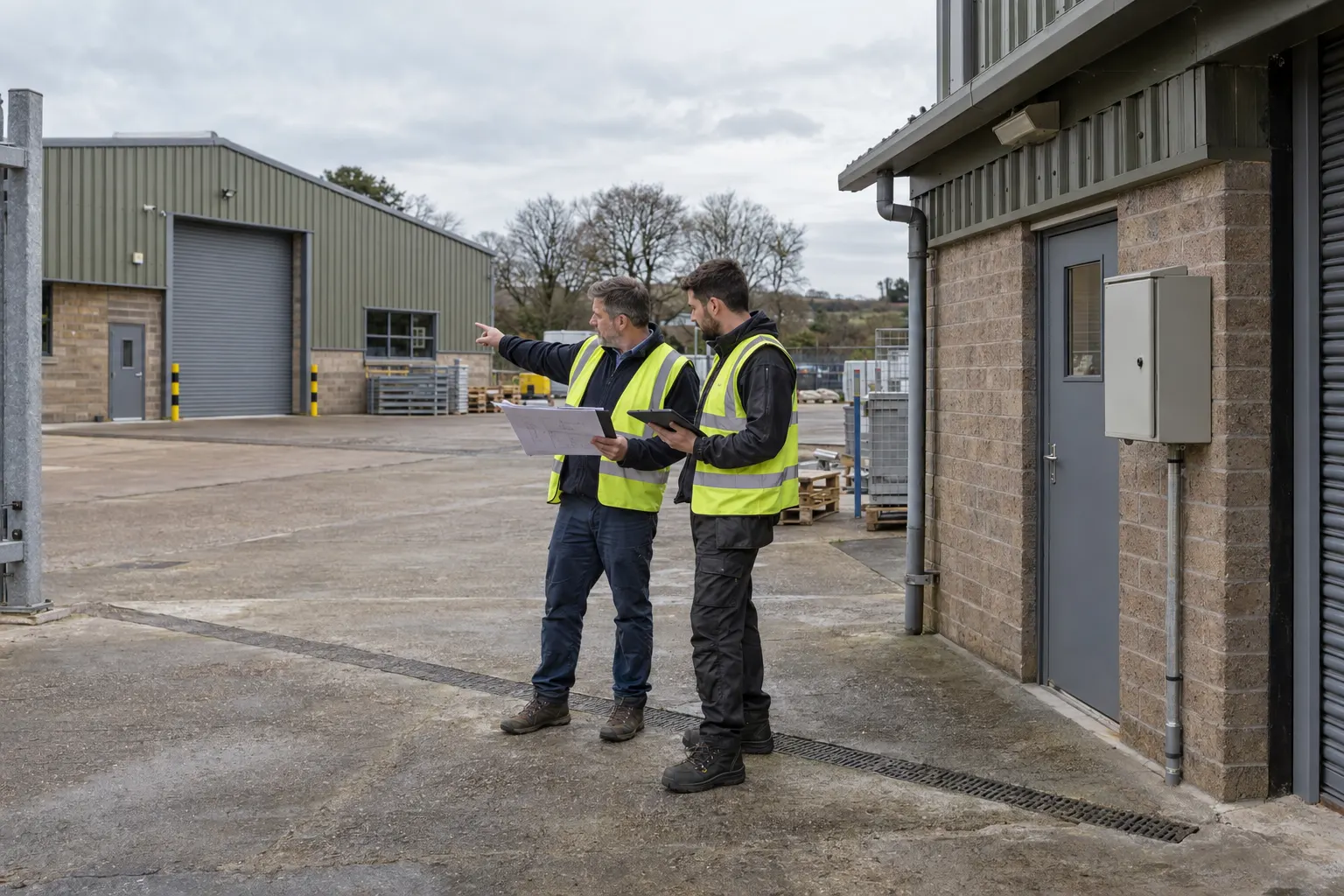
Gather plans, distribution schedules, certificates, maintenance reports and manufacturer information. Start with the main distribution and the buildings it serves, listing gaps rather than filling them from memory.
Agree what “verified” means before collecting data. It might confirm identity and location without confirming every technical detail. Date each check and record its scope, so an identification visit is not later mistaken for a condition assessment or full inspection.
Arrange competent verification
Ask competent electrical personnel to reconcile the records with the installation and identify where further investigation or planned access is needed. Unqualified staff should not remove covers, expose live parts or attempt supply tracing to complete missing fields.
A useful first version lets the next person locate priority assets, understand which supply relationships are verified, and see who owns each unresolved action. Expand the detail as information is checked.
Maenporth Electrical Ltd provides commercial electrical services, electrical testing and planned maintenance across Falmouth, Penryn and wider Cornwall. To discuss electrical work on a multi-building site, call 01326 250297 with any existing plans or equipment records to hand.