
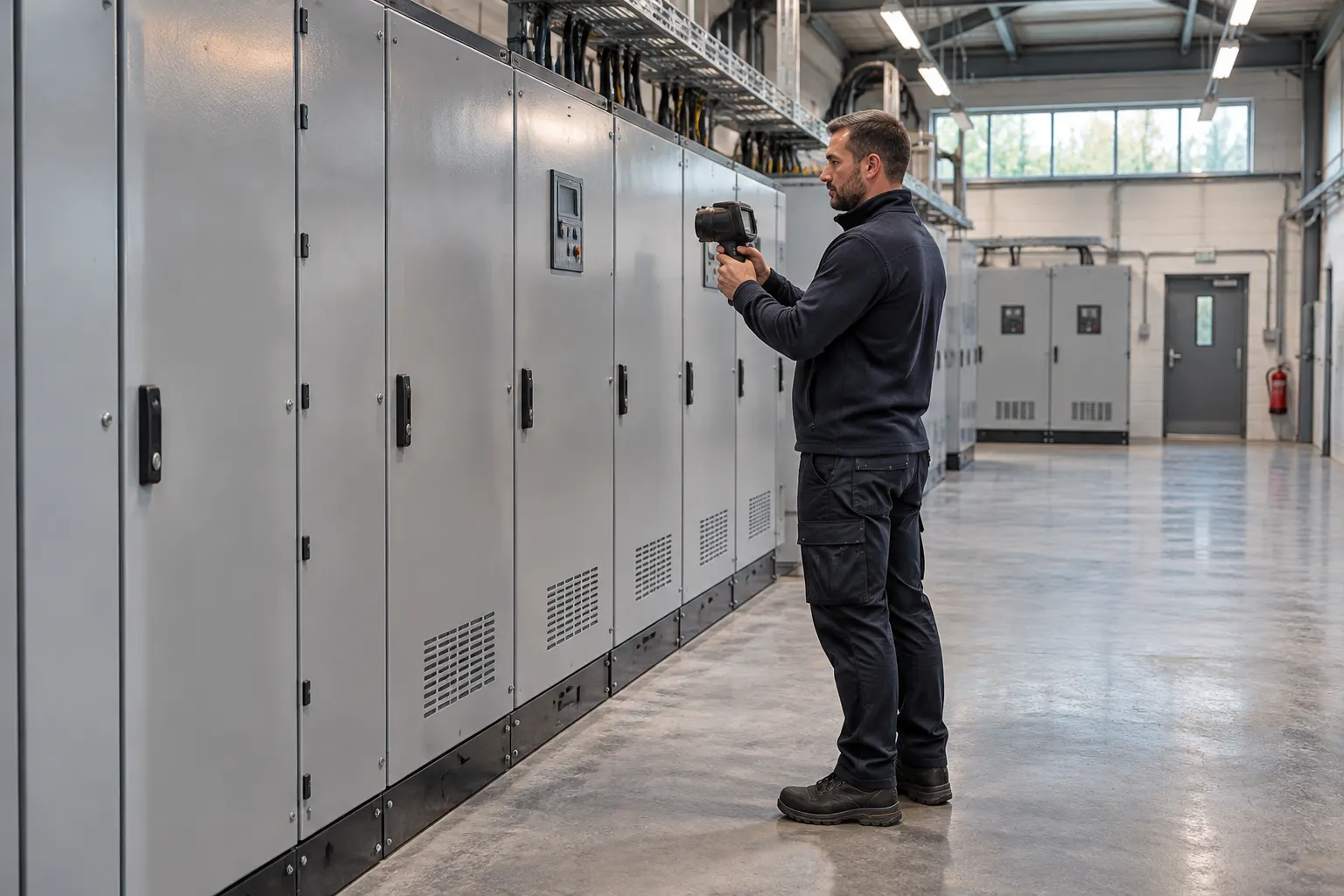
A commercial electrical thermal imaging survey is worth considering when you need evidence of abnormal heating in important electrical equipment while it is operating. Its value depends less on the number of pictures than on the assets included, their operating load and what happens after a finding.
For factories, quarries and multi-building leisure sites in Cornwall, the useful question is not simply whether a camera can find a hot spot. It is whether the survey can support a better maintenance decision without overstating what the images prove.
What electrical thermography can and cannot show
HSE’s switchgear maintenance guidance describes thermography as a way to measure component surface temperatures while equipment is in use. A thermal imaging inspection of switchgear can help identify overheating conductors, connections, fuses and circuit-breakers, subject to safe access.
An unusual temperature pattern needs competent interpretation; it is not a diagnosis of its cause. Thermography does not establish an installation’s complete condition or guarantee that every fault has been detected.
Coverage matters too. Observing an accessible enclosure surface is not the same as assessing every internal connection. Findings must be understood alongside the load, the equipment and the survey’s limitations. A report with no significant thermal anomaly is not a certificate of electrical safety.
Which electrical assets justify inclusion?
For industrial electrical thermal imaging, start with the equipment the site depends on rather than scanning enclosures indiscriminately. Potential priorities include:
- Main low-voltage switchboards supplying several buildings or production areas.
- Distribution boards feeding important refrigeration, pumping or leisure facilities.
- Motor-control equipment and associated supplies for heavily used plant.
- Remote distribution equipment where access difficulties could delay investigation or repair.
For a multi-building site, identify which board feeds which operation before agreeing the list. A modest-looking board may serve a critical pump or process, while a larger board may supply loads the business can work around.
Agree equipment references, system boundaries and voltage levels. The assets above are candidates, not a requirement to scan every item: the final list must reflect safe access, operating conditions and the consequences of failure.
When the business case is strongest
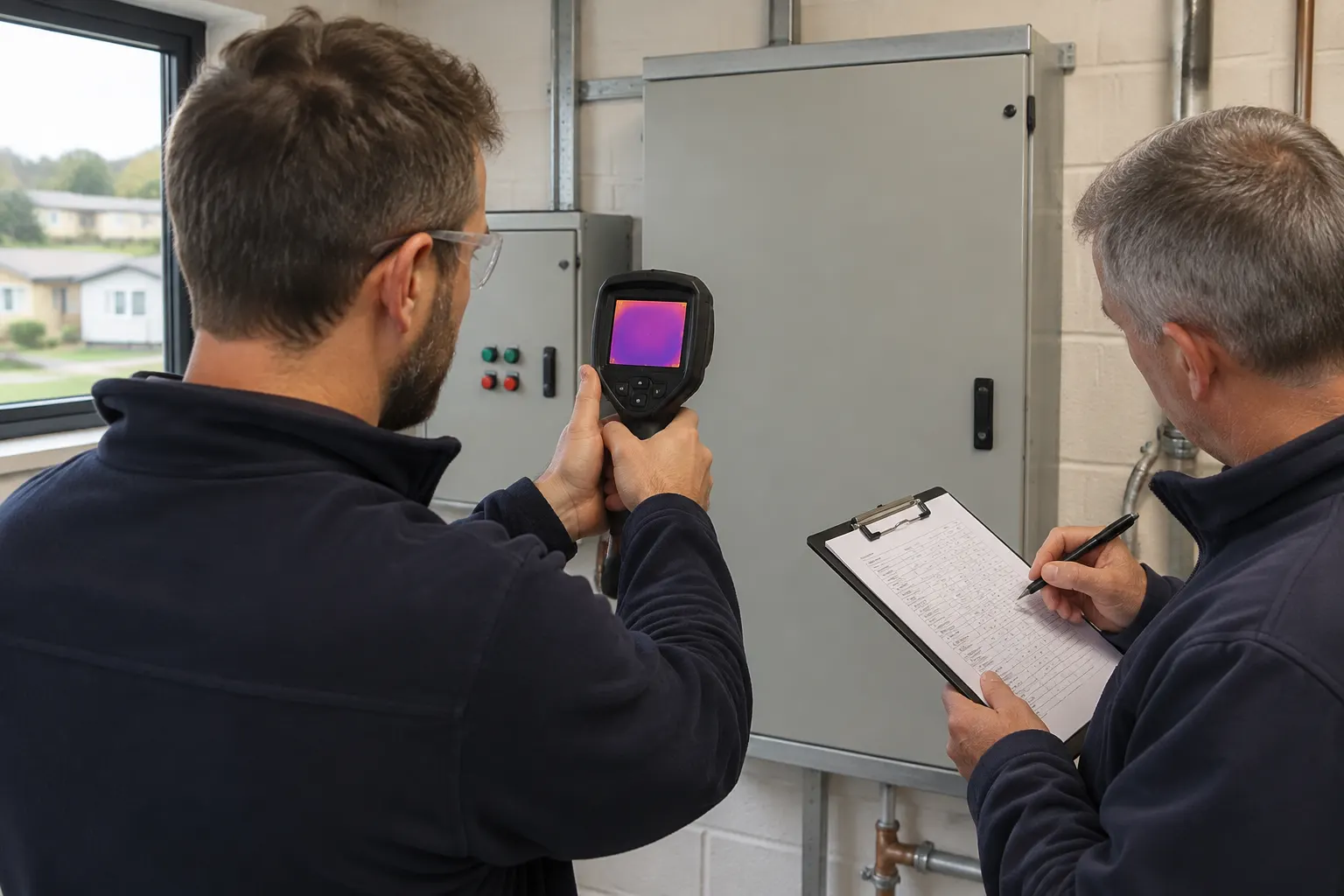
The case for commercial electrical thermography is strongest where a failure could stop production, interrupt essential site services or close accommodation and leisure facilities. Condition history, previous findings and the reliability the business needs should help determine priorities.
Compare that with equipment carrying little load during the visit, or assets that cannot be accessed safely. A low-cost survey with major exclusions may answer less than a focused survey of the equipment that matters.
Before commissioning, decide how findings will feed into planned electrical maintenance and who will authorise follow-up. Images alone do not address a defect; the business needs a route from observation to investigation and action.
A proposal should make coverage, exclusions and follow-up responsibilities clear enough to compare. If an insurer has requested the survey, share its requirements before agreeing the scope.
Agree the load and safe access before booking
Choose a representative operating period
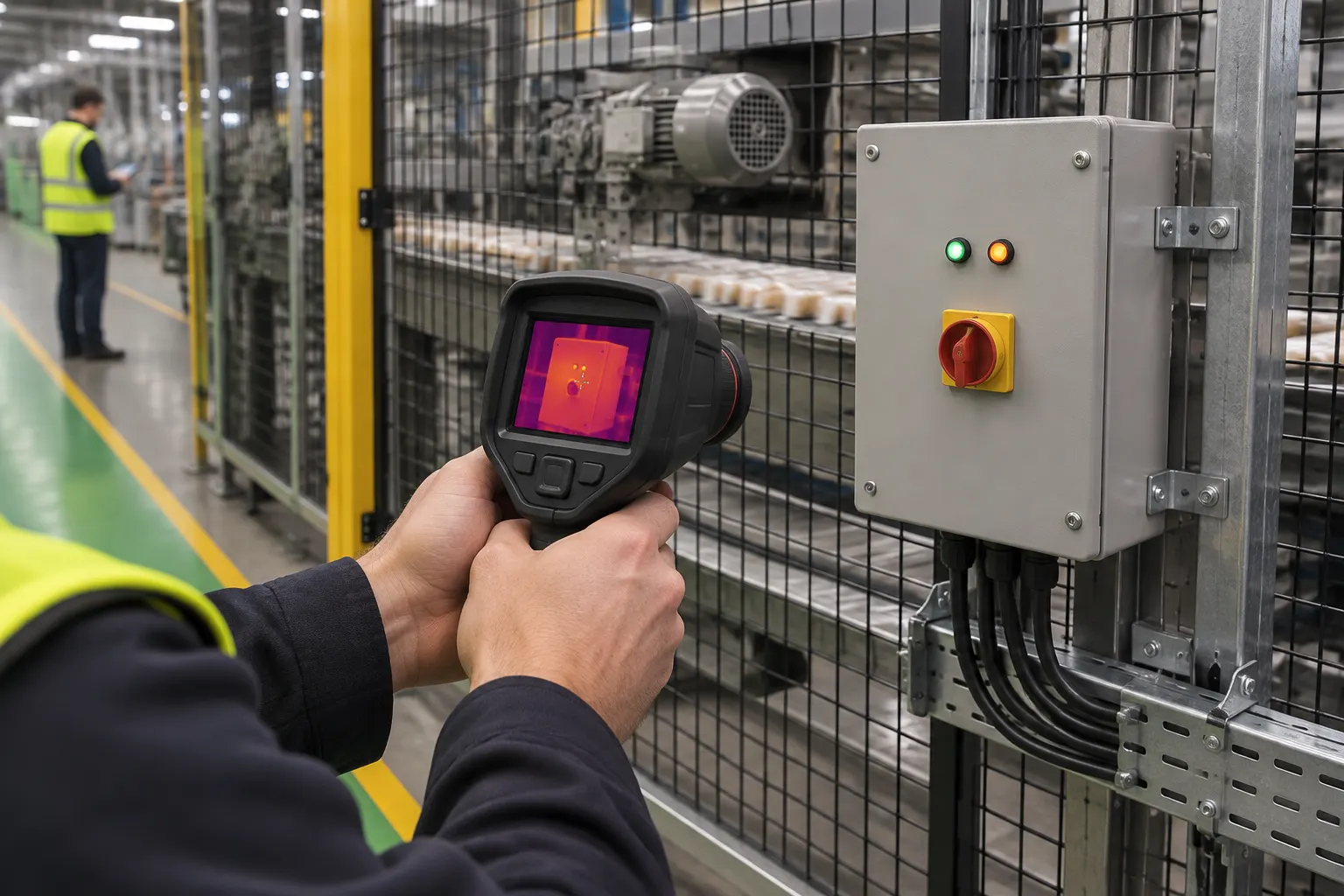
An electrical thermographic survey needs meaningful operating conditions. At a seasonal holiday park, a quiet winter visit may provide limited evidence about normal busy-period loading. At a factory, the same applies if key production plant is stopped.
Agree when relevant loads normally operate and record what was running during the visit. Low or atypical load must be recorded as a limitation, even if the images show no abnormal heating. Where operating patterns vary substantially, discuss whether one proposed visit can answer the question.
The plan should identify who can confirm the normal operating pattern and provide access to the agreed areas. A visit booked solely around contractor availability may miss the loads that prompted the survey.
Set access arrangements with competent people
Equipment being live does not make it safely accessible. Do not assume opening switchgear is a routine, risk-free part of a survey. Access needs competent personnel and task-specific safety arrangements appropriate to the equipment and voltage level.
Ask who will undertake and interpret the survey, and how their competence matches the equipment and voltage levels in scope.
Before the visit, identify restricted areas and anything that cannot be observed safely. If safe access is unavailable, the report must state the limitation, not imply unseen components have been assessed. The survey relies on equipment operating, but that does not mean every stage of access, investigation or remedial work can happen without an interruption.
What an actionable electrical thermal imaging report should show
Ask for an auditable record that someone responsible for maintenance can use, rather than a gallery of coloured images. It should include:
- Clear asset identification and location, with survey dates.
- Matched thermal and visible-light images that make each finding traceable.
- Operating conditions and relevant loading information, including any uncertainty.
- Assets surveyed, exclusions and any access or coverage limitations.
- Findings, priorities with reasons, and recommended next actions.
The report should distinguish what was observed from what remains uncertain, and identify where further inspection or testing is needed before deciding on a repair.
Priorities should reflect context and consequences, not simply which image looks hottest. Arrange competent investigation and any necessary electrical remedial work, then retain evidence of what was done.
Agree who owns each action and how any urgent concern will be communicated during the visit, rather than waiting for the completed report. Receiving that report is not the same as closing its findings.
Where follow-up imaging is appropriate, use comparable operating conditions where practicable. A cooler image under a much lighter load is not a like-for-like demonstration that a problem has been resolved.
Keep reports with the asset records so later findings can be compared and earlier exclusions are not forgotten.
Thermography versus EICR
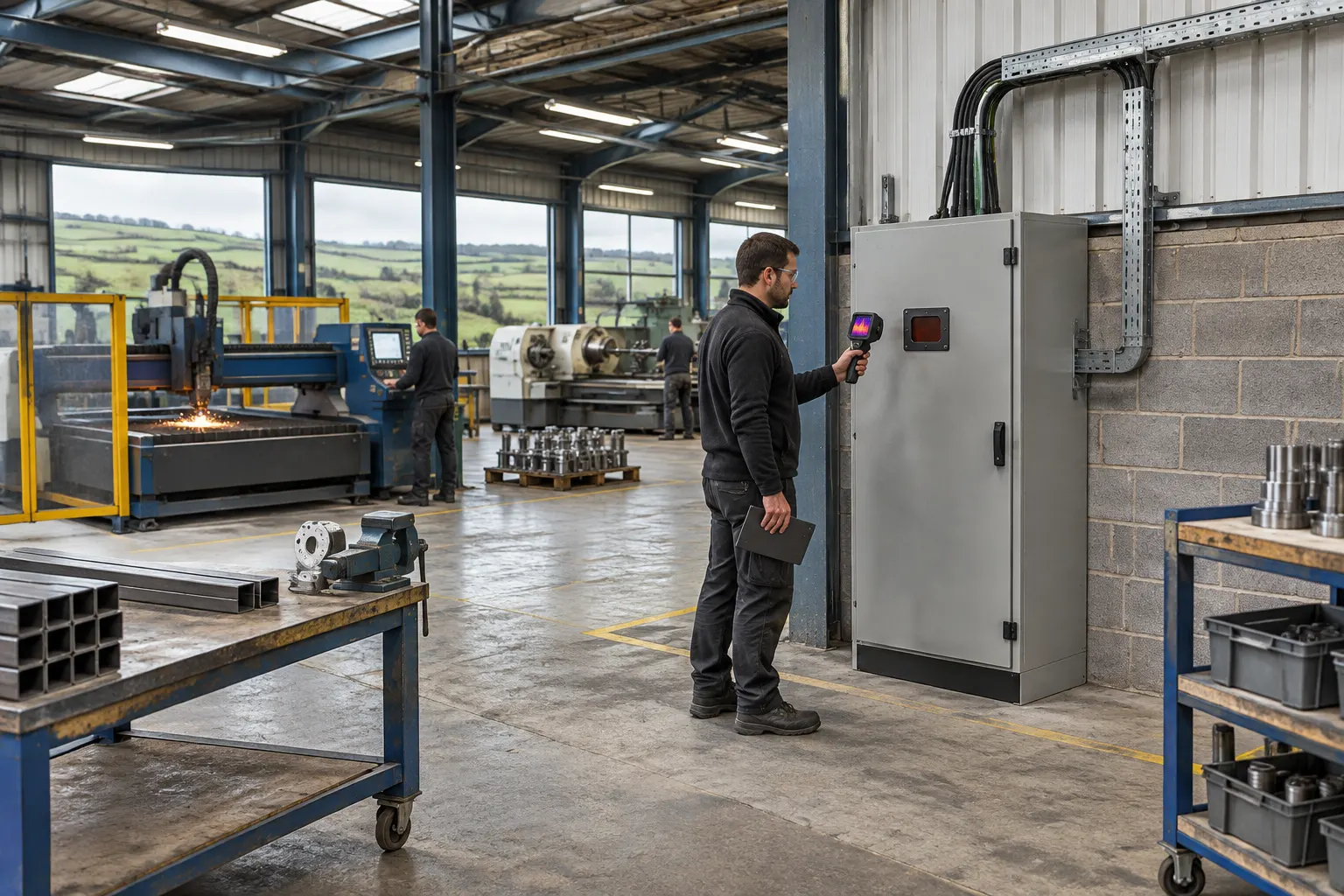
Thermography complements an Electrical Installation Condition Report (EICR); it does not replace it. An EICR records the extent and limitations of inspection and testing, along with test results. A thermographic survey records temperature observations under particular operating conditions. They provide different evidence for maintaining the installation.
Use findings alongside other inspection results, defect history and operational priorities. Agree repeat-survey timing around the equipment, its environment, previous findings and the reliability or availability required.
Regulation 4 of the Electricity at Work Regulations 1989 requires systems to be maintained as necessary to prevent danger. It does not prescribe thermography or a survey interval. Aviva’s loss-prevention guidance, for example, recommends annual surveys; that is insurer guidance, not a universal legal rule. Check your own policy and any risk-improvement notice.
To discuss electrical testing and maintenance in Falmouth, Penryn or wider Cornwall, call Maenporth Electrical Ltd on 01326 250297. Have your asset list, operating pattern and any insurer request ready.