
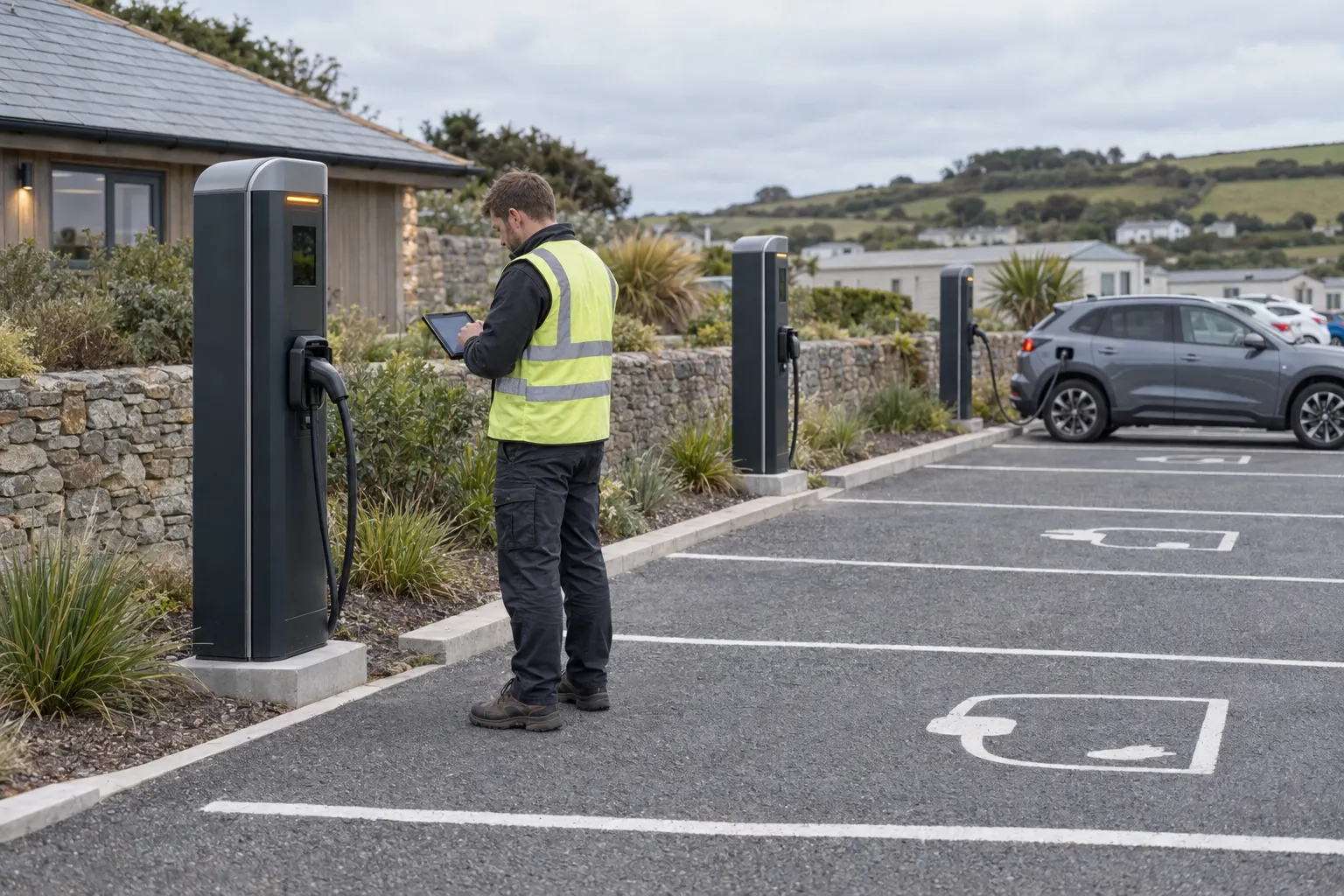
An EV charger voltage fault alert is a clue, not a diagnosis. The chargepoint or associated protection may have stopped charging because it detected a voltage-related condition. That does not establish whether the cause lies in the charger, the site installation or the incoming supply.
When a commercial EV charger keeps cutting out at a holiday park, workplace or leisure site, staff need a safe route from the alert to the right investigator. Repeated resets or an immediate replacement order are no substitute for understanding why charging stopped.
What a voltage-triggered stop does and does not prove
A protective stop can be the equipment responding as intended to a condition it has detected. It is not automatically evidence of a defective charger, and the display message alone cannot prove that the distribution network supply is outside statutory limits.
Nor should a voltage alert be treated as confirmation of an open-PEN fault. Open-PEN detection addresses particular faults involving a combined protective and neutral conductor. Protection methods vary, so do not assume that every commercial charger detects the same conditions in the same way.
If there is smoke, a burning smell, visible damage or a report of electric shock, keep people away and seek urgent assistance. Use emergency services where there is fire or immediate danger.
Separate the equipment, site and network enquiries
Investigating an EV charger supply voltage issue means keeping three possible fault areas open until there is evidence to narrow them down.
- Chargepoint and associated protection. The operator or maintainer needs to establish which device generated the alert and what it means for that model. Available event logs and manufacturer guidance matter more than a generic description of the fault.
- Site installation. A competent contractor can assess the charging circuit, connections and protection, including whether the affected bays share parts of the site’s electrical installation.
- Network supply. National Grid Electricity Distribution (NGED) explains in its guidance on variable supply voltage that voltage varies with demand and local generation, and that voltage excursions can disrupt EV charging.
Simultaneous stops across several bays might warrant looking for a shared condition, but the shared part could be within the site installation. Conversely, a single affected bay does not by itself clear the incoming supply. Use the pattern to decide what evidence is needed, rather than to allocate blame.
What staff can record without opening equipment
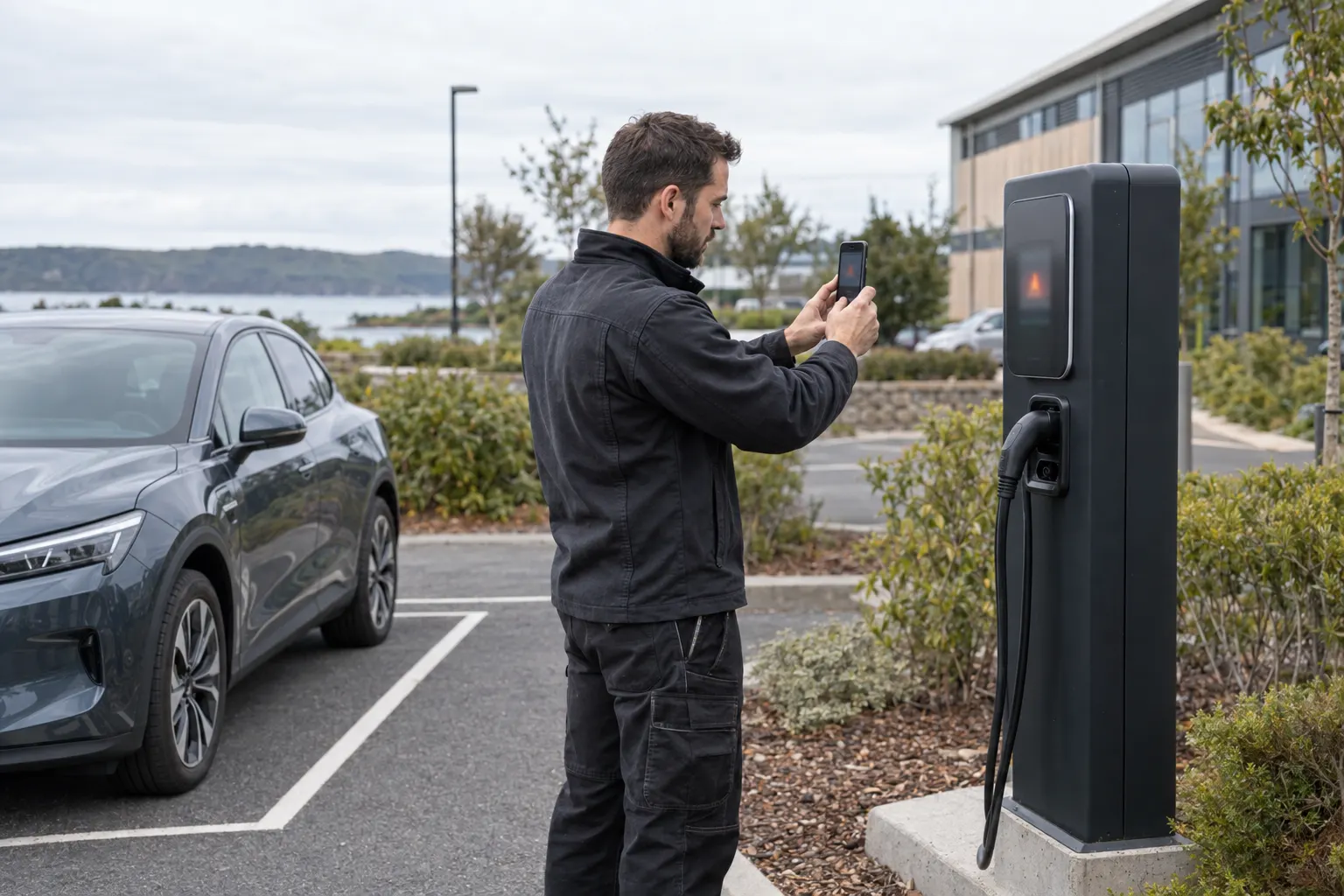
If an EV charger stops charging on site, build a timeline from information already visible or available through normal operator access. Record:
- The exact alert text or fault code, with a photograph of the display if safe.
- The date, time, duration and affected charger or bay ID, including whether other units stopped simultaneously.
- Whether reports involve one vehicle or different vehicles, using existing observations rather than deliberate test sessions.
- Known site activity at the time, such as machinery starting or changes in demand or on-site generation.
- Any other observed symptoms, such as flickering lights or equipment stopping elsewhere.
- Operator reference numbers, available session logs and whether charging resumed without intervention.
Record when the fault is reported as well as when it happened, if those differ. A guest’s morning report may relate to a session that stopped overnight. Exact session times are more useful for matching records than the time someone arrived at reception.
Staff should not open chargers or electrical enclosures, take voltage readings, alter protection thresholds or repeatedly reset tripping equipment. Any technical checks or settings review belong with an appropriately competent person using the relevant manufacturer guidance.
Who to contact when charging keeps stopping
Chargepoint operator or maintenance provider
For a managed charger, report the fault through its support route with the unit ID, alert and timestamps. Ask the operator to preserve available logs and explain the model-specific message. Equipment or manufacturer support may be needed; remote information alone does not establish the condition of the site wiring.
Electrical contractor
Recurring trips, uncertain causes or signs of a site-installation issue call for competent investigation. Commercial EV charging fault finding should bring the operator’s logs together with assessment of the charging circuit, connections and protection.
The contractor can decide what measurements or logging are appropriate, helping to distinguish a local installation problem from a condition needing further supply investigation.
Before a visit, gather the charger make and model, maintenance contact and any existing circuit records. Let the investigator know about access restrictions and when charging or other site operations can be interrupted. Do not arrange deliberate load changes or ask drivers to reproduce the trip.
Distribution network operator
Involve the distribution network operator (DNO) when the evidence points towards the incoming supply. For Cornwall sites on NGED’s network, its guidance explains the investigation process and its response when supply-terminal measurements are outside statutory limits. Share the timeline and professional findings so the network enquiry addresses the recorded interruptions.
These enquiries can run together; a site should not have to guess the final cause before reporting the fault.
Why a brief trip can differ from a DNO assessment
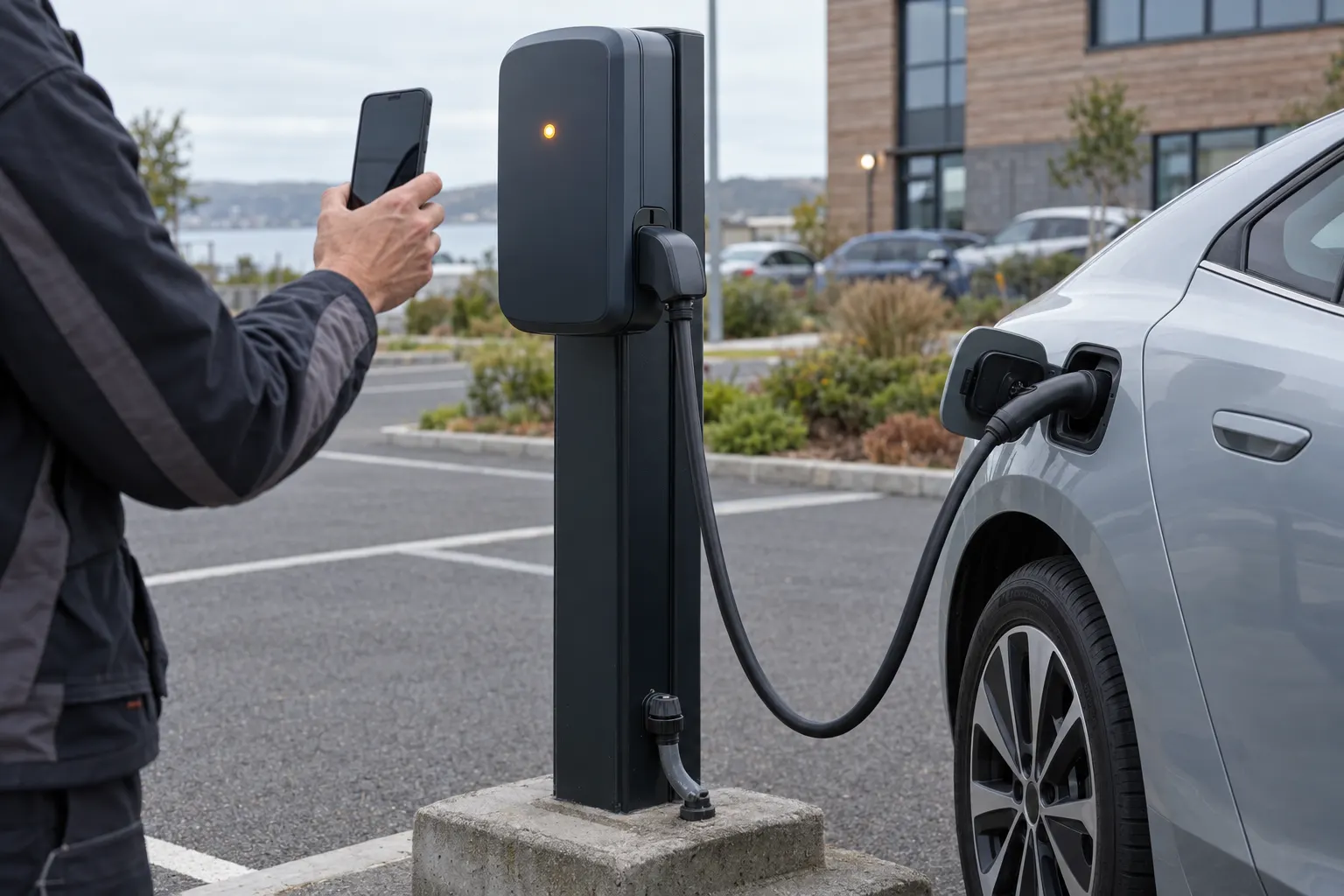
An EV charger overvoltage trip and a network voltage assessment can describe different aspects of the same event. The Energy Networks Association’s January 2026 technical report explains that protective devices may respond to short-duration events, while DNO voltage compliance assessments use ten-minute averages.
A brief event can therefore interrupt charging without proving that the assessed supply is outside statutory limits. Equally, an acceptable average does not mean a recorded interruption should be dismissed.
The useful next step is to compare time-aligned evidence from the chargepoint, the site installation and any network monitoring. Different recording periods and measurement locations need interpretation, not a decision to relax protection simply to keep cars charging.
Build a repeat-fault response for multiple bays
Give one named person responsibility for the incident record and escalation. If a charger repeatedly stops on an unexplained fault, keep the affected bay unavailable through the site’s normal arrangements while advice is obtained. Tell reception, security or facilities staff which bays drivers can use instead.
For holiday parks and leisure venues, a shared update between the site team and chargepoint operator can prevent conflicting messages to drivers. Do not promise a repair time before the cause and necessary work are understood.
Before returning the charger to use, obtain the appropriate operator or contractor advice and record the findings, any action taken and who authorised its return. If the cause remains uncertain, agree whether further monitoring is needed and what should trigger another report. One successful session is not, on its own, evidence that a recurring fault has been resolved.

Get help with a recurring voltage fault
For help with an EV charger voltage fault, call Maenporth Electrical Ltd on 01326 250297. We provide EV charging services, electrical testing and maintenance across Falmouth, Penryn and wider Cornwall. Have the charger details, alert and incident timeline available when you get in touch.