
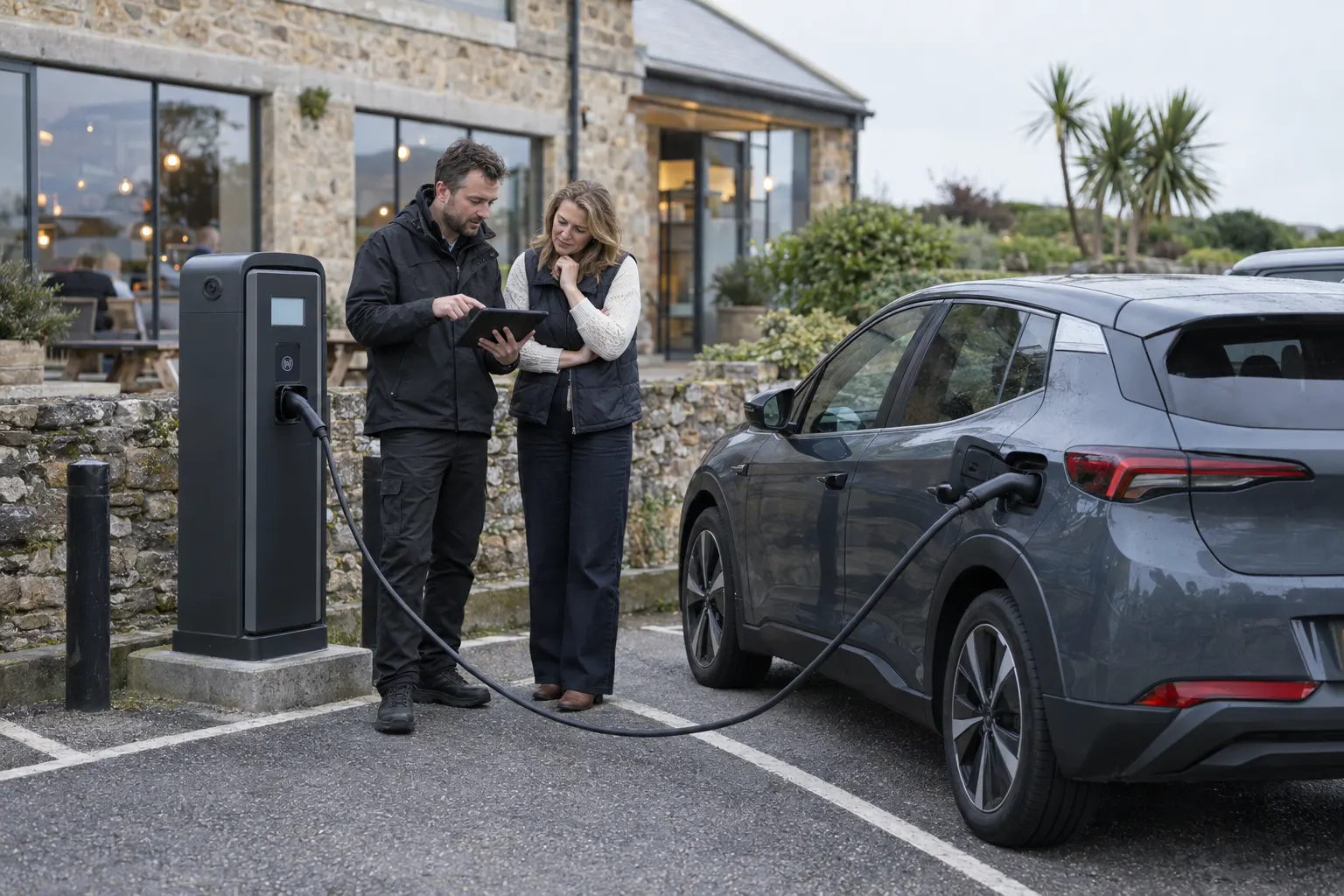
A charger can belong to your business without your business being its operator. Equally, the contractor who installs it does not automatically become responsible for payments, driver support or day-to-day operation.
For businesses planning commercial EV charging in Falmouth, public EV charger operator responsibilities should be clear before commissioning. Whether the site is a holiday park, campsite or leisure venue, the key question is who runs the service once it is switched on.
First confirm whether the charger is public
Staff-only charging is different from charging offered to customers, visitors or guests. Some charge points in public car parks fall within the public rules even where access is restricted to people buying goods or services. Free use and limited opening hours do not automatically put a charger outside scope.
Our article When does a workplace EV charger become public in Falmouth? explores that access question. Once public status is established, identify the operator before agreeing the service.
Who operates a public EV charger after installation?
The charge point operator (CPO) is responsible for overall operation and consumer-facing duties. It may be the site owner or a third party operating on the owner’s behalf. Guidance also considers who controls the charge point’s functioning.
EV charger operator vs installer
The installer delivers the electrical installation. A maintenance contractor may later inspect or repair it. Neither role automatically includes running the charging service, handling driver payments or meeting the operator’s regulatory duties.
A third-party CPO is not automatically required: a site owner can retain the operating role. Alternatively, a supplier may take it on. A payment app, equipment warranty or named supplier in a contract is not enough, on its own, to establish that responsibility has transferred.
Retaining the role means arranging the applicable operating functions, not simply setting a tariff and waiting for faults. Decide who in your organisation will oversee support, payment services, data and compliance, and how those functions will be delivered.
With a third-party arrangement, compare what the provider actually runs with what it merely supplies. A charger purchase, software subscription and maintenance contract are not interchangeable. Ask what the CPO controls and accepts, and what remains with you. The agreement should match the real arrangement.
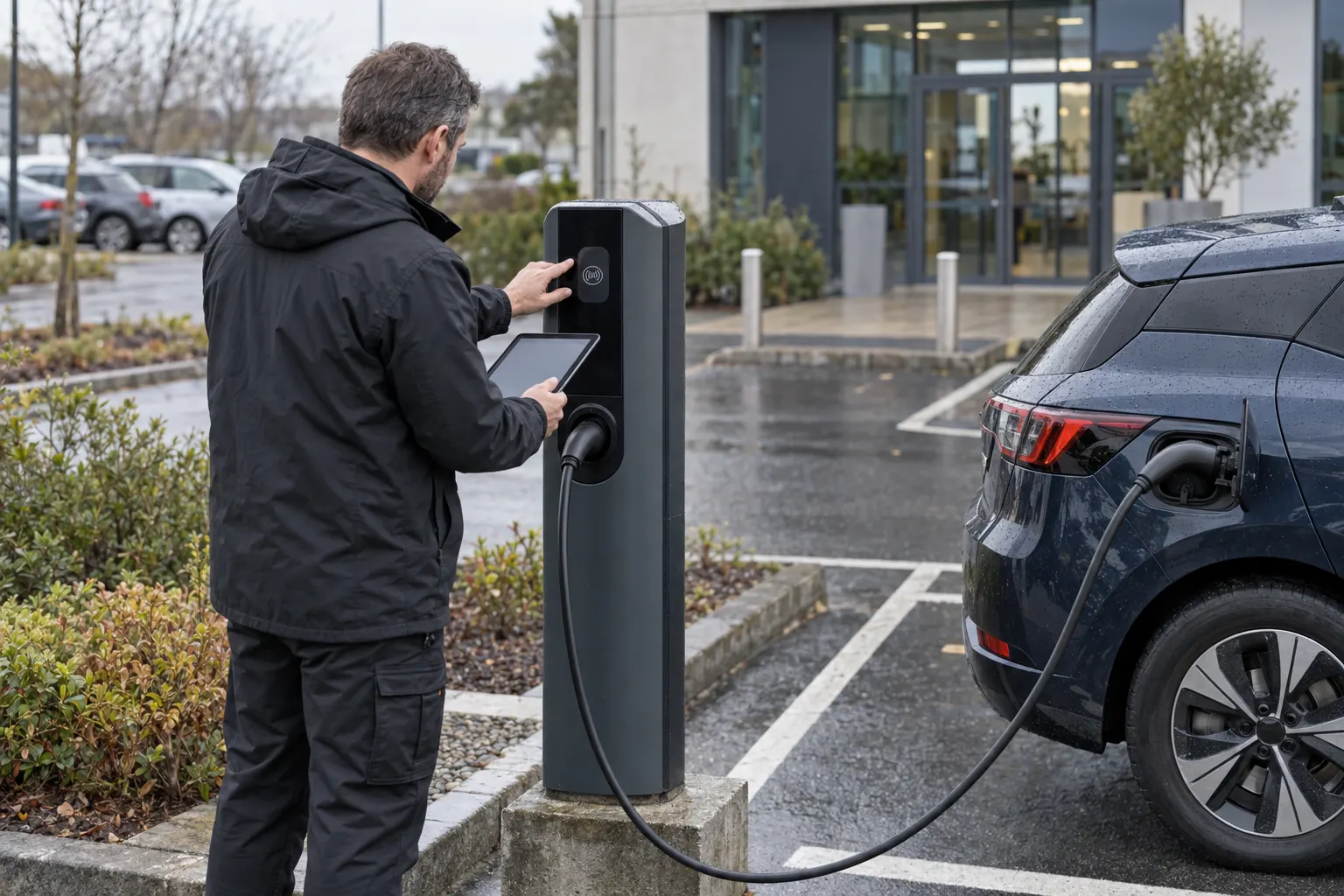
What operating duties apply to a public charge point?
The government’s Public Charge Point Regulations guidance sets out the current requirements. Applicability depends on the operator, charger rating and particular rule, including the exceptions below.
Prices, payments and driver support
Charging prices must be clear in p/kWh. For operators within scope, contactless payment requirements cover new public points at 8 kW and above and existing public points at 50 kW and above. Free points have specific payment exceptions; check the deployment dates and any applicable transition rules in the guidance.
Third-party payment roaming is a separate requirement: it allows payment through a participating provider’s service, rather than only the operator’s own route. It is not just another name for a card reader. In-scope operators must also provide a free, staffed 24/7 helpline. Your reception team’s daytime availability is not a substitute.
Reliability, data and reporting
The 99% reliability requirement is measured across an operator’s network of rapid public charge points rated 50 kW and above, as an average over the calendar year. It is not an uptime guarantee for each charger, nor a rule applying to every slower unit.
For a site with slower destination chargers, the absence of the rapid-network reliability target does not settle the whole compliance question. Pricing, support and data need their own checks. Put a practical fault-response expectation in the agreement even where the statutory 99% calculation does not apply.
Open-data and reporting duties also need an identified owner. Ask who maintains the required charge-point information, deals with updates and supplies evidence of compliance; do not assume the hardware purchase covers these tasks.
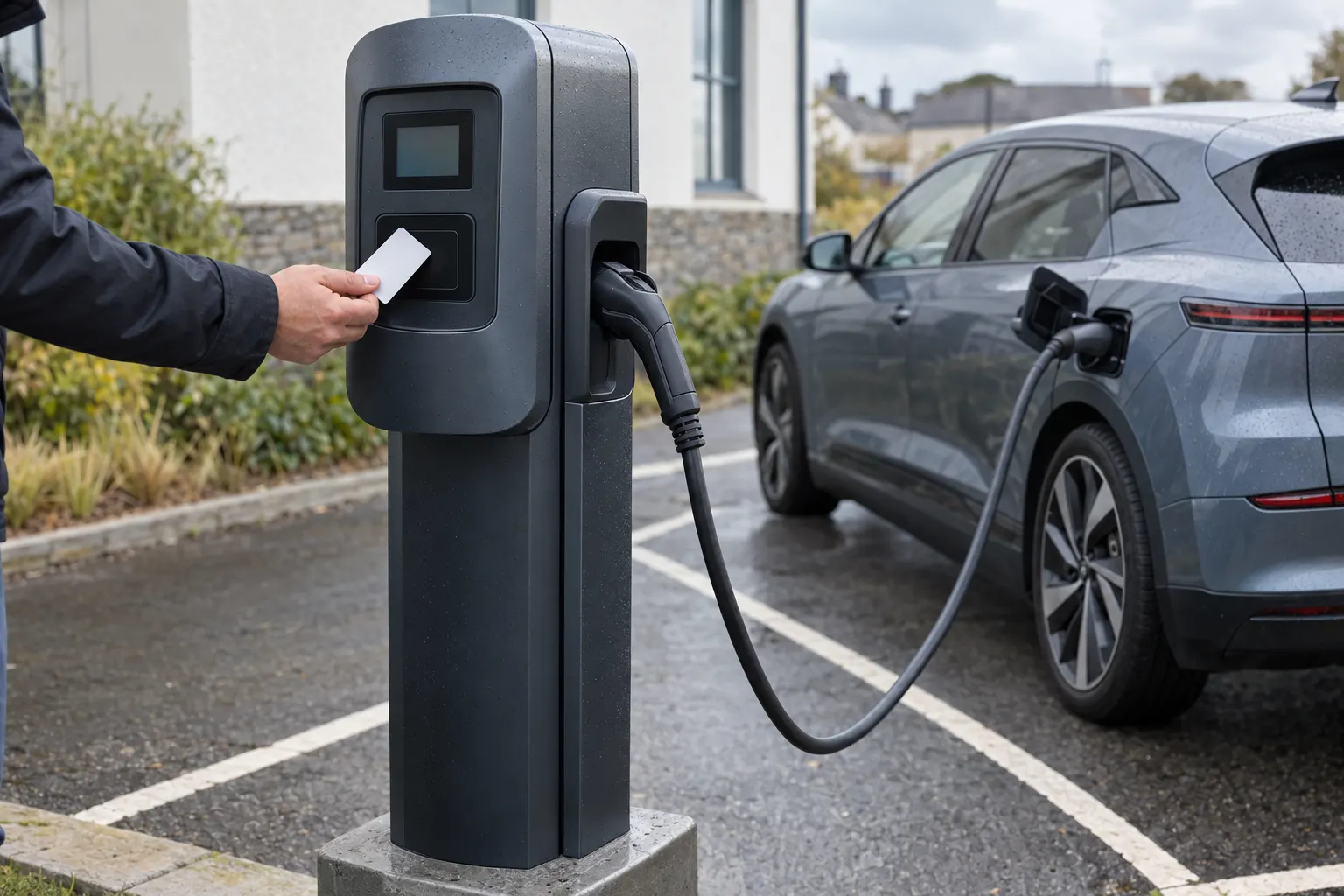
What should a Falmouth site host agree before commissioning?
A commercial EV charging agreement should separate operator duties from EV charging site host responsibilities. For guest-facing charging, make sure the arrangement also works when reception is closed.
- Ownership and operation. Who owns the equipment, which legal entity is the CPO, what does it control, and what remains with your business?
- Payments and costs. Who sets tariffs, collects charging revenue and pays electricity, platform and transaction charges? Who handles refunds and payment disputes?
- Driver support. Who provides the required helpline, and what information will drivers see at the charger? Who contacts site staff when local action is needed?
- Fault escalation. Who checks connectivity or payment faults remotely, and who arranges electrical attendance? Agree response expectations, access arrangements and authority to take a faulty unit out of service.
- Maintenance and records. Who schedules inspection and maintenance, authorises repairs and keeps the electrical handover documents?
- Data and accountability. Who handles required data publication and reporting, and what records can you obtain to check that these duties are being met?
- Contract exit. What happens to equipment access, platform accounts and operating records if you change supplier or the service ends?
Do not accept fully managed as the complete answer. Ask for the boundaries, exclusions and escalation route in writing.
Test the arrangement with an out-of-hours fault
For example, imagine a guest cannot start charging after reception closes. Who takes the call, checks whether the issue is payment, communications or equipment, and decides the next step? If an electrical visit is needed, who authorises it and gives the contractor access?
Run that scenario past both the proposed operator and the electrical maintenance provider. If each expects the other to respond first, there is still a gap to close before commissioning. Agree how your business will be told about an unavailable charger and who confirms that it can return to service.
Do free charging or microbusiness status change the answer?
Free charging changes some payment requirements; it does not, by itself, remove public status or every operating duty.
For a qualifying microbusiness operator, regulations 5–10 do not apply, but regulation 11’s pricing requirement applies to all operators. The statutory test includes a headcount of fewer than 10 and an applicable turnover or balance-sheet threshold.
Check the status of the actual operator, not simply the size of the premises. A small campsite using a larger network operator should not assume the network qualifies. These exceptions do not remove separate electrical safety responsibilities.
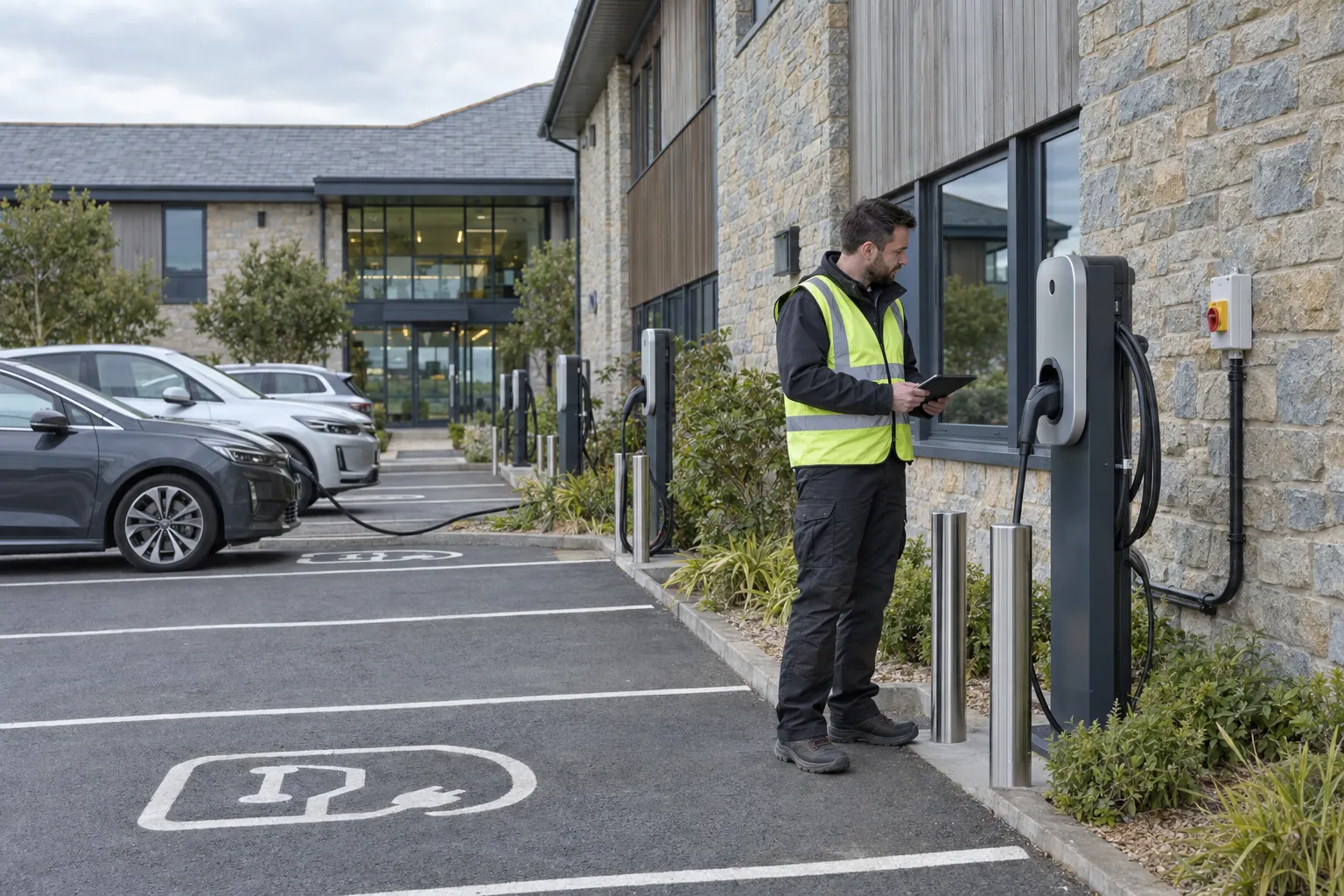
Keep electrical maintenance separate from network operation
An electrical inspection and a payment-platform check answer different questions. A charger can need electrical repair, communications support or both. A sound agreement gives the site host a clear route for each, rather than leaving an electrician and software provider to pass the fault between them.
Agree the maintenance boundary between the charge point and the site’s electrical supply. Confirm what is covered by planned visits, what falls under any equipment warranty and what needs separate approval. These are electrical service questions to settle alongside, rather than instead of, the operating agreement.
Keep electrical handover records alongside the operating agreement. Our article What Electrical Certificates Should a Falmouth Business Keep? covers the paperwork question.
Maenporth Electrical Ltd is based at Maenporth, serving Falmouth, Penryn and the wider Cornwall area. For the installation, electrical testing or planned maintenance side of your EV charging project, call 01326 250297.