
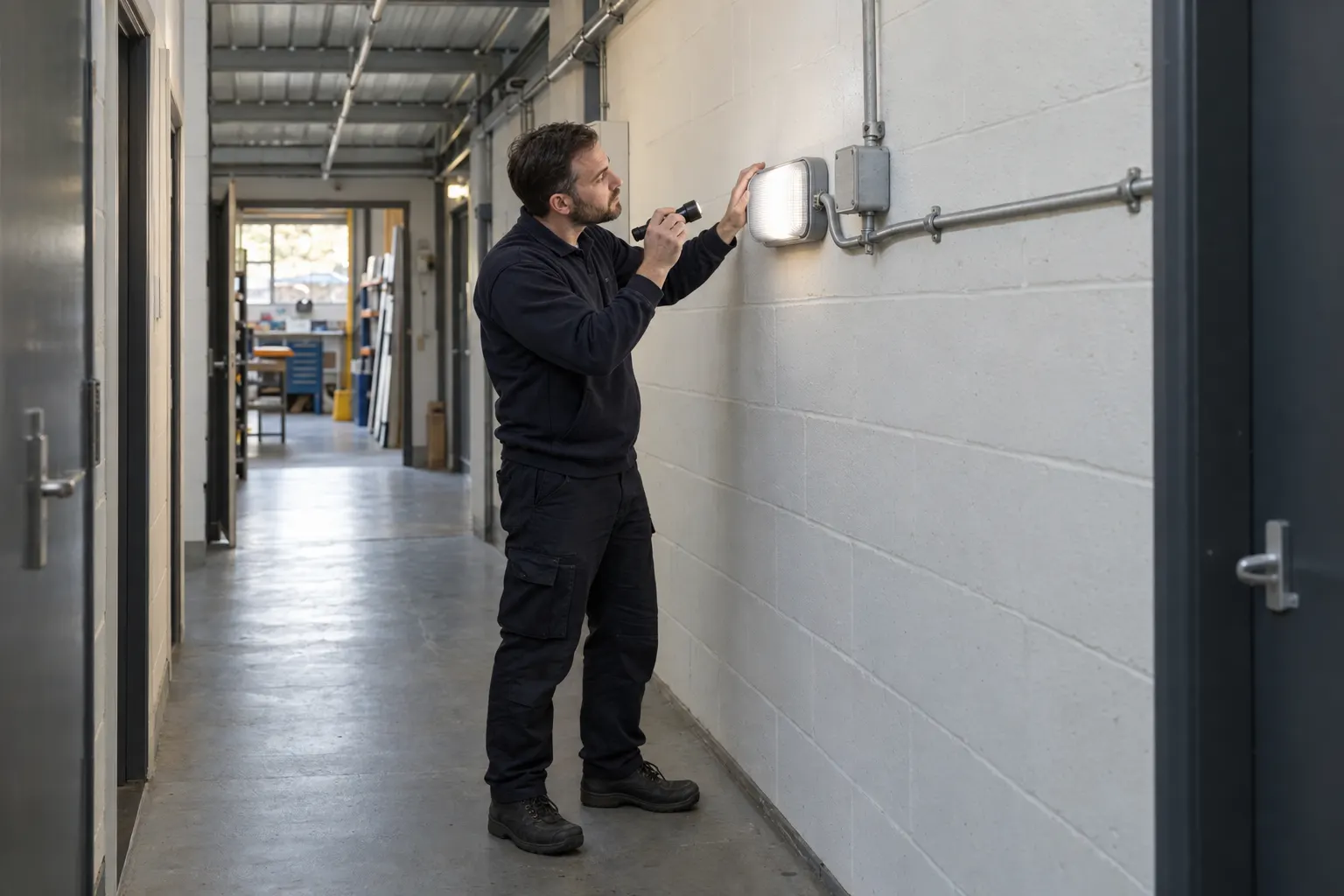
Does an EICR check lighting levels? A satisfactory EICR does not, on its own, prove that workplace lighting is adequate. An Electrical Installation Condition Report (EICR) considers the electrical safety of the fixed installation within its stated extent and limitations. Fixed lighting circuits and fittings can fall within that inspection.
For a Falmouth facilities manager, that means a satisfactory report can sit alongside genuine concerns about shadows across a workbench or glare on a screen. Electrical condition and lighting performance are different questions. Knowing which one you need answered helps you agree the right scope of work.
What an EICR can tell you about fixed lighting
It would be misleading to say that an EICR ignores lighting. Where included in the inspection, the electrical condition of fixed light fittings and their associated circuits forms part of the installation being assessed. An issue affecting that equipment can therefore be relevant to the report.
Start by reading the report’s stated extent and any limitations. Which rooms, circuits and outside areas were covered? Was access restricted anywhere? Do not assume that a satisfactory result describes parts of the site that were outside the agreed inspection.
If you are commissioning a commercial electrical inspection in Falmouth, explain any lighting concerns beforehand. A suspected electrical defect and a complaint that a task is difficult to see should both be raised, but they may require different checks.
EICR vs workplace lighting assessment
A satisfactory EICR alone does not establish that light levels have been measured, that light is evenly distributed or that glare is controlled. It also does not show that the lighting suits every task carried out under it.
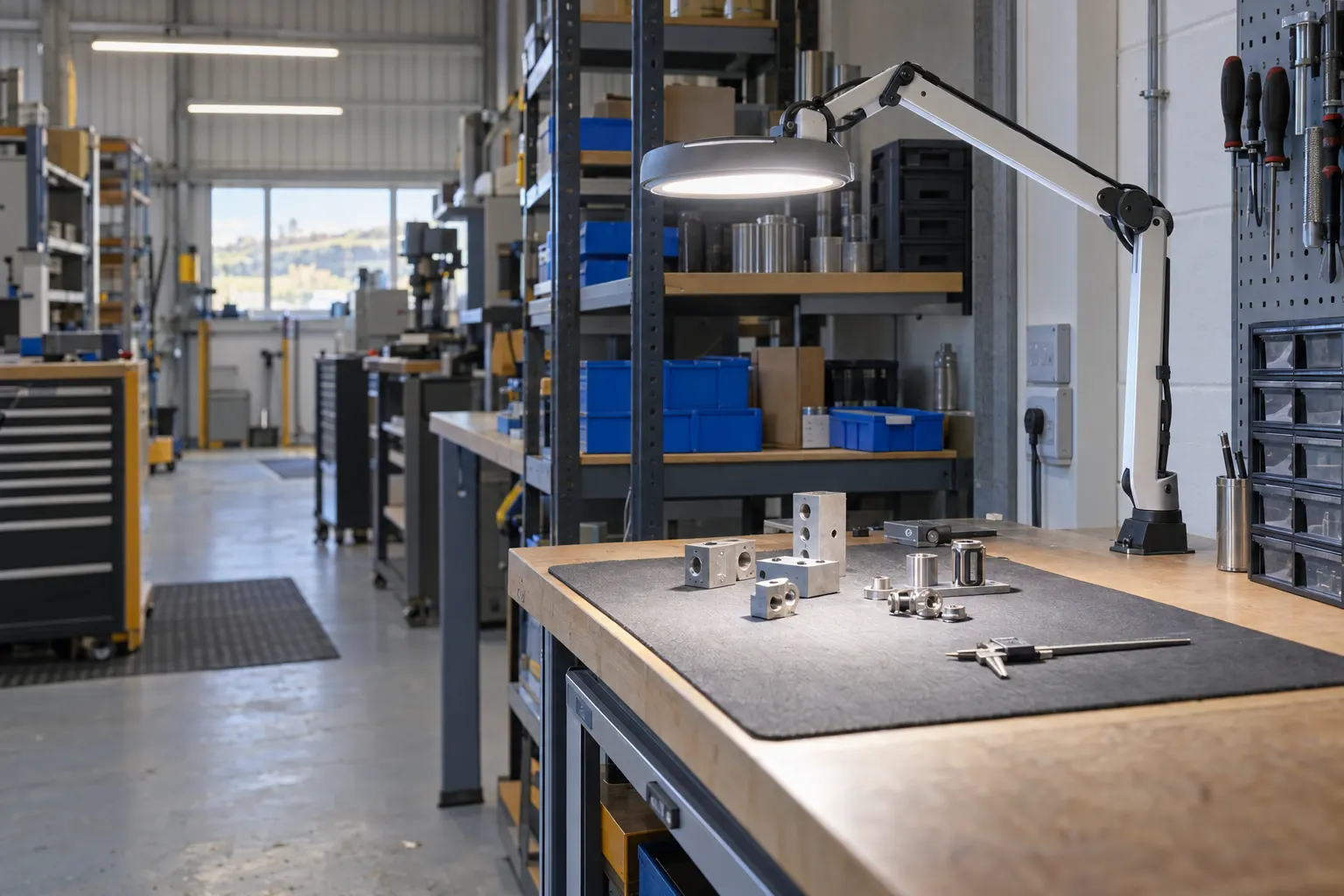
A fitting can be electrically sound yet poorly placed for a bench beneath a shelf. A layout that worked for storage may be unsuitable when the same space becomes a detailed inspection area. Those are lighting-performance questions, not conclusions to draw from an electrical condition report.
One review addresses the installation’s electrical condition; the other considers the visual conditions for the job. For bench-based work, a workshop lighting assessment may be the separate discussion you need. Do not assume light measurements are included simply because electrical testing has been booked.
Why suitable lighting depends on the task and location
For workplaces covered by the general workplace regulations, HSE says lighting must be suitable and sufficient. Its guidance on lighting and visual tasks highlights glare and the need for local lighting where appropriate.
HSE gives different example illuminances for a walkway, a process-control room and engineering drawing. These illustrate why the task matters, rather than setting one universal legal lux target for every room. Lux describes illuminance at a surface, but a number alone cannot explain all the visual conditions people experience.
Consider a factory inspection bench, a holiday park reception desk and a leisure site’s store. Each involves different objects, viewing positions and surrounding surfaces. Daylight, shadows from shelving and the position of the person doing the job can change how useful the available light is.
If measurements are commissioned, their location matters. A reading taken in an open aisle cannot automatically describe a recessed workstation. Explain the normal working position and whether the concern relates to seeing detail, moving safely or reflections obscuring a view.
For quarry operations, check which site-specific rules and risk assessments apply. HSE notes that the general workplace regulations do not cover some mineral-extraction workplaces.
When a Falmouth business may need a separate lighting review
When the lighting no longer suits the work
A satisfactory EICR should not end the discussion if staff report difficulty seeing detail, intrusive reflections or dark areas on working routes. A separate review may also be relevant after benches, racking or workstations move, when tasks change, or when an area starts being used after dark.
Record where and when the problem occurs. A route that seems clear during a daytime visit may look very different during an evening shift. Give the reviewer that context rather than simply asking for brighter lights.
When electrical and lighting concerns overlap
Sometimes both questions need attention. An electrical concern about a fitting can sit alongside a shadowing problem caused by the layout. Ask for the electrical issue and the lighting-performance concern to be considered explicitly; neither assessment should be assumed to cover the other.
For a commercial lighting review in Cornwall, ask whether the proposed work is an initial visual review, a measurement-led assessment, or electrical inspection and testing. Clarify the areas covered, the tasks and the working conditions. The label “lighting check” is too vague to tell you what evidence you will receive.
How EICRs, normal lighting and emergency lighting differ
Keep three questions separate when arranging work. An EICR concerns electrical condition within its scope. A normal-lighting review considers whether the everyday working environment is suitably lit. Emergency lighting addresses a different need when normal lighting fails; its assessment and testing should be treated separately.
If several checks are planned together, ask for their scopes and findings to be clearly identified. Neither a satisfactory EICR nor an emergency-lighting test record should be read as evidence that the normal lighting suits detailed work at a bench.
What to prepare before discussing a lighting concern
A useful brief links the report to what actually happens on site. Before the conversation, gather:
- The existing EICR, including its extent, limitations and observations, plus relevant lighting or emergency-lighting records you already hold.
- The location and task, identifying the bench, room, route or outside area and what people need to see there.
- The timing, including shifts, daylight conditions and whether the concern is constant or appears only at certain times.
- Recent changes, such as moved racking, new workstations, different activities or altered opening hours.
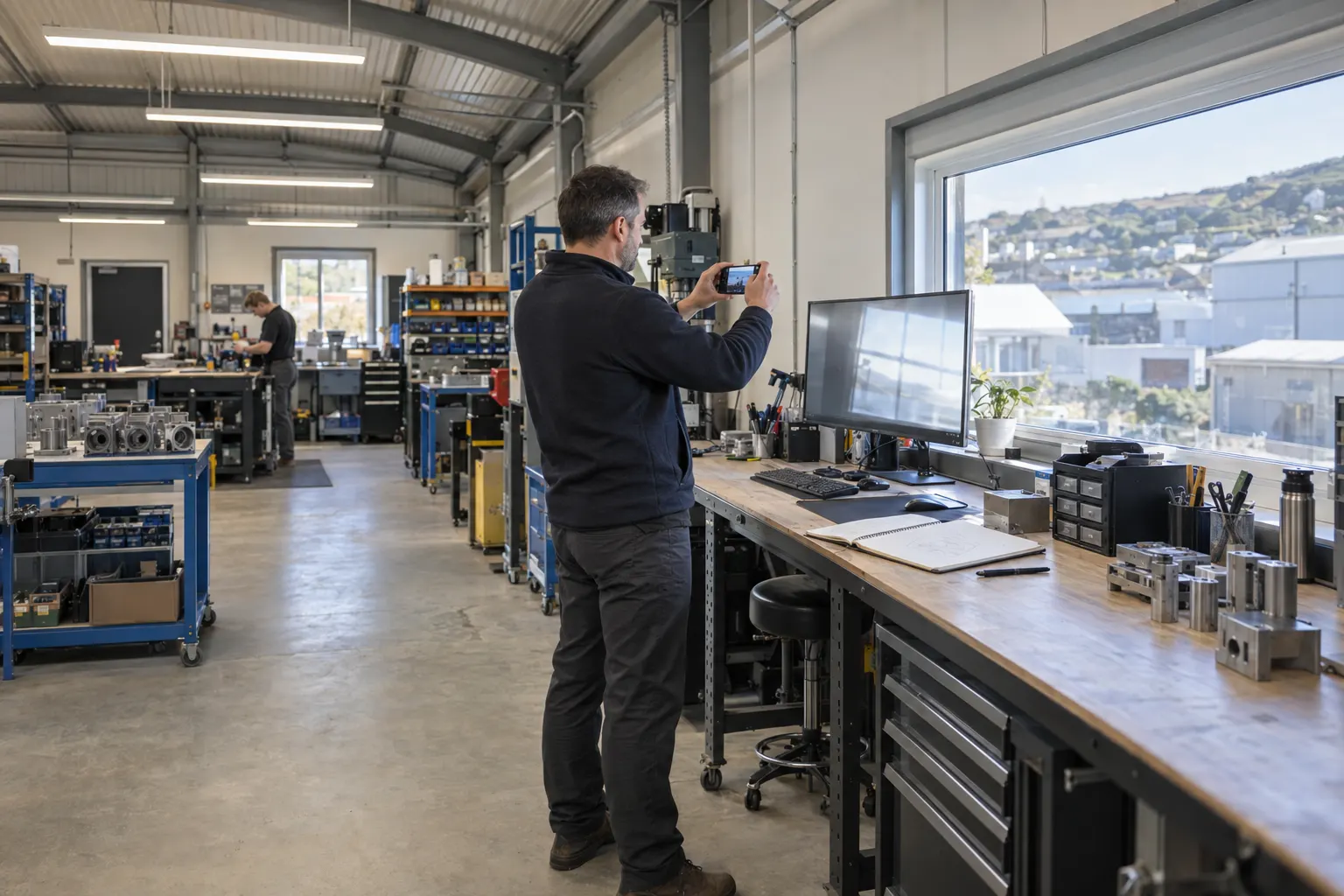
- Safe observations, including staff descriptions and photographs taken from safely accessible positions, without opening fittings or electrical enclosures.
- The decision you need to support, such as whether an electrical concern needs investigation or whether a changed workspace needs a separate lighting review.
For a lighting assessment at a Falmouth workshop, make clear which areas need general visibility and which involve close visual tasks. You do not need to choose a lux target before making contact.
If measurements are needed, agree who will provide them, under which working conditions and what the findings will cover. Do not assume a measured or calibrated survey is included in an EICR or an initial discussion about lighting.
Maenporth Electrical Ltd is based at Maenporth and serves Falmouth, Penryn and wider Cornwall. To discuss a commercial electrical inspection or a lighting concern, call 01326 250297. Explain the question you need answered so the appropriate scope can be agreed.