

Do not switch flood-affected electrics back on just because the water has receded. National recovery guidance says electricity should not be reconnected until the system has been thoroughly examined by a qualified electrician.
For a Falmouth business, commercial electrical checks after flooding should establish what was exposed, who needs to assess it and what can safely return to use. A restored network supply is not, by itself, clearance to restart the premises.
Why electrical risks can remain after floodwater recedes
For businesses, electrical safety after flooding depends on the condition of the installation, not how dry the floors look. Water and contamination may remain inside equipment, and damage may not be visible from outside. A machine running or a light coming on is not evidence that it is safe. Water may have reached low-level connections or nearby plant even where the main distribution board appears untouched.
Cornwall Council lists Falmouth and Penryn as Critical Drainage Areas. This is planning context, not proof that a particular business property is flood-prone. The government's long-term flood-risk tool is also area-level information, not a prediction for an individual property, and does not account for sources such as burst pipes. After an incident, electrical decisions must follow the actual exposure and condition of the installation.
What site staff should do before anyone restores power
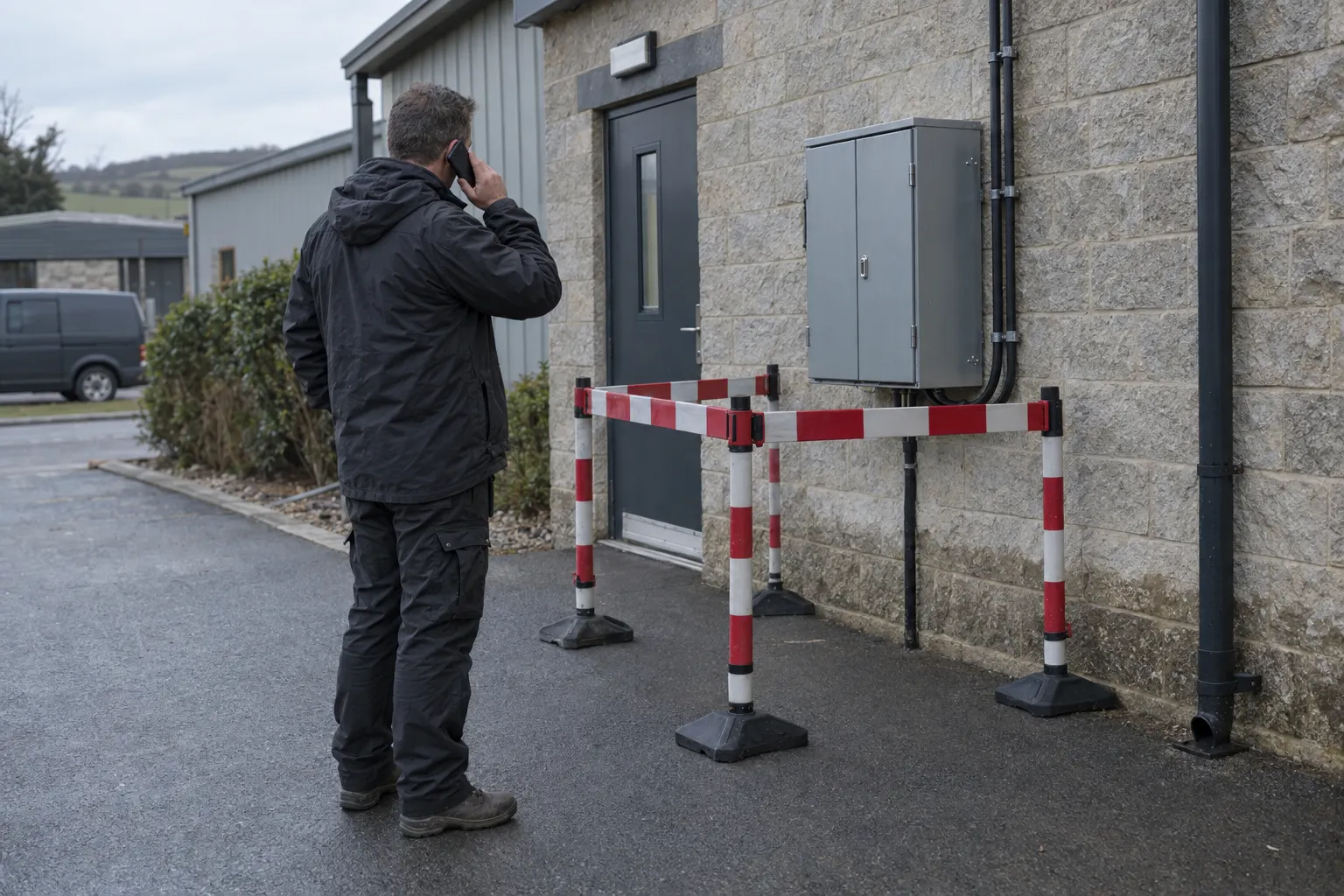
Keep staff, visitors and contractors away from affected areas. Never touch electrical equipment while standing in floodwater, or equipment that has been immersed. Do not enter water to reach a switch or meter.
- Prevent unauthorised reconnection or equipment use through site-management arrangements.
- Do not reset tripped protective devices to see whether they work.
- Do not use flood-exposed sockets or appliances for cleaning and drying.
- Tell the electrician about solar PV, batteries, generators or other alternative supplies. A loss of mains power does not establish that every source is disconnected.
Electrical isolation should only be undertaken where safe and by someone competent to do it. Staff should not open covers, test circuits or try to dry out electrical equipment themselves.
If pumps, dryers or temporary supplies are needed for recovery, have their electrical arrangements assessed too; do not improvise around damaged circuits.
Who to contact about network equipment and the site's own installation
Incoming supply and submerged meters
National Grid Electricity Distribution serves the South West. Its advice on flood-affected electricity supplies says to keep away from a meter that has been underwater and call 105 or 0800 6783 105 for a safety visit.
Give the contact your address, the location of known water exposure and whether safe access is available. Do not enter affected areas to identify equipment or photograph a serial number.
Your installation and connected equipment
Arrange commercial electrical support to assess the premises-side distribution, wiring and connected equipment. Machinery or specialist systems may also need an assessor with competence in that particular equipment. A network visit is not a substitute for assessing the business's own installation.
Network and premises work may need coordinating. Ask what has actually been checked and which equipment remains outside that assessment.
Which commercial electrical systems may need assessment
The scope should follow where the water reached, not just the room where it was first noticed. Depending on exposure, it may include:
- Distribution and fixed wiring, including switchgear, distribution boards, sockets and connections.
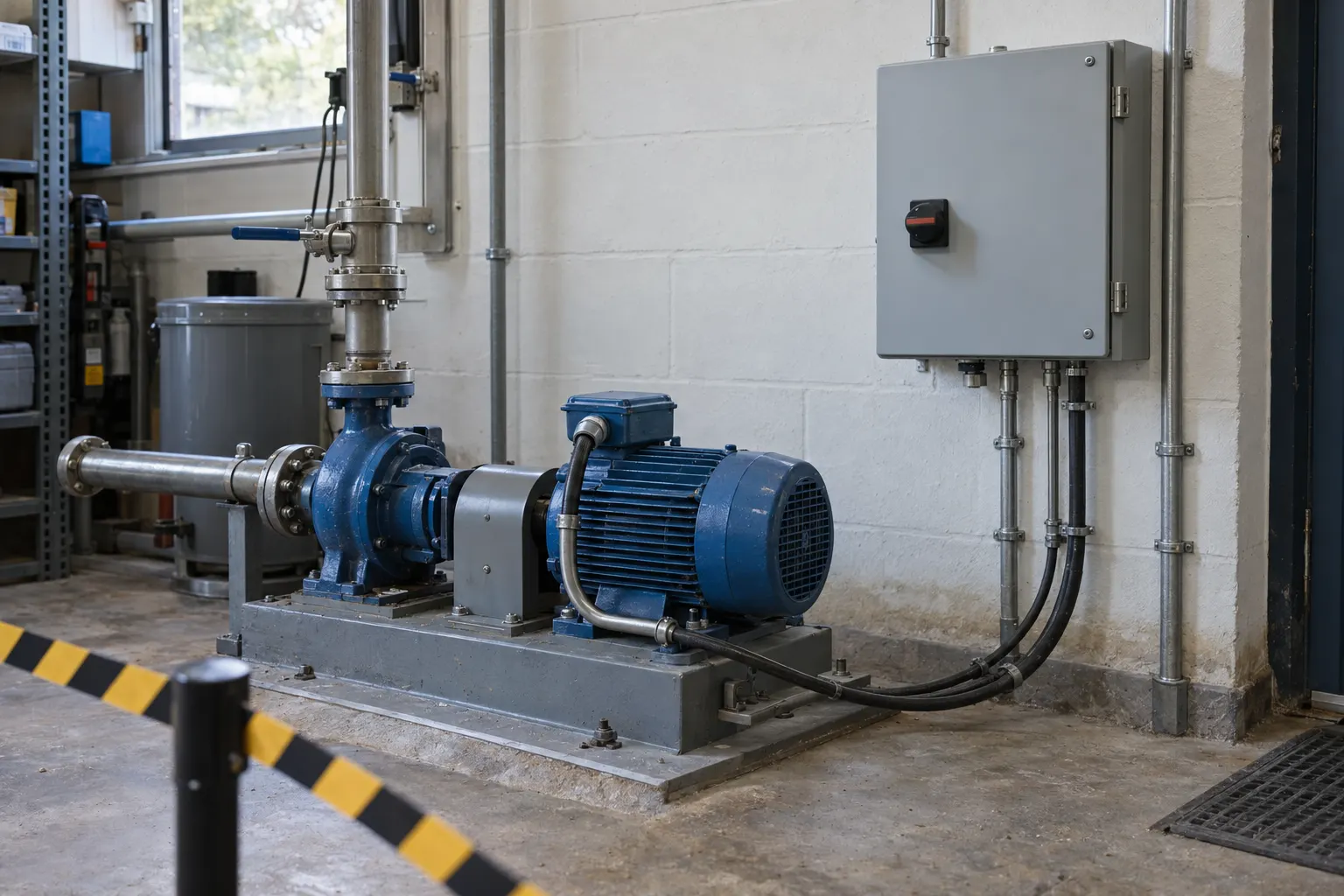
- Machinery and building services, such as motors, pumps, refrigeration and their controls.
- Safety-related systems, including emergency lighting and associated supplies, with specialist input where needed.
- Outdoor equipment, such as campsite hook-ups and EV chargepoints.
- Alternative supplies, including relevant solar PV, battery and generator equipment.
If any equipment has already been moved from the affected area, include it in the brief. Moving an appliance or machine does not make it safe to connect elsewhere.
On a holiday park, a dry reception building does not establish that exposed pitch hook-ups are safe. The assessed boundary must be clear, particularly where supplies serve several buildings or outdoor areas.
What determines the scope of inspection, repair or replacement
A flood-damaged electrical installation inspection is an incident-led assessment, not simply the next scheduled check. The scope of electrical inspection and testing should be risk-based, following Health and Safety Executive (HSE) guidance, with relevant competence for specialist equipment. Workplace electrical systems must be maintained to prevent danger so far as reasonably practicable.
The assessor needs to establish the extent and duration of exposure, the equipment involved and whether safe inspection is possible. Relevant manufacturer guidance and specialist advice may affect decisions about repair, replacement or further investigation. Findings should also identify any areas that could not be assessed, rather than treating them as cleared.
Neither blanket replacement nor drying followed by switch-on should be assumed appropriate. A pre-flood electrical installation condition report (EICR) describes an earlier condition; it does not establish safety after new damage. There is no single post-flood test sequence to prescribe for every business. Ask how the proposed work addresses your incident and what evidence will support reconnection.
For water-damaged commercial electrics, check that the agreed scope separates fixed wiring from machinery and other equipment. A report on one does not automatically cover the other; specialist equipment may still need assessment even if its supply circuit is satisfactory.
What site information, records and approvals can help
Build a brief from existing records and information obtainable without entering unsafe areas. Useful details include:
- Photographs taken safely, plus the estimated water level and duration.
- Known affected areas, equipment lists and existing circuit schedules or drawings.
- Previous inspection reports, maintenance records and known defects.
- Alternative supply details and the loads essential to business continuity.
Nominate one site contact to coordinate access and keep contractors informed of restrictions.
Check access, repair approval and documentation requirements with the landlord, insurer and site management as applicable. Tenancy and insurance arrangements vary, so do not assume one party is responsible for every asset or every cost.
Keep safety controls separate from the commercial approval process. Uncertainty about who will authorise or pay for repairs is not a reason to return affected equipment to use.

How to plan a safe return to service and update the business flood plan
A staged restart may be possible, but only where the competent assessment supports it. With the electrician, agree which circuits and equipment may return to use, what must remain disconnected, who will manage restoration and which safety systems are needed before occupation.
An electrical assessment is not an all-clear for the entire building. Flood recovery may also involve other safety and access decisions. Site management should coordinate those before staff or the public return.
Keep a written record of the assessment, repairs, outstanding restrictions and any follow-up work. Brief staff, tenants and contractors so that equipment left out of service is not inadvertently used. Agree how outstanding work will be followed up rather than allowing restrictions to disappear informally as trading resumes.
Once recovery is under control, update the business flood plan with utility shut-off locations, emergency contacts and continuity arrangements. The government's checklist also includes guidance for campsites and caravan parks.
For commercial electrical checks after flooding, call Maenporth Electrical Ltd on 01326 250297 to discuss your premises-side requirements. Based at Maenporth, we serve Falmouth, Penryn and wider Cornwall.