
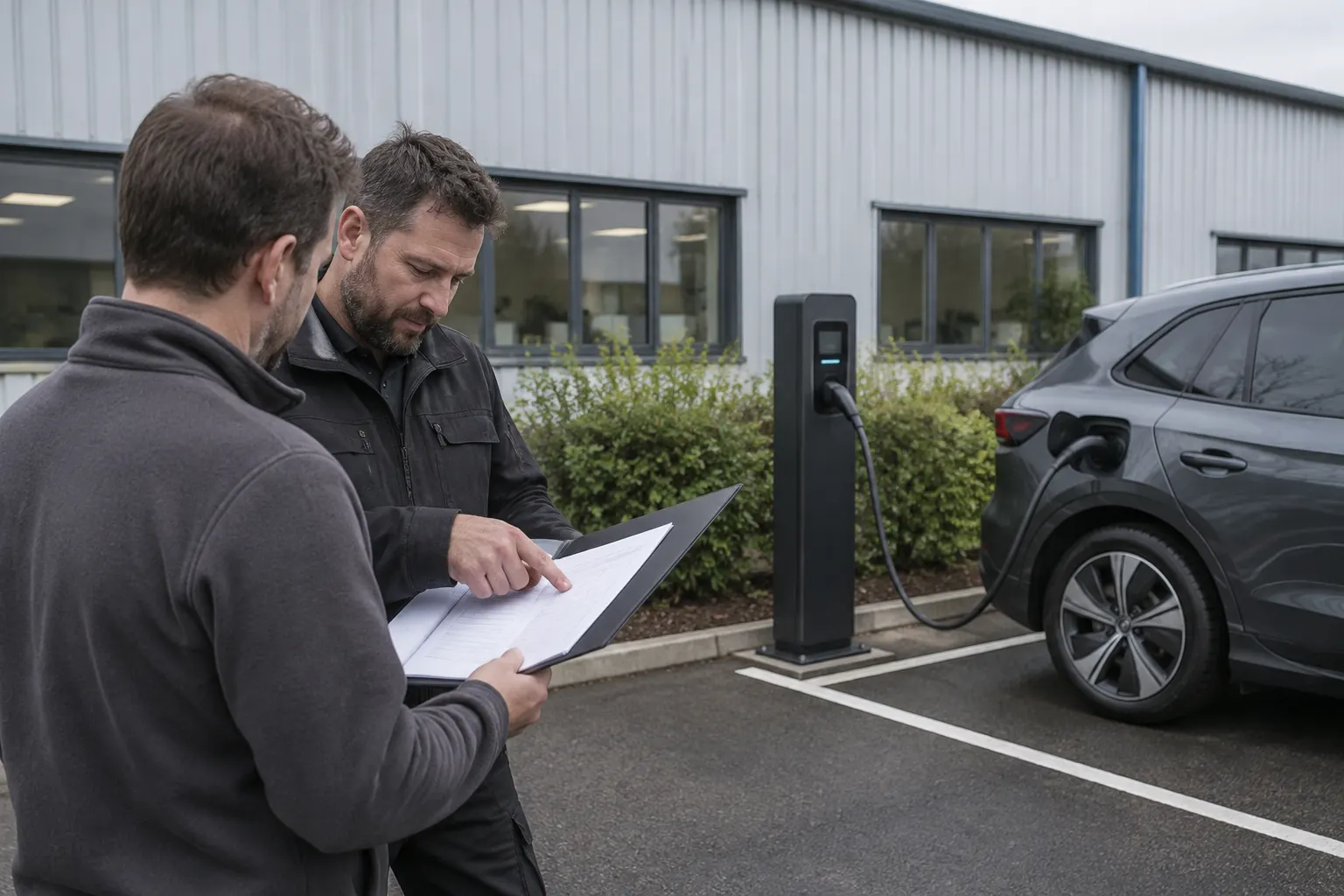
Checking commercial EV charger installer qualifications means looking beyond a course title or a scheme logo. Before appointing a contractor, a site manager needs to know whether the evidence covers non-domestic work, who will take responsibility on site and what certification the finished installation will receive.
For Cornwall’s factories, workplaces, holiday parks and leisure venues, those are practical purchasing questions. Separate the business’s assessed scope, the people’s competence and the installation’s electrical compliance. A convincing answer to one does not automatically answer the others.
Why the October 2026 EAS changes matter
The EV charging installer competence requirements in the Electrotechnical Assessment Specification (EAS) changed from 1 October 2026. The current June 2026 edition replaces the October 2024 EAS while retaining those changes.
EAS is a framework used by certification and registration bodies to assess electrical businesses. It is not a new law or a universal electrician’s licence. Its value to a buyer is the evidence behind a contractor’s competence claim.
The competence tables cover qualified supervisors and employed people responsible for or undertaking EV installation work. Where the relevant role criteria are not met, the EAS points to its EV-specific qualifications table and guide. Use the IET’s EAS and Qualifications Guide to check the evidence against the role, rather than relying on a course advert.
This does not mean every person must hold one identical EV qualification. Trainees and apprentices may work under close supervision. Ask who will be responsible for the work and how supervision will operate on your job.
EAS category A3.2 covers non-domestic EV charging
The EAS lists EV Charging Equipment Installation as category A3, split into:
- A3.1 – EV charging equipment installation in dwellings.
- A3.2 – EV charging equipment installation in places other than dwellings.
For a non-domestic EV charger installation at a workplace or commercial site, A3.2 is the scope to ask about. Domestic A3.1 evidence alone does not confirm that the business has been assessed for the proposed non-domestic work.
At a mixed-use site, ask how the assessed scope relates to the actual installation. Do not assume that the presence of holiday accommodation or staff housing makes every charger a domestic job.
Give tenderers the same description of the proposed installation, so each answer relates to your project rather than EV work in general. Ask for scope confirmation and any limitations in writing.
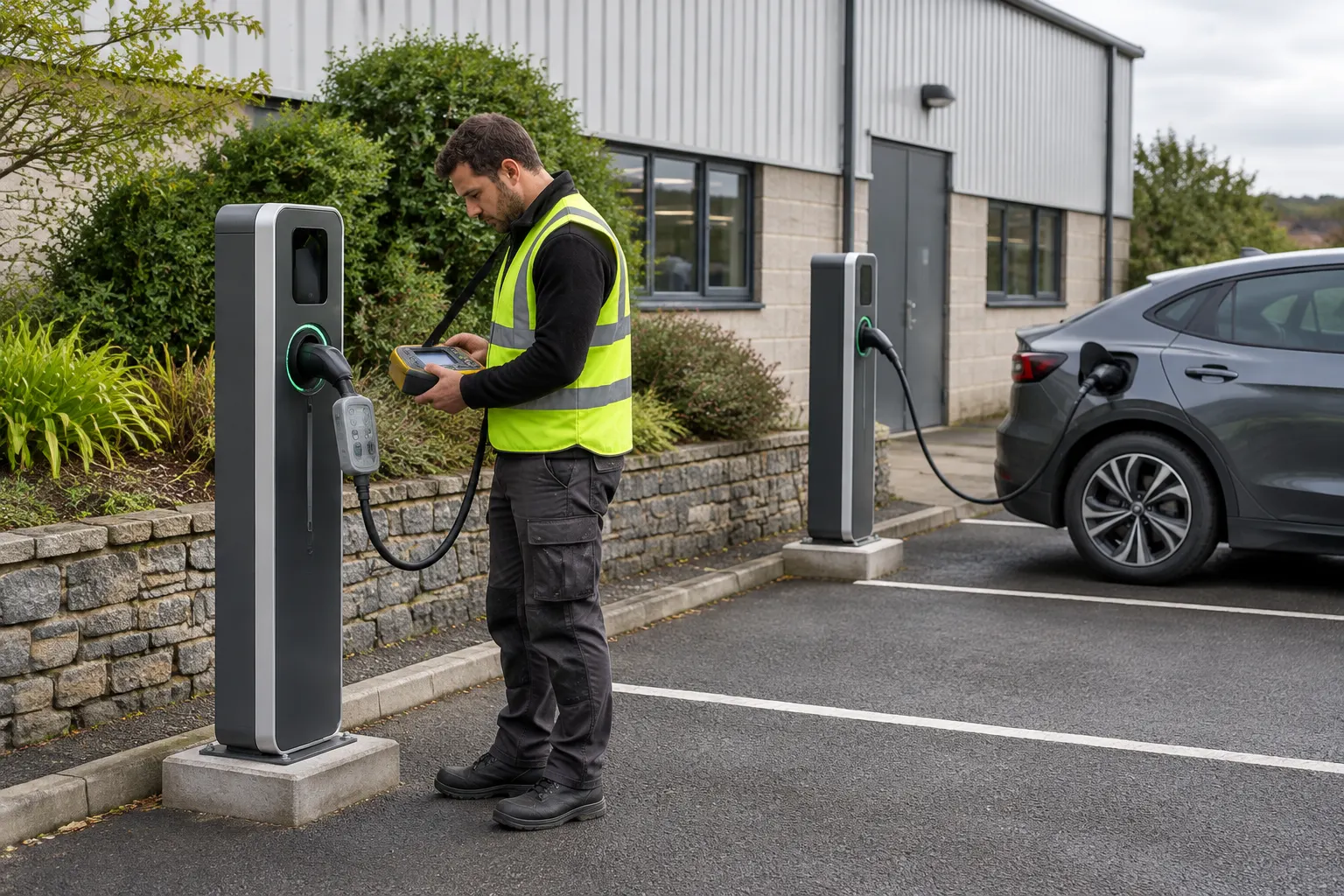
What an assessment certificate can verify
Where a contractor cites EAS-based certification, ask for its current assessment certificate, not just a screenshot of a scheme badge. Under the EAS, the certificate must identify the assessed work category and the extent or limitations of its scope.
Match the named business to the one you intend to appoint. Check whether its scope covers A3.2 and look for relevant limitations. Use the issuing body’s validity check; if the scope is unclear, ask the issuer to confirm it.
Keep individual qualification evidence separate from business assessment evidence. A person’s course certificate does not, by itself, establish the enterprise’s assessed scope. Equally, a business certificate does not explain who will actually take responsibility on your site.
If different businesses will contract, install or certify the work, establish that arrangement before appointment. Ask whose assessment evidence you are reviewing and who will provide the installation certificate.
When comparing quotations, note missing evidence separately from price differences. A general assurance of competence does not answer which category is covered or who is responsible. Give the contractor an opportunity to provide those specifics before treating offers as equivalent.
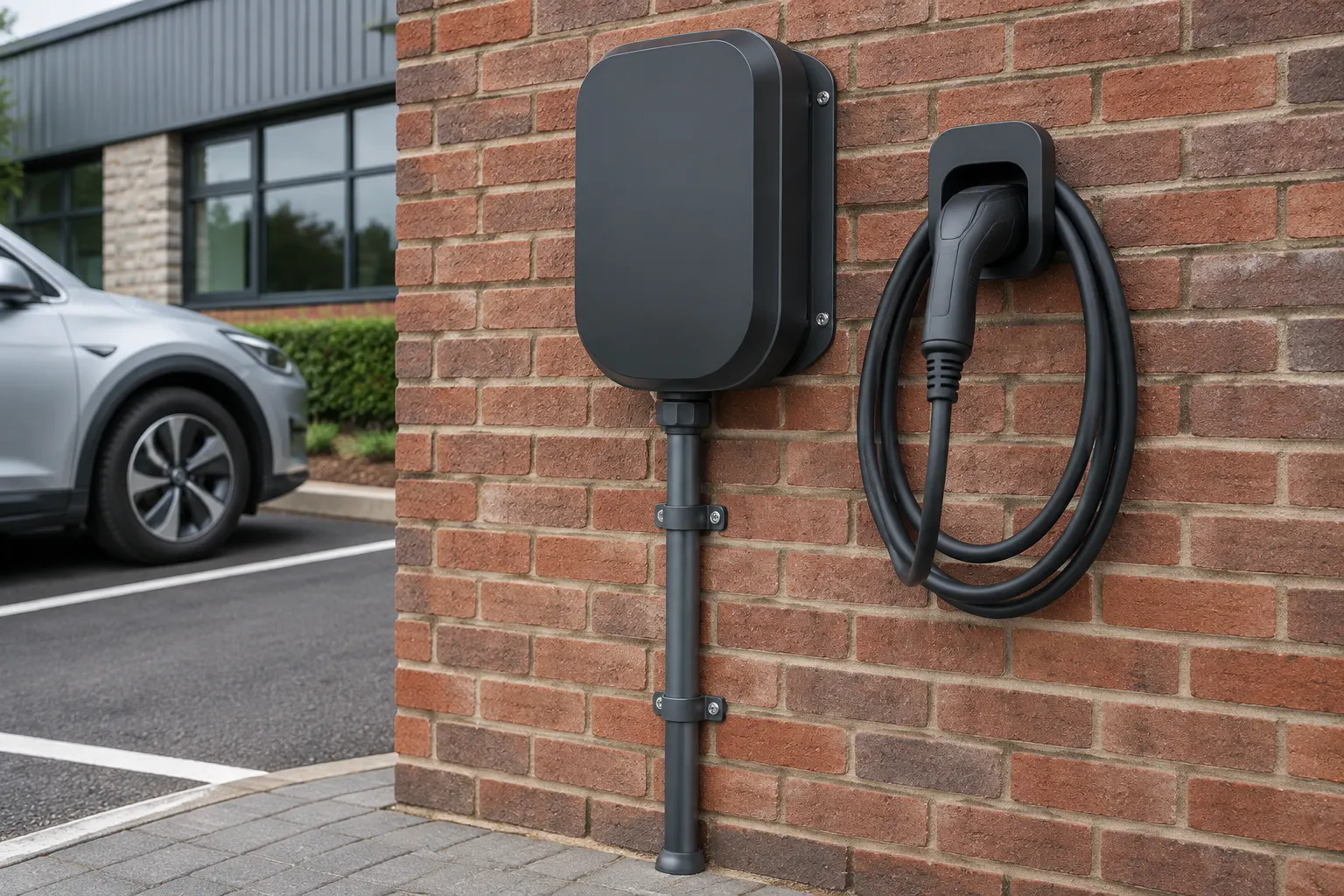
OZEV authorisation versus EAS scope
These are different checks, not alternative ways to approve the same thing.
OZEV authorisation concerns the grant claim
For a Workplace Charging Scheme (WCS) claim, the installer must be authorised by the Office for Zero Emission Vehicles (OZEV). That is a separate check from the contractor’s EAS scope. Grant authorisation is not, on its own, proof that your particular installation is suitable or compliant.
Electrical compliance concerns the completed work
As at 13 November 2026, the current Wiring Regulations edition is BS 7671:2018+A4:2026. Ask how compliance will be demonstrated for your new installation. A qualification or registration does not, on its own, establish that the finished work complies.
WCS guidance separately requires a BS 7671 Electrical Installation Certificate. Make electrical certification part of the written handover scope. An assessment certificate concerns the contractor’s assessed scope; an installation certificate records the completed electrical work.
A pre-contract and handover checklist for site operators
Put the information you need into the enquiry, compare replies on the same basis and make the agreed documents part of the order. Do not leave evidence requests until the final payment discussion.
Before accepting the quotation
- Scope. Ask for written confirmation that the assessed category and any limitations cover the proposed non-domestic installation, and clarify anything excluded.
- People. Identify who is responsible for the work, who will undertake it and how anyone needing close supervision will be managed, not just who prepared the quotation.
- Validity. Verify the assessment certificate through the issuing body rather than relying only on a supplied copy, and record when you checked it.
- Delivery. Clarify any subcontracting arrangements and which business will install, verify and certify the work, especially where different business names appear in the paperwork.
- Grant. Where WCS is involved, check OZEV authorisation separately; do not treat it as a substitute for the technical evidence.
- Handover. Specify the Electrical Installation Certificate and agreed commissioning information, including who will supply them and when, rather than leaving the documents to be agreed after installation.
At handover
Check the evidence against what was actually delivered, not just the original proposal. Your site file should include:
- The agreed Electrical Installation Certificate, identifying the completed work rather than merely repeating a general scope description.
- Commissioning and operating information matched to the installed charging equipment, rather than generic sales literature.
- A record of changes to the agreed installation scope and any associated certification queries requiring a clear answer.
- The relevant contractor and issuing-body details, so a future site manager can understand and check the evidence without starting again.
If a scope, identity or validity answer is vague, resolve it before committing. If a handover document is missing or unclear, record the query and agree how it will be resolved. More paperwork is not automatically better; each document should answer a specific question.
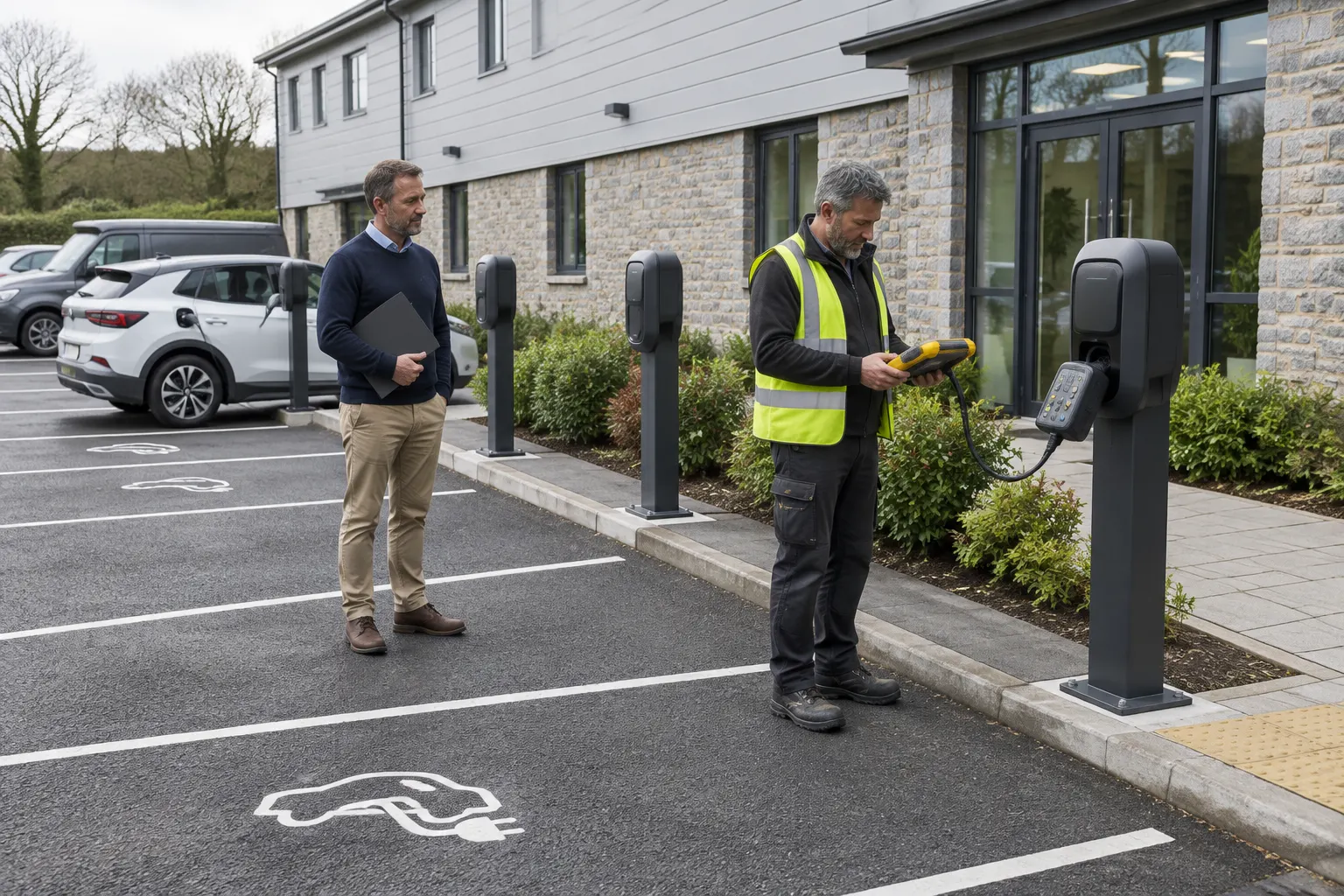
Discuss the evidence before appointing your installer
To discuss EV charging for a commercial site, call Maenporth Electrical Ltd on 01326 250297. Based at Maenporth, we serve Falmouth, Penryn and wider Cornwall. Bring the proposed scope and any tender requirements so the conversation starts with the work and evidence you actually need.