
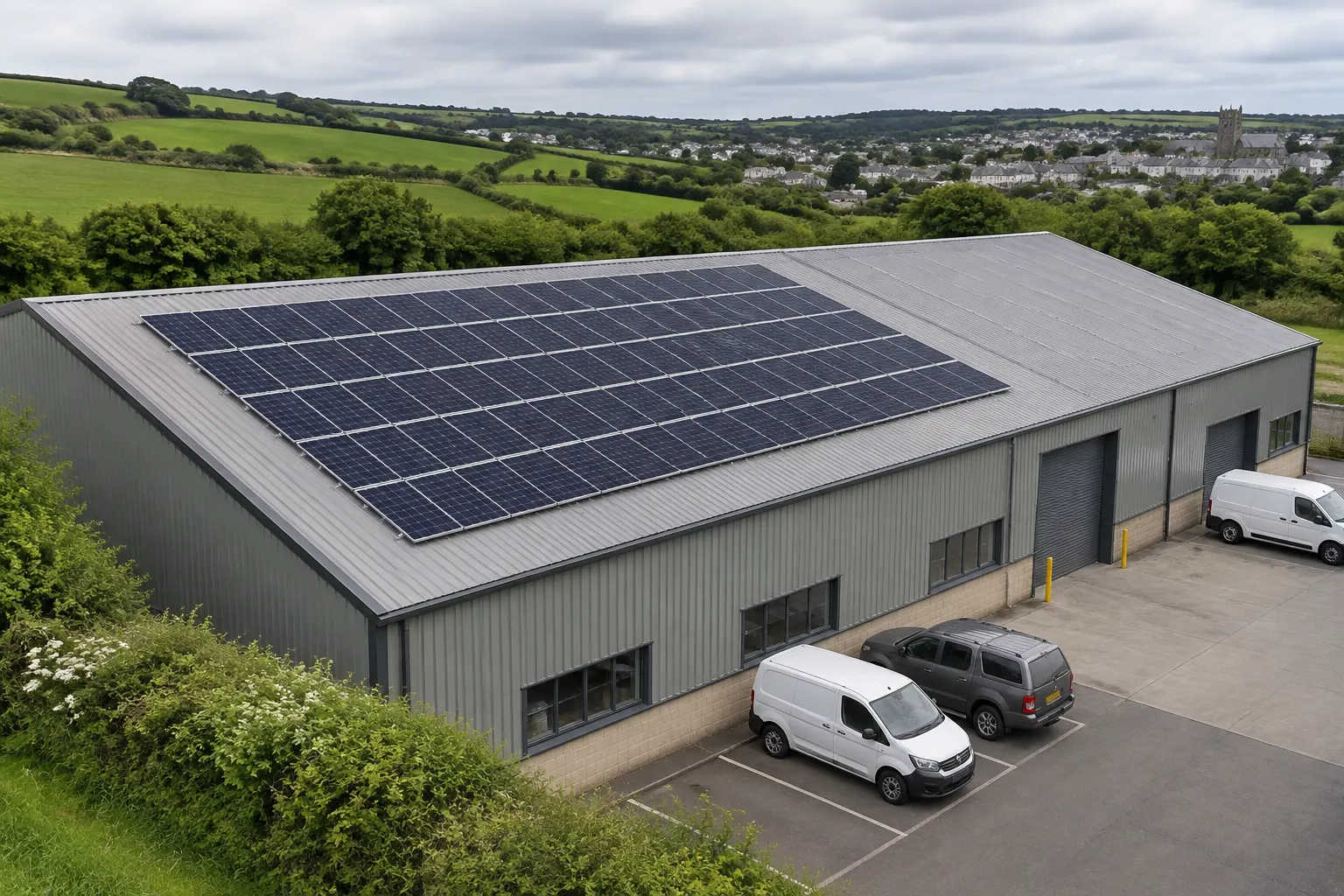
A commercial solar PPA (power purchase agreement) can reduce the upfront capital needed for an installation. But little or no upfront cost does not, by itself, mean free electricity, guaranteed savings or a fixed tariff.
Before signing, compare the proposal with buying or financing a system. For a working site in Cornwall, the useful checks connect the contract to electricity demand, the existing installation and how long the business expects to occupy the premises.
Identify the kind of PPA being offered
An on-site solar power purchase agreement, often called a private-wire PPA, involves a third party owning the installation and selling its electricity directly to the site. The equipment owner, property owner and electricity user may be separate parties.
Other corporate PPAs may source power from an off-site generator through sleeved or unsleeved arrangements. A virtual PPA is a financial arrangement rather than physical supply. Ask the provider to identify the structure in writing before comparing offers.
Identify who will sell the power and who will own the equipment; neither role should be assumed to belong to the installer.
Compare a PPA with purchase and asset finance
Assess commercial solar funding options on the same generation and demand assumptions, not three unrelated sales forecasts.
- Outright purchase: the business funds and owns the system, with maintenance, insurance and operational responsibilities to arrange.
- Asset finance: payments fund the equipment under the finance agreement. Ownership, deposit, end-of-term options and servicing responsibilities depend on its terms.
- On-site PPA: a third party owns the system and the business buys electricity under the agreed pricing and purchase terms. Check which operating costs remain with the site.
A PPA may preserve capital for other work, while purchase gives the business ownership and more direct control over operating decisions. Neither advantage settles the comparison without costs and site plans.
Distinguish the PV system’s cost from roof repairs, electrical upgrades and professional fees. Establish which items each offer includes and which the site must fund separately. Ask your accountant about tax and accounting treatment; a PPA is not automatically off-balance-sheet.

Check when the site will use the generation
Annual electricity totals are not enough. Ask for forecast solar output to be matched against representative half-hourly demand across the site’s operating seasons. A holiday park’s quiet months or a factory’s weekend shutdowns can change the amount used on site.
The forecast should show expected on-site use separately from exports; generation is not the same as avoided grid purchases. Test planned changes to production, opening dates or occupation, because the agreement may continue after the demand pattern has changed.
Establish whether payments cover electricity consumed on site, all generation or a minimum purchase commitment. Who receives income from surplus exports? What happens if demand falls? The business must also account for remaining grid imports and charges outside the PPA.
Allocate responsibility for the electrical connection
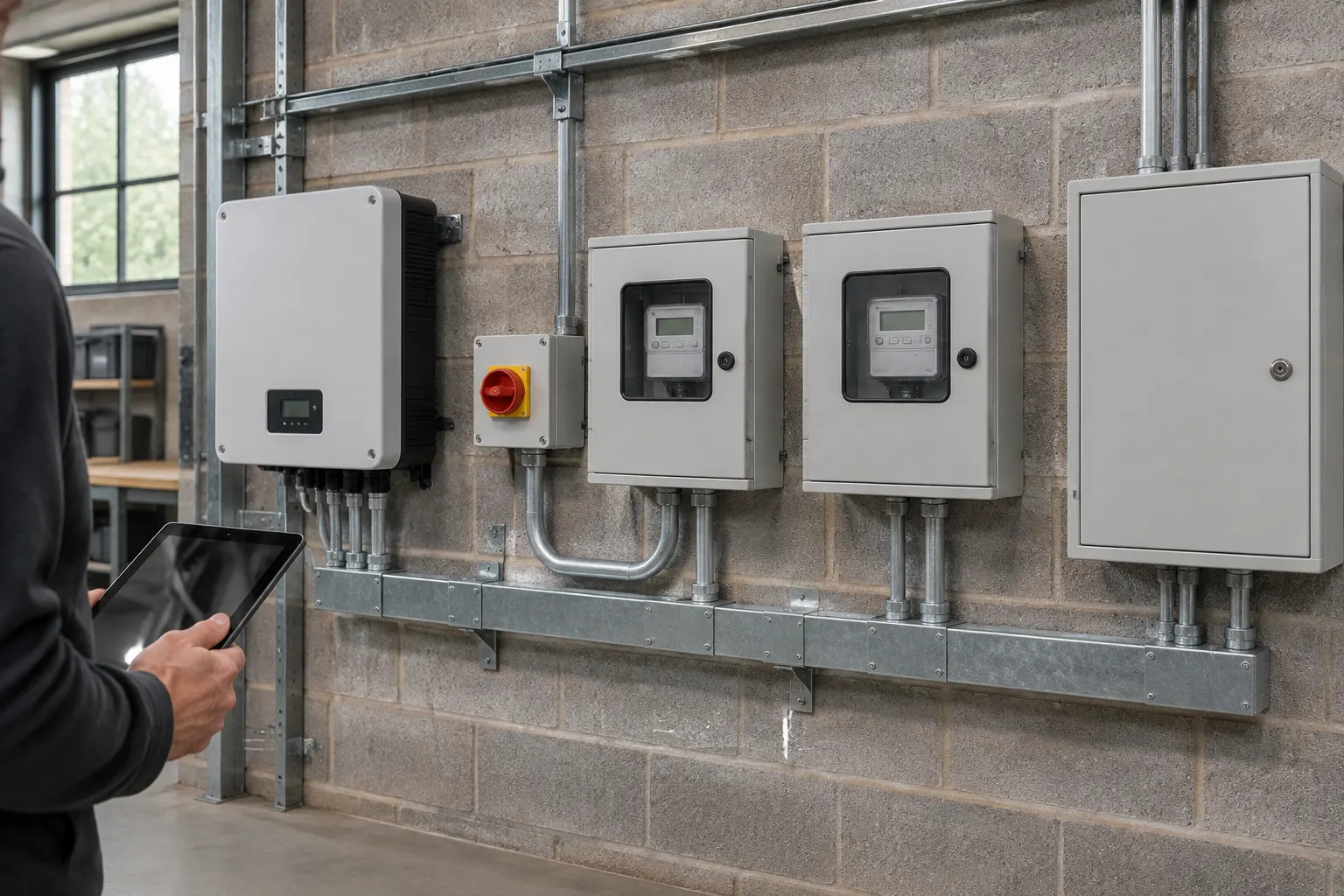
The proposal should identify where the system connects, which loads it supplies and what the PPA meter measures. Existing generation must be considered alongside the new installation.
The connection designer should confirm the applicable process with National Grid Electricity Distribution, the regional distribution network operator, including required approvals and agreed export conditions. Do not assume every proposal follows the same route or receives the same connection terms.
Put responsibility for applications, metering, connection works and associated costs in writing. Any necessary commercial electrical work should have a defined scope, including who pays if the existing installation needs upgrading. Ask when billing obligations begin and what happens if connection or commissioning is delayed.
Clarify ownership and access rights for metering and electrical equipment, and how the provider and site will coordinate fault investigation.
Match property rights to the operating plan
The PPA and any associated lease or access agreement need to work together. Check rights for roof access, cable routes and maintenance, including who pays to remove and reinstate equipment for planned roof works.
Confirm how emergency access is handled and routine visits are agreed around production or public opening. The documents should allocate responsibility for damage, making good and operational disruption caused by work.
Consider a sale, lease expiry, relocation or change of occupier during the agreement. Can it transfer, and on what conditions? Tenants should involve the landlord early. Check that the term fits the period for which the business can confidently occupy and operate the site.
Obtain independent legal review of both the electricity agreement and associated property rights before committing.
Read the price, performance and exit terms
Solar PPA contract checks should extend beyond the opening unit rate. Ask for clear answers on:
- Price changes: tariff indexation, review dates, other charges and the formula used to calculate future bills.
- Metering and billing: the billing boundary, access to readings, accuracy queries and a process for disputed bills.
- Performance and downtime: any output commitments, exclusions, fault response and remedies if agreed performance is not delivered.
- Maintenance and insurance: who arranges them, what is covered and which costs can be passed to the business.
- Early exit or transfer: termination payments, notice requirements and conditions for a new owner or occupier taking over.
- End of term: renewal, buyout, ownership transfer or removal options, including who funds reinstatement.
A forecast is not a contractual guarantee. Check how performance is measured and how shutdowns, access restrictions or supply interruptions affect any commitments.
If a tariff is described as fixed, identify which elements are fixed and for how long. Test lower on-site consumption or an earlier move rather than relying on a first-year saving illustration. Seek independent energy-procurement advice if the tariff comparison is unclear.
What the Cornwall example does and does not show
The South West Net Zero Hub’s Cornwall Airport Newquay solar case study describes a 165 kW ground-mounted scheme connected to the terminal. Cornwall Council funds, owns and operates the system; the airport buys the electricity generated and used on site.
This is a public-sector arrangement, not a standard private business offer. It illustrates how ownership and electricity purchasing can be separated, but does not establish a tariff, savings expectation or eligibility for another business.
Bring the proposal together before signing
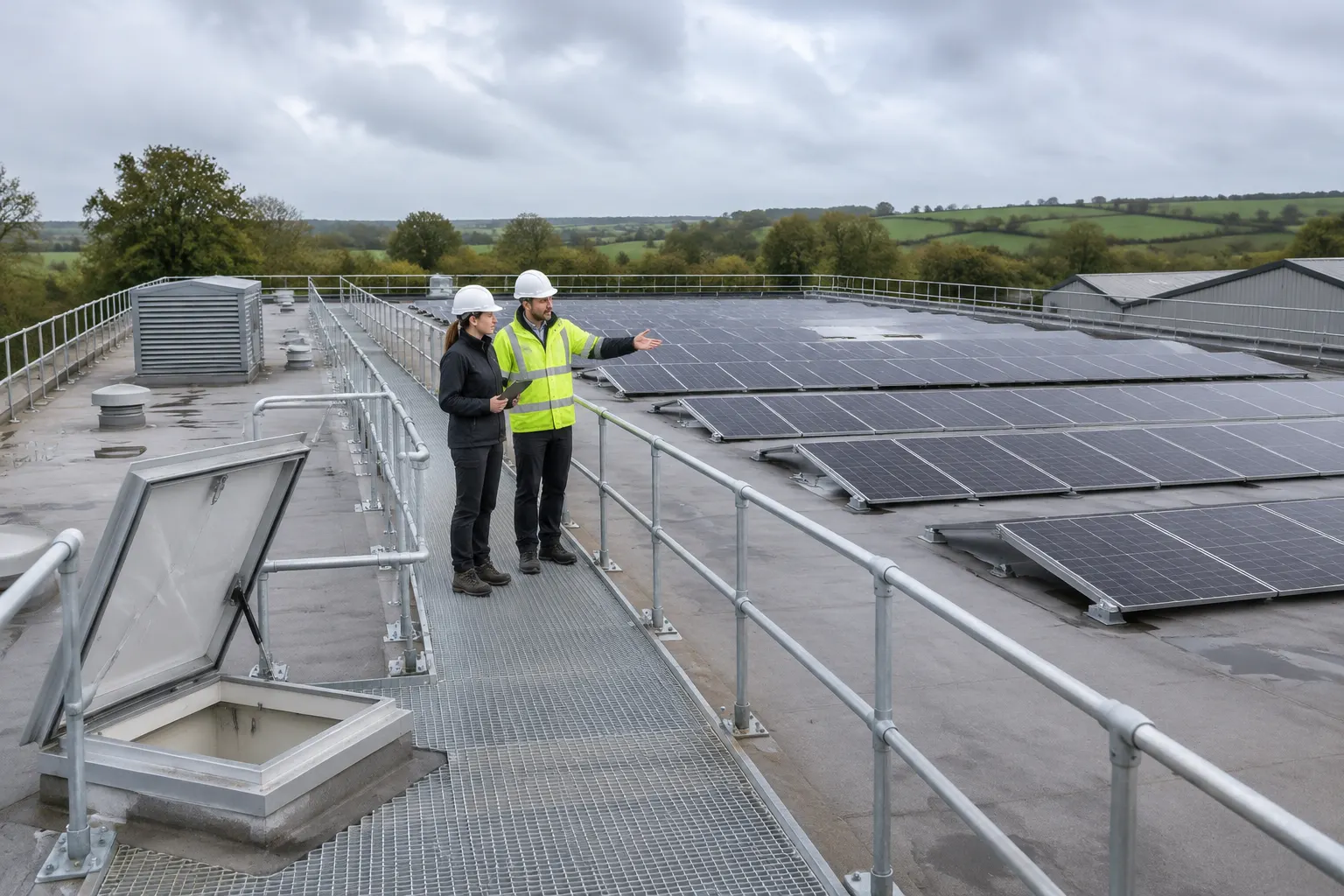
Assemble the generation assumptions, half-hourly demand records, connection scope, full tariff schedule and draft property documents. Consider the technical and legal reviews together, so a change to one part of the proposal is reflected in the others.
Maenporth Electrical Ltd provides solar PV services across Falmouth, Penryn and wider Cornwall. To discuss a proposed system’s electrical feasibility and site requirements, call 01326 250297. Obtain funding and contractual advice separately.