
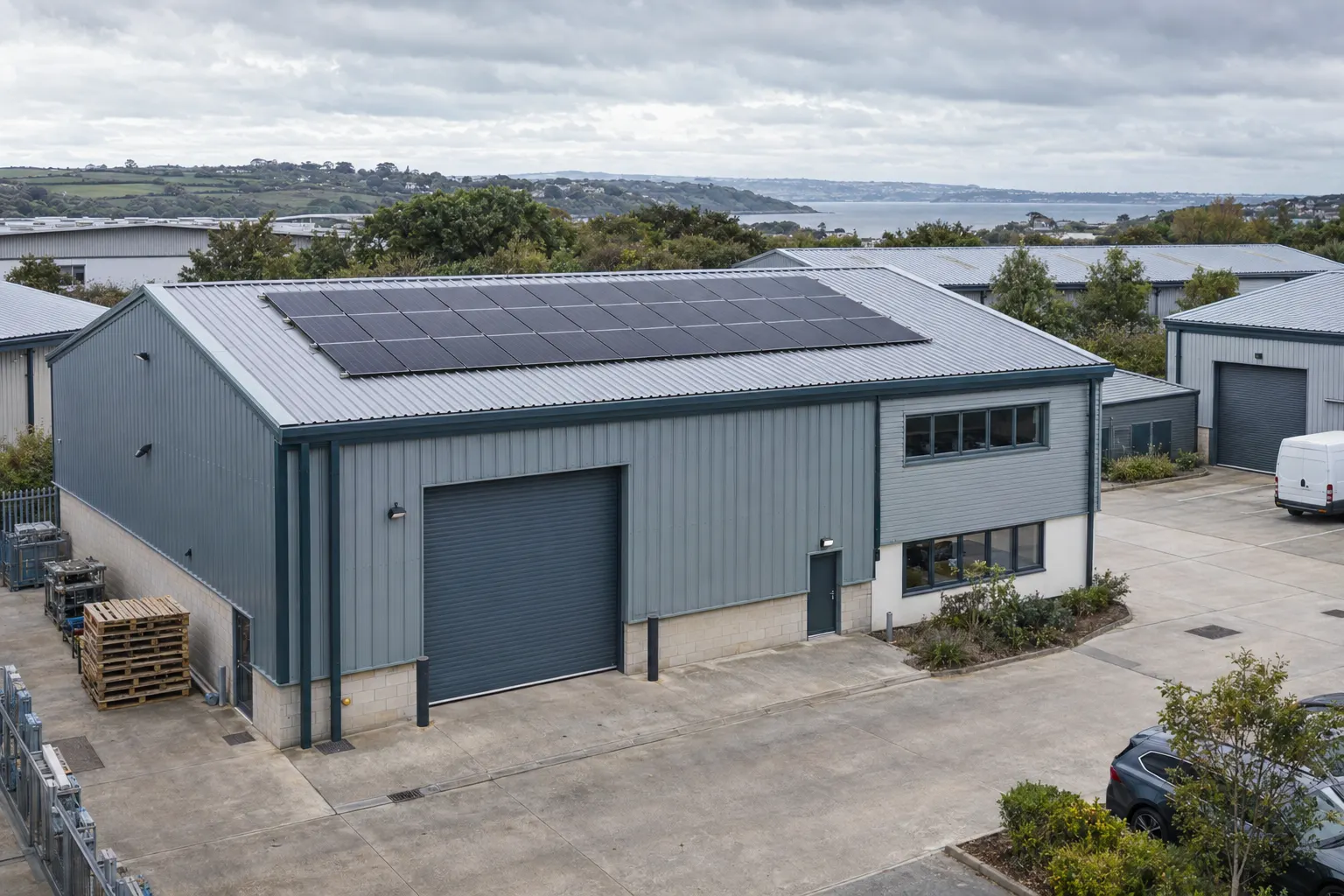
A rented workshop or business unit need not rule out solar. The difficult questions often come before panel selection: who can authorise work on the roof, who gets the electricity and who pays if the installation must move?
This guide to solar panels on rented commercial property explains what Falmouth tenants and landlords should agree before commissioning a detailed electrical design.
Can a Falmouth business install solar on rented premises?
Potentially, yes. A tenant-funded installation or a landlord-owned system may be worth discussing, but neither removes the need to check the lease and secure the necessary permissions. Occupying a building does not, by itself, settle who can authorise work on the roof or shared electrical infrastructure.
Commercial solar for tenants needs agreed property rights as well as an electrical design. The tenant should understand what happens to its investment if it leaves early; the landlord should understand which equipment and responsibilities could remain. An informal conversation is a starting point, not the finished permission.
Start with the lease and who controls the roof
GOV.UK’s guidance on business tenancy responsibilities explains that most responsibilities depend on the lease. Ask a commercial property solicitor to review the extent of the premises you rent, alterations clauses and any rights needed over shared areas.
Include inverter space, cable routes, meter access and future maintenance access. An inverter in a shared plant room, for example, may involve space outside your tenancy. Establish who controls each area and whether another property owner’s approval is needed.
Do not assume a landlord must approve. Section 19(2) of the Landlord and Tenant Act 1927 can be relevant to consent for improvements, but it is conditional, not a general solar permission. The Act excludes specified agricultural holdings and farm business tenancies. Your solicitor should assess the particular lease and project.

Requesting landlord consent for commercial solar
Give the landlord a proposal they can assess, rather than just an estimated annual output. It should identify:
- Who is proposing and funding the installation, and who will own it.
- Which roof areas, equipment locations and shared routes need permission.
- How surveys, installation and maintenance access would be arranged.
- Which electricity supply would receive the generation and whether other occupiers are involved.
- How the remaining lease term and break clauses affect the proposal.
- Who will commission surveys and technical checks, and how any agreed landlord review costs will be handled.
Seek in-principle agreement before detailed design, then have formal consent and any necessary lease documentation settled before installation. Let the solicitor advise how permission should be recorded.
Keep the consent tied to a defined scope. If the design changes to use another roof, a shared cable route or additional equipment space, check whether the permission also needs updating.
If batteries or a carport are part of the proposal, our related solar guides in the blog archive cover those separate choices. Include their space and access needs in the landlord’s brief.
Agree ownership, electricity use and maintenance
Record solar PV lease responsibilities in the agreed documents, not only in an installer’s quotation. Cover both normal operation and changes of occupier.
Ownership and electricity use
Who buys the equipment, and how will ownership be documented? Which supply receives the generation, and who benefits from it? If the landlord owns the array, agree how electricity charges will be calculated and recorded, and what happens during vacancy.
If electricity use depends on a separate supply agreement, have its duration and termination terms reviewed alongside the lease. Check what happens if the tenancy ends before that supply agreement, or vice versa.
On multi-let sites, supplying solar electricity to other occupiers can raise electricity-supply licensing questions. Do not assume a landlord or private-wire arrangement is exempt; obtain specialist legal and energy-supply advice.
Upkeep, access and insurance
Agree who arranges inspections, maintenance and fault response, who pays for replacement equipment and who can authorise isolation. Set out notice arrangements for access, including emergencies, and confirm insurance requirements with the relevant insurers. Ownership alone does not answer all these questions.
Agree who keeps handover records, warranties, monitoring access and inspection reports, and how these pass to a new occupier. Make sure both parties have a named contact for faults and access requests.
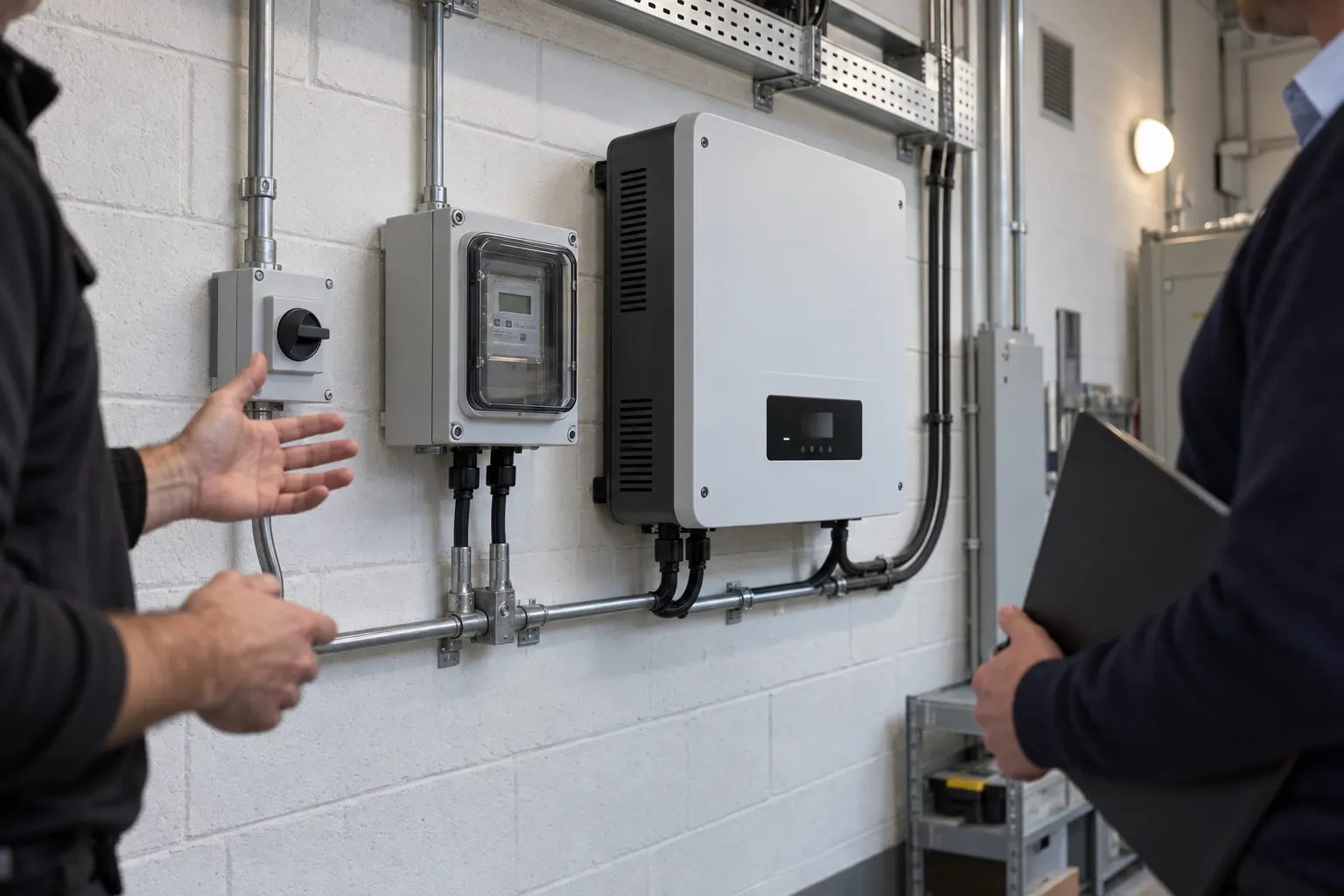
Plan for roof repairs, a change of tenant and lease end
Roof work: decide who arranges and pays for isolation, removal, storage and reinstallation if roof repairs are needed. Agree how access and disruption will be managed, rather than assuming the roof-maintenance clause answers every solar-related cost.
Lease assignment or relocation: if the lease transfers to another occupier, can the solar equipment and its agreements transfer too, and whose approval is needed? Consider break options and planned moves rather than assuming your business will remain for the system’s working life.
End of the tenancy: record whether the array stays, is transferred or must be removed, who pays and what making good is required. Have these terms checked against the lease’s end-of-term repair and reinstatement obligations, often discussed as dilapidations.
If the system stays, document its future ownership and upkeep and who receives the records. If it goes, include mounting points, cable routes and affected building areas in the reinstatement scope.
Keep property consent separate from other approvals
Landlord consent is not planning permission, building-regulations approval or confirmation that electricity-network requirements have been met. For solar panels on a leased commercial building, check each route separately:
- Planning: assess the current non-domestic rooftop-solar rules under Class J, including the proposal’s details and site designations. Do not assume every commercial roof qualifies for permitted development.
- Building control: establish any building-regulation requirements separately from the planning position.
- Network connection: have the designer confirm the applicable distribution network operator process, including G99 where relevant, and identify who will handle any application or notification.
Once the property position is clear, our commercial solar site-assessment guide covers the broader technical checks. These inform the agreed scope but do not replace landlord consent.
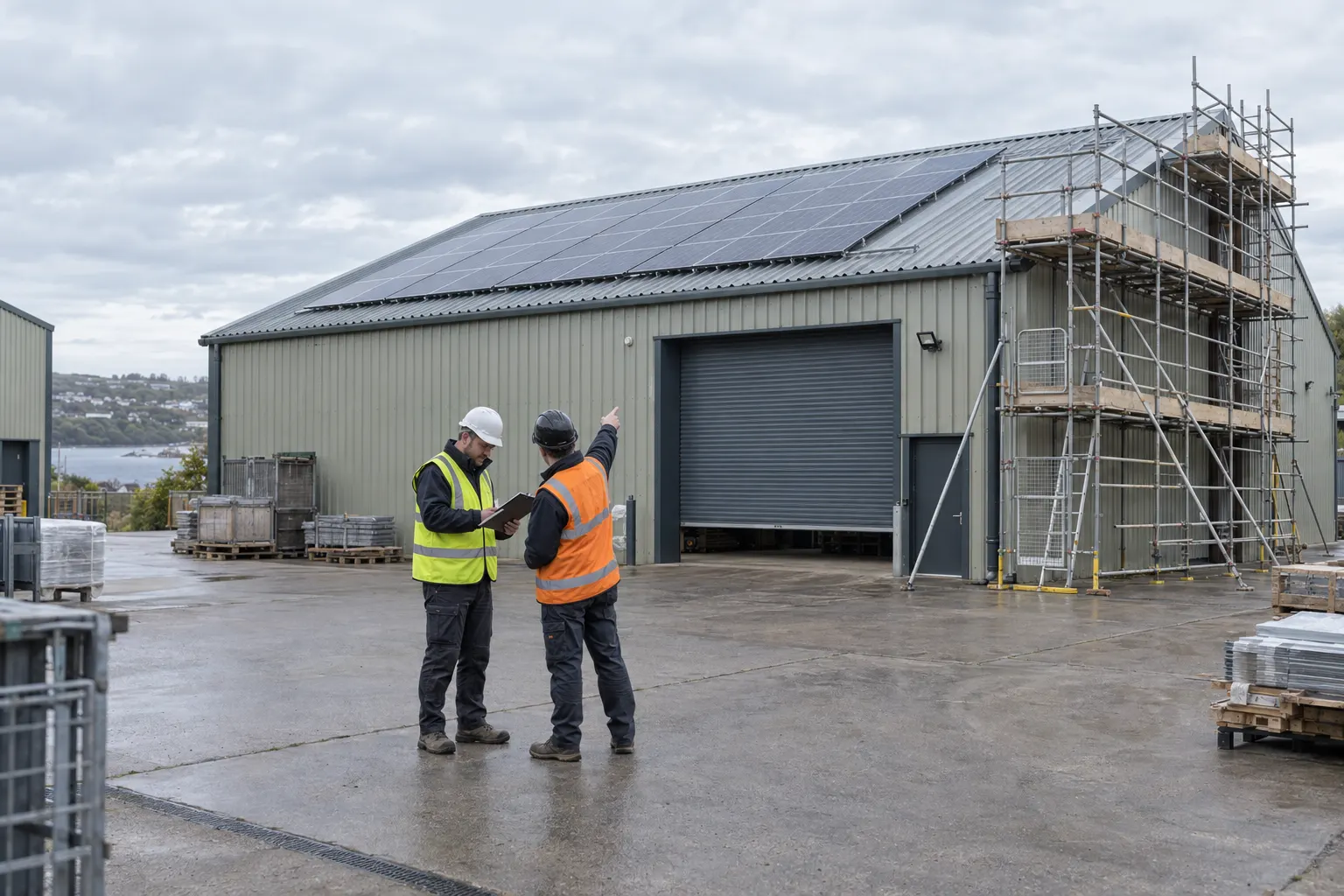
A pre-feasibility checklist for your Falmouth commercial solar proposal
Before commissioning the next stage, bring together:
- Lease documents and relevant plans, including any roof or common-area exclusions.
- Remaining term, break dates and known plans for roof work.
- Written landlord feedback and the proposed consent route.
- A draft schedule of ownership, billing, maintenance and access responsibilities.
- Proposed arrangements for transfer, removal and making good.
- Recent electricity-use information and the authorised contacts for the building and supply.
The aim is an agreed brief, not a final system specification. It should show who can authorise the project, which questions still need professional advice and whether both parties are willing to proceed on the same basis.
If roof rights, consent or lease-end responsibilities remain unclear, resolve those first. A preliminary discussion is more useful than a detailed design based on permissions nobody has agreed.
Considering solar panels on rented commercial property in Falmouth or Penryn? Call Maenporth Electrical Ltd on 01326 250297 to discuss the electrical scope. Based at Maenporth, we serve sites across Cornwall. Your solicitor should advise on the lease.