
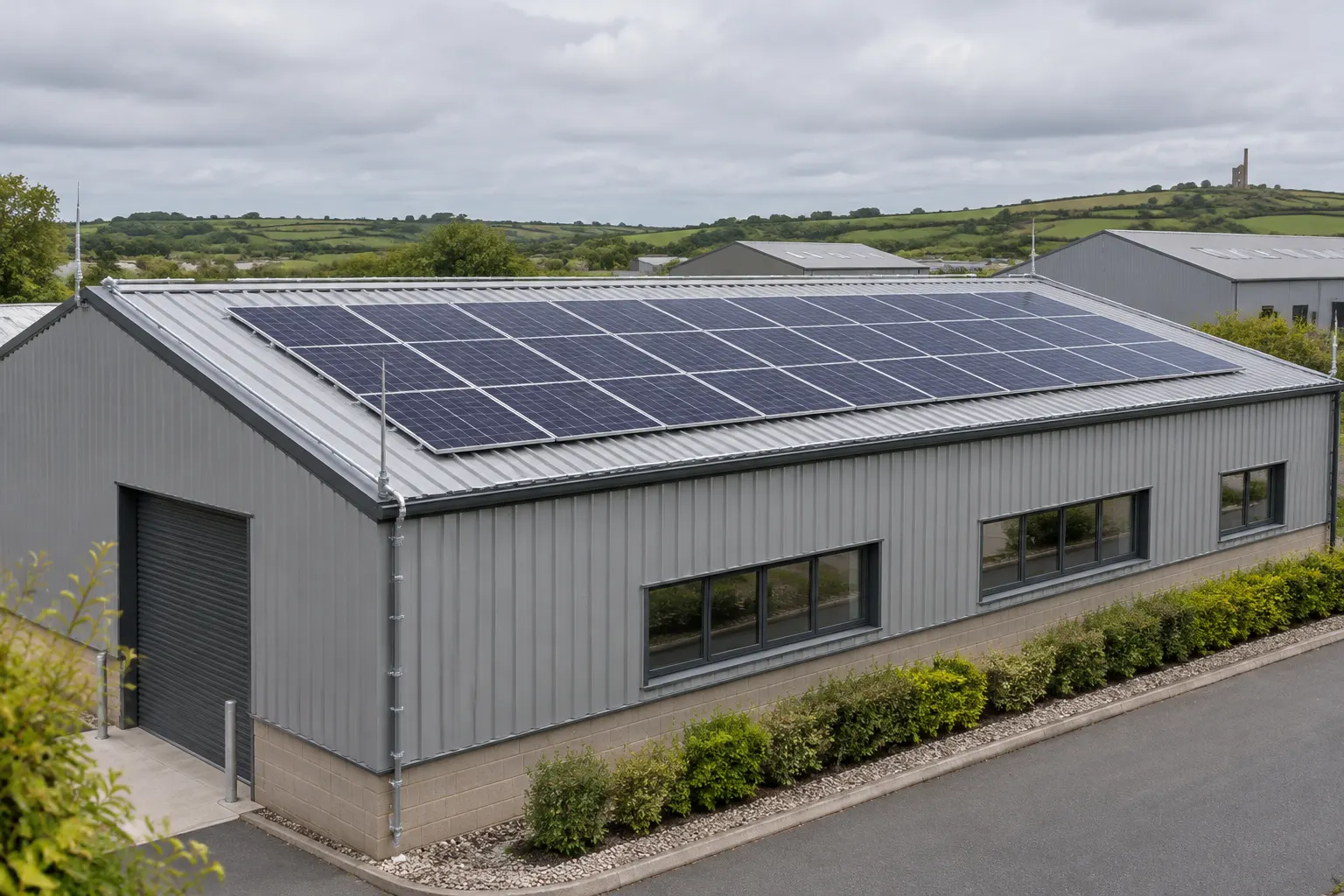
If your building already has a lightning protection system, review the proposed solar array with the PV designer and a competent lightning-protection specialist before finalising the layout. The existing installation may remain suitable, need modification or require further investigation; roof conductors alone cannot settle that.
A solar PV lightning protection review does not mean every array needs a new external system. Nor should panels alone be treated as evidence that a strike is more likely. For factories, leisure buildings and larger rural sites, the priority is a coordinated design and a documented outcome.
Why an existing lightning protection system needs a PV-specific review
An existing lightning protection system (LPS) was designed around a particular building arrangement. New panels, frames and cable routes introduce changes that need to be considered against that design. They can also affect access for inspection or roof maintenance.
A previous LPS inspection report describes the installation inspected at that time. It does not, on its own, approve a new PV layout. Equally, adding solar does not automatically make the existing system non-compliant.
For example, a layout might leave visible lightning conductors untouched but block access needed to inspect them. A late change to an inverter position could also alter cable routes already reviewed by the designers. Both are reasons to revisit the proposal rather than rely on the original drawing.
Make commercial solar lightning protection an explicit part of the brief for your commercial solar PV project. Establish what must be checked before the panel layout and cable routes are agreed, rather than leaving the interface for roof installers to resolve during construction.
What the 2024 BS EN IEC 62305 series means for your project
Part 2 of BS EN IEC 62305 covers lightning risk management. BSI's listing for the 2024 edition records an October 2026 corrigendum.
When considering BS EN IEC 62305:2024 and solar PV, the UK national-foreword guidance is to implement the series as a whole. It cautions against using Parts 1, 3 or 4 without a Part 2 risk assessment. A commercial PV lightning risk assessment belongs in the design discussion, not as paperwork after installation.
Part 4 also contains an informative annex on current sharing in PV installations. Its presence is not a standalone retrofit requirement; ask the designers to explain whether that guidance affects the proposed arrangement and how relevant conclusions are documented.
ATLAS's transition guidance gives 31 October 2027 as the planned withdrawal date for the 2011 editions. It also explains that the update does not automatically require immediate changes to existing LPS installations.
Ask the designers to confirm applicable editions, corrections and project requirements in writing, including whether the existing assessment needs updating for the proposed work.
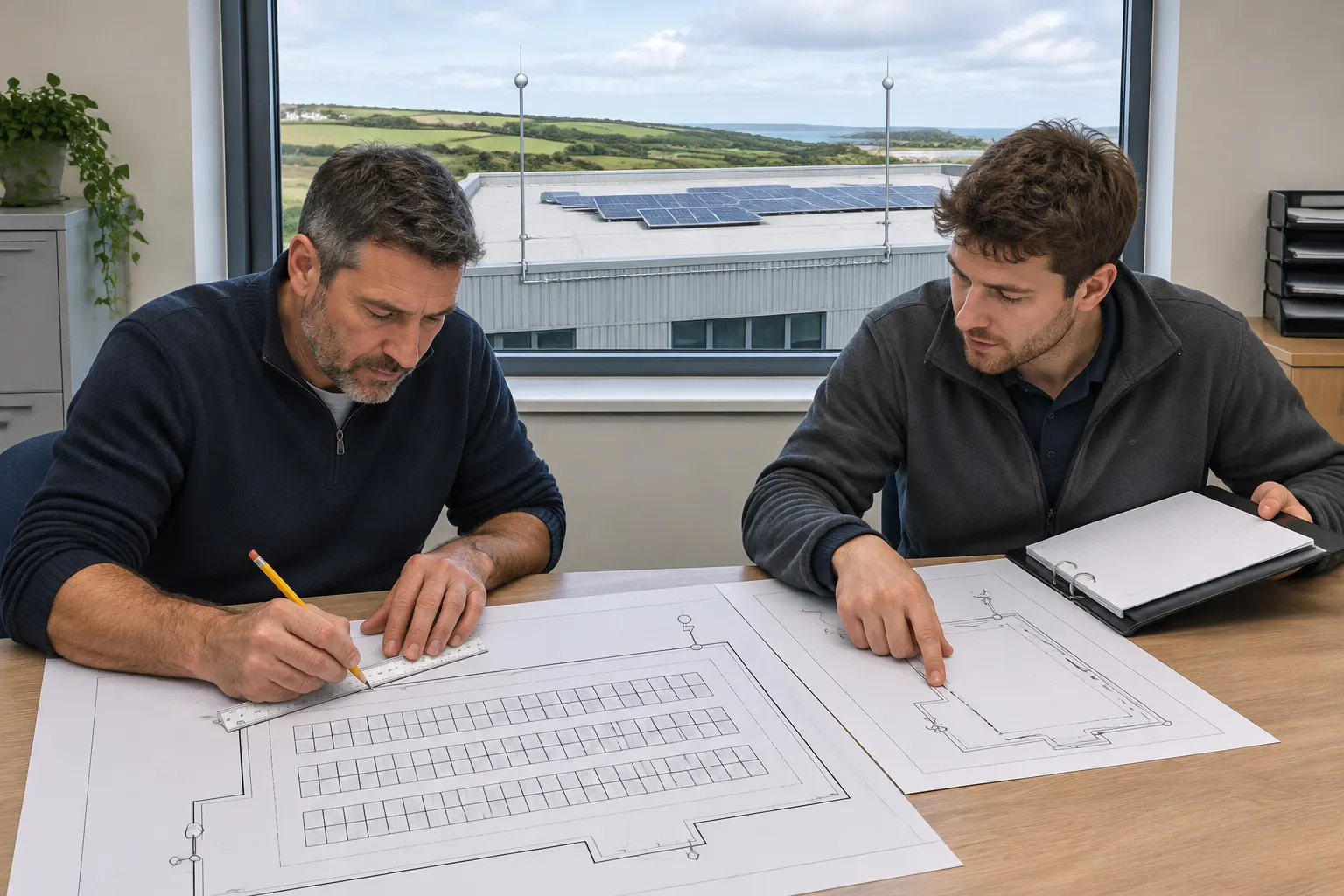
External lightning protection and surge protection do different jobs
Protection of the structure
External lightning protection provides a designed path for lightning current, addressing risks of physical damage and injury. The specialist needs to assess how the proposed PV installation relates to the existing roof-level protection, conductors and earthing arrangement.
Surge protection for commercial solar
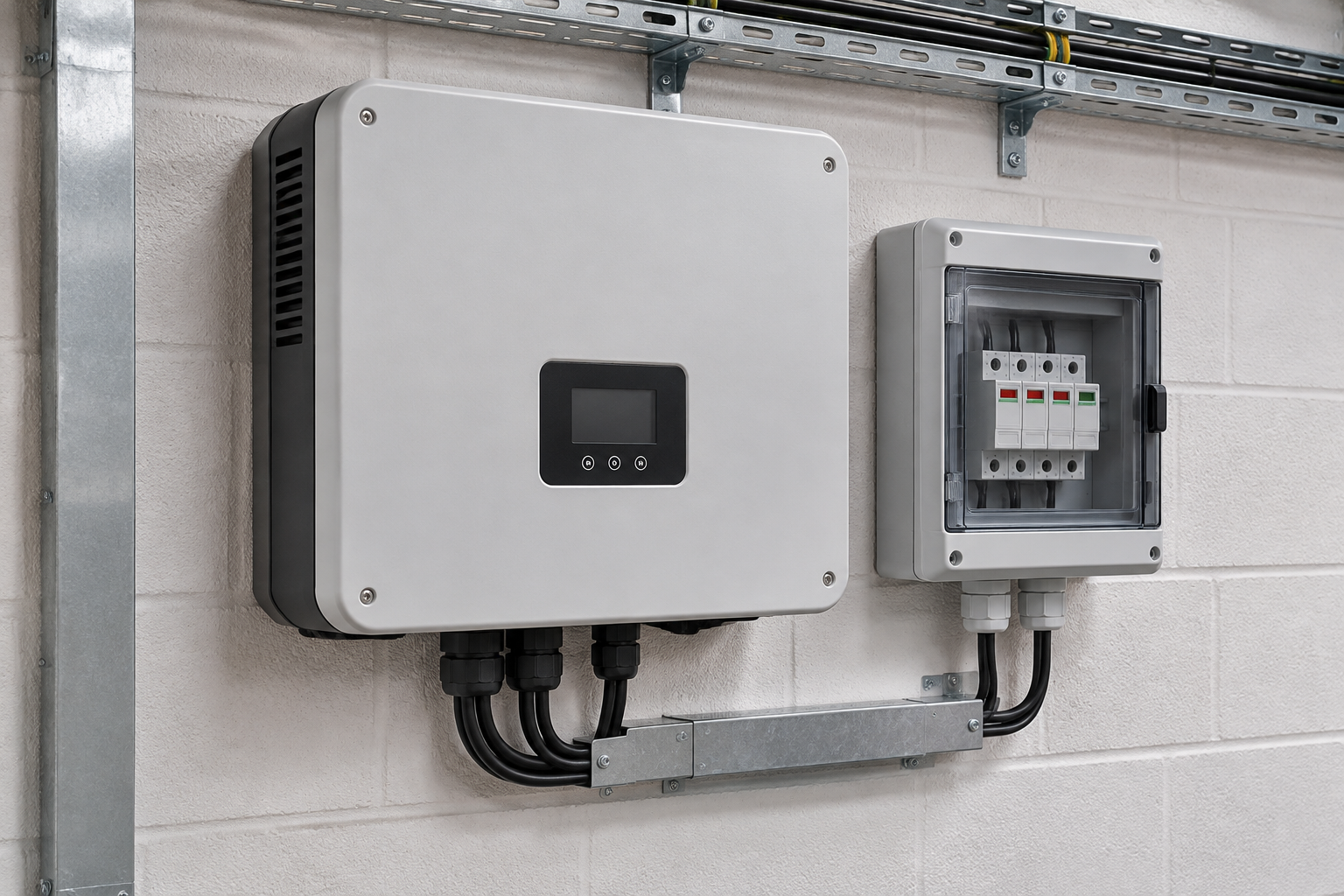
Surge protection measures address electrical and electronic systems. Relevant interfaces can include the PV installation's DC and AC circuits, inverter and monitoring connections. Surge protective devices (SPDs) are part of that assessment, not a replacement for reviewing external lightning protection.
The presence of an LPS does not establish that the electrical equipment has appropriate surge protection. Likewise, an inverter's built-in protection does not demonstrate coordination across the complete installation. Bonding arrangements, separation distances and SPD selection must be resolved through competent, site-specific design, not chosen from a generic online diagram.
Records to assemble before the solar design is fixed
Gather what is available before the first coordinated review. A useful briefing pack includes:
- Existing LPS information — the risk assessment, design basis, drawings and any recorded alterations.
- Inspection and test records — including outstanding defects and evidence of remedial work.
- Roof information — current layouts, roof plant, access routes and other planned works.
- PV proposals — panel and mounting layouts, inverter locations, proposed cable routes and building entry points.
- Electrical records — available single-line diagrams, supply and earthing information, and details of existing surge protection.
- Project responsibilities — contacts for the building owner, PV designer, electrical contractor, roofing contractor and lightning-protection specialist.
Flag missing or outdated information early. Ask the specialist what survey or verification is needed; do not assume an old roof drawing represents the installation now present.
Send the same roof and PV drawing revisions to both designers and the relevant roof contractor. If a layout changes, circulate the revised version through the agreed review process. This helps prevent one contractor pricing or installing against a proposal that another has already superseded.
Questions for the PV designer and lightning-protection specialist
Use the design review to obtain recorded answers to these questions:
- Who owns each part of the assessment? Identify who reviews lightning risk, designs any LPS changes and coordinates electrical surge protection.
- Has the installed arrangement been checked? Agree how discrepancies, missing records or existing defects will be handled before relying on the proposed layout.
- How will the roof and electrical designs be coordinated? Ask for the agreed approach to panel positions, cable routing, access, separation and any bonding requirements, without prescribing the answer yourself.
- What must be agreed before work starts? Set a clear review point before procurement or roof work, and a process for approving later layout changes.
- What evidence will demonstrate completion? Agree the drawings, inspection results and design records expected from each contractor.
If no LPS alterations are needed, ask for that conclusion and its assumptions to be recorded. If work is required, establish who designs, installs and inspects it, and whether this changes the roof programme. Neither contractor should assume the other is covering the interface.
These answers also make quotations easier to compare. A vague allowance for lightning work is less useful than a defined assessment scope, stated exclusions and a clear process for agreeing any resulting work.
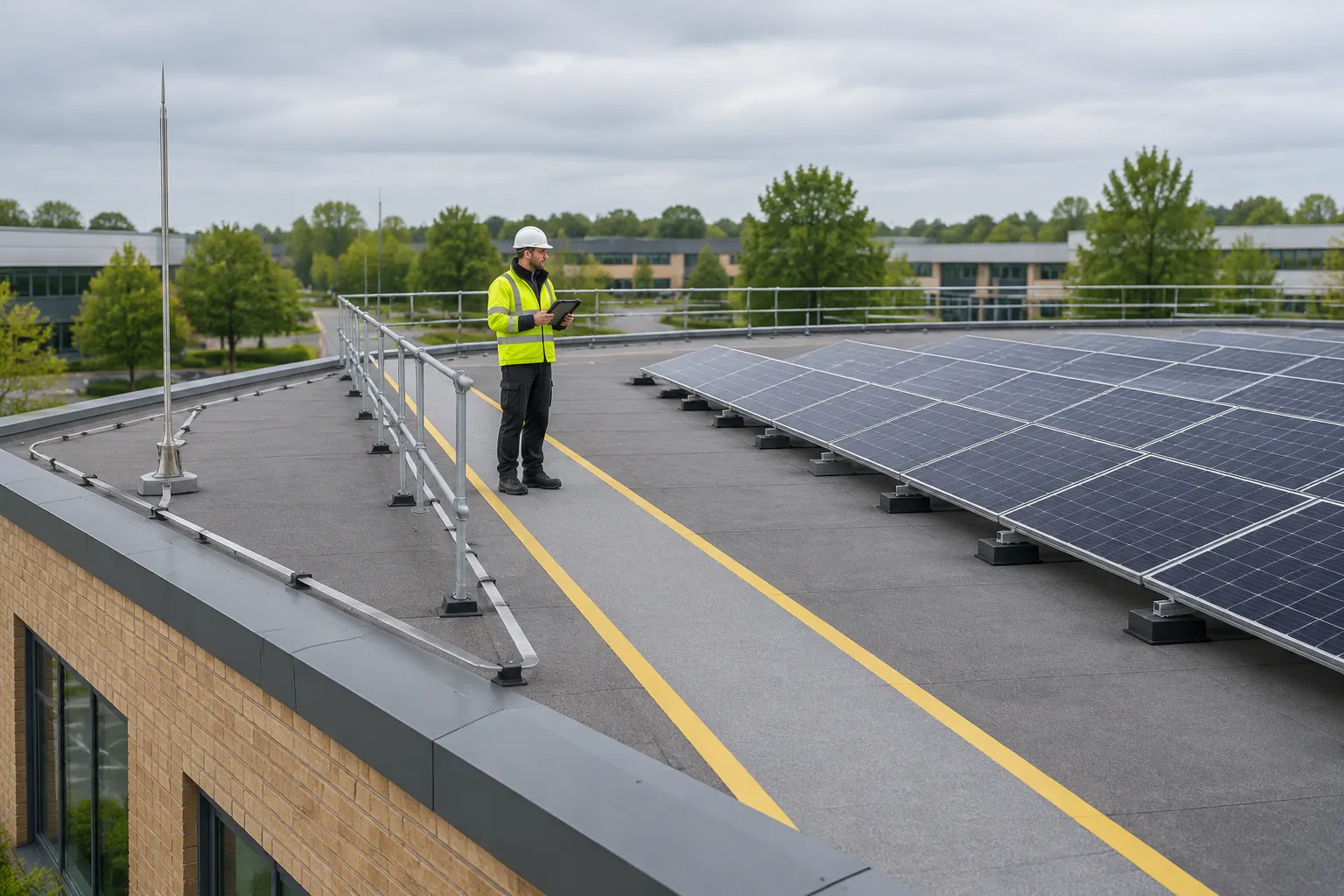
Handover, inspection records and future roof or PV changes
Keep the completed risk review, agreed design, updated drawings and relevant inspection and test records together. Make it clear which documents cover the PV electrical installation and which cover the LPS; PV certification alone is not approval of the lightning protection design.
Store the records where the site's responsible manager and future contractors can retrieve them, not just in an installer's email trail. A later roof contractor or PV maintenance provider needs to know that the LPS exists and where its agreed design is documented.
Agree who arranges subsequent inspections, who retains the records and how defects are escalated. Build the PV responsibilities into the site's solar maintenance arrangements, while keeping specialist lightning-protection inspection responsibilities explicit.
Later roof repairs, extra panels, new roof plant or altered cable routes should be flagged for review. The original coordination decisions should not be assumed to cover a changed installation.
Planning commercial solar in Cornwall? Call Maenporth Electrical Ltd on 01326 250297 to discuss the solar and electrical scope and its coordination with a competent lightning-protection specialist.