
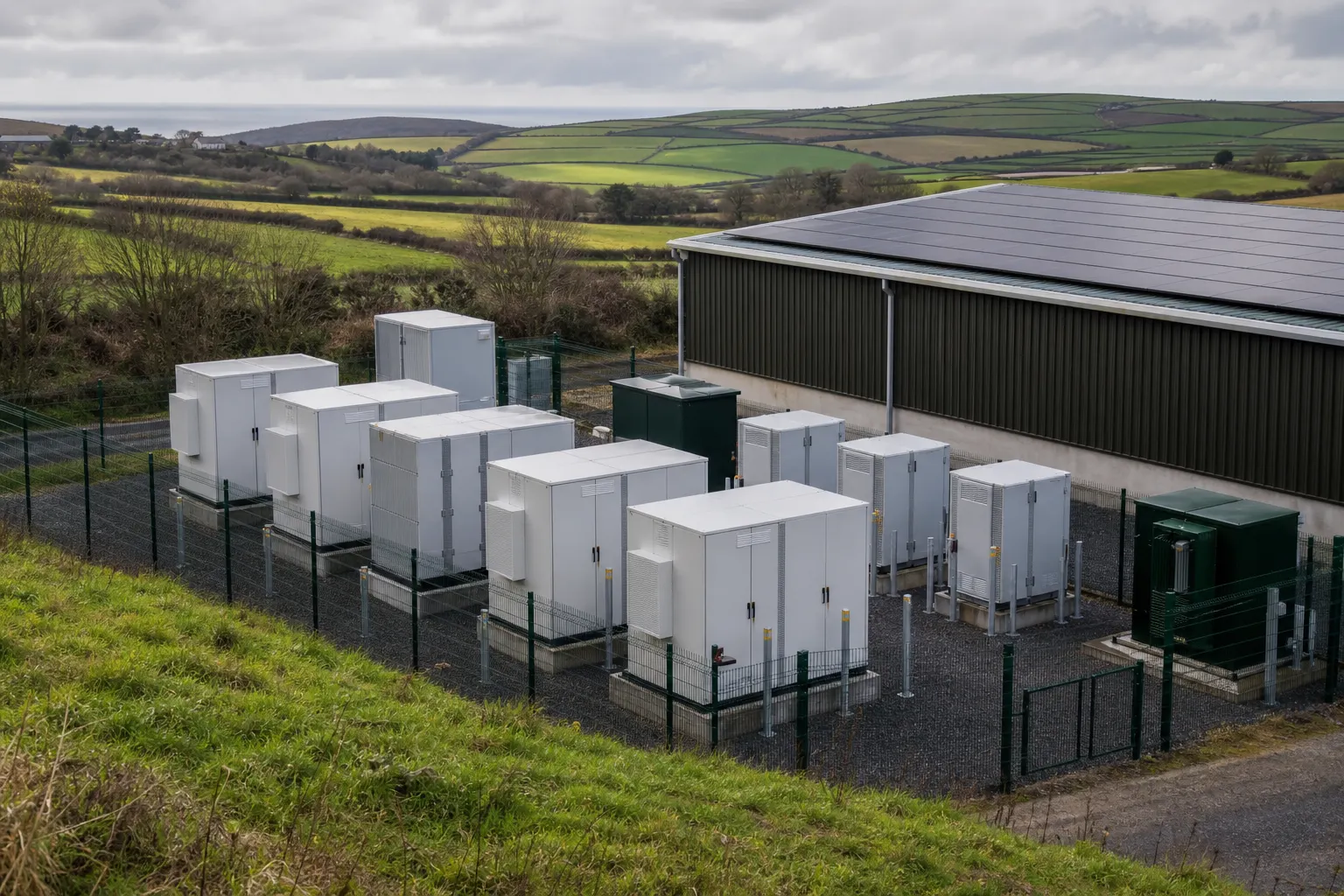
Choosing where to put a battery is not simply a matter of finding an unused wall or a clear corner of a plant room. The location affects electrical design, fire safety, maintenance, system performance, planning and the practical running of the site.
That is particularly important for commercial, industrial, leisure and rural premises. A factory, quarry, holiday park or golf facility may have vehicle movements, public access, seasonal demand, outdoor equipment and several electrical distribution points. The most convenient-looking space may therefore be unsuitable once the whole site is considered.
Good battery storage locations balance several requirements rather than optimising only one. The battery needs to work with the solar installation and electrical infrastructure, but it must also remain secure, accessible and appropriate for its surroundings.
Start With What the Battery Is Expected to Do
The right location depends partly on the role of the battery. A system intended to increase the use of on-site solar generation may be designed differently from one intended to manage peak demand, support selected loads during an outage or participate in a wider energy strategy.
The expected power, storage capacity and operating pattern all influence the equipment selected. They may also affect enclosure size, ventilation or cooling requirements, cable routes, protection arrangements and the space needed for maintenance.
Before comparing possible locations, the designer needs a clear picture of:
The site's electricity demand and when that demand occurs.
The size and connection arrangement of any existing or proposed solar PV system.
The main incoming supply, switchgear and distribution layout.
Whether backup power is required and which loads would need to remain operational.
Possible future expansion of the battery, solar array or electrical installation.
The manufacturer's environmental, clearance and installation requirements.
This prevents the location decision from being made around equipment that has not yet been properly specified.
Electrical Proximity Matters, but It Is Not the Only Priority
There can be advantages in locating battery equipment reasonably close to the relevant switchgear, meter position, inverter or point of connection. Sensible positioning can simplify cable routes, reduce disruption and avoid unnecessary work across roads, yards or occupied areas.
However, the shortest cable route is not automatically the best overall design.
A position next to the main distribution board might also obstruct access, sit on an escape route or expose the battery to impact from forklifts and delivery vehicles. Equally, placing equipment far from the electrical infrastructure may require longer cable runs, additional containment, groundworks or changes to the protection design.
On larger sites, the designer may need to compare several points of connection rather than assuming that the battery must sit beside the solar panels. Electricity generated by roof-mounted or ground-mounted solar may be stored elsewhere if the electrical design supports it.
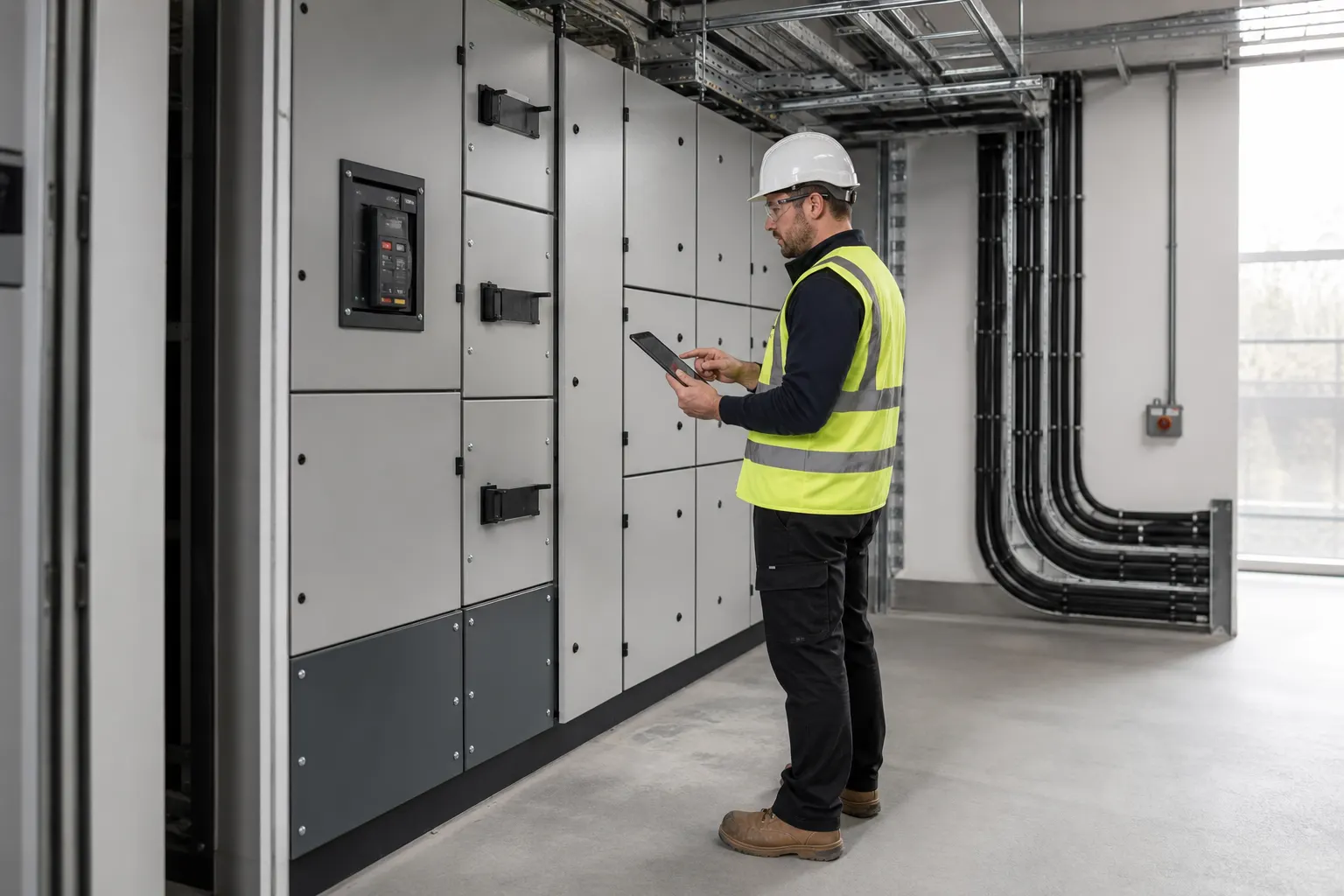
Battery Location Is Part of the Site's Safety Strategy
Battery energy storage systems contain substantial stored energy. Their location must therefore be selected through a suitable design and risk-assessment process, taking account of the battery technology, system size, occupancy and surrounding hazards.
Keep Access and Escape Routes Clear
Battery equipment should not compromise protected escape routes or make it harder for people to leave a building.
The location must also leave suitable working space for installation, inspection, isolation, servicing and eventual replacement.
A locked room that is difficult to reach may appear secure, but it can create problems if engineers cannot safely move equipment or gain access to isolation points. Battery modules and cabinets can be heavy, so the route used to deliver and replace them also needs consideration.
Look at Hazards on Both Sides
A site assessment should consider both the potential effect of the battery on its surroundings and the hazards that the surroundings present to the battery.
Examples include:
Combustible materials.
Fuel storage.
Hot processes.
Machinery.
Vehicle movements.
Flooding.
Vandalism.
Nearby electrical equipment.
Dust, chemicals or corrosive substances.
Protective barriers may be needed where equipment is exposed to vehicles, but they must not restrict doors, ventilation, maintenance clearances or emergency access.
The arrangement has to be designed as a complete installation rather than assembled from competing individual measures.
Indoor, Outdoor or in a Separate Structure?
There is no single location that suits every battery system.
Common options include an outdoor enclosure, a dedicated plant area or a separate outbuilding. Each has practical advantages and constraints.
Outdoor Battery Storage
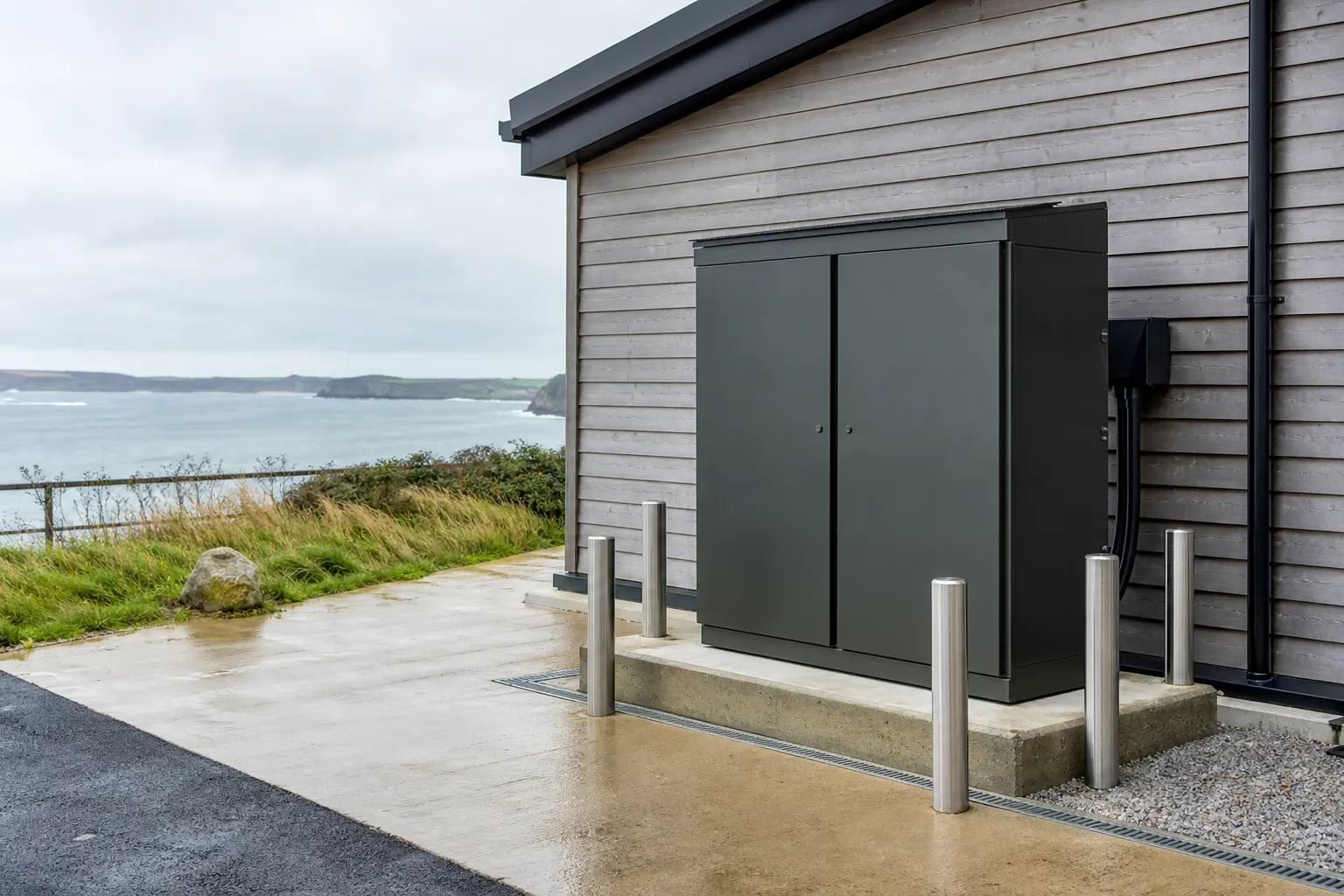
An outdoor location can provide separation from occupied areas and may be practical where there is space near the relevant electrical infrastructure.
The selected equipment must be approved by its manufacturer for the proposed environment and installed with the required weather protection and clearances.
The position should be checked for:
Direct sunlight.
Standing water.
Roof runoff.
Vegetation.
Vehicle impact.
Unauthorised access.
An enclosure's nominal weather rating does not remove the need for a proper assessment of how the location behaves throughout the year.
Dedicated Plant Rooms
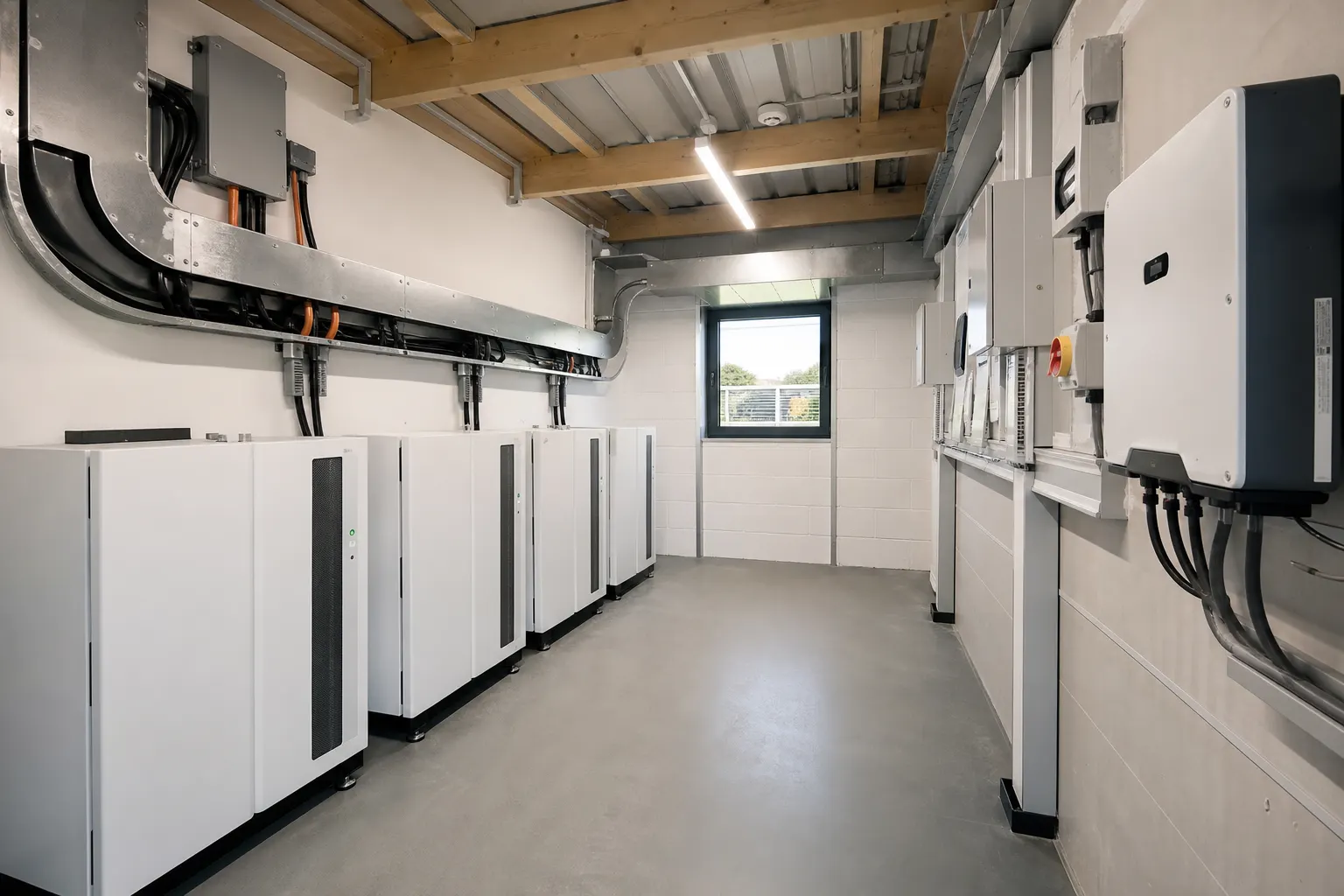
A plant room can offer security and controlled access, but it must be suitable for battery equipment.
Existing rooms may contain boilers, fuel, combustible storage or unrelated services that introduce additional risks. Heat accumulation, ventilation, structural capacity and escape arrangements also require assessment.
A plant room should not become a convenient dumping area after installation. The long-term management of the space is just as important as its condition on commissioning day.
Detached Buildings and Purpose-Made Compounds
For some commercial solar and battery storage projects, a detached structure or dedicated compound provides the clearest separation and best maintenance access.
This may be particularly relevant to larger rural, industrial or leisure sites where suitable land is available.
However, a separate structure can also introduce additional requirements, including:
Planning.
Trenching.
Drainage.
Security.
Civil engineering.
Emergency access.
The relationship with nearby buildings, boundaries and other infrastructure should therefore be considered early in the design process.
Cornwall's Site Conditions Need Specific Attention
Battery equipment in Cornwall may face very different conditions from one property to another.
A coastal commercial site can experience salt-laden air and wind-driven rain, while an inland rural site may present dust, mud, standing water or machinery movements.
Low-lying areas and sites with known drainage issues should be checked for flood and surface-water risk. Equipment should not be placed in a hollow simply because it is visually unobtrusive.
Roof drainage, yard falls and runoff from surrounding ground can all affect a small equipment compound.
Exposure also matters. Direct sunlight can raise enclosure temperatures, while poorly ventilated indoor areas can retain heat generated during operation.
Battery management and thermal-control systems do not make location irrelevant. They operate within specified conditions that the installation must support.
For holiday parks, golf facilities and other leisure premises, noise and appearance may also influence the decision.
Inverters, cooling equipment and associated plant can produce operational noise, so proximity to accommodation, neighbouring properties and quiet visitor areas should be reviewed.
Allow for Maintenance From the Beginning
A battery installation is a working electrical asset, not a sealed object that can be forgotten once it is switched on.
Engineers may need access to inspect enclosures, check connections, review monitoring data, test protective arrangements and respond to faults.
The location should provide:
Safe access without moving stock, vehicles or temporary structures.
The manufacturer's required working and ventilation clearances.
Clear access to isolators and emergency controls.
A practical route for removing and replacing equipment.
Protection against casual interference and unauthorised entry.
Space for any planned additional battery modules or associated switchgear.
Reliable communications where monitoring systems require a network connection.
These details can prevent a low-cost initial location from becoming expensive or disruptive over the life of the system.
Do Not Overlook Planning and Emergency Access
Planning requirements depend on the scale, type and setting of the installation.
The landowner or operator should establish whether permission, prior approval or other consent is required before work begins, particularly where external compounds, new structures, listed buildings or sensitive locations are involved.
For larger battery energy storage systems, planning and emergency response become major parts of site selection.
Government planning guidance encourages applicants seeking permission for systems of 1 MWh or more, other than systems associated with a home, to engage with the relevant fire and rescue service before submitting an application.
Cornwall Fire and Rescue Service also highlights early risk assessment, spacing, emergency access, monitoring, water management and a detailed emergency response plan for large-scale BESS sites.
These considerations need space. They cannot always be added after the equipment layout has already been fixed.
Domestic battery systems have their own fire-safety requirements and guidance, including PAS 63100:2024 within its defined scope.
Commercial and industrial projects should not assume that a domestic layout can simply be scaled up. The applicable standards and design approach depend on the installation.
A Site Survey Should Compare Real Options
The best result normally comes from comparing two or more realistic locations against the same criteria.
This makes it easier to identify trade-offs between cable routes, safety, access, environmental exposure and future expansion.
A useful site review should ask:
Is the position compatible with the selected equipment and manufacturer's instructions?
Can the battery be connected without disproportionate cable routes or disruption?
Are escape routes, occupied spaces and emergency access protected?
Could vehicles, flooding, heat, dust, salt or other site conditions affect it?
Can competent people safely install, isolate, maintain and replace the equipment?
Will the location still work if the system is expanded?
Are planning, fire-safety or landlord approvals likely to influence the choice?
Making these checks before ordering equipment can avoid redesign, unsuitable foundations and unexpected alterations to the electrical installation.
Planning Battery Storage for a Cornwall Site
Battery storage can help a site use renewable generation more effectively, but its value depends on sound electrical design and a location that remains workable over the long term.
If you are considering solar and battery storage for a commercial, industrial, leisure or larger rural site in Cornwall, speak to Maenporth Electrical Ltd about the electrical layout, intended use and possible equipment locations.
Call 01326 250297 to discuss your site.