

Electrical standards do not stand still. New equipment, changing patterns of electricity use and the growth of technologies such as battery storage all affect how installations need to be designed, verified and documented.
BS 7671:2018+A4:2026, commonly referred to as BS 7671 Amendment 4, was published on 15 April 2026. It can already be used for electrical work, while the previous version remains valid during a six-month transition period ending on 15 October 2026.
For related work and planning, see our Maenporth Electrical page.
This is relevant to anyone planning commercial, industrial or renewable electrical work in Cornwall. It does not mean that every existing installation suddenly needs replacing. It does mean that designs, specifications and project discussions need to reflect the latest requirements and the date on which work will be delivered.
For Maenporth Electrical, the update reinforces the importance of looking at electrical projects as complete site systems rather than isolated additions. That is particularly important where established premises are adding new machinery, solar generation, battery storage, EV charging or other substantial loads.
Why the October 2026 changeover matters
During the transition period, electrical work may be designed and carried out using either BS 7671:2018+A2:2022+A3:2024 or the new Amendment 4 edition. The earlier edition is due to be withdrawn on 15 October 2026.
A project beginning before that date may continue through procurement, installation and commissioning afterwards. Clients, designers and contractors should therefore establish the intended design basis early instead of leaving the applicable edition unclear.
The IET’s current BS 7671 edition guidance confirms the transition arrangements and outlines the principal areas changed by Amendment 4.
This matters when obtaining comparable quotations. Two proposals based on different assumptions may specify different equipment, protective measures or documentation. A clear scope helps clients understand what is included and reduces the risk of late design changes.
The practical changes behind Amendment 4
Amendment 4 contains changes throughout BS 7671, but several areas are especially relevant to modern commercial and industrial sites.
A dedicated chapter for stationary batteries
Electrical energy storage is no longer a niche consideration. Businesses may investigate batteries to increase on-site use of solar generation, manage demand or provide a defined level of resilience.
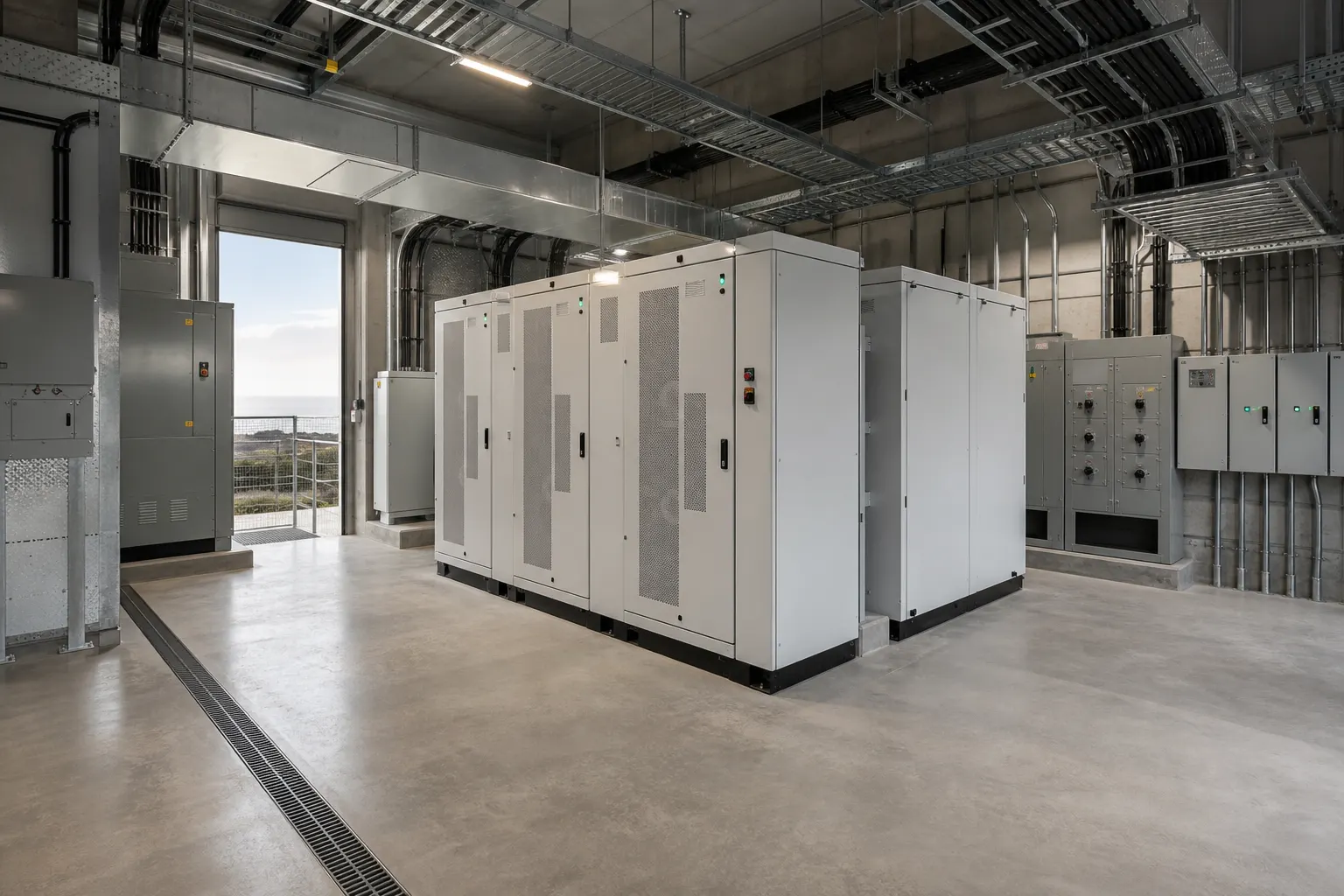
Amendment 4 introduces a new chapter covering stationary secondary batteries used for storing energy and supplying electrical installations. This gives battery systems a more distinct place within the main wiring standard.
For site owners, the important point is that a battery is not simply another box to connect. Its relationship with the incoming supply, distribution equipment, generation, protective devices and operating arrangements needs to be considered as part of one system. Physical location, access, environmental conditions and manufacturer requirements also remain important project factors.
Maenporth Electrical’s solar and renewable electrical work can form part of this wider assessment where a Cornwall business is considering generation, storage or future electrical expansion.
Power over Ethernet and connected buildings
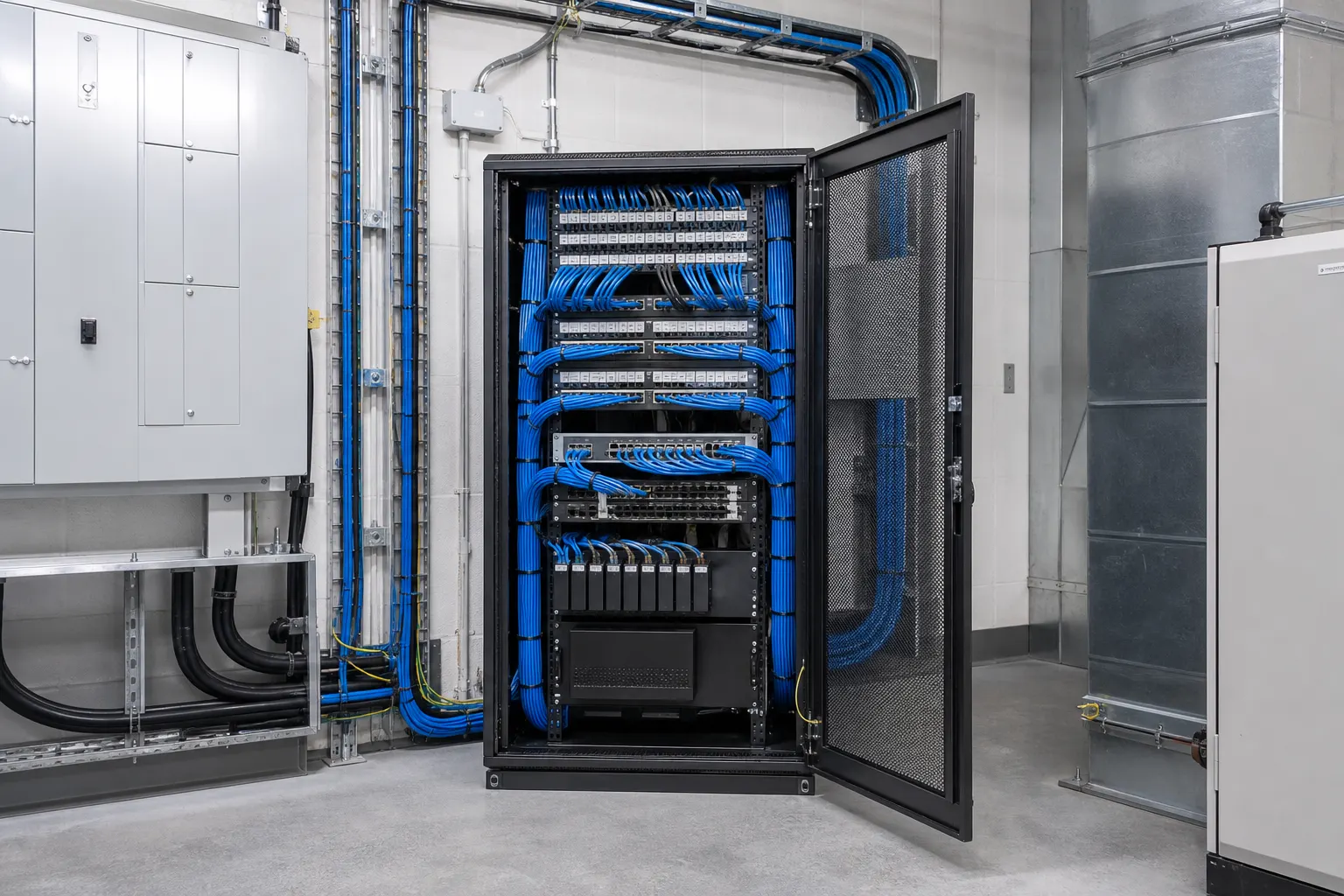
Amendment 4 also introduces a new section covering Power over Ethernet. PoE uses network cabling to carry both data and electrical power, supporting equipment such as wireless access points, cameras and other connected building devices.
These systems can be easy to overlook when electrical and data packages are specified separately. As connected equipment becomes more extensive, cable grouping, heat, equipment selection and coordination between trades need proper consideration.
The update also includes new provisions relating to functional earthing and functional equipotential bonding for information and communication technology systems. This is another reason to discuss specialist equipment early rather than treating it as a late addition after the principal electrical design has been completed.
Revisions beyond the headline changes
The battery and data-related provisions are prominent, but Amendment 4 is a broad update rather than a single-issue revision. It incorporates Amendment 3 into the main document and includes changes across multiple parts of the standard.
Businesses should not assume that a project is unaffected simply because it includes neither batteries nor PoE. The appropriate edition should be considered for new installations, additions, alterations and relevant inspection and testing work.
What Cornwall site operators should review
The changeover is a useful prompt to examine upcoming work as a whole. Before requesting a final quotation or approving a specification, it helps to gather accurate information about the existing site and the intended outcome.
- Project dates: establish when design, installation, testing and handover are expected to take place.
- Existing records: locate distribution schedules, previous certificates, inspection reports and drawings where available.
- Supply and capacity: identify the incoming supply, principal distribution equipment and significant existing loads.
- Future plans: include machinery, accommodation, EV charging, solar, batteries or building expansion that may follow later.
- Operating constraints: explain when shutdowns are possible and which processes, guests or facilities must remain operational.
- Site conditions: flag dust, moisture, corrosion, vehicle movements, outdoor equipment and restricted-access areas.
- Responsibilities: clarify who is designing, supplying, installing, commissioning and documenting each part of the project.
This information allows the electrical scope to be developed around the real site rather than a list of equipment alone.
Existing installations do not automatically become obsolete
The publication of a new amendment does not, by itself, make an older electrical installation unsafe or require it to be rebuilt immediately. Installations may have been correctly designed to an earlier edition of the wiring regulations.
The condition of the installation, how it is being used and whether it remains suitable for its environment are more meaningful questions. Changes to production equipment, occupancy or site layout can expose limitations that were not present when the original installation was designed.
Inspection and testing can help establish the present condition, but an Electrical Installation Condition Report should not be confused with a complete capacity or upgrade design. A report records observations about the installation within its agreed scope. Planning a substantial new load may also require load assessment, surveys, equipment information and coordination with the distribution network operator.
BS 7671 is a widely recognised code of practice for electrical installations, but its scope is not universal. Some specialist systems, including certain equipment associated with mines and quarries, may be governed by additional or different requirements. Defining boundaries and responsibilities is therefore particularly important on complex industrial sites.
Different Cornwall sites create different priorities
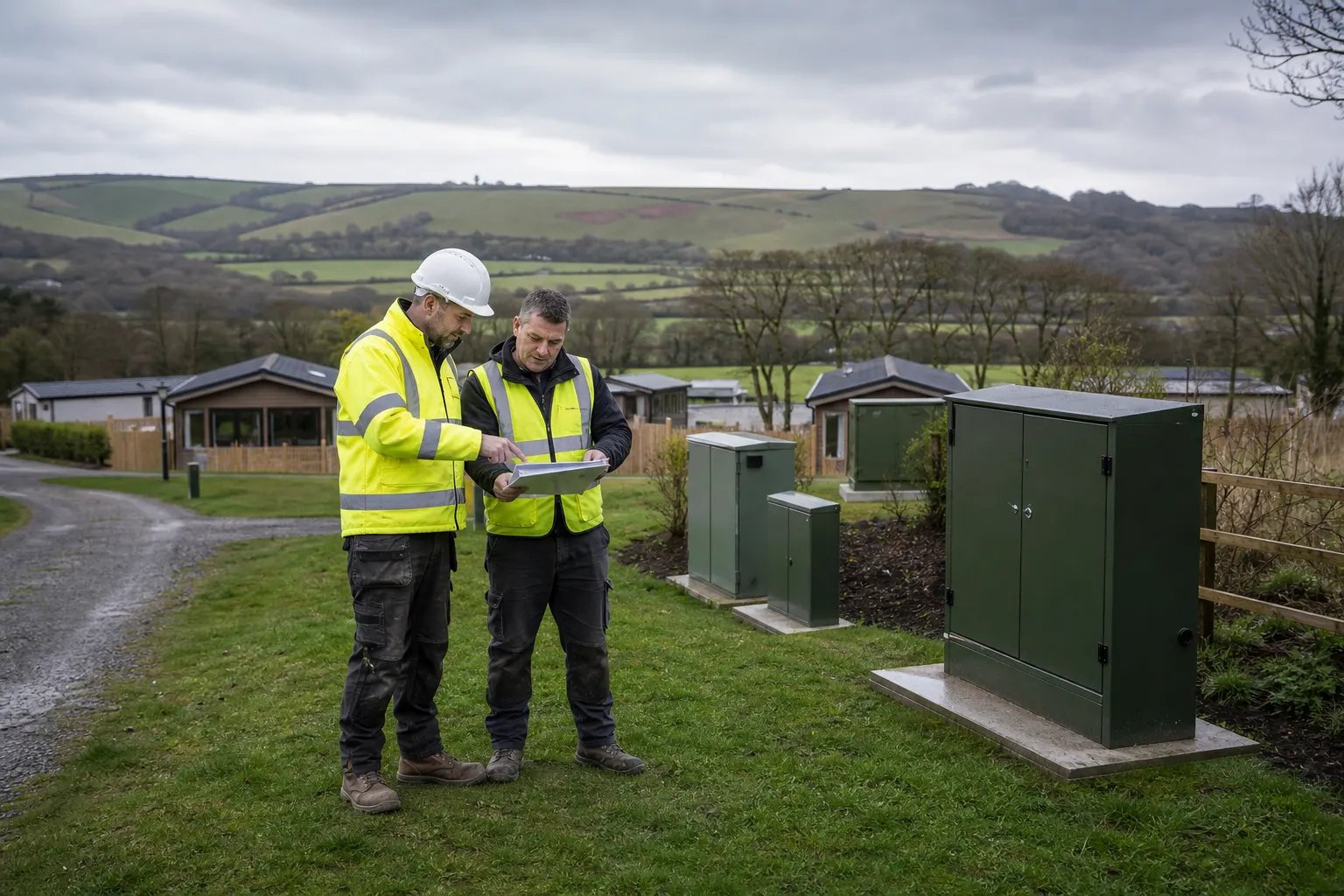
A factory adding production machinery has different electrical priorities from a holiday park adding accommodation or charging points. A quarry may need to account for harsh conditions, heavy plant and specialist systems. Golf, leisure and rural premises can combine public areas, workshops, outdoor distribution and buildings added at different times.
The technical answer must reflect those differences. A design that is appropriate for a controlled indoor commercial space may not be appropriate beside mobile plant, in an exposed coastal position or across a large outdoor site.
Seasonal operation also affects planning. Holiday parks and leisure premises may have a narrow window for disruptive work, while industrial operations may need phased shutdowns. Early surveys make it easier to identify these constraints before equipment has been ordered or opening dates committed.
A joined-up approach to upcoming electrical work
BS 7671 Amendment 4 is a technical standards update, but the practical lesson is broader. Electrical testing, planned maintenance, new distribution, renewable generation, storage and EV charging should not be treated as unrelated conversations when they share the same supply and infrastructure.
Where several improvements are being considered, a sensible sequence may avoid duplicated work. For example, planned distribution changes could be assessed alongside future charging or renewable requirements. Cable routes and isolation arrangements can be considered before finishes, roads or landscaped areas are disturbed.
Maenporth Electrical provides industrial, commercial, renewable, testing and maintenance services across Cornwall, with domestic electrical work also available. The emphasis is on practical site requirements and properly defining the work before installation begins.
Discuss your next Cornwall electrical project
If you are planning an electrical upgrade, new equipment, solar, battery storage, EV charging or wider site development, now is a useful time to review how Amendment 4 may affect the scope.
Contact Maenporth Electrical Ltd on 01326 250297 to discuss electrical work in Falmouth, Penryn, Newquay, Carnon Downs and surrounding parts of Cornwall.