
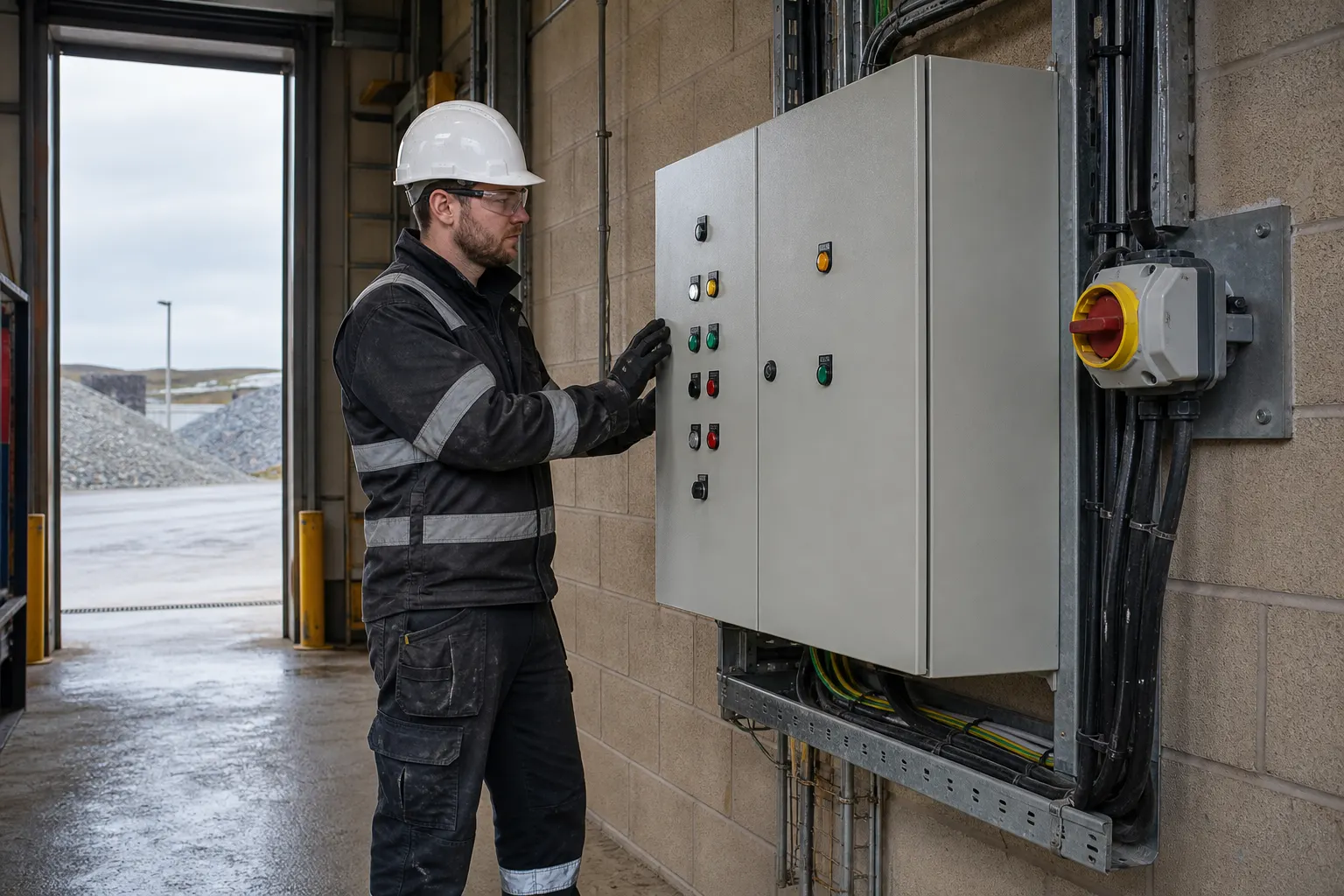
When industrial equipment needs maintenance, the immediate focus is usually the machine that has stopped. However, the safety and practicality of the work often depend on what sits further upstream: the isolators, distribution boards, control circuits, alternative supplies and site procedures used to make that equipment safe.
This becomes especially important on sites that have expanded in stages. A production line may have been extended, a conveyor replaced, a generator added or a control panel modified without the overall isolation strategy being reviewed. The equipment may still run, but safely separating one part of the process from every source of energy can become unnecessarily difficult.
For quarries, factories, holiday parks, workshops and larger rural premises, a review of isolation arrangements can be a valuable part of wider industrial electrical work. The aim is not simply to install more switches. It is to make shutdowns clear, secure and workable for the people who operate and maintain the site.
Switching off is not the same as electrical isolation
Pressing a stop button normally tells a control system to stop a machine. It does not necessarily disconnect the equipment from its electrical supply. Contactors may remain energised, automatic controls may still be active and another command could cause part of the process to restart.
The Electricity at Work Regulations distinguish between cutting off a supply and isolation. Isolation requires electrical equipment to be disconnected and separated securely from every source of electrical energy. The arrangements must also prevent inadvertent reconnection where this is necessary to avoid danger.
The distinction is explained in the HSE guidance on the Electricity at Work Regulations. For site operators, the practical point is that an emergency stop, touchscreen command or local control button should not automatically be treated as a safe means of isolation.
Why industrial plant can be difficult to isolate
On a simple installation, the relationship between a machine and its supply may be obvious. Industrial sites tend to be more complicated. One item of plant can have a main power circuit, separate controls, auxiliary equipment and mechanical or process energy that remains present after the motor has stopped.
Potential complications include:
- More than one electrical supply entering a machine or control panel.
- Separate feeds for controls, heaters, pumps, extraction or ancillary equipment.
- Automatic start signals from timers, sensors, programmable controllers or remote systems.
- Generators, uninterruptible power supplies, batteries or solar equipment creating additional sources.
- Stored electrical energy in capacitors and drive equipment.
- Compressed air, hydraulic pressure, gravity or moving material remaining hazardous after electrical isolation.
- Shared circuits that shut down unrelated areas when one machine needs attention.
- Labels and drawings that no longer match the installation.
No single lock-off device resolves every one of these issues. The isolation method needs to reflect the actual plant, its energy sources and the work being undertaken.
What a practical isolation review should cover
Trace every relevant source
The first task is to establish how the equipment is supplied. This may involve tracing feeders from distribution equipment, checking auxiliary circuits and identifying supplies entering from elsewhere. Existing schematics are useful, but they should not be assumed to be accurate where a site has undergone repeated alterations.
Alternative and stored sources also need consideration. A machine that appears dead after its main switch is opened may still contain an energised control circuit or require a defined discharge period before work begins.
Inspect the isolation point itself
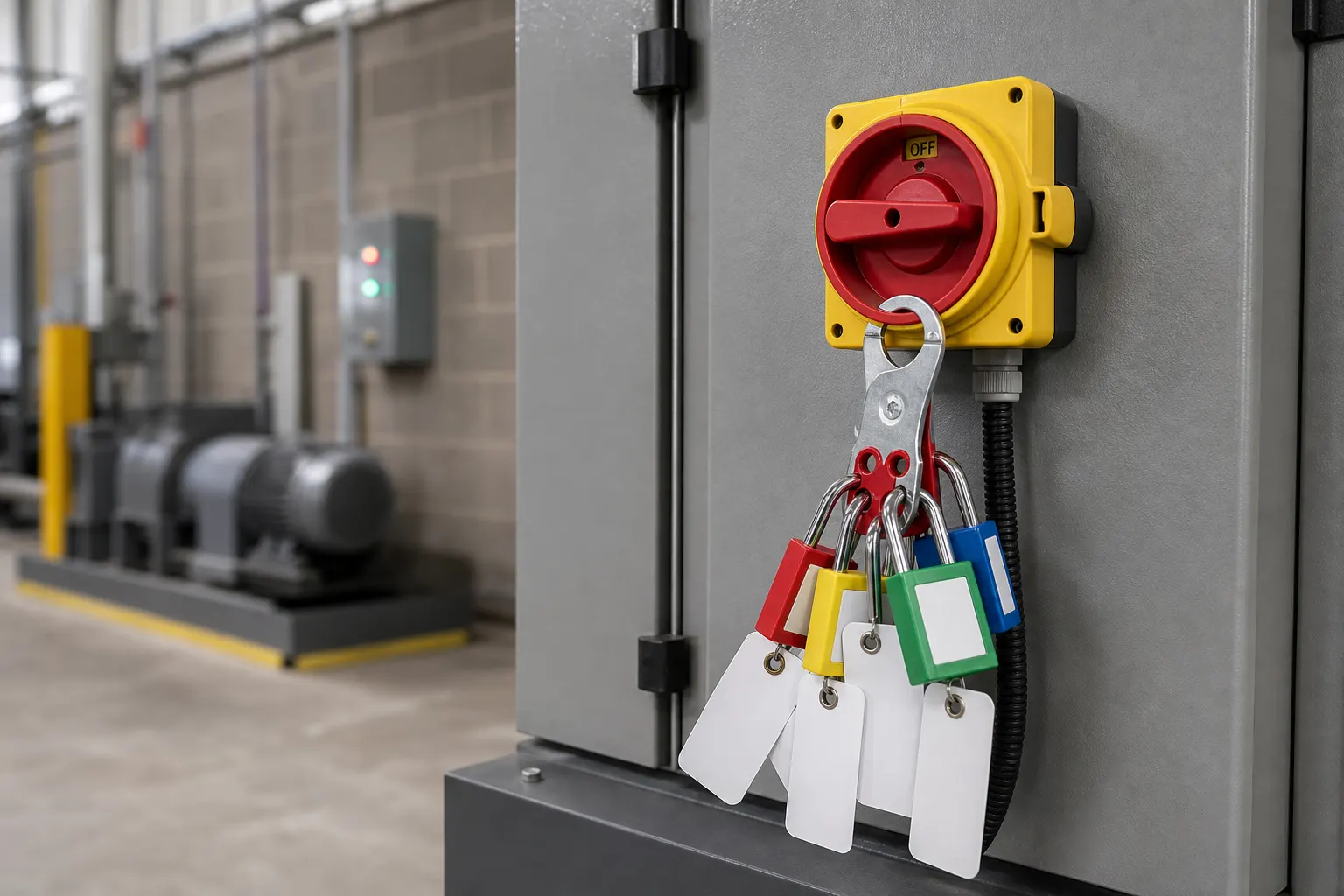
An isolator needs to be suitable for its duty and clearly associated with the equipment it controls. Its location also matters. An isolation point hidden behind stored materials, exposed to damage or positioned far from the machinery can be difficult to use and supervise.
Where lock-off is required, the arrangement should allow the supply to remain securely isolated. Multi-person tasks may need a method that protects each person involved rather than relying on a single shared understanding.
Confirm identification under controlled conditions
Labels should correspond with the correct machine, circuit and distribution point. Similar-looking isolators lined up beside a process can create avoidable uncertainty, particularly during a breakdown or night shift.
Any verification must be planned and carried out by competent people. It is not enough to operate a switch and assume the expected equipment has become safe. Electrical conductors that will be worked on or near must be proved dead using an appropriate safe isolation procedure and suitable test equipment.
Consider the whole machine and process
Electrical isolation is only one part of making industrial equipment safe. A conveyor may contain material that can move. Raised equipment may descend under gravity. Pneumatic actuators can retain pressure, while a flywheel or fan may continue rotating after power is removed.
The site’s risk assessment and safe system of work should bring these hazards together. Electrical contractors, maintenance personnel, machine operators and production managers may each hold information needed to plan the shutdown correctly.
Design changes that can make shutdowns more manageable
A good isolation review often identifies practical improvements beyond replacing worn equipment. The right solution depends on the installation, but common considerations include:
- Local isolation: providing a clearly identified isolation point within an appropriate position relative to the equipment.
- Process segmentation: dividing supplies so one section can be maintained without unnecessarily stopping unrelated plant.
- Lockable devices: selecting isolation equipment that supports the site’s lock-off procedure.
- Clear identification: coordinating labels across machines, panels, distribution boards and site drawings.
- Accessible equipment: keeping isolation points visible, unobstructed and reasonably protected from the operating environment.
- Updated records: revising circuit schedules and drawings when alterations are completed.
- Planned test points: considering how competent personnel will verify the electrical condition safely.
These changes can make future maintenance easier to plan, but they must be engineered around the site. Adding an isolator without understanding control logic, interlocking or additional supplies could create confusion rather than remove it.

Isolation challenges vary across Cornwall’s working sites
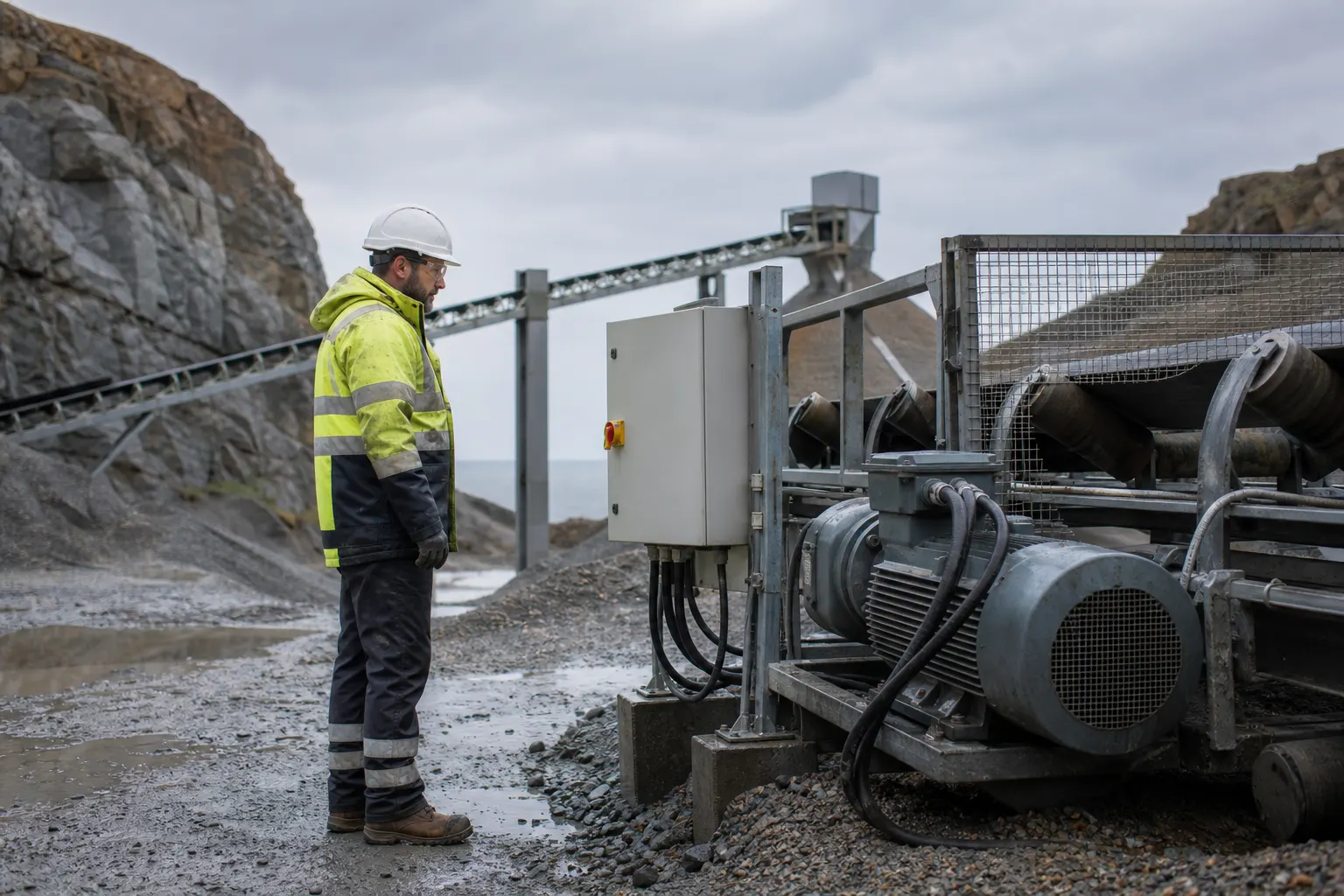
Quarries and mineral sites can combine heavy motors, conveyors, pumps and outdoor distribution equipment. Dust, moisture, vibration, vehicle movements and long cable routes can all affect the selection and positioning of electrical equipment.
Factories may have closely linked processes in which one shutdown affects several machines. Production pressure can make precise isolation boundaries and well-planned access particularly valuable. Older and newer controls may also operate side by side.
Holiday parks, campsites and larger leisure sites can include water systems, treatment equipment, laundries, commercial kitchens, workshops and distribution spread across a wide area. Seasonal operating patterns may provide limited windows for disruptive work, increasing the importance of preparation.
Rural commercial sites can present another mixture of conditions, including detached buildings, outdoor plant and supplies that have evolved as the business has changed. The isolation plan should reflect the real layout rather than treating the premises as a single simple installation.
Use planned shutdowns to improve the next intervention
A planned shutdown is an opportunity to address weaknesses that are difficult to investigate while plant is running. Before the shutdown, the contractor can review records, inspect accessible equipment and agree the scope with site personnel. During the shutdown, circuits can be verified, condition issues assessed and agreed alterations completed.
The final stage is equally important. Labels, schedules and operating information should be updated so the next maintenance team is not working from outdated assumptions. Incorporating these checks into planned electrical maintenance can prevent isolation arrangements from gradually falling behind site changes.
Useful questions before the next shutdown include:
- Can each machine be matched confidently to its isolation point?
- Are there additional or alternative electrical supplies?
- Can the isolator be secured against reconnection?
- Do drawings and circuit schedules reflect the current installation?
- What non-electrical energy remains after the supply is isolated?
- Which people need to be involved in authorising, carrying out and clearing the work?
- Can the affected area be separated without shutting down more of the site than necessary?
Signs that the isolation strategy needs attention
A review should not have to wait for a serious incident. Warning signs include handwritten or contradictory labels, isolators that cannot be locked, repeated uncertainty about which board supplies a machine, undocumented control modifications and maintenance tasks that require a disproportionately large shutdown.
Frequent reliance on verbal knowledge is another concern. Experienced operators provide valuable insight, but essential safety information should not exist only in one person’s memory. A clear physical installation, supported by accurate records and site procedures, is more resilient when staff, contractors or operating conditions change.
Plan industrial electrical isolation around the site
Effective isolation is a combination of suitable electrical equipment, accurate information and a safe system of work. It needs to account for every relevant energy source and for the practical realities of operating and maintaining the plant.
Maenporth Electrical Ltd supports industrial and larger commercial sites across Cornwall with electrical installation, alteration, testing and maintenance work. To discuss isolation points, distribution changes or an upcoming plant shutdown, call 01326 250297.