
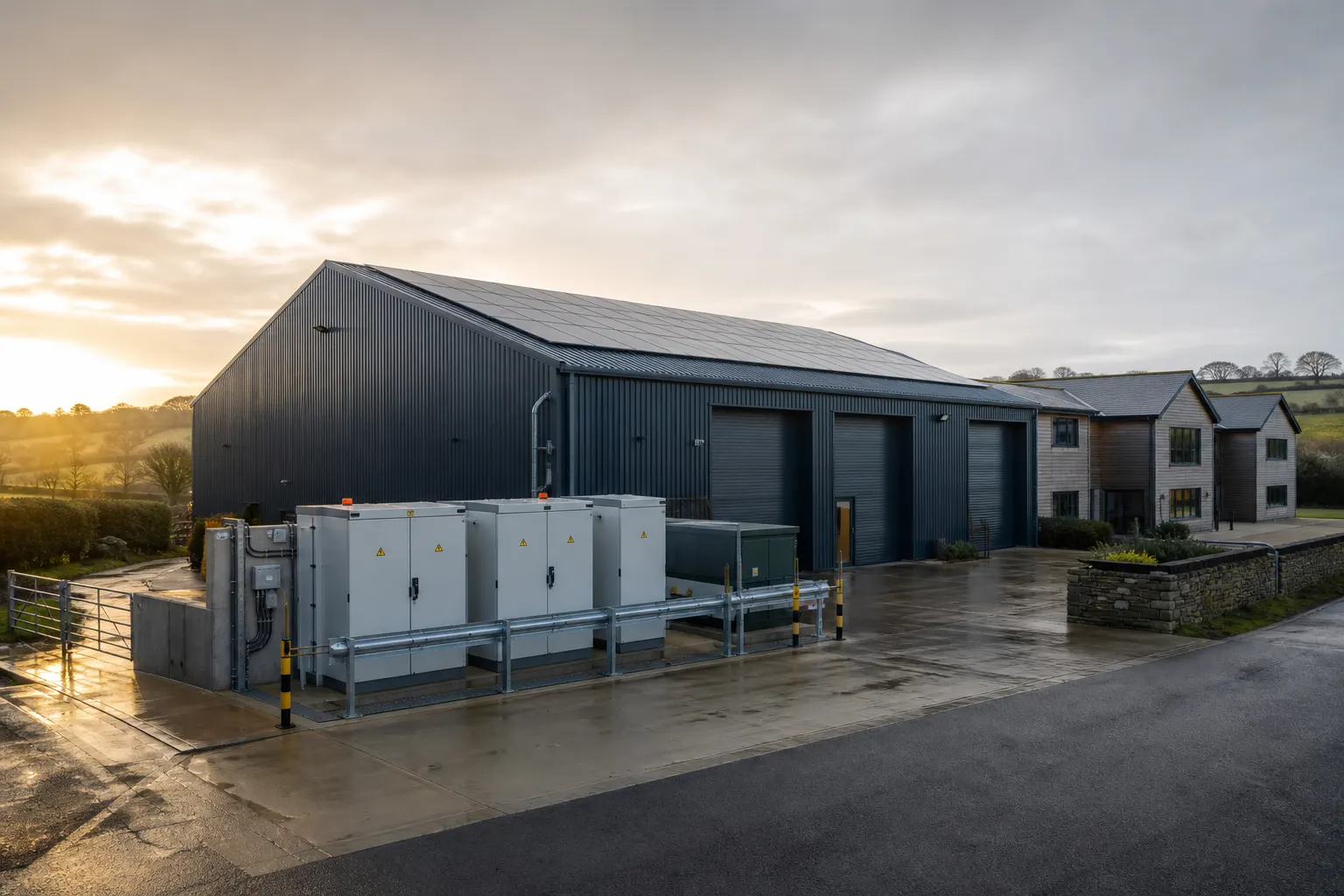
A battery may store enough energy to run part of a commercial site for several hours, but that does not automatically mean it will provide power when the grid fails. Backup operation must be designed into the electrical system, with suitable switching, protection, controls and a clear decision about which loads should remain available.
This distinction matters for Cornwall’s factories, holiday parks, quarries, leisure facilities and larger rural premises. A brief interruption could stop communications, controls, access systems, refrigeration, pumps or other operational equipment. Trying to support the entire site, however, can make a battery backup scheme unnecessarily large and expensive.
The useful question is not simply, “How big should the battery be?” It is, “What must keep working, for how long, and under which operating conditions?”
Why ordinary solar panels normally stop during a power cut
A standard grid-connected solar PV inverter is designed to disconnect when it detects that the public electricity supply has failed. This loss-of-mains protection helps prevent generation from energising wiring that the network operator reasonably expects to be disconnected.
Consequently, having solar panels on the roof does not normally give a business usable electricity during an outage. It may be sunny and the array may be capable of generating, but the inverter will stop unless the installation has been specifically designed for island-mode operation.
Island mode allows selected parts of an installation to operate as a separate electrical system after being safely disconnected from the grid. Designing that arrangement involves much more than adding a battery. Maenporth Electrical can consider backup requirements as part of wider commercial solar and renewable systems, including how generation, storage and the existing electrical installation need to work together.
Not every commercial battery provides backup power
Commercial batteries can be installed for several different purposes. A system might store surplus solar electricity, charge when grid electricity is less expensive, reduce short peaks in demand or limit export. None of these functions necessarily requires it to power the premises during a grid failure.
Backup operation depends on the system having appropriate power conversion equipment and a controlled means of separating the supported circuits from the public network. The design must also maintain effective earthing and fault protection while the normal supply is unavailable.
The latest technical treatment reflects the growing importance of these systems. The 2026 amendment to BS 7671 introduced new requirements concerning stationary secondary batteries, power conversion equipment and two-way energy flow. Detailed IET guidance on island-mode installations also explains why grid separation, system referencing and protective measures must form part of the design.
Product descriptions such as backup-ready should therefore be treated carefully. They may indicate that compatible backup equipment is available, rather than confirming that a particular site will automatically operate safely and effectively during an outage.
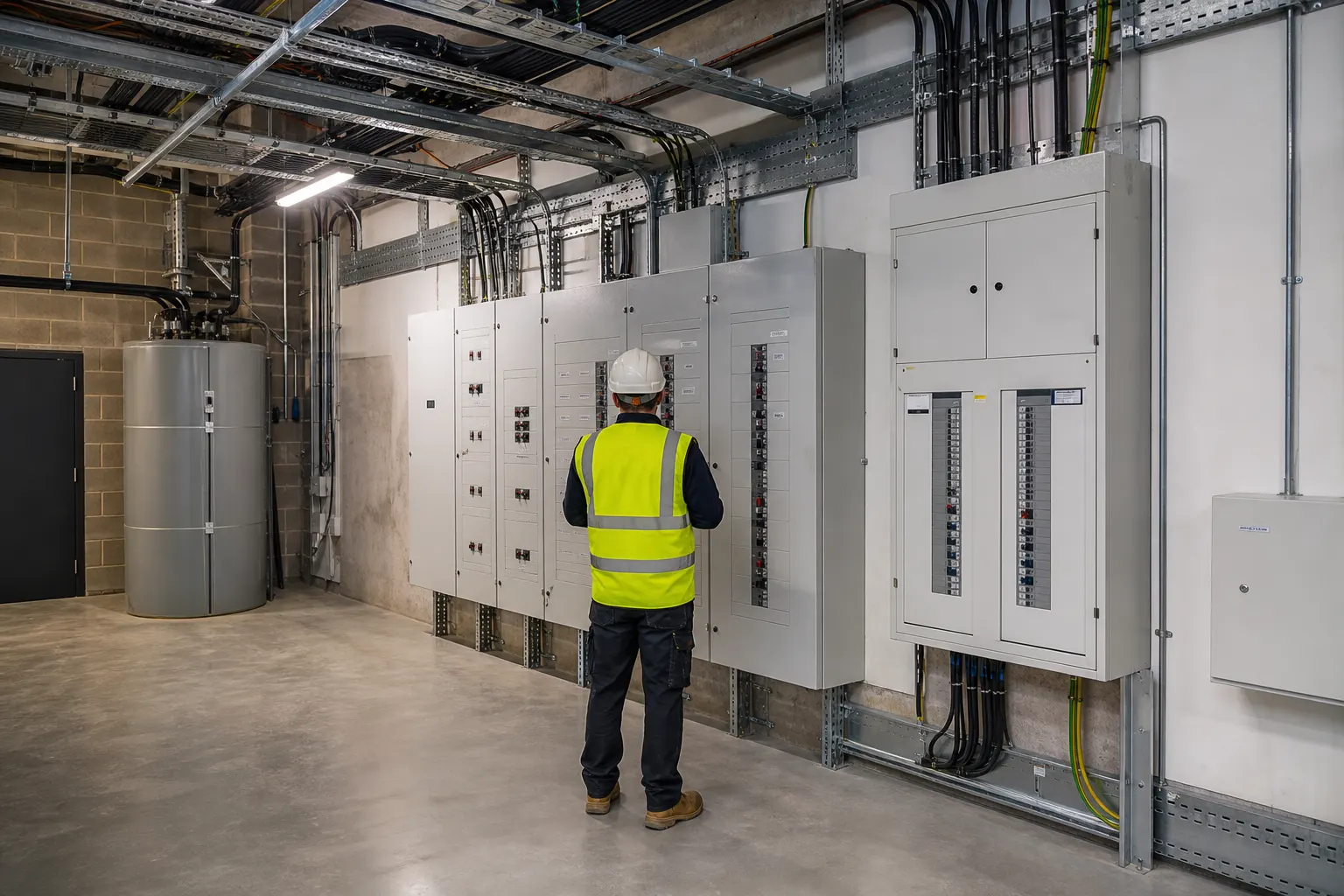
Start with an essential loads assessment
Supporting every distribution board on a commercial or industrial site is rarely the best starting point. Heating equipment, EV chargers, commercial kitchens, large motors and workshop machinery can quickly exceed the output of a battery inverter, even where the battery contains substantial stored energy.
An essential loads assessment separates genuinely important services from equipment that can remain off until the grid returns. Depending on the premises and its operational risks, candidate loads might include:
- internet, telephone and internal communication equipment;
- fire, security, CCTV and controlled-access systems where suitable backup is required;
- servers, tills, booking systems and selected office equipment;
- control panels, instrumentation and process monitoring;
- selected refrigeration or temperature monitoring;
- small pumps needed to prevent avoidable disruption;
- emergency or operational lighting in defined areas; and
- equipment needed for an orderly shutdown rather than continued production.
This list is not universal. A campsite reception, quarry processing area and manufacturing unit have very different priorities. Existing dedicated batteries, uninterruptible power supplies and generator arrangements must also be identified so that systems do not conflict or duplicate one another.
Battery capacity and inverter output are different limits
Battery storage is commonly described in kilowatt-hours, which indicates how much energy is available. The inverter has a separate power rating in kilowatts, determining how much load can be supplied at one time.
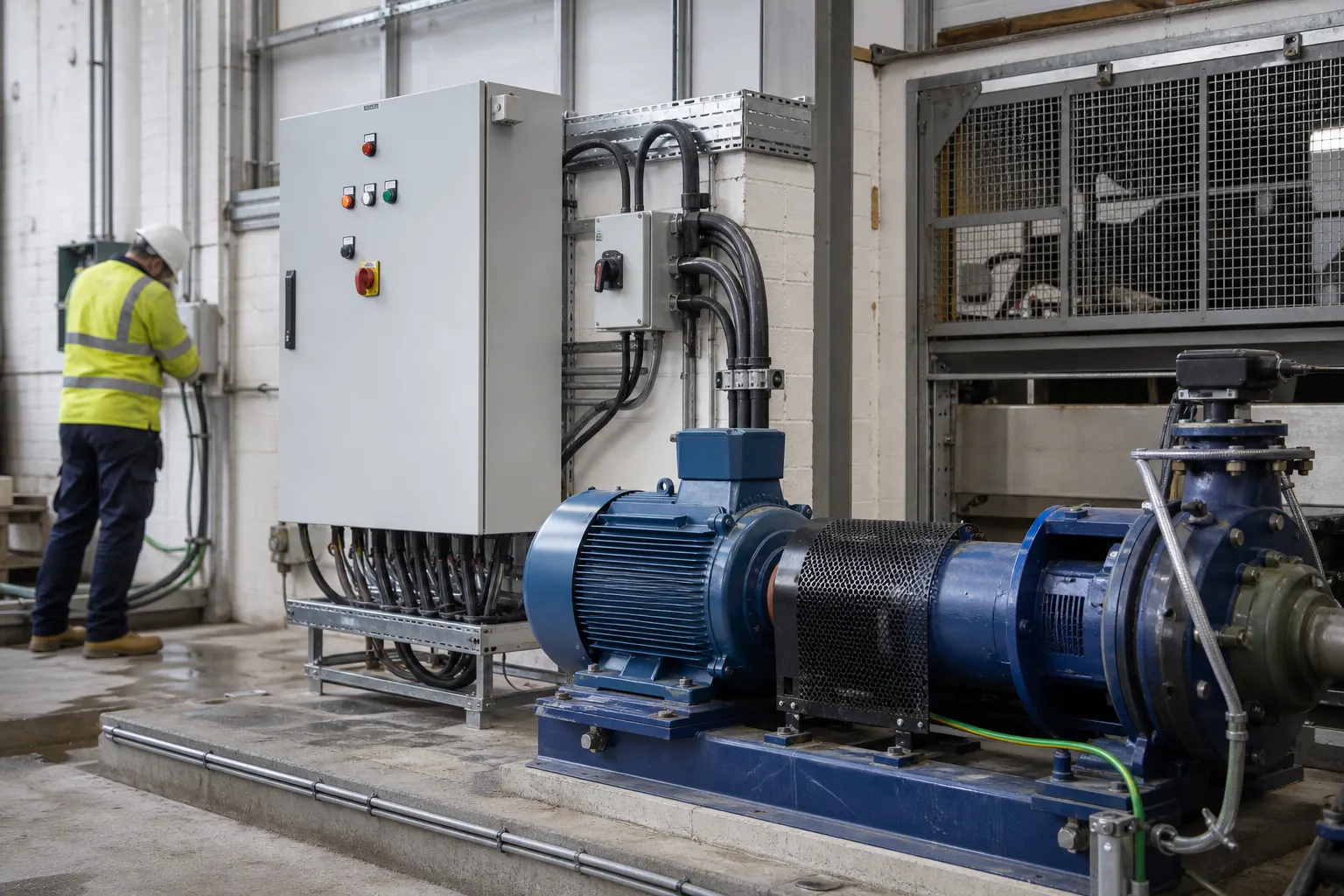
A system can therefore hold plenty of energy but still be unable to start or operate a particular item of equipment. Motors, compressors, pumps and refrigeration plant may draw a high starting current. Several loads restarting together after an outage can create a demand well above their normal running consumption.
A useful assessment should consider:
- Maximum simultaneous demand: the combined power of loads likely to operate together.
- Starting demand: temporary peaks produced by motors, transformers and other equipment.
- Required duration: whether backup is needed for minutes, several hours or a longer interruption.
- Usable stored energy: the energy available within the manufacturer’s operating limits.
- Future requirements: planned equipment, extensions or changes in site use.
Load sequencing can sometimes provide a better result than simply specifying a larger battery. Controls may restart equipment in stages, disconnect non-essential loads or preserve stored energy for higher-priority circuits.
Whole-site backup versus a separate essential-loads board
For a relatively small installation, it may be possible to support most of the premises. Larger commercial and industrial sites often benefit from a defined essential-loads distribution board instead.
This approach creates a clear boundary around the circuits available during an outage. It can reduce the required inverter output, prevent discretionary equipment from draining the battery and make operating limitations easier for site staff to understand.
Existing wiring does not always group essential equipment conveniently. A survey may find that communications, lighting and critical controls share circuits with sockets or machinery that should not be backed up. Some circuit alterations may therefore be necessary before the storage system can operate as intended.
Three-phase premises need additional consideration. Loads may be unevenly distributed across phases, while the proposed backup equipment may have phase-specific operating limits. The designer must assess the actual arrangement rather than relying only on a total figure from an electricity bill.
Solar can extend backup time, but only with compatible controls
A suitably designed system may allow solar PV to recharge the battery or contribute directly to supported loads while the site is islanded. This can extend operating time during a daytime outage, particularly when demand is low and solar conditions are favourable.
It should not be treated as guaranteed output. Cornwall’s solar resource varies by season, cloud cover, array orientation and time of day. The system also needs a way to control generation when solar output exceeds the supported load and the battery can accept no more energy.
Compatibility between the solar inverter, battery inverter and control equipment is therefore important. Existing solar should not be assumed to remain operational simply because a new battery has been added.
Generators and batteries need a coordinated design
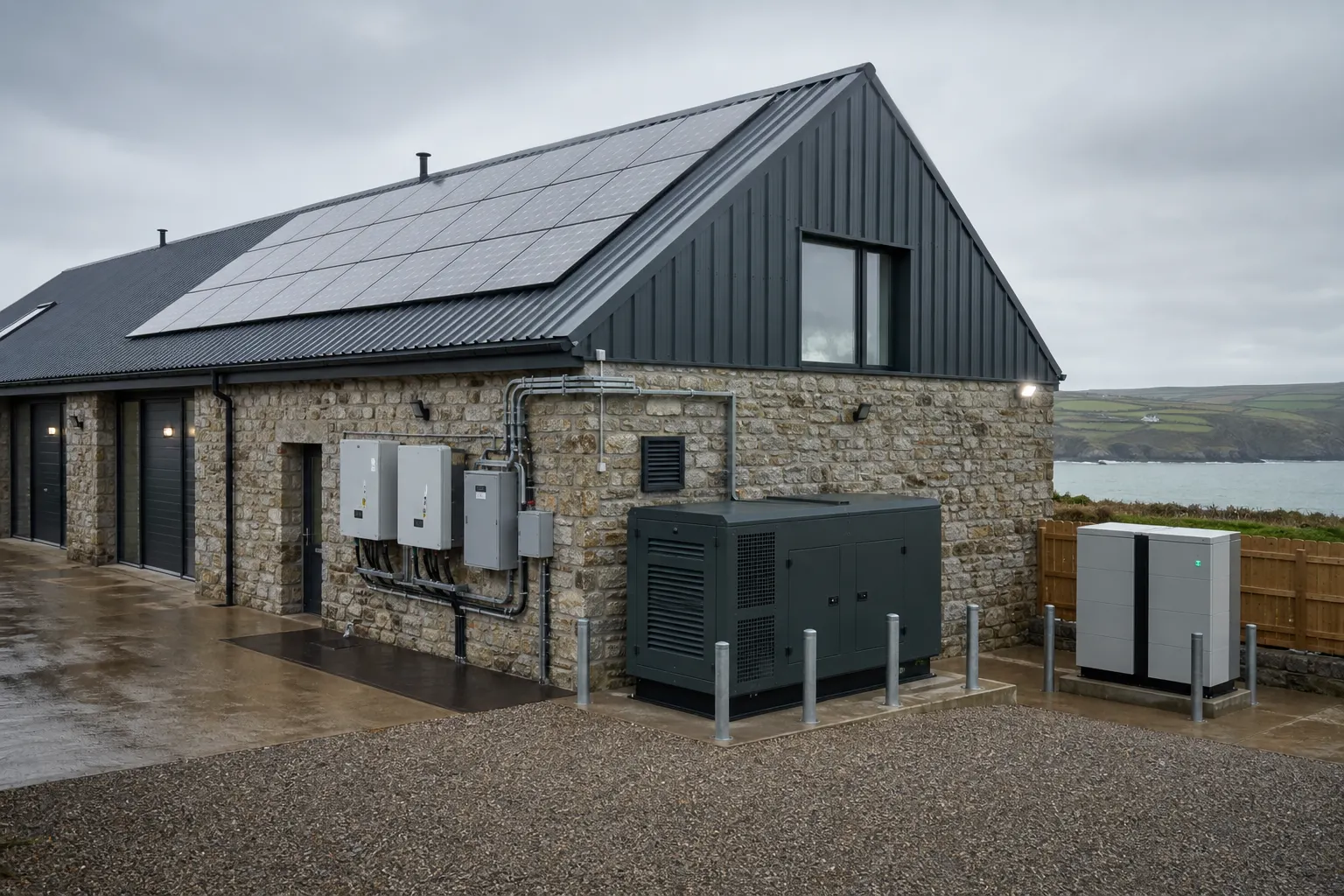
Some rural and operational sites already use standby generators. Battery storage may complement a generator by covering short interruptions, maintaining sensitive controls while a generator starts or reducing the need to run an engine at very low load.
Integration must be deliberately engineered. Changeover equipment, neutral and earthing arrangements, generator controls, inverter behaviour and protection settings all need to be compatible. An informal arrangement involving separate systems can create unreliable operation or unsafe parallel supplies.
The operating sequence should be documented: what happens when the grid fails, when the generator starts, when the battery reaches a minimum charge and when the public supply returns.
Connection approval, testing and ongoing upkeep
Because battery systems can potentially export electricity, the proposed arrangement may require notification to or prior approval from the Distribution Network Operator. The applicable process depends on equipment ratings, type-tested components, existing generation and any export limitation scheme. This should be checked during design rather than after equipment has been ordered.
Commissioning should include more than confirming that the battery charges. The backup sequence, isolation, protective devices, supported circuits and restoration to grid operation should all be verified. Site users also need clear information about what is available in backup mode and which high-demand equipment must remain off.
Battery backup should then be included within the site’s planned electrical maintenance. Periodic checks can cover warning messages, firmware or configuration changes, protective equipment, ventilation, physical condition and an appropriate functional test of the changeover sequence.
Plan resilience around the site, not the product
A useful commercial battery backup system begins with site operations. Essential loads, outage duration, starting currents, existing solar, generator arrangements and distribution-board layout all shape the eventual design.
For businesses and larger sites in Cornwall, Maenporth Electrical can assess the electrical installation and discuss practical options for solar, storage and backup power. Call 01326 250297 to arrange an initial conversation about your premises.