
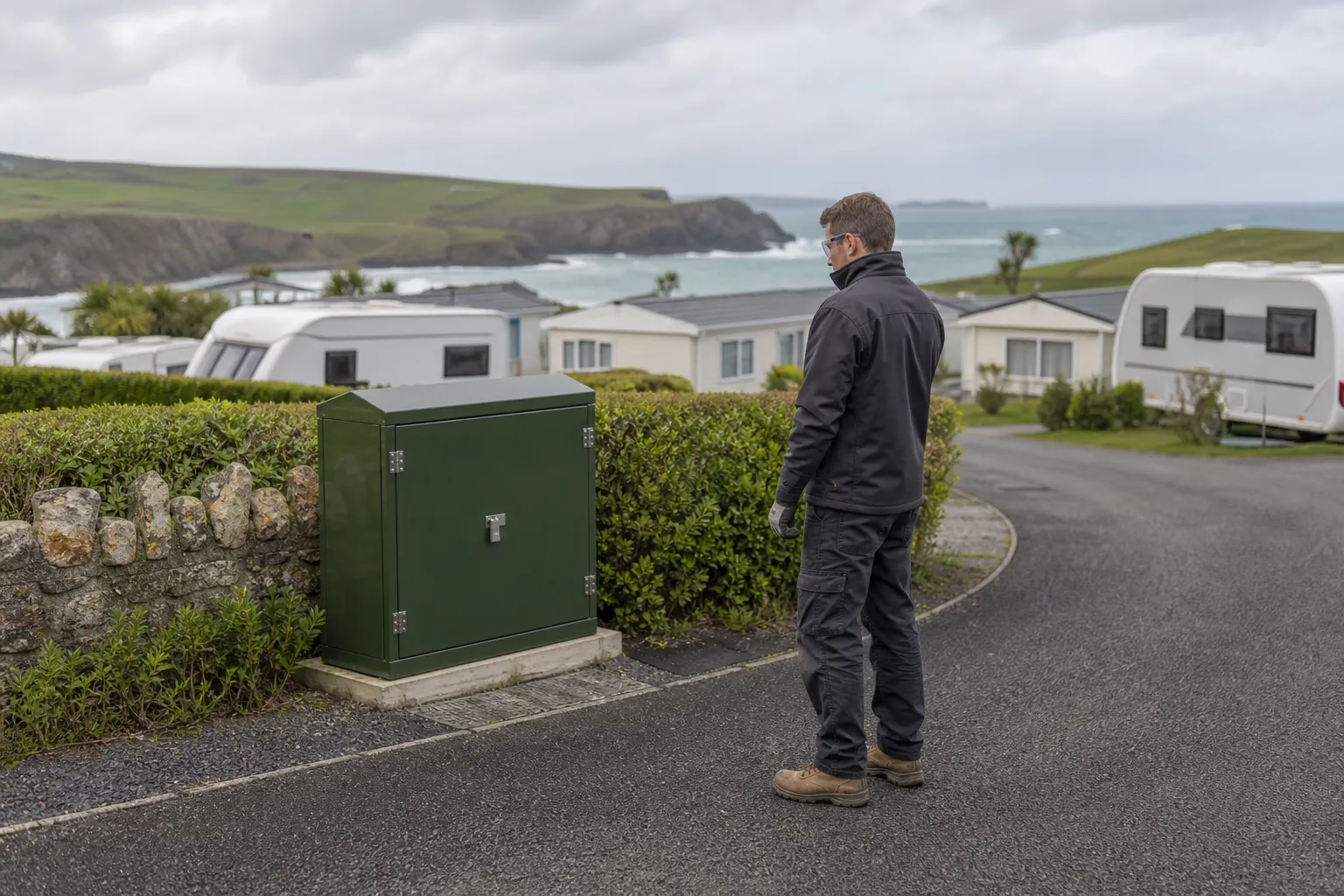
Electrical demand on a holiday park rarely stands still. Touring pitches gain higher-capacity hook-ups, static units acquire more appliances, amenity blocks are refurbished and operators add laundries, commercial kitchens, electric heating, hot tubs or vehicle charging. Each project may look manageable in isolation, but the combined load can expose weaknesses elsewhere on the site.
That is why successful holiday park electrical upgrades in Cornwall begin with the existing infrastructure rather than the new equipment. Before selecting a charger, distribution board or pitch bollard, operators need to understand how electricity reaches the site, where capacity is available and which parts of the system are already working hardest.
A whole-site approach also makes it easier to phase work around bookings, seasonal shutdowns and future investment. For larger sites, this is a form of commercial electrical planning, not simply a collection of individual installation jobs.
Why holiday park electrical demand is difficult to predict
A holiday park is not one uniform electrical load. It is a network of accommodation, guest facilities, operational buildings and outdoor equipment, often developed in stages over many years.
Demand also changes throughout the day and season. A park may experience simultaneous use of cooking equipment, showers, water heating and laundry facilities in the morning, followed by another peak when guests return in the evening. Cold or wet weather can increase heating, drying and indoor appliance use.
Historical electricity bills are useful, but they do not always show what is happening on individual feeders or during short peaks. Where an upgrade is being considered, temporary load monitoring can provide a clearer picture of:
- maximum demand across the incoming supply;
- loading on individual phases and distribution circuits;
- which facilities create the largest peaks;
- whether demand is concentrated at particular times;
- how much practical headroom remains for expansion.
This evidence helps prevent two common mistakes: assuming that a main switch rating represents spare capacity, or designing around an average consumption figure that hides peak demand.
Start with the incoming supply and agreed capacity
The first technical question is whether the site’s incoming supply can support the proposed change. The assessment should consider the service equipment, metering arrangement, main switchgear, protective devices, cable ratings and the site’s agreed import capacity.
An existing three-phase supply does not automatically mean there is enough capacity for additional pitches, electric heating or several EV charge points. The phases may be unevenly loaded, parts of the distribution system may have lower ratings than the intake, or the site’s measured maximum demand may already be close to its agreed limit.
If more network capacity is required, an application to the local distribution network operator may be necessary. That process can affect cost, design and programme, particularly if upstream work is needed. Establishing this early is preferable to discovering a connection constraint after equipment has been ordered or groundworks have started.
Load management may be part of the answer
Not every future load has to operate at full output simultaneously. Suitable control systems can manage selected equipment to keep overall demand within a defined limit. EV chargers are a common example, but controls may also coordinate heating, water systems or other flexible loads.
Load management is not a substitute for sound electrical design. The control strategy, failure behaviour, monitoring and operational priorities all need to be understood. Guests should not experience repeated interruptions because the underlying site demand was underestimated.
Assess the distribution network beyond the main switchboard
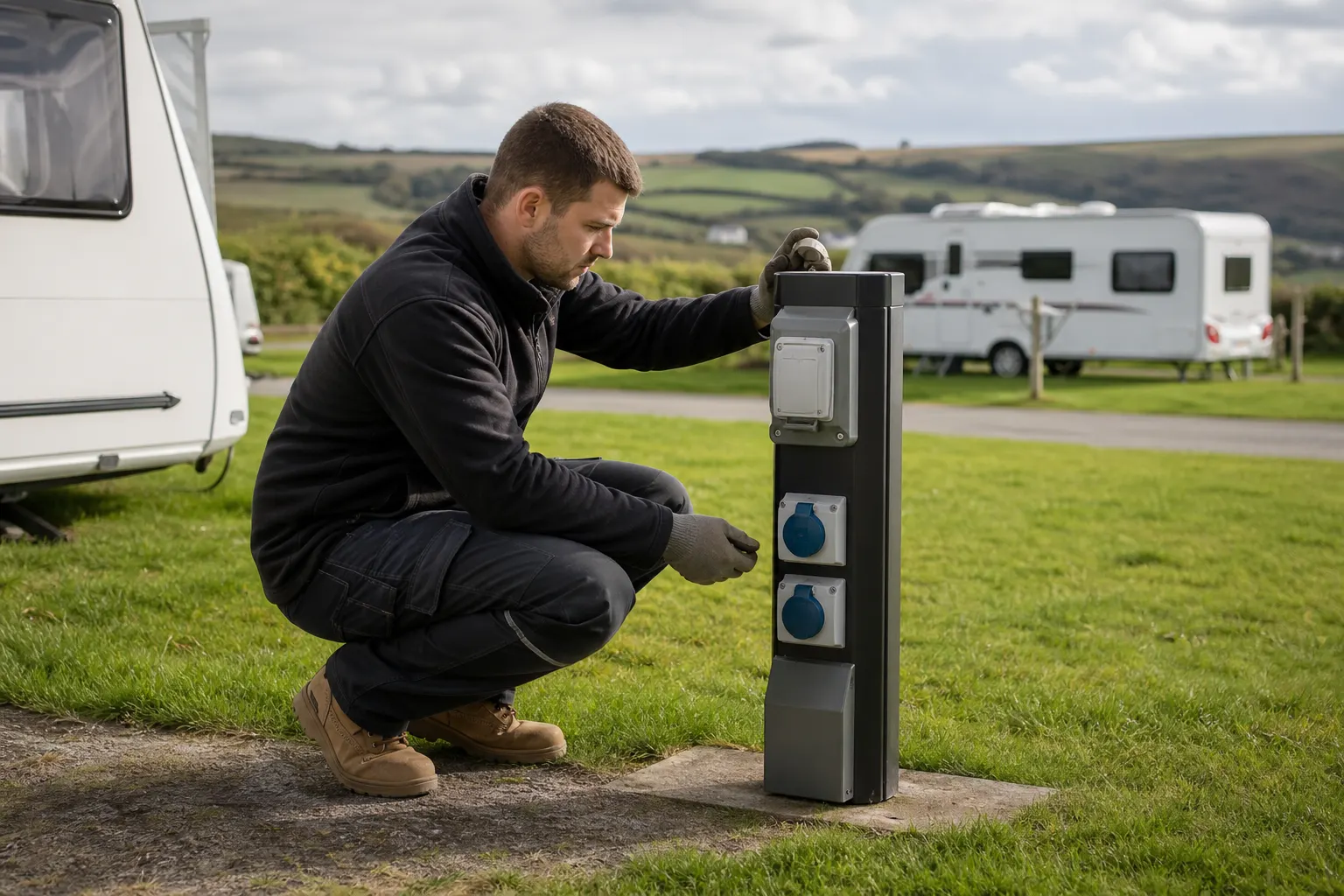
On an established park, the limiting factor may be a remote feeder rather than the incoming supply. Long underground cable runs, older distribution boards and several generations of alterations can create local constraints.
A site survey should therefore follow the electrical network from the intake to its final points of use. Depending on the project, this may include checking:
- the condition and rating of main and sub-main switchgear;
- cable sizes, routes, installation methods and protective devices;
- voltage drop at remote areas of the park;
- earthing and bonding arrangements;
- selectivity and coordination between protective devices;
- the suitability of outdoor enclosures for their environment;
- records for buried cables and isolation points;
- available space for safe maintenance and future additions.
Coastal air, driven rain, damp ground and exposed locations can all influence equipment selection and maintenance requirements. Enclosures and accessories should be suitable for their actual position, not merely described as outdoor equipment.
Touring pitches and hook-ups require specific attention
Caravan and camping park installations are covered by specific requirements within BS 7671 in addition to its general rules. New work should be designed and verified to the applicable edition of the standard and the requirements relevant to the location. The IET provides an official BS 7671 edition checker for confirming current publications and transition arrangements.
Pitch supplies are exposed to frequent connection and disconnection, changing users, vehicle movements and weather. Their design should account for the arrangement of socket-outlets, protective measures, earthing, physical protection and safe isolation.
Site licence conditions may also contain electrical requirements, and these can vary according to the site and local authority. Operators should check their own licence rather than relying on assumptions based on another park.
When extending a touring area, the design should consider the entire new section. Adding bollards one at a time without reviewing feeder capacity, voltage drop and protection can create an installation that becomes increasingly difficult to operate and maintain.
Plan maintenance around how the park operates
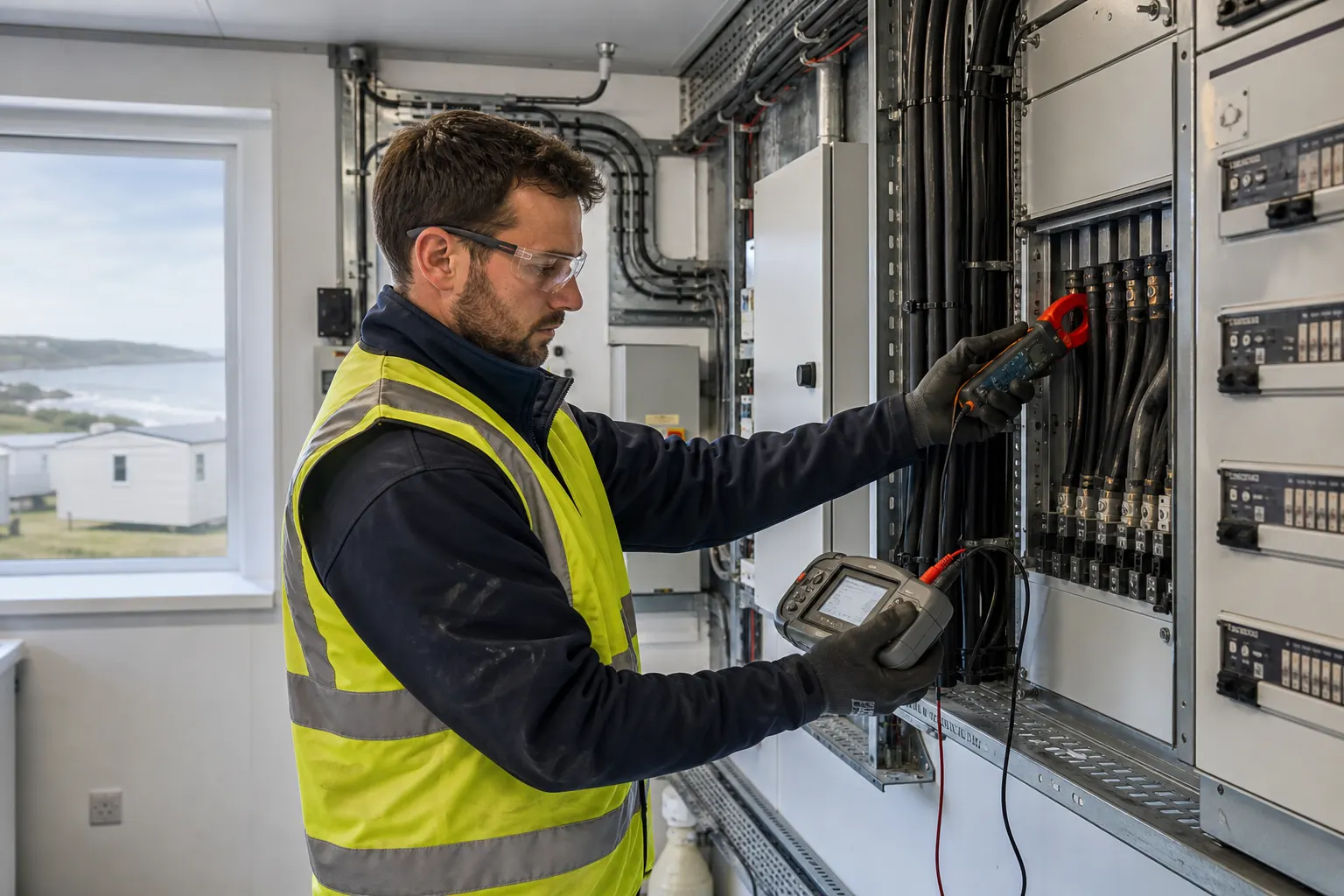
Electrical inspection should not be treated as a single certificate-driven event. HSE guidance states that electrical equipment must be maintained to prevent danger, while the type and frequency of checks, inspections and testing should reflect the equipment, environment and previous findings.
For a holiday park, a practical planned electrical maintenance schedule may combine formal inspection and testing with routine visual checks by site staff. Guest-accessible equipment, pitch hook-ups, service areas and outdoor distribution equipment may need different approaches.
Useful records include distribution diagrams, circuit schedules, test results, maintenance history, cable routes and details of alterations. When documents are incomplete, even a modest fault or extension can take longer to investigate because the contractor first has to establish how the site is supplied.
Use the quieter season effectively
Many intrusive tasks are easier to complete when occupation is lower. Shutdowns, switchboard work, cable replacement and excavations can then be coordinated to reduce disruption. The quieter period is also a good opportunity to investigate recurring summer problems while operating experience is still fresh.
Planning should identify essential loads that must remain available, areas that can be isolated separately and whether temporary arrangements are appropriate. Any temporary supply must itself be properly designed and managed.
Allow for the next project, not only the current one
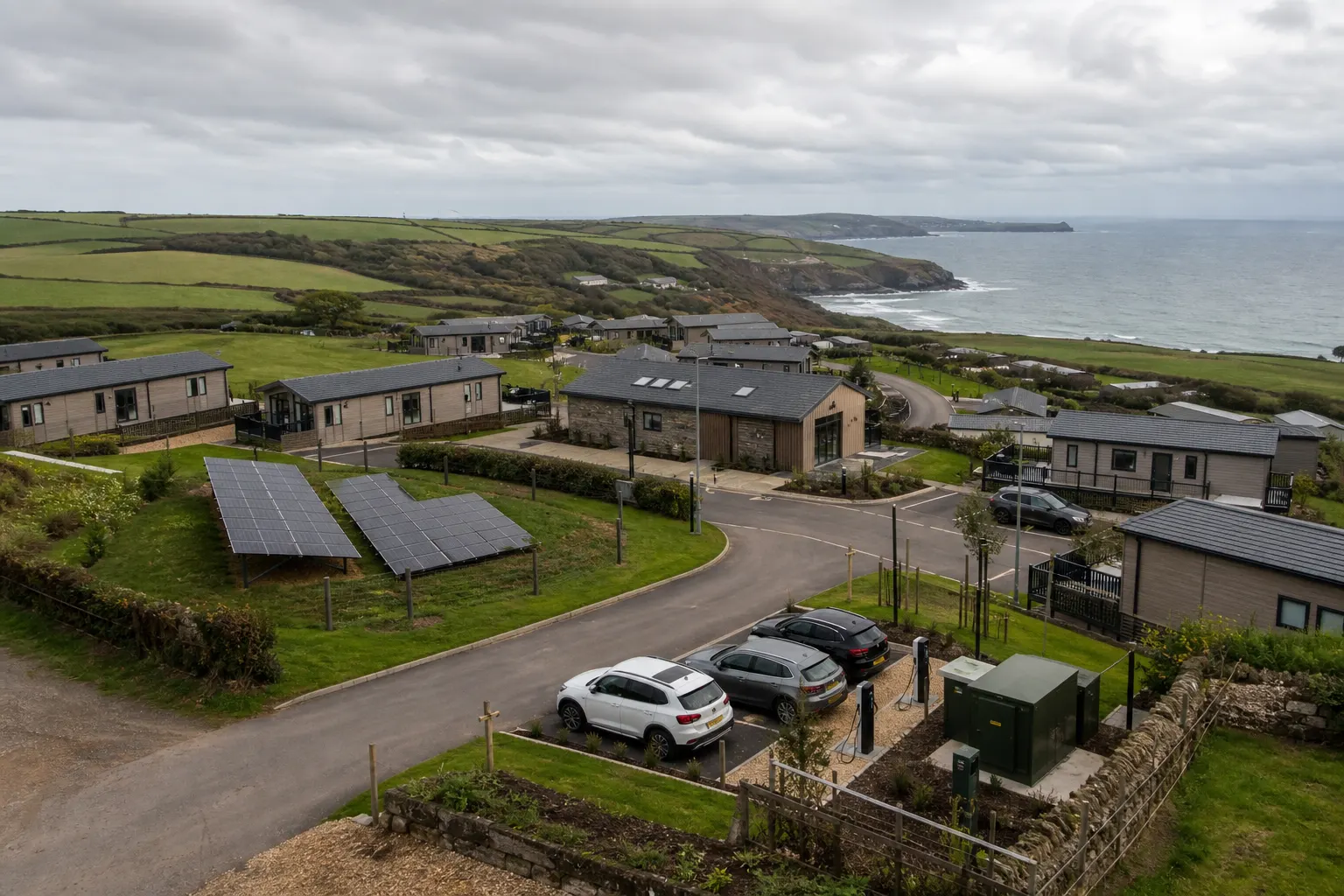
A park upgrading one facility today may later add more accommodation, EV charging, solar generation, battery storage or electric space and water heating. Those technologies can change both the amount of electricity used and the direction in which power flows through the installation.
Future-proofing does not mean installing oversized equipment without justification. It means making informed provisions where they are technically and commercially sensible. These might include spare switchboard capacity, accessible cable routes, monitoring equipment, clear network drawings or a phased strategy for replacing constrained sub-mains.
Renewable generation also needs to be considered alongside demand. Solar panels may reduce imported energy at some times without removing the site’s evening peak. Export capacity, protection, network approval and the interaction with batteries or load controls should be addressed during design.
A practical pre-upgrade checklist
Before committing to a holiday park or campsite electrical upgrade, establish:
- What new equipment is being added and how will guests or staff use it?
- What are the realistic simultaneous and peak loads?
- What is the site’s agreed import capacity?
- Are the phases evenly loaded?
- Can the existing switchgear, sub-mains and final distribution support the change?
- Are drawings, circuit schedules and underground cable records available?
- Will network operator approval or a capacity increase be required?
- Which work can be phased or scheduled outside peak occupation?
- How will the new installation be inspected, isolated and maintained?
- What likely future projects should influence the design now?
Discussing holiday park electrical upgrades in Cornwall
A well-planned upgrade should improve capacity, reliability and maintainability without creating avoidable constraints elsewhere on the park. The most useful first step is often a site survey supported by load information and a clear outline of the operator’s future plans.
Maenporth Electrical Ltd provides site-focused electrical services for commercial premises, holiday parks, campsites and larger rural sites across Cornwall. To discuss an electrical survey or planned upgrade in Falmouth, Penryn, Newquay, Carnon Downs or the surrounding areas, call 01326 250297.