
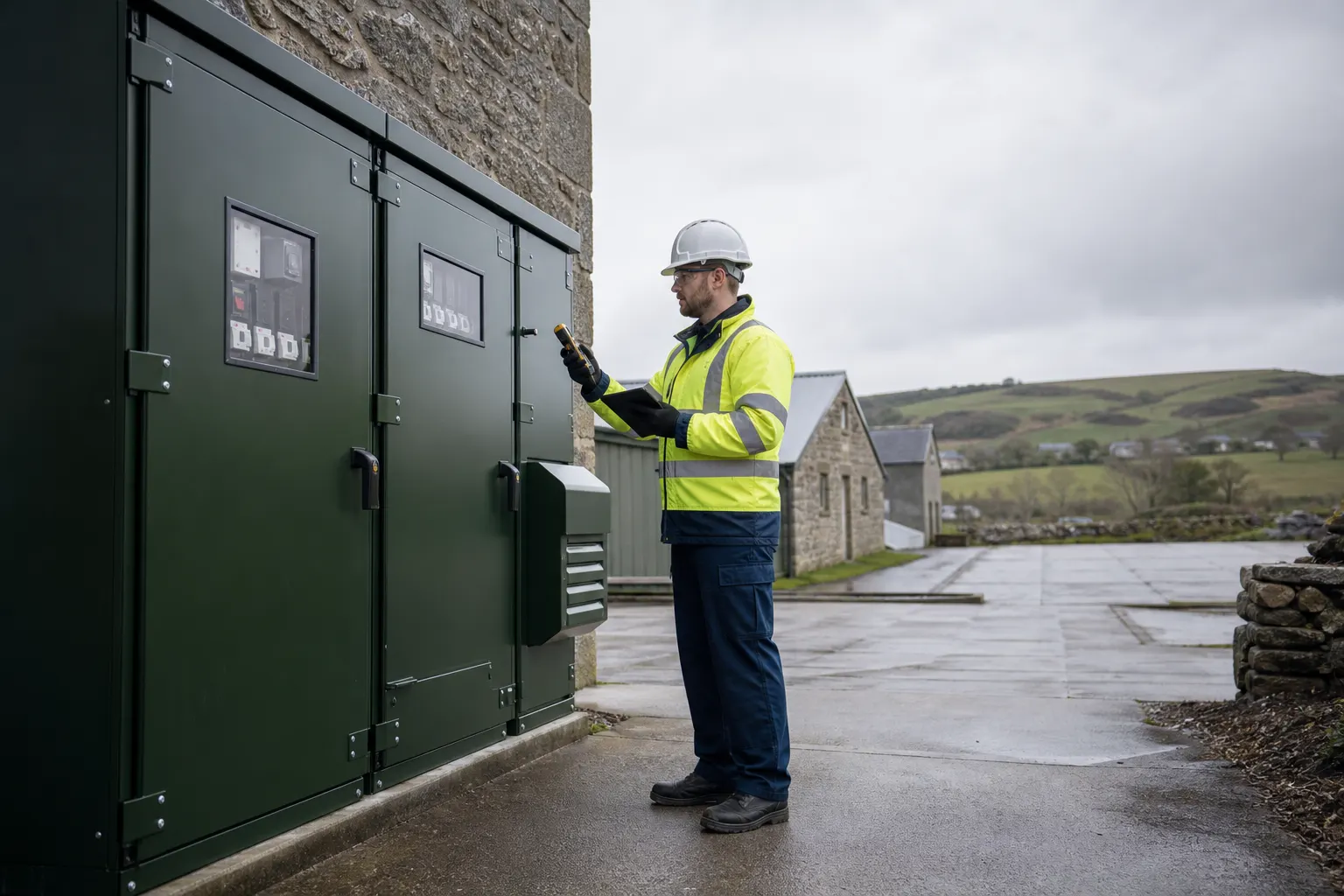
An Electrical Installation Condition Report is an important part of managing a business site, but it cannot cover every aspect of electrical maintenance. It records the condition of an installation at the time of inspection. It does not, by itself, keep equipment clean, identify every developing operational fault or make sure remedial work is completed.
For factories, quarries, holiday parks, leisure facilities, commercial premises and larger rural sites, the more useful approach is to place inspection and testing within a planned maintenance programme. That programme should reflect how the site actually operates, the environment around its electrical equipment and the consequences of losing a particular supply.
What an EICR does, and what it does not do
Periodic inspection and testing is intended to assess whether an existing electrical installation is in a satisfactory condition for continued use. Depending on the installation, this can involve inspecting distribution equipment, protective measures, earthing and bonding, circuits and other accessible parts of the fixed wiring.
The resulting report provides valuable evidence about the installation’s condition and identifies observations that need attention. It can help a site operator prioritise safety-related remedial work and understand where further investigation may be required.
However, an EICR remains a point-in-time assessment. Conditions can change after the inspection because of equipment damage, moisture, contamination, vibration, alterations, increased loading or ordinary deterioration. Some operational problems may also be intermittent and not present while testing takes place.
This is why an EICR works best alongside planned electrical maintenance, routine site observations and a clear process for recording and resolving faults.
The maintenance duty is based on preventing danger
The Electricity at Work Regulations 1989 require electrical systems to be maintained, where necessary, to prevent danger so far as is reasonably practicable. The regulations do not prescribe one universal maintenance interval for every workplace or every item of equipment.
The appropriate regime should instead be based on risk. The type of installation, its use, operating conditions, previous results and likelihood of damage all matter. The Health and Safety Executive’s guidance on the Electricity at Work Regulations provides further information for dutyholders.
This risk-based approach is particularly relevant to mixed sites. A clean, dry office does not present the same conditions as a quarry workshop, outdoor distribution point, campsite hook-up or production area. Applying the same inspection routine to every asset may lead to unnecessary work in low-risk areas while leaving more demanding equipment without enough attention.

What should a planned electrical maintenance programme include?
A useful programme connects records, inspection, testing, servicing and repairs. Its scope will vary, but the following elements provide a practical starting point.
A reliable picture of the installation
Maintenance is harder when distribution boards are poorly labelled, circuit schedules are missing or site drawings no longer reflect alterations. Establishing an accurate baseline may involve checking available certificates and reports, identifying important distribution equipment and recording supplies to critical plant.
An asset register does not need to become an unnecessarily complicated administrative project. It should contain enough information to identify equipment, understand its function, find its maintenance history and plan the next appropriate action.
Priorities based on risk and operational importance
Not every circuit has the same consequence of failure. A fault affecting a single store cupboard is different from one interrupting production, water treatment, refrigeration, communications, site lighting or a large group of holiday pitches.
Useful questions include:
- Which electrical assets are safety-critical or operationally critical?
- Which equipment is exposed to water, dust, impact, vibration, heat or corrosive conditions?
- Where would a failure affect customers, tenants, production or animal welfare?
- Which parts of the site have a history of repeated faults?
- Are replacement components readily available?
- Can the equipment be isolated without shutting down a much larger area?
Several levels of inspection
Effective maintenance is not limited to formal testing. It may combine day-to-day observations by site staff, scheduled visual inspections, functional checks, periodic electrical testing and specialist condition monitoring where justified.
Staff can be encouraged to report obvious damage, unusual smells, water ingress, repeated tripping or changes in equipment behaviour. They should not remove covers or attempt electrical repairs unless they are competent and authorised to do so.
More detailed inspection and testing should be carried out by people with the competence, equipment and information needed for the task. On suitable installations, techniques such as thermal imaging can provide additional evidence, but they are not a replacement for inspection, testing or sound fault diagnosis.
A process for completing remedial work
A report is only useful if its findings are reviewed and acted upon. Each observation should have an owner, an agreed priority and a record of the action taken. Where work cannot be completed immediately, the site may need interim controls based on competent advice and the level of risk.
Repeated defects also deserve investigation. Continually replacing the same component without identifying the cause can conceal problems involving loading, environmental exposure, poor equipment selection or an upstream fault.
Cornwall sites can place very different demands on equipment
Electrical maintenance in Cornwall often needs to account for outdoor equipment, exposed locations and sites spread across several buildings. Coastal air, wind-driven rain, damp outbuildings and seasonal weather can all influence the condition of enclosures, connections and supporting infrastructure.
Different sectors introduce their own priorities:
- Quarries and heavy industrial areas: dust, vibration, mobile plant, demanding loads and physical damage may require close attention.
- Factories and workshops: production changes, additional machinery and accumulated alterations can affect loading, protection and isolation arrangements.
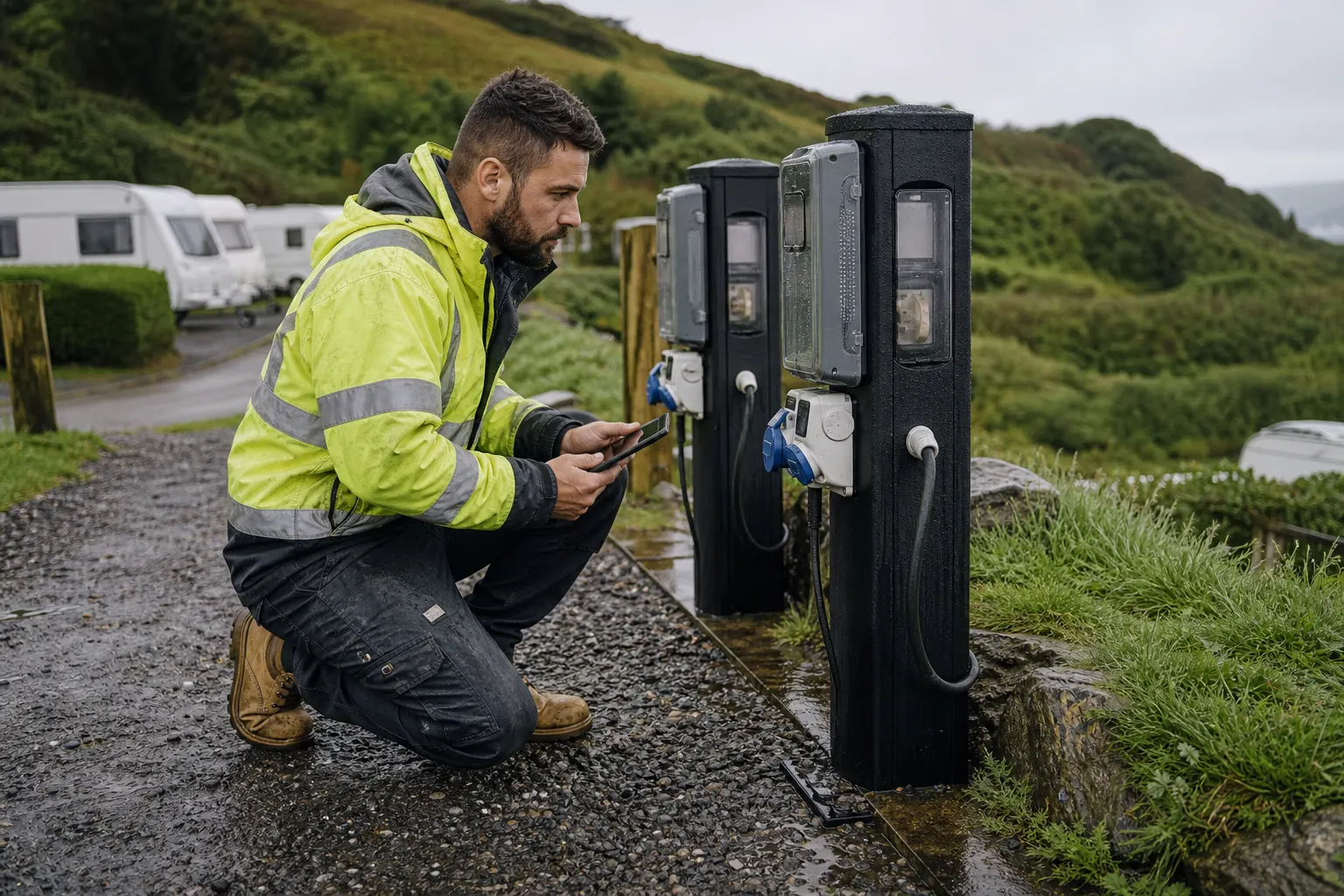
- Holiday parks and campsites: outdoor distribution, seasonal occupancy and long periods of low use followed by high demand need to be considered.
- Golf and leisure sites: supplies may extend across clubhouses, workshops, hospitality areas, irrigation equipment and outdoor facilities.
- Larger rural sites: long cable routes, outbuildings, pumps, private infrastructure and limited access can make faults harder to locate and repair.
The maintenance plan should therefore reflect the individual areas of the site rather than assigning one generic interval to everything.
Plan maintenance around the operating calendar
Electrical work is easier to manage when it is coordinated with quieter periods, production stops, changeover days or seasonal closures. Waiting for a fault to dictate the timetable can leave a business arranging access, parts and specialist support under pressure.
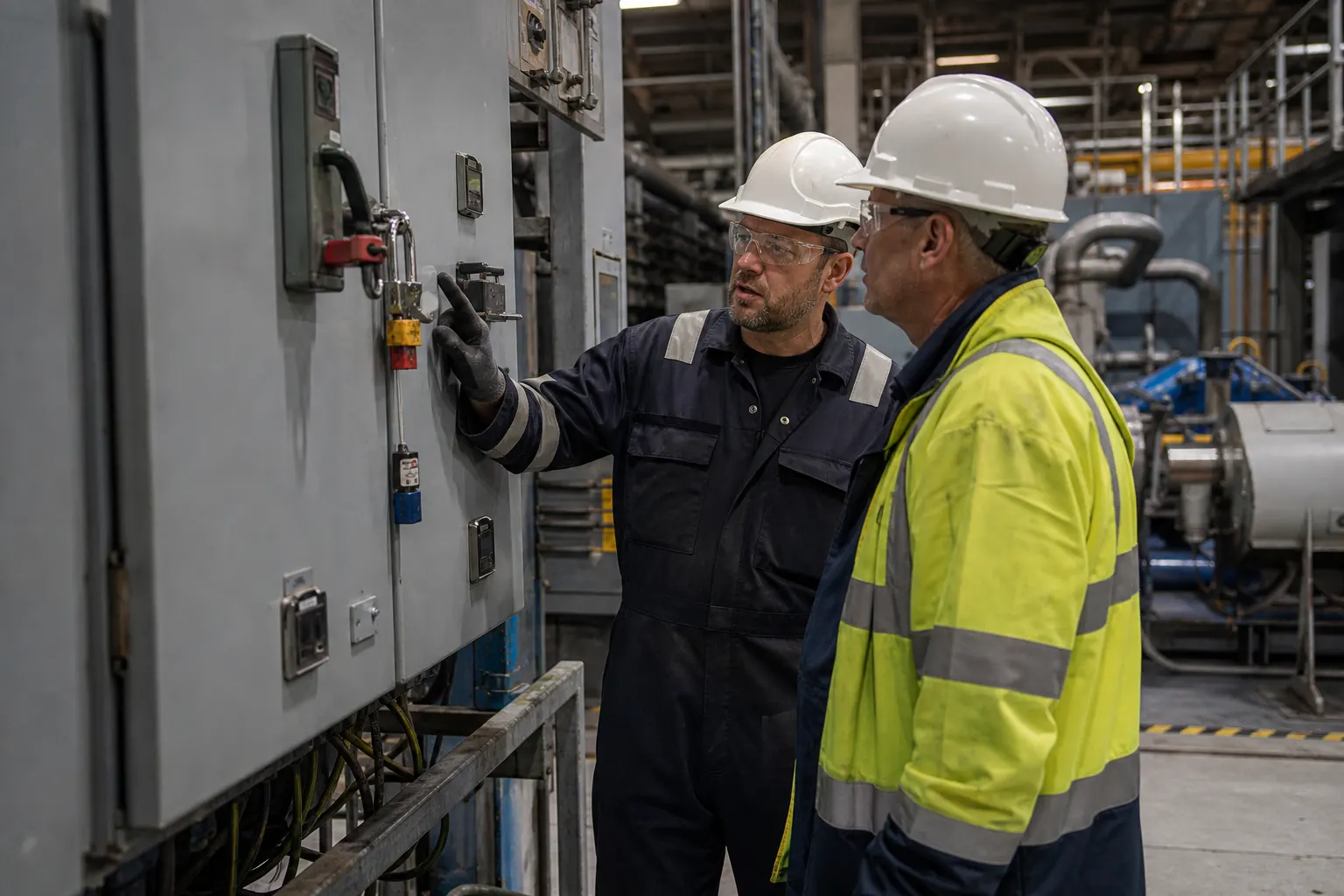
A planned shutdown can allow several related tasks to be grouped together. For example, inspection, testing, cleaning, tightening where appropriate, component replacement and remedial work may be coordinated to reduce repeated disruption. The exact work must be selected for the equipment concerned and completed under suitable isolation and safety arrangements.
Phasing can also be valuable. A large site does not necessarily need every distribution area taken out of service at once. With adequate information, maintenance can be divided into manageable sections while preserving supplies elsewhere.
Use records to improve the maintenance interval
Maintenance frequencies should not remain unchanged simply because they were entered into a spreadsheet several years ago. Previous findings provide evidence about how equipment is deteriorating in its real environment.
If repeated inspections find damage or contamination before the next planned visit, the interval or maintenance method may need to change. If an asset remains in good condition over several cycles, a competent risk review may support a different approach.
Useful records include inspection and test reports, remedial certificates, fault logs, service information, circuit changes and details of replaced equipment. Maenporth Electrical’s electrical testing services can form part of this wider evidence base for commercial, industrial and rural installations.
Warning signs should not wait for the next scheduled test
A maintenance date is not a reason to ignore a developing problem. Arrange competent assessment when site staff notice signs such as:
- repeated or unexplained operation of protective devices;
- heat discolouration, unusual smells or evidence of overheating;
- water inside or around electrical equipment;
- corroded, cracked or damaged enclosures;
- loose accessories or exposed cable damage;
- buzzing or other unexpected changes in operating noise;
- recurring failures of the same equipment; or
- unrecorded alterations and circuits that cannot be identified reliably.
Immediate action may be needed where there is evidence of danger. Site personnel should follow their reporting and isolation procedures rather than attempting an unplanned repair.
Good maintenance also supports future site upgrades
Accurate records and a well-understood installation make it easier to plan new machinery, solar generation, battery storage, EV charging or changes to building use. These additions can affect demand, distribution, protection, earthing and the way power moves around a site.
Planned maintenance can identify constraints before an upgrade reaches the installation stage. It can also reveal opportunities to coordinate renewals with expansion, avoiding the disruption of working on the same part of the system twice.
Build a plan that matches the site
An EICR is a key electrical safety document, but it should be treated as one component of an active maintenance system. The strongest plans combine risk-based intervals, clear records, routine reporting, competent inspection and timely remedial work.
Maenporth Electrical provides electrical testing and planned maintenance support for industrial, commercial and larger rural sites across Cornwall. To discuss the condition, maintenance priorities or future requirements of your site, call 01326 250297.