

A fault in a rented workshop can involve the tenant’s machinery, a landlord-controlled supply and lighting shared with another unit. Sorting out who acts is not always as straightforward as deciding who pays.
Commercial electrical maintenance responsibilities depend on the lease, workplace safety duties and practical control of the system. For Falmouth business tenants, landlords and site managers, those are three related questions, not one.
The short answer is to check the lease and control
Neither the landlord nor the tenant is automatically responsible for everything. GOV.UK’s business property guidance describes tenants as normally responsible for electrical-equipment safety and landlords as responsible for the health-and-safety aspects assigned to them in the lease. It says the lease should state who handles repairs and maintenance.
Start by establishing what the lease allocates, then check what each party actually controls. A contractual agreement about payment does not answer every workplace safety question. More than one party may have duties on the same site.
Workplace electrical duties follow control
Under Regulation 3 of the Electricity at Work Regulations 1989, employers’ and self-employed people’s duties apply to matters within their control. Ownership is not the only test: an employer operating equipment and a landlord retaining control of shared distribution equipment may have different responsibilities.
Regulation 4(2) requires electrical systems to be maintained, as necessary, to prevent danger so far as is reasonably practicable. The HSE guidance on the Electricity at Work Regulations explains that inspection and, where necessary, testing are essential parts of preventive maintenance.
The practical question is therefore not just “Whose equipment is it?” but “Who can manage its condition, arrange access and get necessary work authorised?”
Make sure occupiers know how to report concerns such as damaged equipment, repeated tripping or signs of overheating. Reporting a concern is different from authorising or carrying out electrical work.
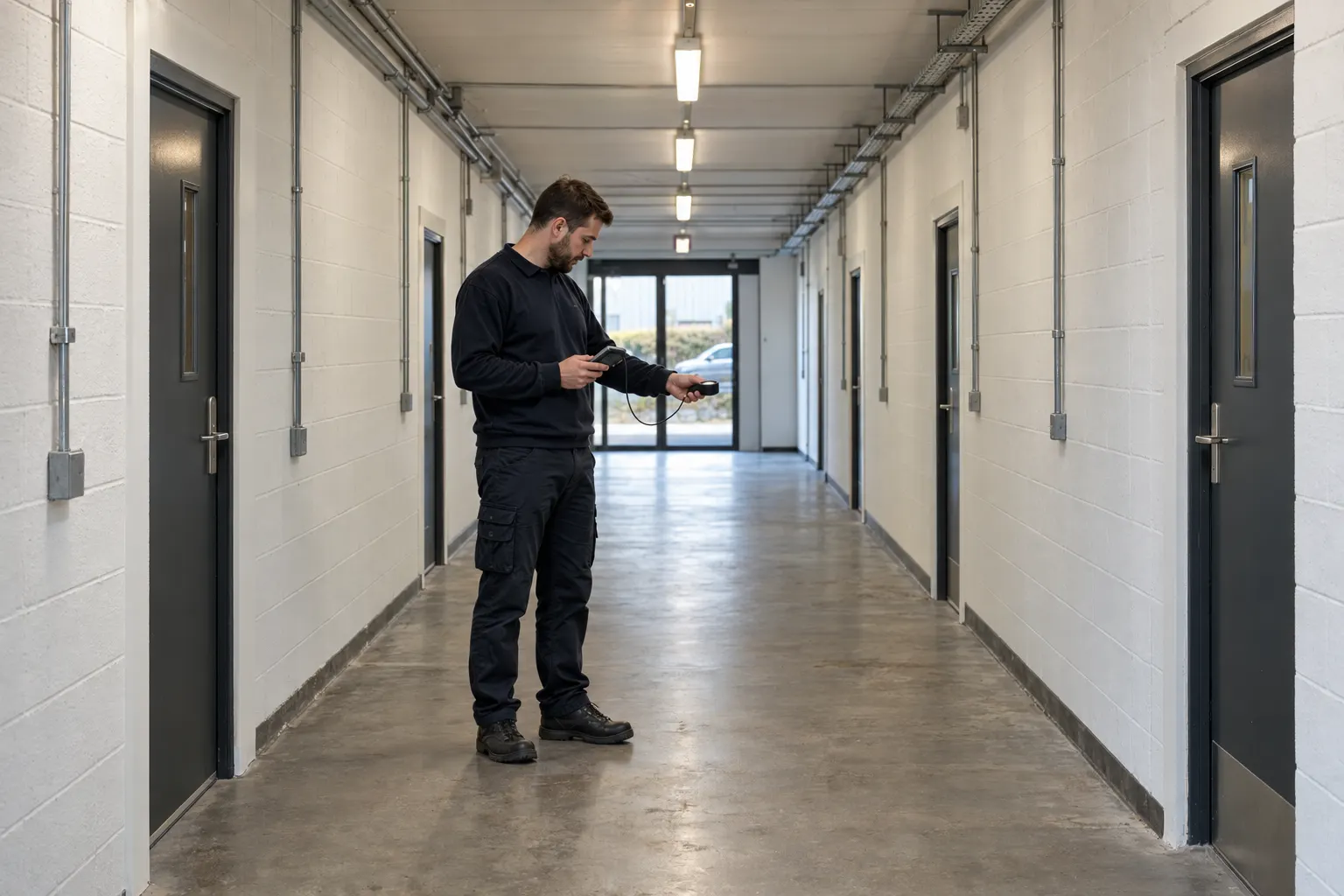
What the commercial lease should clarify
Look beyond a general promise to maintain the premises. Check the lease’s electrical maintenance terms for:
- Who commissions inspection and testing of the fixed installation.
- Who arranges repairs, approves alterations and authorises urgent work.
- Which equipment and shared areas sit within each party’s scope.
- Who pays directly, and whether costs may be recovered through service charges.
Check whether the lease distinguishes the original installation from tenant alterations, and who must approve work affecting other occupiers. Then compare that wording with the actual site, especially where earlier fit-outs or subdivisions have changed the wiring. A meter or unit boundary does not necessarily define the maintenance boundary.
If the lease and current maintenance arrangements do not match, flag the discrepancy. An informal practice is not a reliable substitute for clarifying responsibility.
Separate tenant, landlord and shared electrical systems
Use three headings to map the site, without treating them as automatic legal allocations.
Tenant installations and equipment
Identify the wiring and equipment the business uses or has added. For an inherited fit-out, check both the agreed maintenance responsibility and whether the installation is covered by the available inspection report.
Tell the person coordinating maintenance about new machinery or fit-out alterations. Changes may affect access, use or inspection scope beyond the immediate work area.
Landlord-retained systems
Establish who controls any main switchroom, distribution equipment or supplies serving several units. Record who can authorise access and work where a tenant cannot reach or control the relevant equipment.
Shared areas and supplies
Corridor lighting, outside lighting and supplies crossing unit boundaries need an agreed maintenance route. Ask the inspector to confirm where each installation’s inspection scope starts and ends.
Consider a workshop supplied from a shared distribution board. The tenant’s inspection brief might start at the unit’s own board, while the landlord’s brief covers only communal lighting. The feeder supplying the workshop could be missed. Agree the boundaries with the electrician before either inspection is booked.
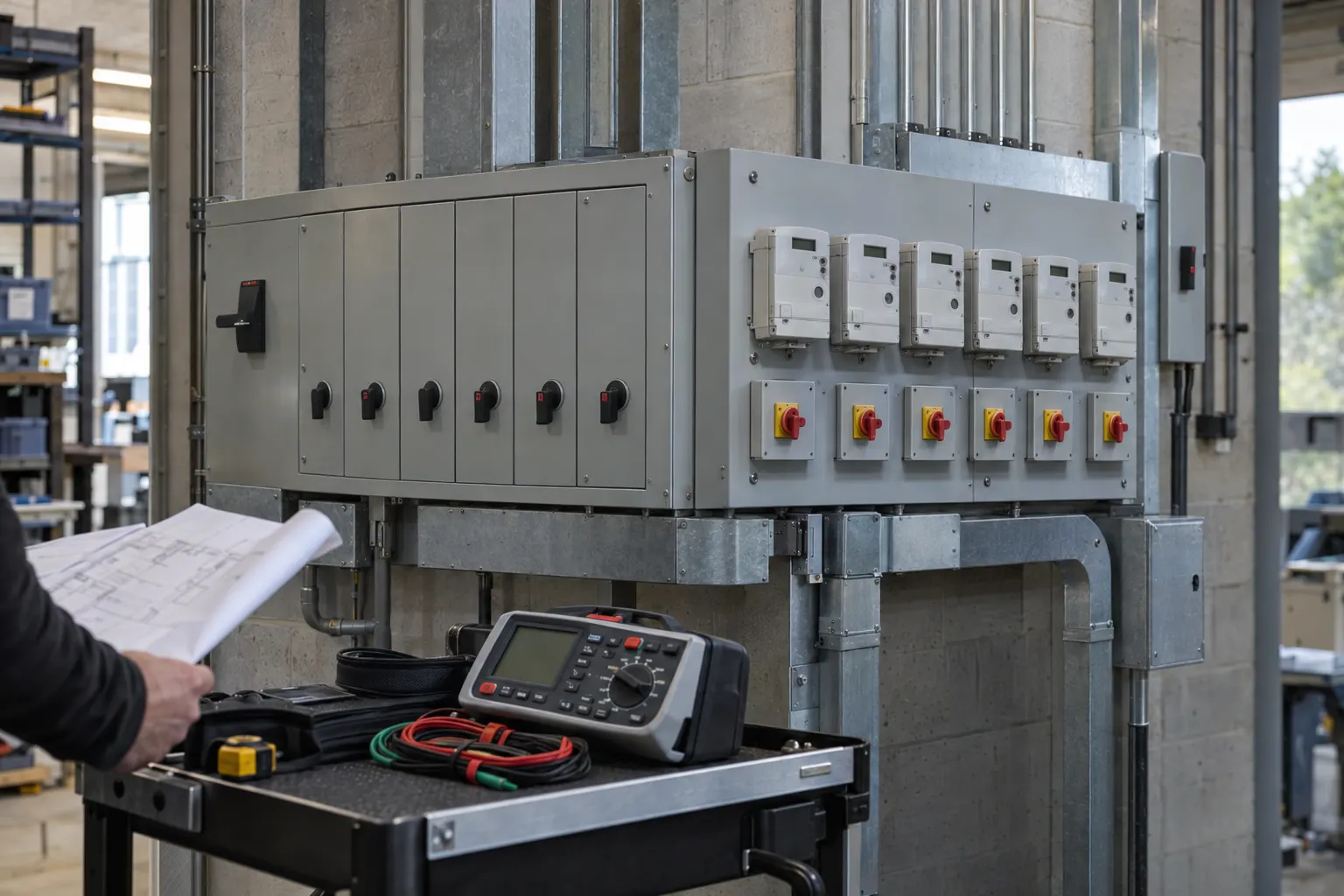
Who arranges an EICR for commercial premises?
Agree a lead contact using the lease allocation and actual control of the installation. That person coordinates the inspection; appointing them does not remove other parties’ safety duties.
An electrical installation condition report (EICR) records the condition of the fixed installation within its stated scope. When arranging EICR testing, share the agreed scope with both landlord and tenant so neither mistakes a unit-only report for a whole-site assessment.
Before work starts, agree who receives the report, who authorises remedial work and who tracks it to completion. Give each outstanding action a named contact and a route for approval.
A managing agent may coordinate appointments without having authority to approve every repair. Confirm how urgent findings will reach someone able to act.
Do rented-home testing rules apply to commercial units?
Not automatically. The five-year inspection requirement described in GOV.UK’s rented-residential guidance concerns relevant premises occupied as the tenant’s only or main residence. It is not a blanket rule for commercial leases. Mixed-use buildings and sites with holiday accommodation need their property and tenancy arrangements considered separately.
There is no universal statutory commercial EICR interval. Those responsible should determine inspection and testing frequency based on the system’s use and condition, previous experience, competent advice and manufacturer guidance. An EICR does not replace maintenance between inspections.
An electrical handover checklist for Falmouth businesses
At a new tenancy, a management change or a review of commercial property electrical maintenance responsibilities, bring the relevant contacts together. Have the lease’s relevant clauses, previous reports and details of later alterations available, and record:
- Boundaries. The systems each party controls, including supplies and shared areas outside the unit.
- Inspection coverage. Which reports cover which installations, and any exclusions or access limitations.
- Open actions. Outstanding findings, who is arranging the work and how completion will be confirmed.
- Access and authority. Who holds keys, can approve disruption and can authorise spending.
- Payment route. Who is to be billed, what needs prior agreement and who handles disputed costs.
- Next review. Who keeps the shared record current when tenants, equipment or layouts change.
If reports or responsibility details are missing, mark them as unresolved and agree who will obtain information or arrange competent assessment. A gap in the handover is not evidence that somebody else has covered the system.
HSE notes that maintenance records are not themselves required under the Electricity at Work Regulations, but can help monitor condition and maintenance effectiveness. This checklist is a practical coordination tool, not a prescribed legal form. Keep the agreed boundary and contact list available to those running the site, not only in the lease file.

When to ask an electrician or a solicitor
Use a competent electrician to establish the electrical scope, assess condition and advise on testing and remedial work. Seek a commercial property solicitor’s advice on disputed lease wording, liability or cost recovery. This article is practical information, not legal advice.
If there is a suspected dangerous defect, obtain prompt competent help rather than waiting for a payment dispute to be resolved.
For commercial electrical testing in Falmouth or help with planned electrical maintenance, call Maenporth Electrical Ltd on 01326 250297. Based at Maenporth, we serve Falmouth, Penryn and the wider Cornwall area.