
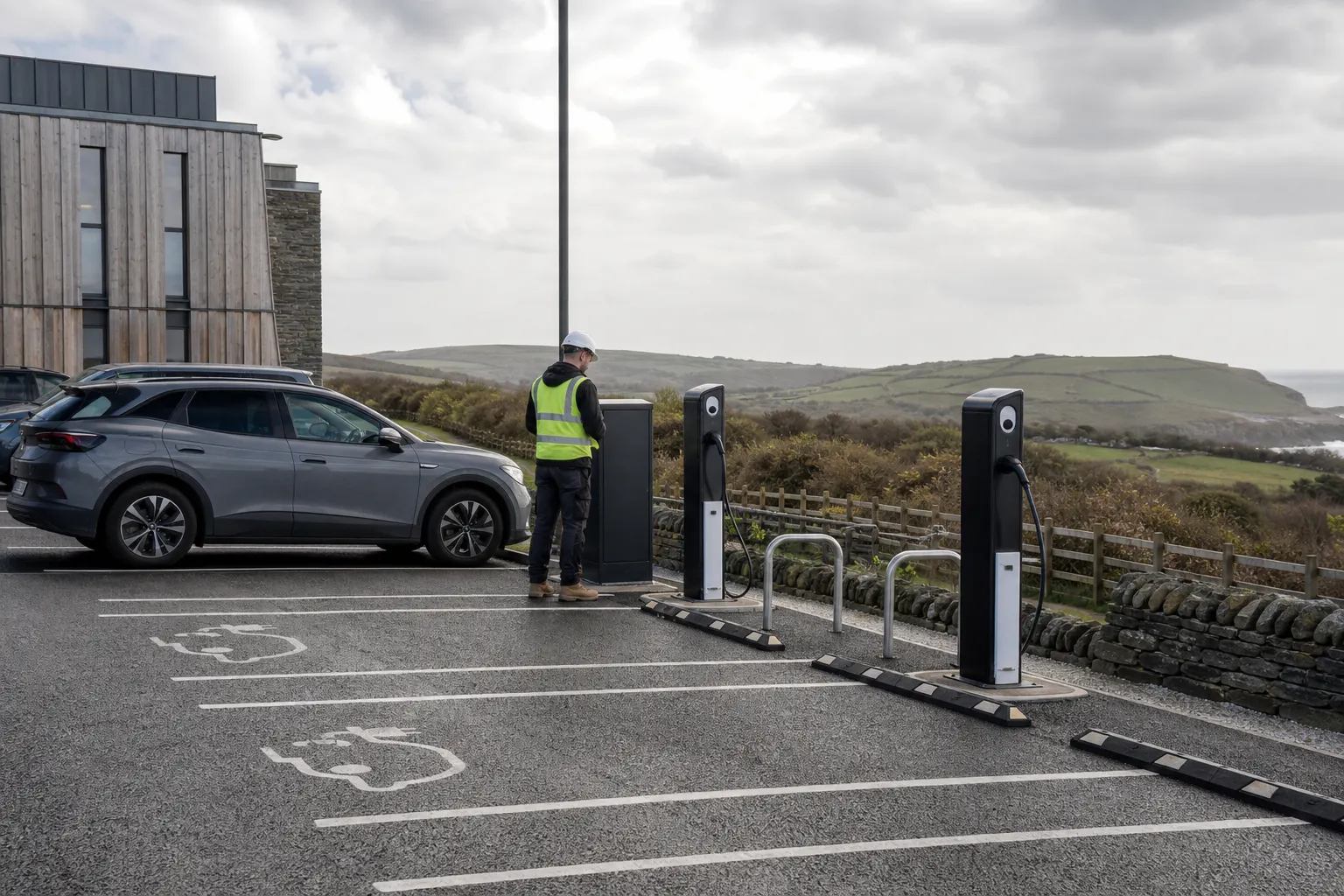
Commercial EV charging is not simply a matter of choosing a charger and fixing it beside a parking space. On a workplace, holiday park, leisure venue, industrial unit or larger rural site, the charger is only one part of a wider electrical and operational system.
The right design depends on who will charge, how long vehicles remain parked, the capacity already available and whether the equipment will be private or open to the public. Cable routes, groundworks, communications, payment systems and future expansion can all have as much influence on the project as the charge point itself.
For businesses considering commercial EV charging in Cornwall, an early site assessment can prevent an installation from being oversized, difficult to operate or costly to expand later.
Begin with how charging will actually be used
Charger selection should follow the operating pattern of the site. A fleet returning overnight has different requirements from a café serving short-stay visitors, while employees parked for a full working day may not need the highest available charging rate.
Useful questions include:
- Will the chargers serve employees, fleet vehicles, guests, customers or the public?
- How many vehicles are likely to connect at the same time?
- How long does each vehicle normally remain on site?
- Must every vehicle leave with a particular level of charge?
- Will charging be free, restricted, billed internally or sold to the public?
- Could vans, larger vehicles or additional charge points be introduced later?
These answers establish the required service rather than allowing charger ratings alone to drive the specification. They should form part of the wider assessment for any site undertaking substantial commercial electrical work.
Assess the electrical supply before choosing equipment
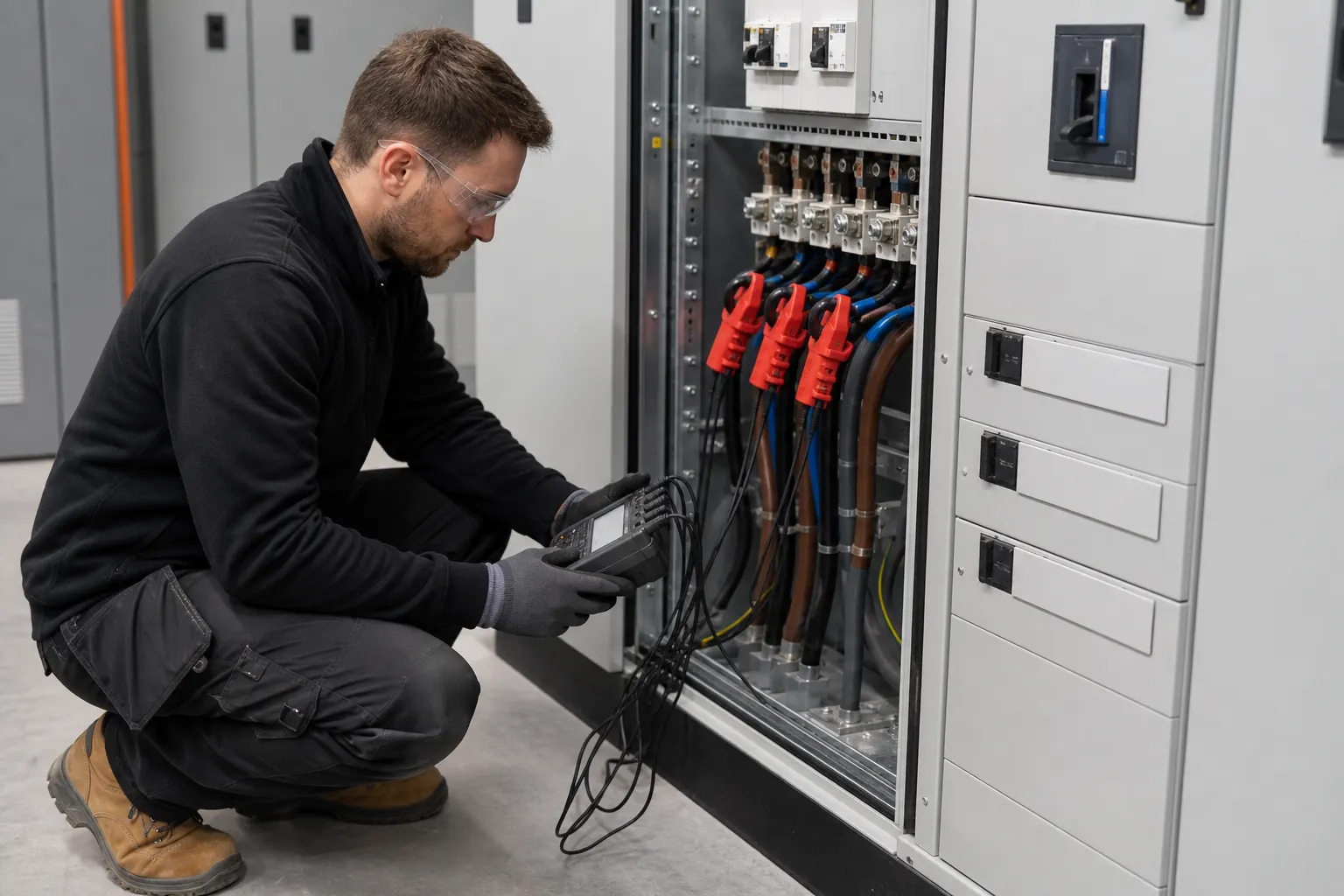
An existing supply may have spare capacity, but that cannot be established reliably from the service fuse or switchgear rating alone. The assessment should consider the site's actual demand, existing distribution equipment and any planned loads such as heating, machinery, catering equipment or new accommodation.
Understand the site's demand profile
Maximum demand is not always obvious from a single inspection. Where appropriate, load monitoring can show how demand changes across working hours, weekends and seasonal peaks. This is particularly useful at factories, holiday parks and leisure sites where electrical use can vary significantly.
The design may need to consider phase balance, switchgear ratings, protective devices, discrimination, voltage drop and the condition of existing distribution circuits. The earthing arrangement and protection required for outdoor vehicle charging also need proper technical assessment.
Allow for network engagement
EV charging installations must follow the relevant distribution network operator process. Depending on the proposed load and the existing connection, this may involve notification, prior approval, a supply alteration or a new connection.
Early engagement matters where several charge points or higher-powered equipment are proposed. Discovering a network constraint after chargers, bases and ducts have been specified can lead to redesign and delay.
Match charger speed to parking time
Higher power is not automatically better. AC charge points are commonly suitable where vehicles remain parked for several hours, while rapid DC charging is intended for situations where a shorter turnaround justifies the additional electrical infrastructure and equipment.
The vehicle also influences the result. An AC charge point can only deliver at the rate accepted by the vehicle's onboard charger. Installing higher-rated equipment therefore does not guarantee that every vehicle will charge at that full rating.
A mixed approach may be appropriate on some sites. A holiday park could prioritise steady overnight charging, for example, while a fleet operation might reserve higher-powered charging for vehicles with short turnaround windows. The aim is to provide enough usable energy within the available parking period, rather than chasing the largest headline figure.
Use load management carefully
Dynamic load management can monitor site demand and adjust the power available to EV charging. It may help a business introduce several charge points without allowing them all to draw maximum power while the rest of the premises is heavily loaded.
This can be valuable, but it does not create additional electrical capacity. If too many vehicles share a limited allocation, charging may become slower than users expect. The design should model likely simultaneous use and identify any minimum charging service that the site needs to maintain.
A useful control strategy might:
- share available power between connected vehicles;
- give priority to fleet vehicles with scheduled departure times;
- reduce charging during periods of high building demand;
- use timed charging where vehicles remain overnight; and
- record consumption for billing or management reporting.
The controls, chargers and communications platform must also work together. A theoretically sophisticated arrangement has limited value if it is difficult for site staff to manage or depends on unreliable connectivity.
Decide whether the charge points will be public
A charger on private land can still be publicly accessible. Businesses should establish the intended access model early because public operation can bring requirements relating to price display, payment, roaming, customer support, reliability and charge point data.
The government's guidance on the Public Charge Point Regulations explains which obligations apply to different types of public charge point. The equipment, software platform and commercial arrangement should be selected with those responsibilities in mind.
A charger restricted to authorised employees or a closed fleet is a different proposition from one advertised for use by any passing driver. Access controls, tariffs, tax treatment and responsibility for operating the system should be agreed before procurement.
Plan the physical site around vehicles and people
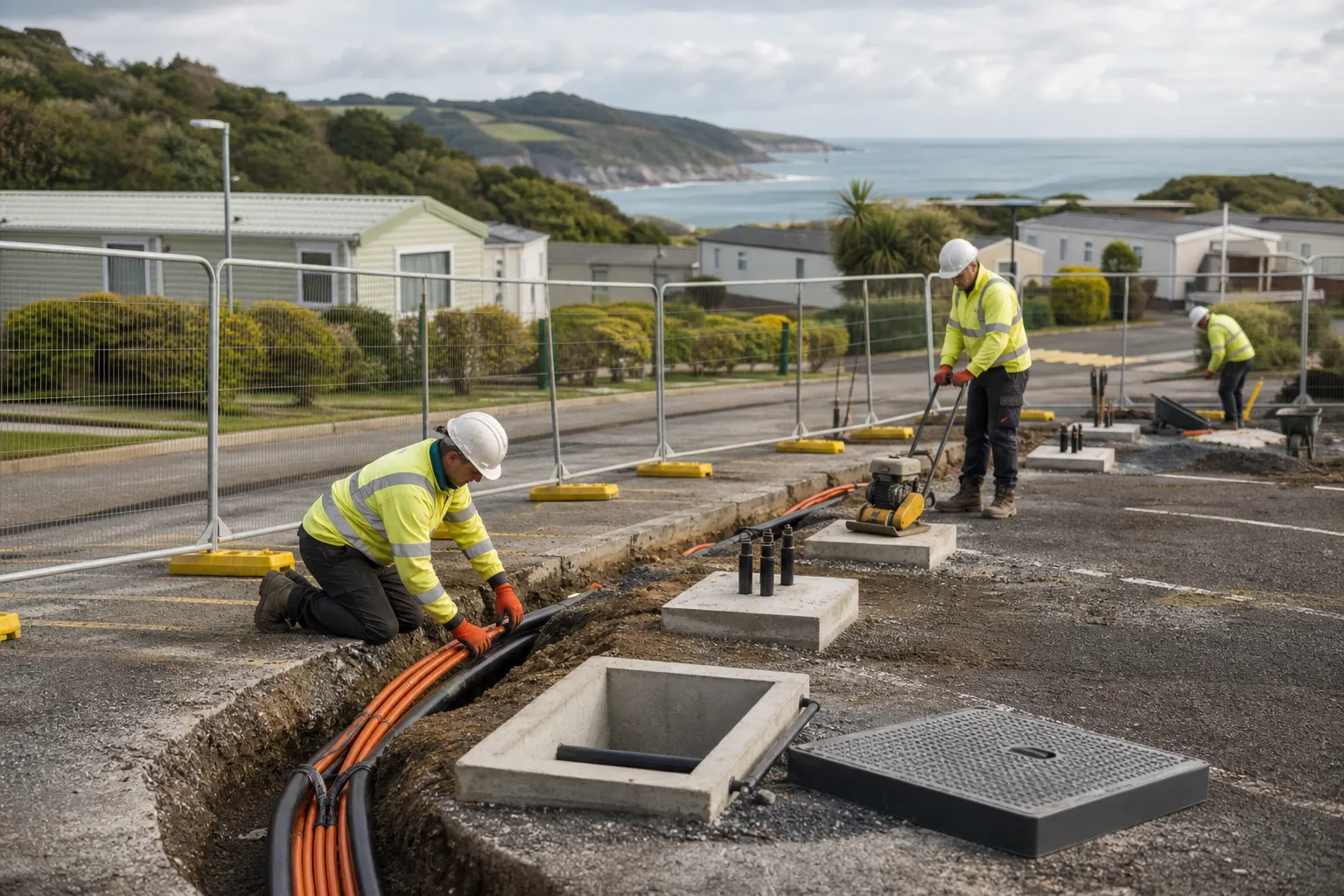
Charge point locations must work electrically and practically. The shortest cable route is not necessarily the best position if it creates vulnerable equipment, obstructs pedestrians or places charging leads across circulation routes.
Site planning should consider:
- safe cable routes and the extent of trenching or containment;
- drainage, ground conditions and exposure to coastal weather;
- protection from vehicle impact;
- parking bay dimensions and accessibility;
- lighting, signage and safe pedestrian movement;
- mobile or data connectivity for smart services and payments;
- isolation points and access for maintenance;
- metering and allocation of electricity costs; and
- planning, lease, landlord or highways constraints.
On busy commercial and industrial sites, charger placement must also account for delivery routes, forklifts, trailers and changes in traffic flow. At rural and leisure sites, longer cable runs and limited communications coverage may have greater influence.
Build in sensible provision for expansion
Many of the disruptive costs occur below ground or within the main electrical distribution system. Installing spare ducts, appropriately sized containment, draw pits or space for future protective equipment may be more economical than reopening a completed car park.
Future provision should still be based on a realistic development plan. Oversizing every component can waste capital, while installing only for today's first charger may make the next phase unnecessarily difficult.
EV charging can also be considered alongside on-site generation and storage. Solar output and charging demand do not always occur at the same time, so integration requires an understanding of load profiles and controls rather than an assumption that the systems will naturally align. Maenporth Electrical's solar and renewable electrical services can form part of that wider site discussion.
A practical sequence for an EV charging project
- Define the users and operating requirement. Establish vehicle numbers, parking periods, access and billing.
- Survey the existing installation. Review supply capacity, distribution equipment, earthing and cable routes.
- Measure demand where needed. Use representative information rather than relying on assumptions.
- Develop the charging strategy. Select suitable power levels, quantities and load management.
- Confirm external requirements. Address network applications, planning considerations and public charging obligations.
- Design for safe operation and maintenance. Include protection, testing, communications and physical layout.
- Allow for proportionate expansion. Put practical infrastructure in place where future demand is credible.
Plan commercial EV charging around the whole site
A well-planned installation should meet users' needs without placing unmanaged demand on the electrical supply or creating avoidable operational problems. That means considering the existing installation, network connection, parking pattern and long-term plans before deciding how many chargers to buy.
Maenporth Electrical Ltd provides EV charging and wider electrical services for commercial, industrial and rural sites across Cornwall. To discuss a proposed installation in Falmouth, Penryn, Newquay, Carnon Downs or the surrounding areas, call 01326 250297.