
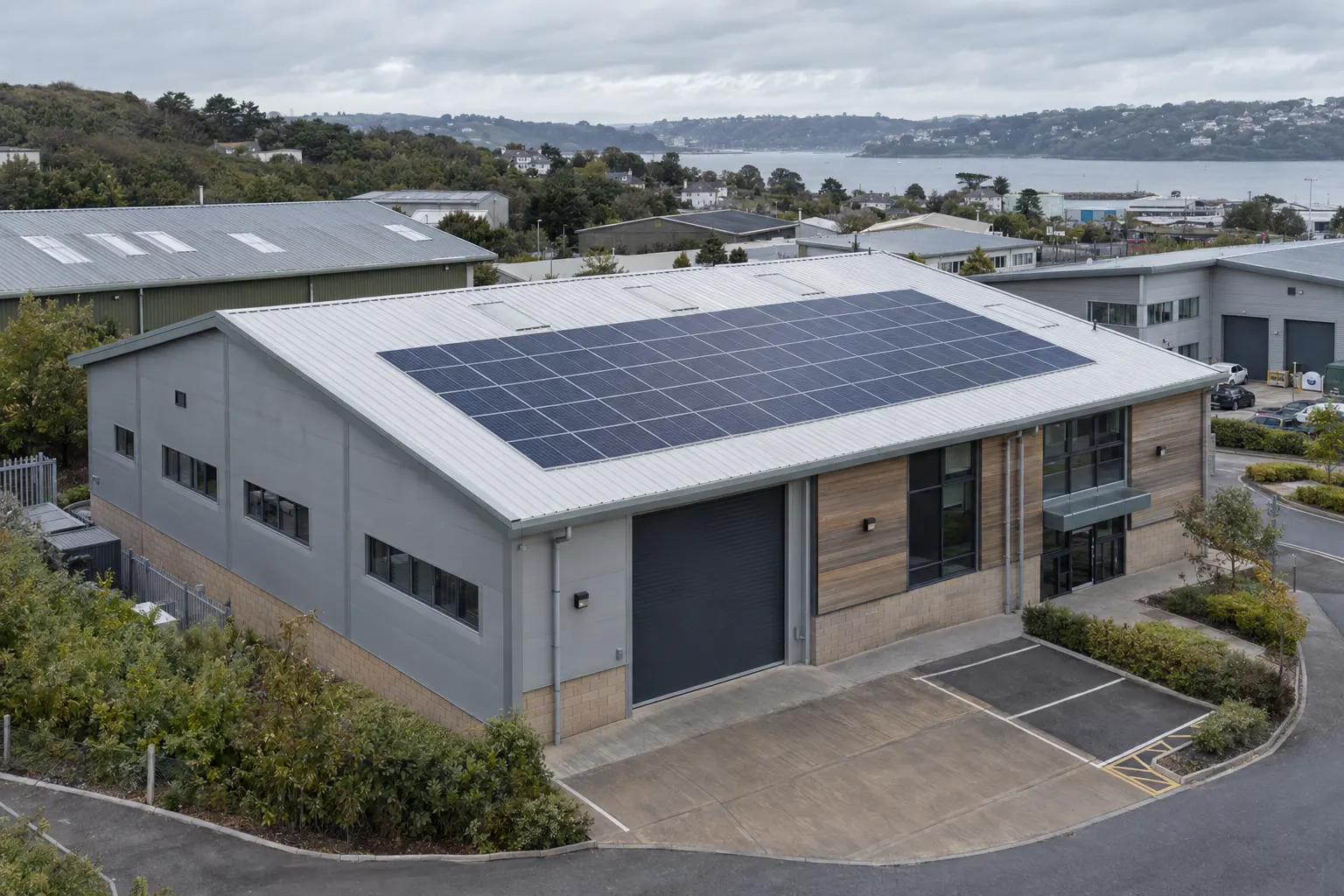
Conservation-area status does not automatically rule out commercial rooftop solar in Falmouth. Nor does an array above 50 kW automatically need a full planning application. The right route depends on the building, the panel layout and the conditions attached to permitted development.
For businesses checking commercial solar planning permission in Falmouth, the priority is to establish that route before committing to installation. This guide focuses on non-domestic rooftop solar PV, including workshops, factories and commercial leisure buildings, rather than ground mounts, carports or domestic systems.
For related work and planning, see our solar PV services page.
Does a Falmouth Conservation Area address rule out commercial rooftop solar?
No. A conservation-area designation is not the same as listed-building status. An otherwise compliant Class J rooftop installation can qualify within a conservation area, subject to the rules and any site-specific restrictions.
Conservation areas are Article 2(3) land under the planning rules. Changes effective from 21 December 2023 removed the former Class J restriction on highway-facing roof slopes in these designated areas. Facing a road is therefore not, on its own, a reason to rule out Class J rooftop solar.
Check whether your building is within Falmouth’s Conservation Area and whether other constraints affect it. Appearance and amenity still matter; the 2023 change is not blanket approval for every panel layout.
What Class J permits on non-domestic buildings
In England, Class J of the General Permitted Development Order covers microgeneration solar thermal and PV equipment on non-domestic buildings, and other solar PV equipment on a building’s roof. For electricity generation, microgeneration means a capacity of no more than 50 kW.
For rooftop PV, distinguish these three situations:
- Up to and including 50 kW may qualify without the Class J(c) prior-approval process, provided all applicable limits and conditions are met.
- Above 50 kW may still qualify as permitted development, but Class J(c) requires a prior-approval application before work.
- Outside Class J, a proposal may need a full planning application, with separate heritage consent where relevant.
Permitted development is planning permission granted nationally, not an exemption from planning controls. Do not transfer domestic Class A/B rules, or these rooftop tests, unchanged to wall-mounted panels, ground-mounted systems or solar canopies.
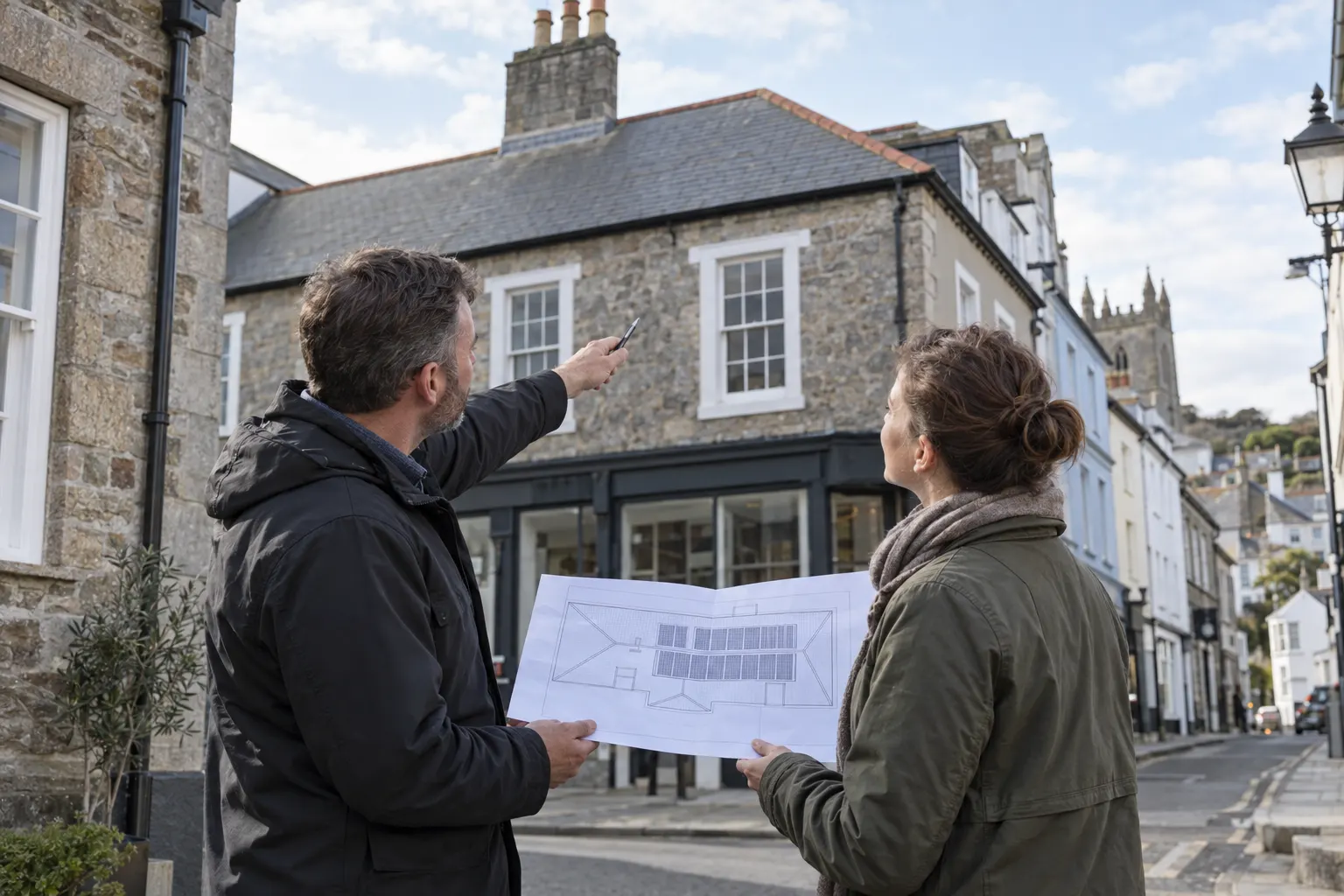
Which roof limits and heritage constraints can change the planning route?
Check the layout, not just the panel count
For Class J rooftop proposals, the roof limits include:
- Pitched roofs: equipment must project no more than 0.2 m beyond the roof slope’s plane.
- Flat roofs: equipment must be no more than 1 m above the roof.
- Roof edges: equipment must not be installed within 1 m of the roof’s external edge.
Class J also requires siting, so far as practicable, to minimise the effect on the building’s external appearance and the amenity of the area. Physical space for panels is not the only test.
Listed buildings and their curtilage
Class J excludes equipment on a scheduled monument, a listed building or a building within a listed building’s curtilage. Do not assume an outbuilding qualifies simply because it looks modern or stands apart from the main building.
This does not mean solar is necessarily impossible; it means this permitted development route is unavailable. Cornwall Council says solar panels on listed buildings need planning permission and listed building consent.
Use Cornwall Council’s development-constraints guidance as a starting point for site checks. The Council says its checker results are not definitive, so refer uncertain status to the Council or an appropriate planning professional.
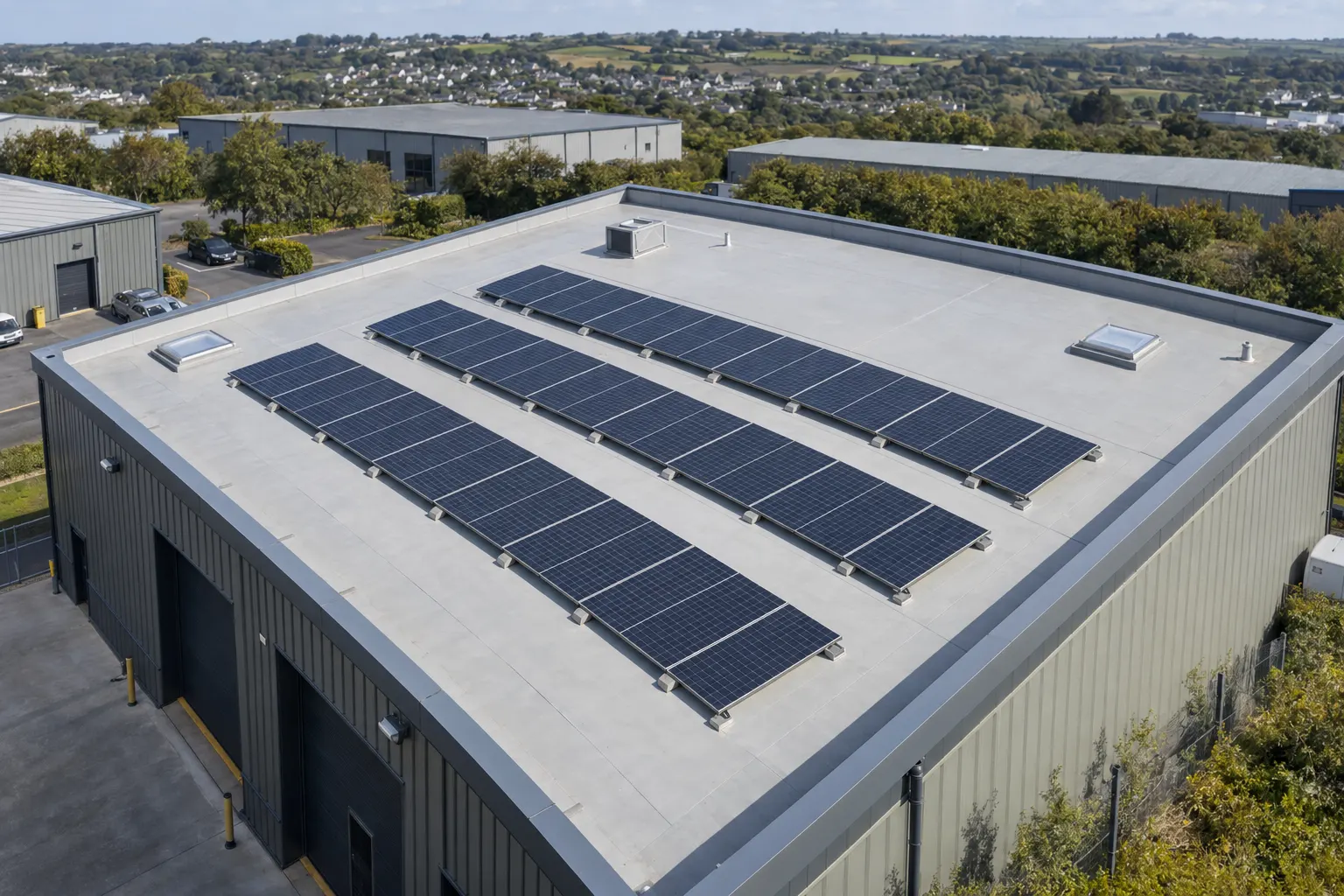
When does a commercial array above 50 kW need prior approval?
For rooftop PV above 50 kW relying on Class J(c), a prior-approval application is required before installation. It concerns the design or external appearance of the equipment, particularly the impact of glare on occupiers of neighbouring land. This is a defined planning check, not a full planning application.
The former 1 MW Class J capacity cap was removed in December 2023. Larger arrays can therefore still fall within the route, but the remaining limits and conditions apply.
What the 56-day provision actually means
The statutory start conditions include written notice that prior approval is not required, written approval, or expiry of 56 days without notification of whether approval is given or refused. These are legal conditions, not a promise that any project can begin on day 57.
For related work and planning, see our renewable electrical services page.
Other applicable conditions still have to be met. Confirm that the application and proposed start comply with the procedure before arranging work.
Planning status does not settle export capacity or grid-connection approval. Whether a business can install more solar than it can export needs separate consideration; removal of the planning cap is not a network connection allowance.
What planning status does not settle about the roof and the site
Planning permission does not demonstrate that a roof can carry an array. Building regulations and an assessment of roof strength remain separate checks.
Separately consider whether the commercial roof needs repair or replacement before solar. Resolve that sequence early, but do not confuse a sound roof with a confirmed planning route.
If you occupy under a lease, you may also need landlord, freeholder or management-company permission. Neither permitted development nor a Council planning decision replaces those agreements.
What to gather before the first project discussion
Whether you manage a workshop, a holiday park facilities building or a leisure clubhouse, a useful initial pack includes:
- The site address and the exact building proposed for the array, with any known planning or heritage constraints.
- Proposed generating capacity in kW, plus a roof layout showing panel positions, heights and edge clearances.
- Photographs showing the roof in context, neighbouring buildings and views where glare may need consideration.
- Ownership or lease details, relevant permissions and any existing Council correspondence about the proposal.
- Available roof-condition and structural information, identifying anything that still needs professional assessment.
Bringing these together helps distinguish a layout issue from a consent issue before the project is priced and programmed. This is an initial screening guide, not a site-specific legal determination. Where the route is uncertain, confirm it with Cornwall Council or an appropriate planning professional.
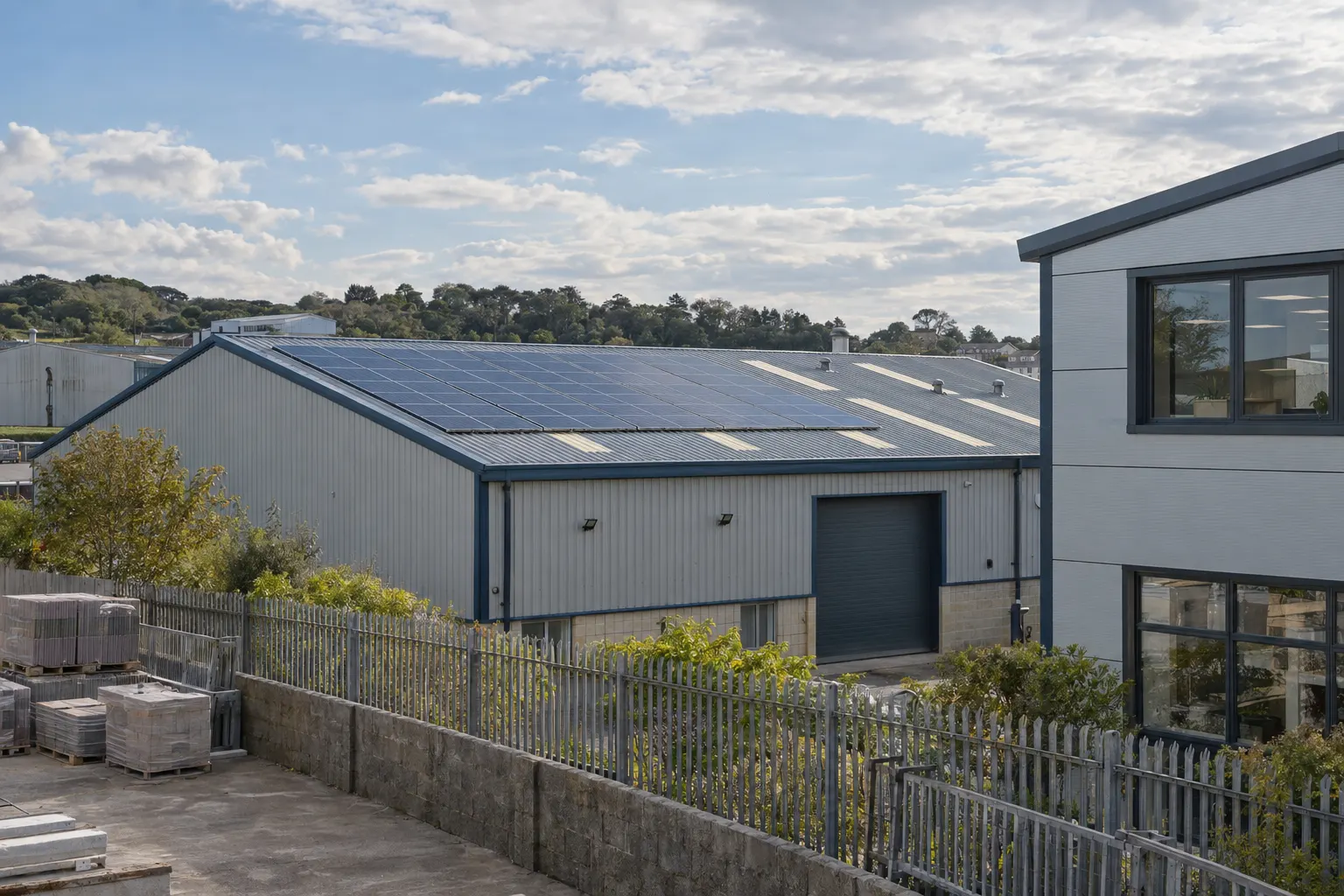
Discuss your commercial rooftop solar plans
Call Maenporth Electrical Ltd on 01326 250297 to discuss the electrical side of your rooftop solar project. Based at Maenporth, we serve Falmouth, Penryn and the wider Cornwall area.