
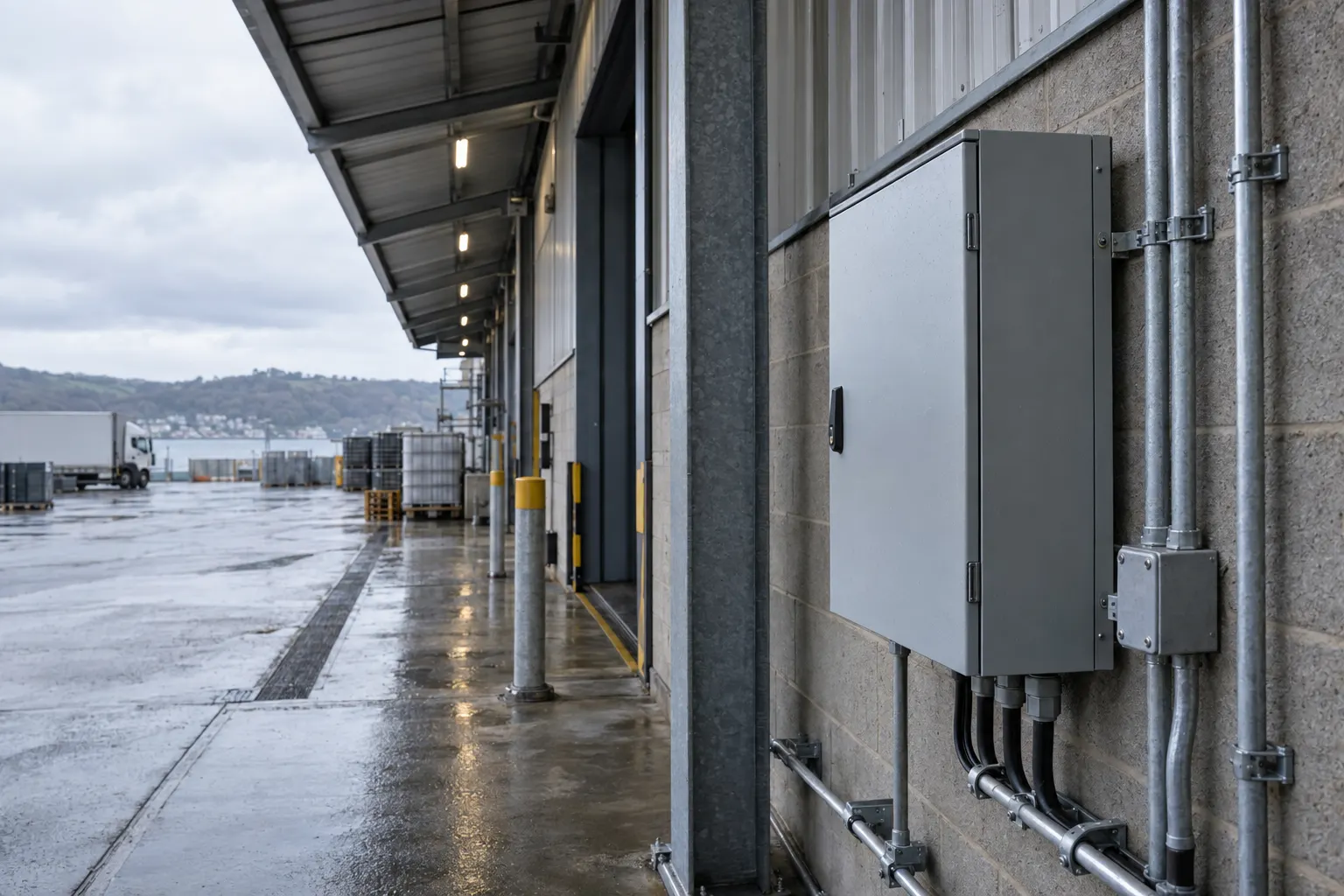
An IP rating for industrial electrical equipment is one part of site suitability, not the whole assessment. A cabinet can offer protection against dust and water without that rating settling questions about condensation, corrosion, vibration or heat.
For a factory in Falmouth or a quarry elsewhere in Cornwall, the useful starting point is what happens around the equipment during production, cleaning and downtime. Those conditions help a competent contractor assess suitability; simply requesting a higher rating does not.
What an enclosure’s IP rating actually tells you
The BS EN 60529 IP code classifies enclosure protection relating to access to hazardous parts and ingress of solid foreign objects and water. In plain language, it describes aspects of the protective barrier around electrical parts.
This makes it relevant when comparing electrical enclosures for dust and moisture. However, it is not a complete environmental specification or a guarantee that equipment will suit every industrial location.
The rating needs to be considered with the manufacturer’s information and the proposed use. Protection against water ingress does not, by itself, establish resistance to cleaning chemicals. Equally, protection against dust entering does not remove the need to manage accumulation around equipment.
There is no single IP rating to recommend for every industrial site. For a purchasing decision, ask the supplier or contractor which operating conditions the proposed equipment suits, and which need separate consideration. A specification containing only an IP code leaves those questions unanswered.
What an IP rating does not settle
Condensation and heat
Moisture inside an enclosure is not always evidence of rain or wash water getting in. Condensation needs separate consideration from physical ingress, alongside temperature changes and the equipment’s operating heat.
Simply requesting a more tightly sealed enclosure is not a complete answer. Ventilation, condensation and ingress protection need to be considered together for the particular assembly, using manufacturer information.
Describe whether equipment runs continuously, shuts down overnight or sits beside a heat-producing process. Those operating patterns give a contractor more useful context than the IP marking alone.
Corrosion and chemical exposure
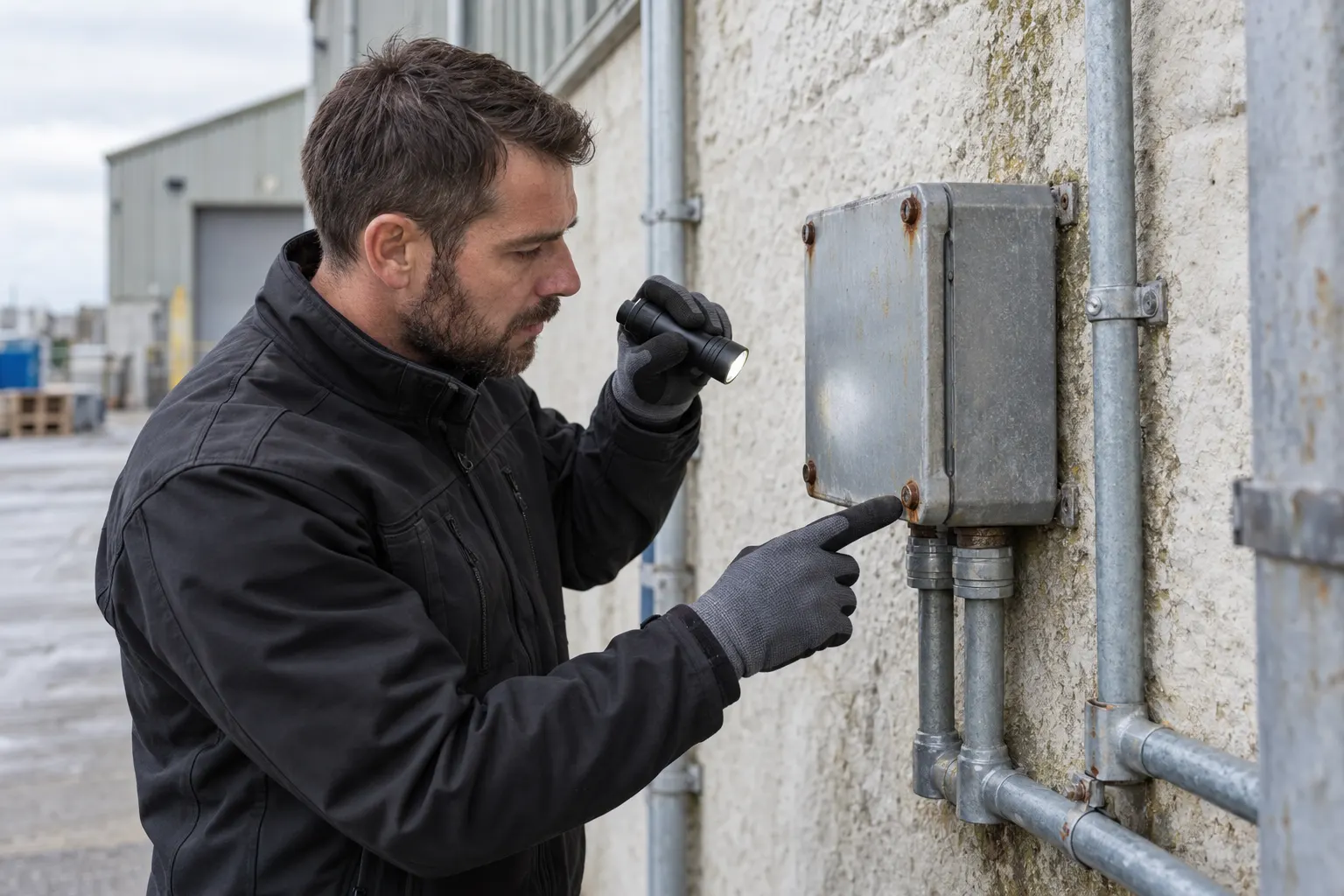
Where a site is exposed to coastal air, or a process uses cleaning chemicals, material suitability matters. An IP code does not guarantee corrosion resistance or chemical compatibility. The enclosure and its exposed components need assessment, not just the number on the label.
A Falmouth address alone does not establish the degree of exposure: describe the actual location and shelter.
Impact and vibration
A control enclosure beside moving plant may face different mechanical risks from one in a protected room. Its IP marking alone does not establish impact resistance or suitability for the vibration at that location.
Which conditions matter in a Falmouth factory or Cornwall quarry?
A cabinet beside a frequently cleaned process area may face very different exposure from one in a dry service room. Explain whether cleaning involves wiping, splashing or directed water, and identify any chemicals used. Those details are more useful than describing the area as “wet”.
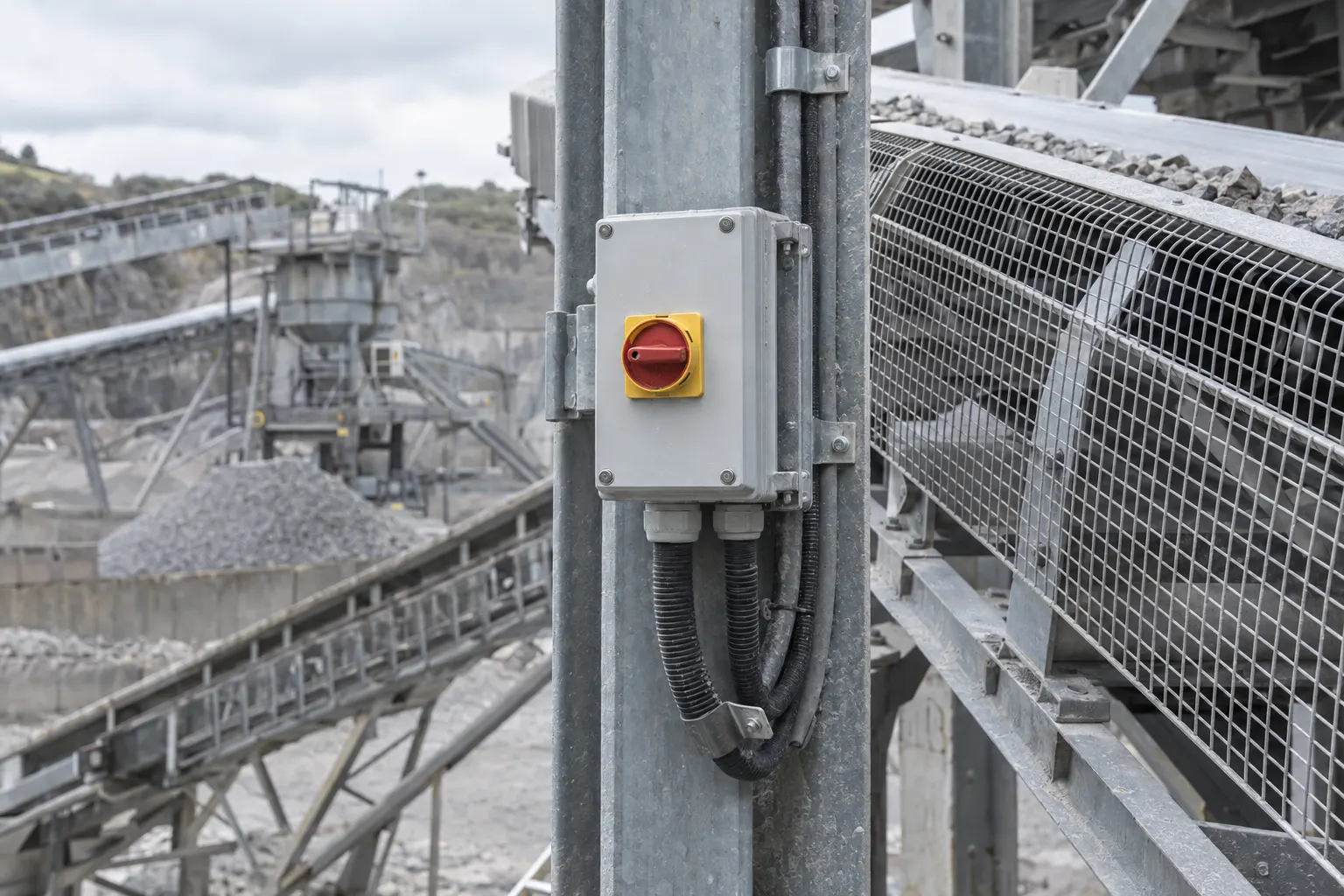
For quarry electrical equipment in Cornwall, a useful review considers where dust is generated and accumulates, proximity to moving plant and exposure to the weather. When arranging quarry electrical services, distinguish sheltered equipment from exposed equipment rather than treating the site as one uniform environment.
These examples are not fixed rating recommendations. A specification for one location should not be copied across the site solely because equipment performs the same task. The surroundings can differ even when the electrical function is identical.
When dust raises a separate DSEAR question
Some dusts can form explosive atmospheres. That is a separate question from whether dust can enter an enclosure or build up around equipment. Visible dust alone does not establish that an area is hazardous.
Where an explosive atmosphere may occur, an assessment under the Dangerous Substances and Explosive Atmospheres Regulations (DSEAR), with appropriate specialist input, is needed. An IP rating is not a substitute for that assessment or for equipment suited to the assessed risk.
Share the materials handled and any existing DSEAR assessment with the contractor; do not assume a standard enclosure upgrade resolves the issue.
Make inspection and maintenance reflect the exposure
An IP marking is not a maintenance plan. HSE’s quarry guidance warns that dust accumulation can seriously affect safe electrical-equipment operation. Its quarry Approved Code of Practice describes a written scheme for systematic inspection, maintenance and, where appropriate, testing of areas, buildings and plant, including electrical equipment. The detail and frequency should reflect the risks, with competent people responsible for the work.
That is quarry-specific guidance. More generally, HSE’s Electricity at Work guidance treats inspection and, where necessary, testing as preventive maintenance. Frequency decisions should take account of the environment, practical experience and manufacturer information, rather than follow an interval copied from another site.
A plan for industrial electrical maintenance should account for real exposure and changing equipment condition. Report visible external damage, corrosion or recurring problems through the site’s maintenance process. The original IP marking is not a reason to dismiss deterioration or changed conditions.
A process change can alter that plan even when the enclosure has not moved. More dust, a different cleaning regime or a newly exposed position should be shared with the person responsible for maintenance, so they can consider whether the existing arrangements remain appropriate.
What to share with a competent electrical contractor
Before a review, gather information available from site records and normal observations. The aim is to help the contractor understand the environment before discussing products, access or shutdowns. Mark unknown details as unknown rather than guessing from appearance.
- Location and use – what the equipment serves, whether it is indoors or outside, and nearby process or cleaning areas.
- Dust – the materials handled, where dust settles and any existing DSEAR assessment.
- Water and cleaning – rain exposure, splashes, cleaning methods and products, where relevant.
- Operating environment – coastal exposure, temperature changes, heat sources, vibration and potential vehicle or handling impacts.
- Equipment records – manufacturer details, existing enclosure specifications and maintenance history, where available.
- Previous recommendations – outstanding inspection findings or manufacturer advice relevant to the enclosure’s suitability.
- Changes and symptoms – process alterations, visible external damage or corrosion, and reported recurring faults.
- Access and downtime – operating hours, authorised access arrangements and opportunities for a planned review.
Use existing records or observations made safely from normal access areas. Do not open enclosures, remove covers or attempt electrical testing to assemble this information.
Discuss your industrial site in Falmouth
Maenporth Electrical Ltd is based at Maenporth, serving Falmouth, Penryn and wider Cornwall. To discuss equipment suitability or planned maintenance with an industrial electrical contractor, call 01326 250297 with a brief description of your site.