
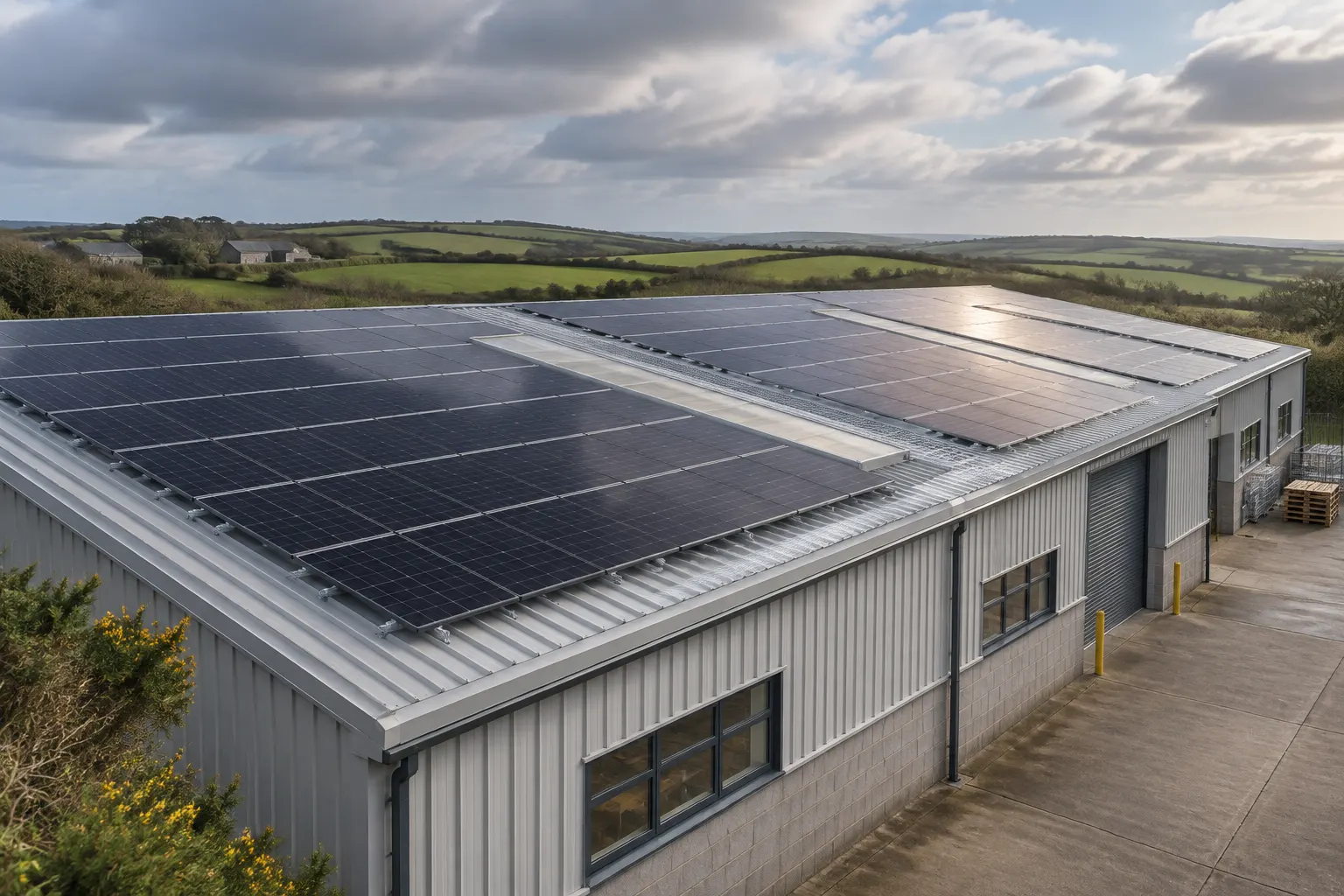
A lower number on a solar dashboard is a reason to investigate, not a diagnosis. For a factory, holiday park or other commercial site, the first step is to establish whether the array is producing less electricity or whether the reporting has changed.
Commercial solar underperformance should be judged against the system’s own design and operating history. Cloudy weather, missing communications and a genuine electrical fault can look similar on a headline graph. Keep initial checks to records and safe observations, not equipment operation or roof access.
Has generation fallen, or has the data stopped?
First identify what the figure measures. Solar PV performance monitoring may use meter-, inverter- or string-level data. Export is electricity leaving the site, not total PV production; changes in site demand or battery charging can reduce export without proving a generation fault.
Check the timestamps and source of existing records for the same period. A blank graph is not the same as a recorded zero. If the portal stops updating while generation-meter totals continue to rise, the reporting connection may be the issue, although that does not prove the whole array is performing normally.
Record the last valid reading, the affected devices and any missing intervals. If panels appear not to be generating, include the time and duration: a night-time zero is normal. Without an independent record to cross-check, report output as unconfirmed rather than treating gaps as measured zero generation.
Solar Energy UK’s industry best-practice guidance for PV operations and maintenance distinguishes systems that are not generating, not communicating and underperforming. Those are different starting points for an investigation.
Compare the system with its own baseline and similar periods
Start with the commissioning pack, design forecast, installed capacity, roof orientations and earlier generation records. Compare energy totals in kWh over matching periods, not an instantaneous power reading with a daily total.
There is no universal kWh-per-kWp figure or percentage drop that proves a fault. Season, weather, shading and system configuration all affect the comparison. The same month last year is a useful reference, not a weather-adjusted test.
Use complete, matching periods where possible. Missing readings, recorded outages or a change to the installed array can make two apparently similar months unsuitable for direct comparison. For a seasonal site, keep occupancy and export figures separate from the generation record: a quieter park does not automatically mean poorer PV performance.
If records are incomplete, the European Commission’s PVGIS tool can provide location-specific estimates. Treat them as context, not a guarantee or a substitute for the site’s design assumptions and metered history.
Keeping consistent monthly records as part of planned solar maintenance makes future changes easier to assess.
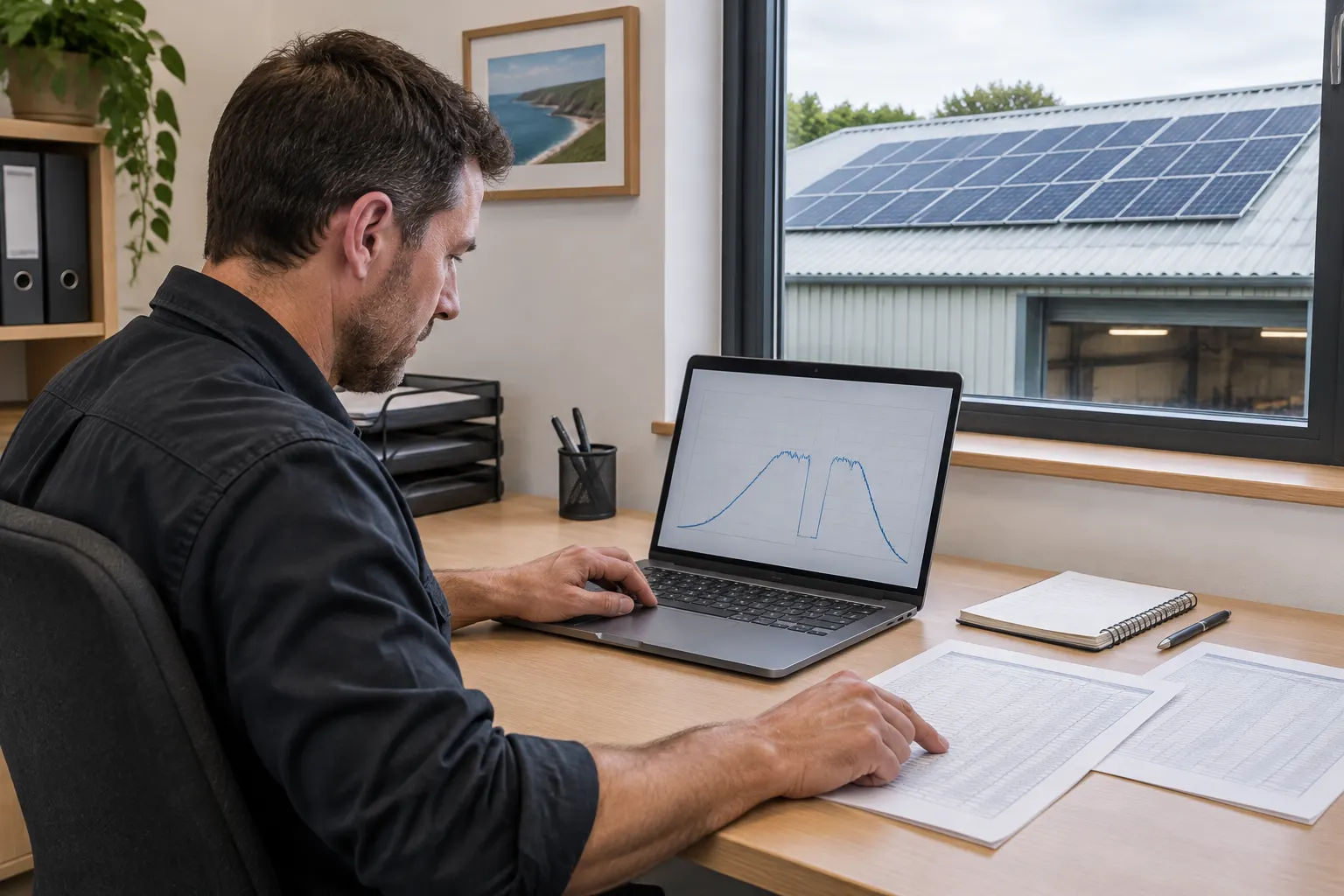
Read the pattern across the array, inverters and site operating conditions
Once the data source and comparison period are clear, look for the pattern of the change rather than simply labelling the total low.
A sudden change across the system
Record when the drop began and whether it coincided with a power outage, planned shutdown, site works or loss of communications. A shared timestamp helps narrow the investigation; it does not establish the cause.
One inverter or particular hours
Compare each inverter with its own history where data allow. Different capacities, roof slopes or shading mean they should not be expected to produce identical totals. A repeatable dip at similar times is useful evidence for assessing shading or operating controls.
A gradual decline
A gradual decline needs a longer view. Retain the daily or monthly history alongside maintenance dates and known site changes, rather than relying on a single screenshot. If the array covers several roofs, keep the relevant inverter groups separate where monitoring allows; an overall total can obscure a change in one area.
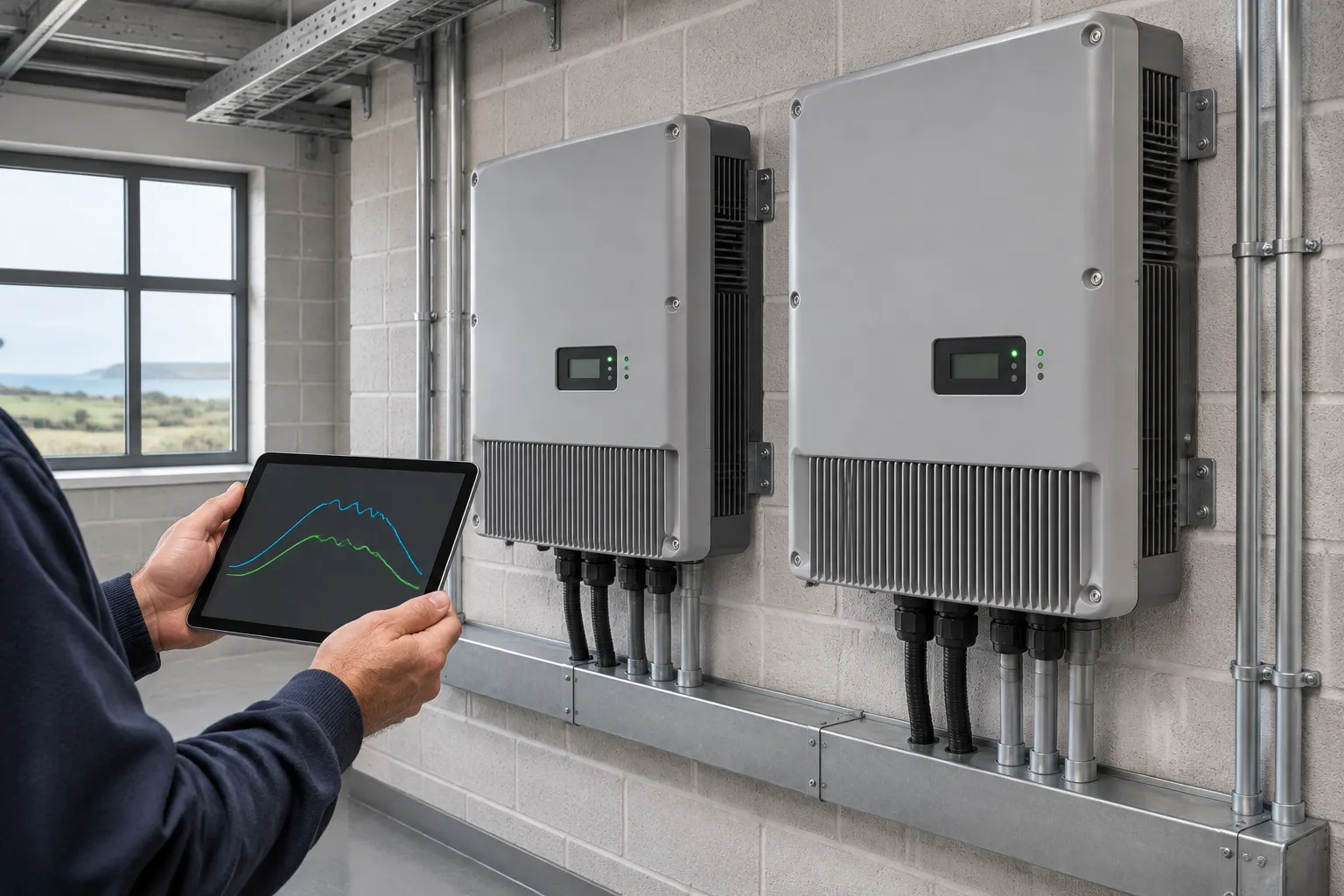
Weather, site changes, controls or an electrical fault?
Check what changed around the site. Tree growth, a new structure or additional roof-mounted equipment may alter shading. Note any soiling visible from a safe ground-level position, without seeking roof access for a preliminary check.
Weather can explain a commercial solar output drop, but it should be assessed alongside valid generation records. Existing control settings can also constrain output. Leave settings unchanged and ask the investigator to establish whether the observed behaviour matches the intended operation.
An electrical fault remains another possibility. Manufacturer alerts can guide the investigation, but fault terminology varies. Record the exact code and wording rather than turning it into a diagnosis. Commercial and industrial systems may need specialist support and a fault-identification plan specific to the equipment.
If generation remains unconfirmed, resolving the data gap is a different task from investigating confirmed low output. Let that distinction guide the scope, rather than selecting a repair first.
What to record before requesting commercial PV fault-finding
Useful commercial solar generation data need context. Gather what is already available; missing documents should not delay reporting a concern. Keep original data exports where possible, rather than only a screenshot of the headline total.
- Timing and extent — when the change began, whether it is continuous or intermittent, and which equipment appears affected.
- Generation records — exports of available daily or monthly kWh totals, covering the affected period and comparable earlier periods.
- Data source — whether figures come from the generation meter, inverter portal or export records, with timestamps and gaps identified.
- Equipment information — installed capacity, inverter makes and models, layouts, commissioning documents and the design forecast, if held.
- Alerts — screenshots of existing warnings and fault codes, without clearing them or trying resets.
- Site history — outages, maintenance, nearby works, new shading and known changes to controls or operating hours.
- Access arrangements — the site contact, working hours, operational restrictions and who manages monitoring access.
Existing site plans and photographs taken from normal safe access routes can help identify the affected area. Do not seek labels behind covers or climb for a clearer image.
Ask what can be reviewed from the records and what will require attendance. For working factories, quarries and holiday parks, explain production or guest-access restrictions early so the investigation can be planned around site operations.
The aim is to help scope the investigation, not to diagnose the system before anyone attends.
Keep rooftop and electrical investigations with competent personnel
Do not open enclosures, test wiring, operate isolators, reset equipment or climb onto the roof to investigate. Roof work needs planning, and HSE advises treating roofs as fragile until a competent person confirms otherwise.
Ask a competent PV contractor to define the checks, access needs and any specialist support required. If there are signs of damage, overheating or another immediate safety concern, follow the site’s emergency procedures rather than continuing routine monitoring.
Agree how findings will be recorded, which data will be used to check performance afterwards, and whether follow-up monitoring is needed before the issue can be considered resolved.
To discuss commercial solar underperformance, call Maenporth Electrical on 01326 250297 with the records you have. We provide solar PV services across Falmouth, Penryn and wider Cornwall.