
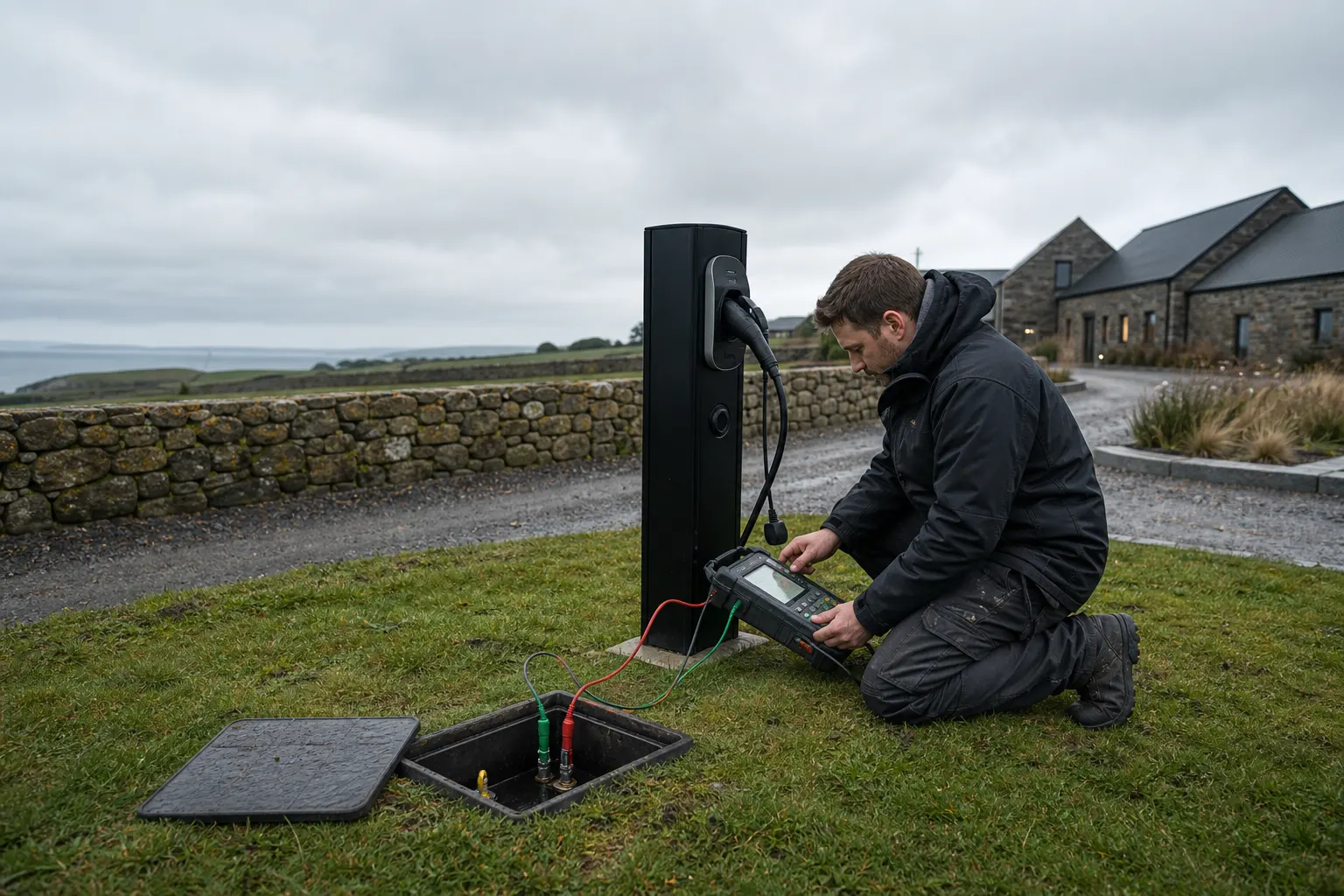
A satisfactory earth reading is not simply a figure to record on the day an EV charger is commissioned. On a TT earthing system, the installation depends on its own connection to the general mass of Earth. That connection must remain effective when the weather and ground conditions change.
This can be challenging on some sites in Cornwall. Shallow soil, exposed locations, made ground and rocky areas can make a low, stable earth electrode resistance harder to achieve. An electrode that produces an acceptable result after prolonged rain may perform differently following a dry period.
For EV charging equipment, that makes earthing a design issue rather than a final testing formality. The existing installation, charging equipment, protective devices, surrounding metalwork and long-term ground conditions all need to be considered together.
What a TT earth reading actually represents
In a TT system, the electrical installation has a local earth electrode rather than relying solely on an earth terminal provided through a TN supply arrangement. The electrode may take the form of a rod or another suitable system selected for the site.
The resistance between that electrode and the surrounding ground forms part of the fault path. Residual current devices are therefore particularly important because an ordinary overcurrent protective device may not disconnect quickly enough when earth fault current is limited by ground resistance.
The earth reading cannot be assessed in isolation. It has to be considered alongside the type and operating current of the protective device, the required disconnection time and the overall design of the installation. This is why proper electrical testing and verification is essential before additional loads such as EV chargers are connected.
Why Cornwall ground conditions can produce variable results
An earth electrode does not perform independently of its surroundings. Its resistance is influenced by the material around it, the available contact area, installation depth, moisture content and temperature.
Conditions can also vary significantly within one site. A holiday park may include landscaped areas, compacted roadways, imported stone and previously disturbed ground. A larger rural property may have shallow soil over rock in one location and deeper, wetter ground elsewhere. Commercial premises may offer very little clear ground away from foundations, buried services and hardstanding.
Seasonal moisture changes matter
Moist ground generally conducts more effectively than very dry ground. A rod installed and tested during wet winter conditions can therefore give a result that does not represent its likely performance during a dry summer.
The depth and type of electrode should be selected so that normal drying or freezing does not raise its resistance beyond the required value. The IET's guidance on TT earthing and seasonal variation also highlights the value of testing at different times of year where ground conditions may affect stability.
In Cornwall, prolonged rainfall should not automatically be treated as proof that an electrode will remain satisfactory. The aim is not just to obtain a passing reading in favourable conditions. It is to establish an earthing arrangement with an appropriate margin for the less favourable conditions the site may experience.
Why earthing needs particular attention for EV charging
EV charging equipment presents specific earthing considerations because the vehicle is normally outdoors and its conductive body can be touched by someone standing in contact with the ground. The charging installation must protect against faults within the installation while also accounting for the characteristics of the supply earthing arrangement.
On a site that already uses TT earthing, the proposed charger cannot simply be added on the assumption that the existing electrode is suitable. Its condition, measured resistance, protective devices and ability to support the altered installation must be verified.
There may also be multiple electrical supplies or earthing arrangements across commercial and rural sites. A charger could be located near metal fencing, lighting columns, service equipment, another building or conductive structures associated with a different system. The possibility of someone touching conductive parts connected to different earthing arrangements requires careful assessment.
A separate TT arrangement is not an automatic answer
Where a premises has a PME supply, creating a separate TT arrangement for an outdoor charger is sometimes discussed as a solution to open PEN conductor risk. In practice, adequate separation from buried or accessible metalwork connected to the PME system may be difficult to achieve.
Modern charging equipment can include open PEN protection, but the exact protective method, supply characteristics and manufacturer's requirements still need to be checked. Product features should not replace a site-specific electrical design.
Designing for stable earth readings throughout the year
Driving a single rod into the nearest patch of ground is not always sufficient. If the initial reading is high or the result appears vulnerable to seasonal change, the electrode system and its location need to be reconsidered.
A practical assessment may include:
- Confirming the earthing arrangement at the origin and at the proposed charging position.
- Inspecting the existing electrode, earthing conductor, connections and identification.
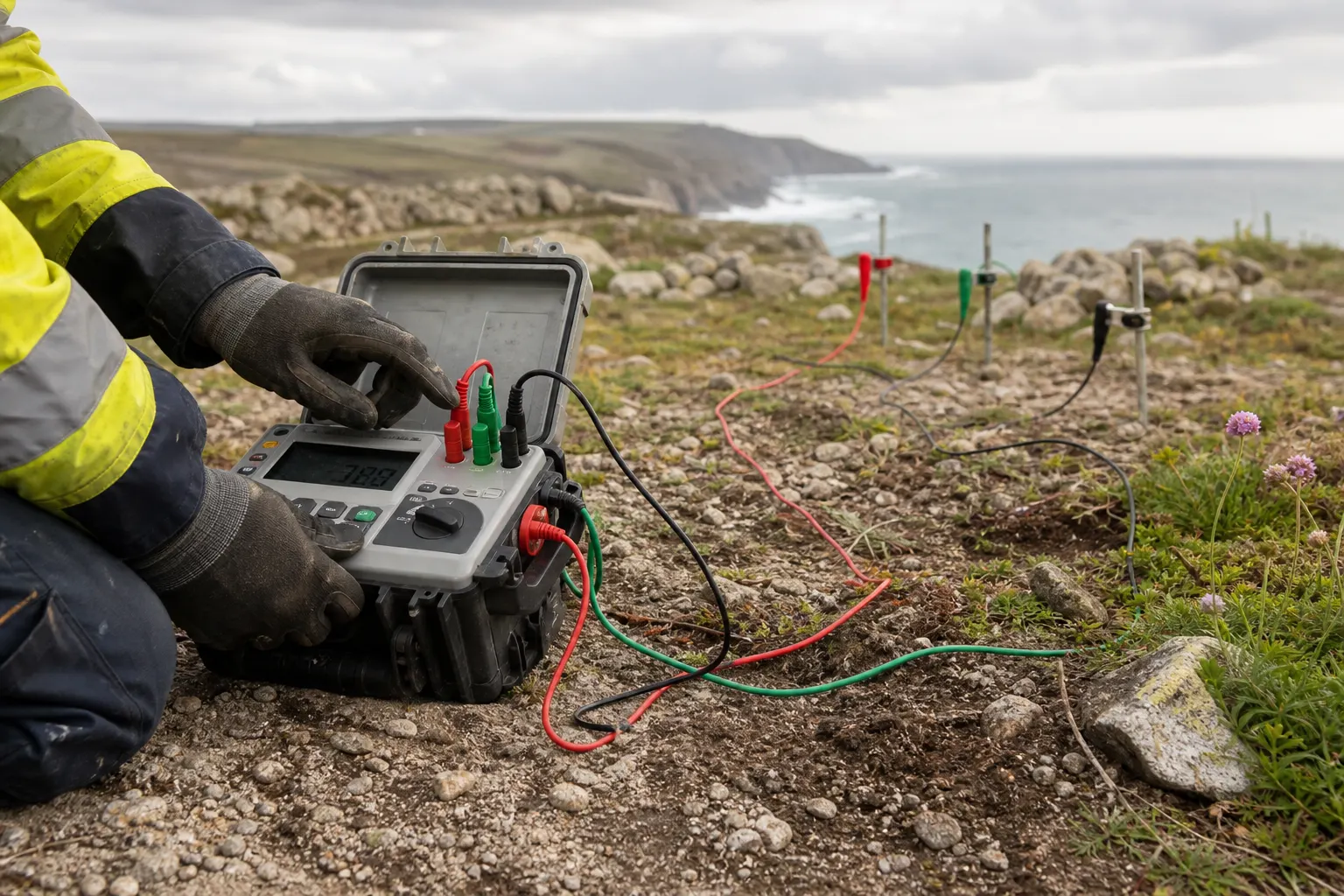
- Measuring earth electrode resistance using a method appropriate to the installation.
- Reviewing previous test results rather than relying on one isolated measurement.
- Considering soil depth, rock, drainage, hardstanding and areas of made ground.
- Locating buried services before any rod, tape, mat or plate is installed.
- Assessing separation from other earthing systems and conductive structures.
- Checking RCD selection, coordination and the protection built into the charging equipment.
- Allowing a sensible design margin for drier and less favourable conditions.
- Recording the electrode arrangement so it can be found, inspected and tested later.
Depending on the ground and available space, the solution could involve a deeper electrode, multiple correctly arranged electrodes or a different type of electrode. More rods do not automatically guarantee success. Their spacing and interaction with the same volume of ground affect how much improvement they provide.
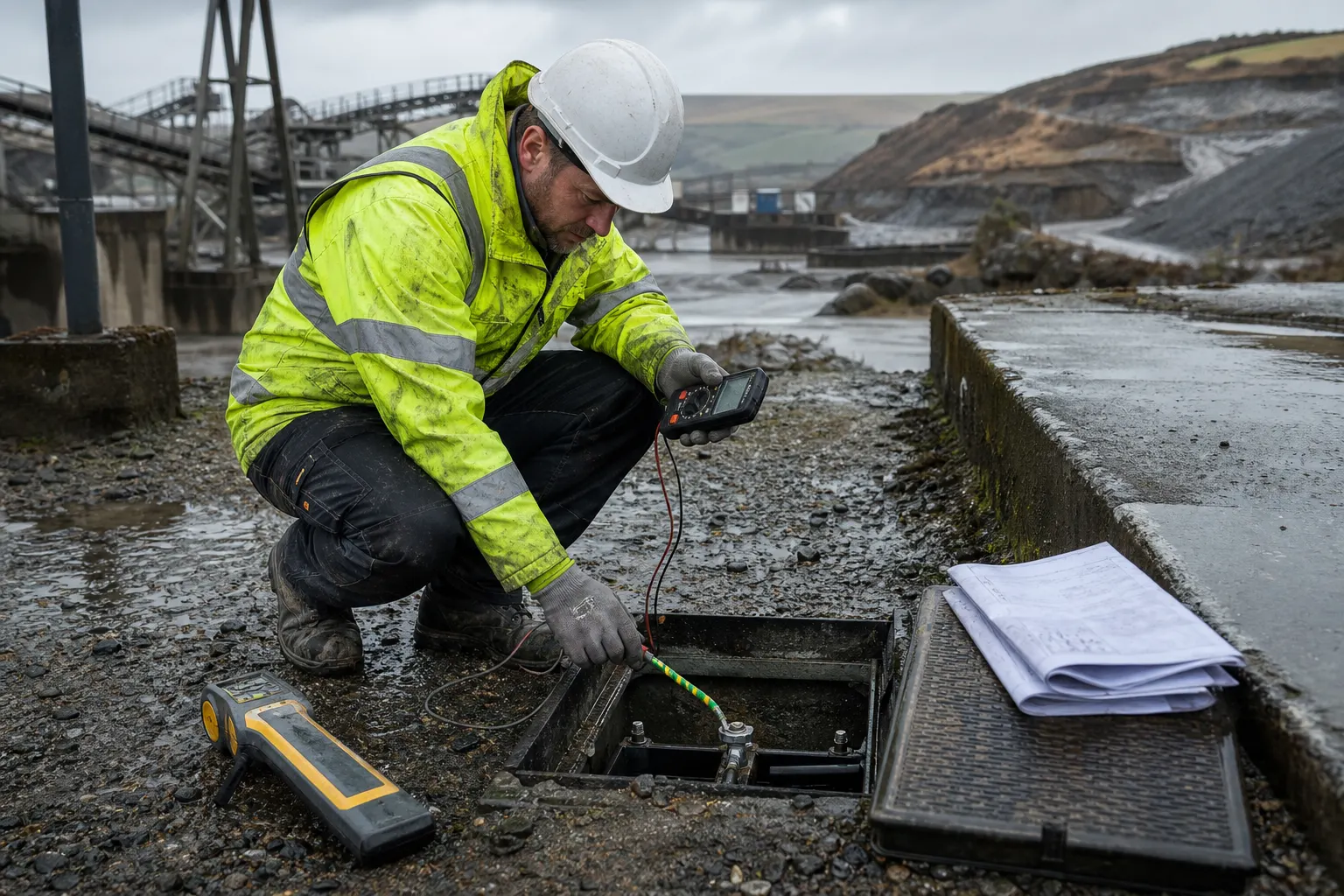
The installation method also matters. Driving an electrode without establishing the position of underground electricity cables, drainage, water services or communications infrastructure can create serious risk. Site records, detection equipment and an appropriate safe system of work are required before ground is disturbed.
Initial testing is only the starting point
A stable earthing system should be treated as an asset that requires periodic verification. Connections can loosen or corrode, conductors can be damaged and site alterations can affect the surrounding ground or introduce new conductive structures.
Earth readings become more useful when they are recorded consistently. A gradual change can then be identified before it becomes an immediate safety or reliability concern. If seasonal variation is suspected, testing at different points in the year can provide a more realistic picture than repeatedly testing under similar conditions.
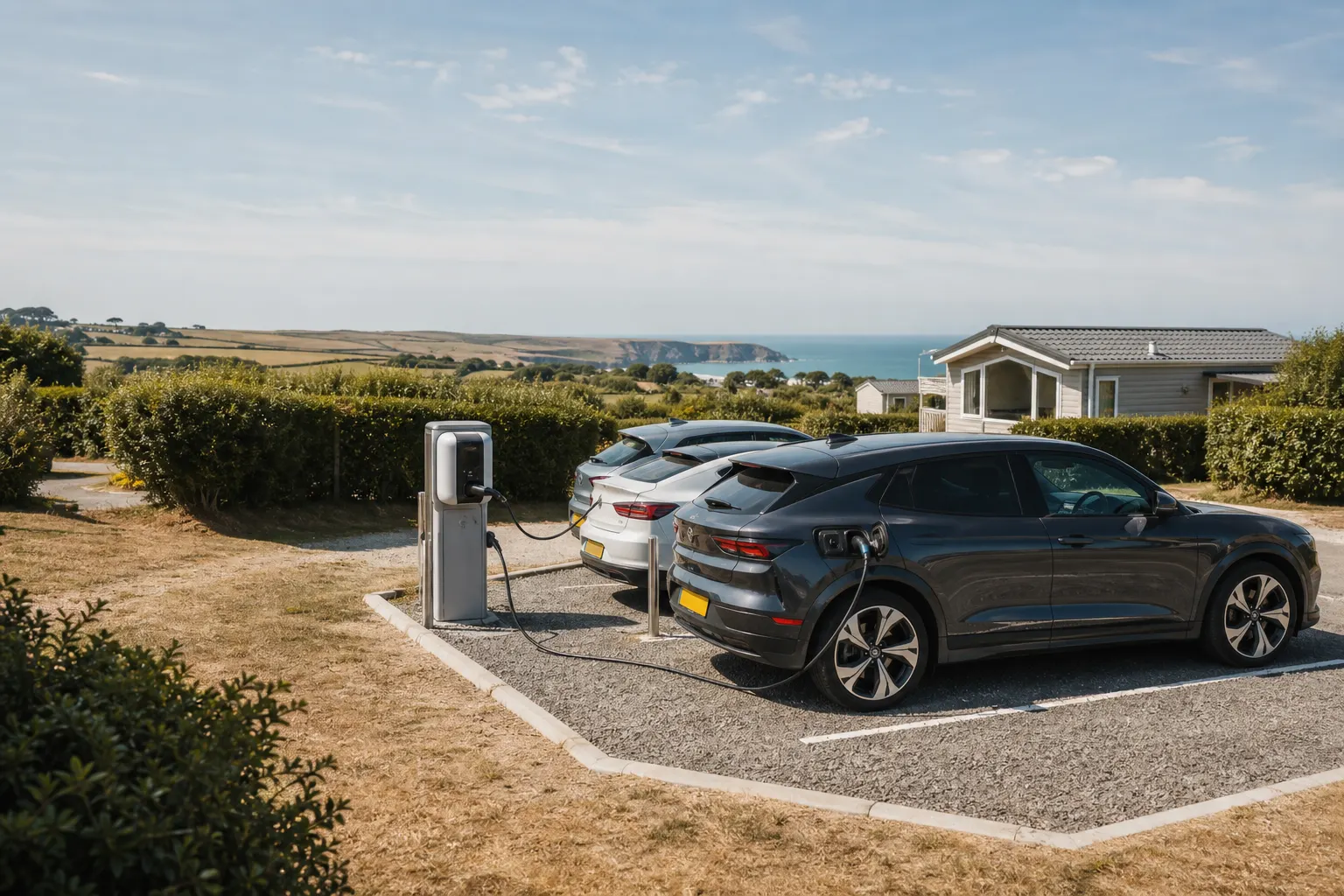
This is especially relevant for holiday parks, factories, quarries, golf and leisure sites and larger commercial premises. Charging infrastructure may operate for long periods, serve staff or visitors and form part of a wider distribution system. Access chambers, labels and records should make future inspection practical rather than leaving the electrode hidden and difficult to verify.
When an existing earthing system should be reviewed
An earthing assessment is advisable before an EV charging installation where:
- The premises has a TT supply or an unidentified earthing arrangement.
- The electrode cannot be located or inspected.
- Previous certificates show inconsistent or relatively high readings.
- The site has shallow, rocky, heavily drained or made ground.
- The charger will be remote from the main building.
- More charging points or higher-power equipment are planned later.
- Nearby metalwork may be connected to another earthing system.
- Solar generation, battery storage or backup operation forms part of the wider design.
Reviewing these points early can prevent the charging equipment, civils and cable route from being designed around an earthing approach that proves unsuitable during commissioning.
Plan the earth before installing the charger
Reliable EV charging starts with the electrical supply and protective design beneath it. On a TT system, obtaining one satisfactory earth reading is not enough if that figure is likely to rise significantly when the ground dries.
Maenporth Electrical Ltd can assess existing earthing systems, proposed charger locations and the wider electrical installation for commercial, rural and larger domestic sites across Cornwall. To discuss an EV charging or earthing requirement, contact Maenporth Electrical or call 01326 250297.