
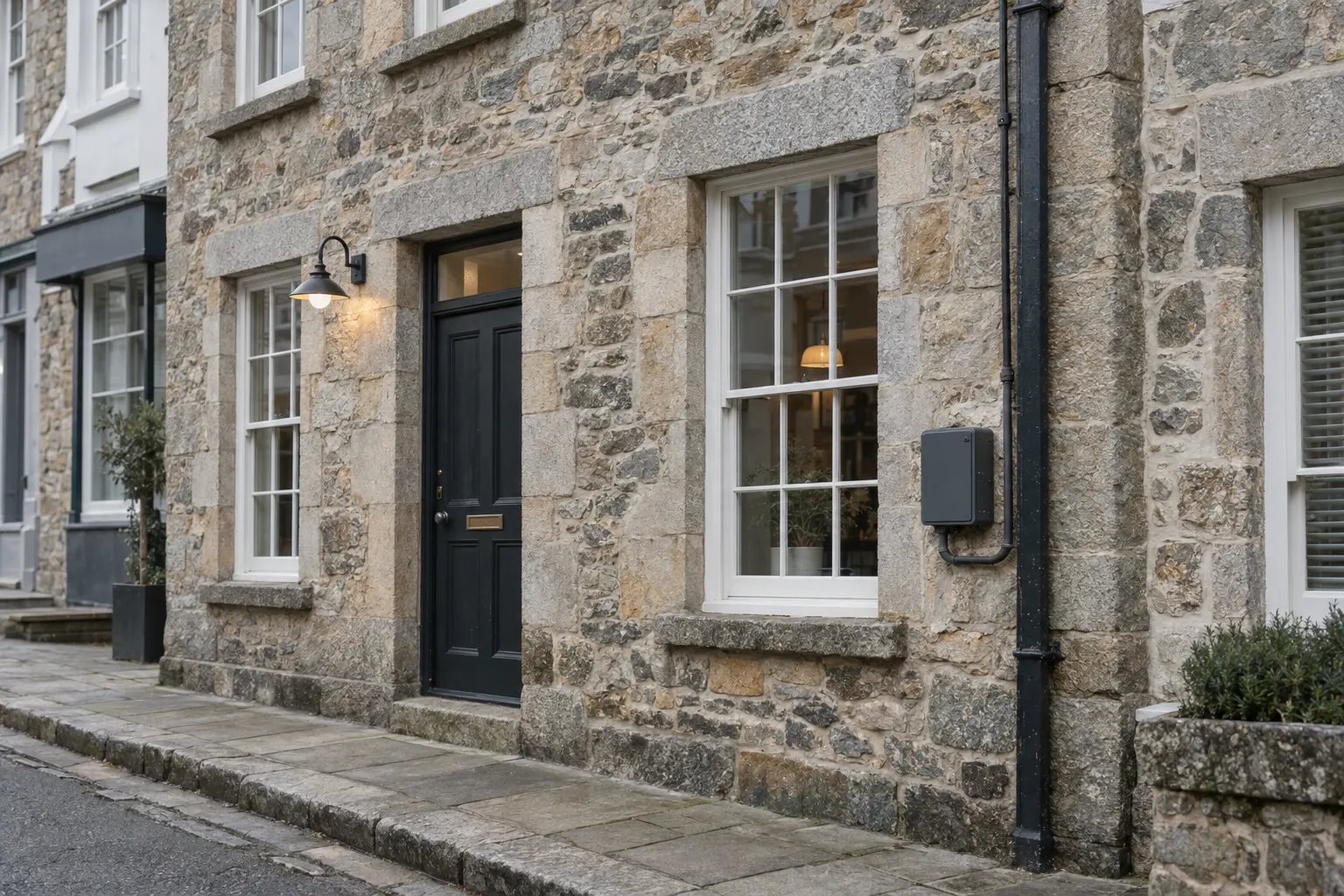
Electrical work in a listed building needs listed building consent where it affects the building’s special architectural or historic character. A rewire is not automatically exempt, but neither does every electrical alteration require consent.
Cornwall Council’s guidance on works to historic buildings says new internal services are likely to need consent. For a Falmouth business planning an upgrade, that means checking the proposed work before routes, fittings and start dates are fixed.
The useful starting point is a clear description of the electrical work and its effect on the building. Use this guide to prepare that brief, not as a consent ruling for your property.
Is the Falmouth premises individually listed, in a conservation area, or both?
Check the specific address first. Falmouth has a designated Conservation Area, but being within it does not automatically make a property individually listed. The two designations raise different approval questions.
Listing generally covers the interior and exterior, not just the street-facing frontage. An upstairs office or back-of-house store should not be treated as outside the listing simply because customers do not see it.
If your business occupies only part of the building, include any shared areas or external walls affected by the proposal. A route serving your unit may pass through fabric outside the space you lease.
For electrical work in the Falmouth Conservation Area, external changes may need planning permission even if the property is not listed. Record both designations in the project brief and confirm the position with Cornwall Council’s planning or conservation team.
When can electrical work in a listed building affect special character?
Consent questions often turn on how an installation is fitted, not simply what equipment is supplied. Routes through old plaster, panelling, masonry or floors, visible containment and new fixings can matter as much as the fittings themselves.
For example, the same new reception desk could be supplied along an existing service path or by a route through historic joinery. The business need is unchanged, but the heritage impact may be very different.
Historic England recommends surveying existing services and considering ways to minimise harm to historic fabric. An existing route may offer a less intrusive option, but reusing it is not a guarantee of consent exemption or electrical suitability.
Include removal as well as installation in the discussion. Taking out redundant cables or fittings may disturb the surface beneath, so describe what happens to the old equipment.
The electrical design and the effect on significant features need assessing together. Unauthorised alterations affecting special character can be an offence, so check before work starts rather than assuming internal work does not count.
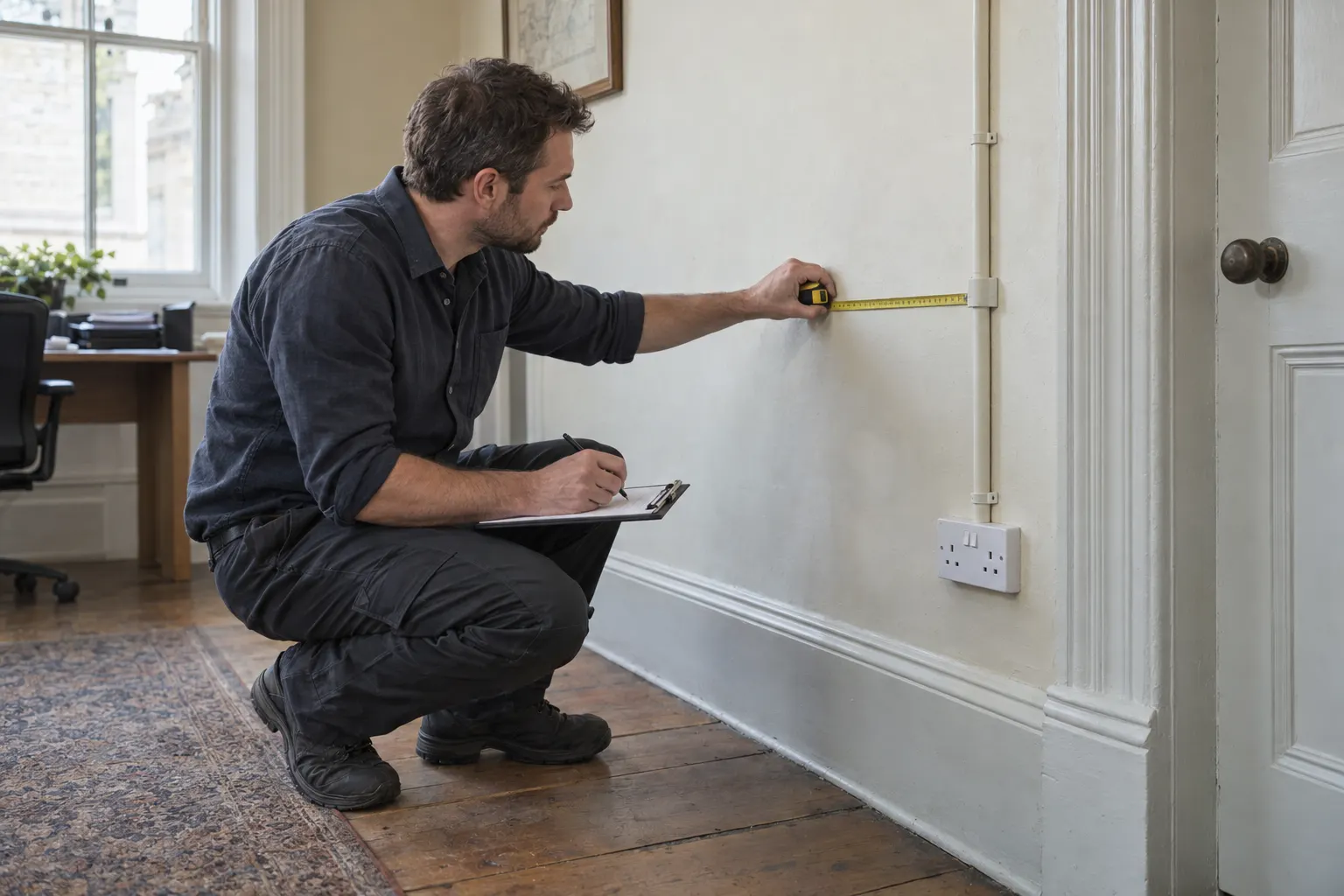
Which electrical changes deserve an early consent check?
New internal services and cable routes
If you are rewiring a listed commercial building, ask the electrical contractor to describe more than the circuits being replaced. The proposal should explain where cables and containment would run, how they would be fixed, and what access or making good would be needed.
Electrical cable routes in listed buildings need consideration of both visibility and disturbance. Concealing cables may affect historic fabric, while visible containment may change a room’s appearance. Neither approach is automatically preferable.
Fittings, external lighting and meter enclosures
Include the position and fixing method for sockets, switches, luminaires and distribution equipment. Outside, identify proposed lighting, exposed cabling and meter boxes rather than treating them as minor finishing details.
Historic England’s Advice Note 16 gives examples where similar replacement external lights or unobtrusive reused cable routes may not need consent, while prominent meter boxes or cabling affecting significant fabric may do. These are examples, not permission for a particular property. Describing work as ‘like for like’ is not, by itself, a consent decision.

What information should you gather before asking Cornwall Council?
Give the council enough information to understand both the electrical scope and the effect on the building. A request to ‘upgrade the electrics’ does not explain whether important fabric will be disturbed.
- Property details. The address, listed status and known conservation-area designation.
- Existing services. Available installation records and photographs of current routes, equipment and affected rooms.
- Reason for the change. The business need or electrical issue being addressed, explaining why work is proposed as well as where.
- Proposed scope. What is being added, replaced, relocated or removed, including redundant wiring.
- Routes and fixings. Annotated photographs or drawings showing cable paths, mounting positions and any proposed openings.
- Fabric and finish. What would be disturbed, how it would be made good and alternatives considered to reduce impact.
- Site constraints. Landlord involvement, occupation, access restrictions and the desired programme.
Ask the council what further information it needs to advise on listed building consent for electrical work and any other approvals. An electrical quotation may not explain proposed methods, finishes or alternatives clearly enough. Treat this as an enquiry brief, not a substitute for the information required in a formal application.
Avoid opening up historic finishes merely to prepare the brief. Agree any necessary investigation with the appropriate professionals first.
Use this information in commercial refurbishment planning too, so electrical routes and making-good work are not agreed separately.
How do listed building consent, planning permission, building regulations and electrical compliance differ?
Listed building consent concerns the effect of alterations on the building’s special character. Check the particular proposal with Cornwall Council.
Planning permission is a separate question. Some external changes may need it, including in a conservation area; listed building consent does not settle that issue.
Building regulations are separate again. Listed buildings are not generally exempt, although their historic character may need special consideration. Establish the building-control position for the proposed scope.
Electrical safety and compliance require suitable professional design, installation, inspection and testing. Heritage approval does not certify an installation as safe, and electrical certification does not resolve heritage permissions.
For leased premises, establish any landlord or freeholder requirements too. Their agreement is not a substitute for statutory approvals.
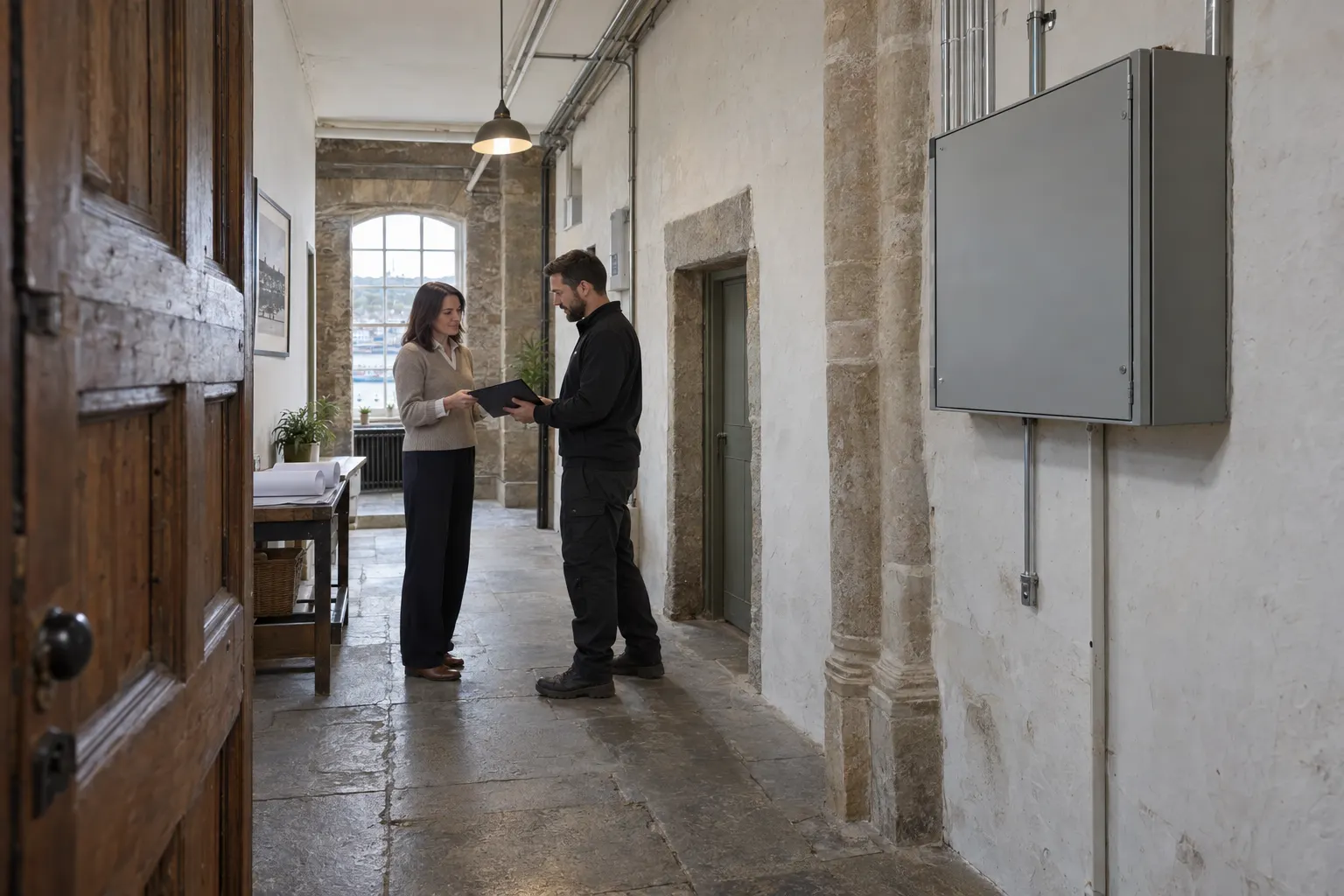
What is a sensible approval and project-planning sequence for a commercial site?
Plan the project around an agreed scope and the approvals it needs, rather than a start date alone.
- Confirm status and survey existing services. Bring together the owner or managing agent, electrical contractor and any conservation adviser needed.
- Develop a clear proposal. Consider less intrusive options and gather the photographs and drawings needed for the council’s check.
- Resolve the approval route. Confirm which permissions are needed and obtain them before the relevant work starts.
- Plan delivery against the agreed scope. Coordinate access, shutdowns and making good. If a route must change, check its implications before proceeding.
- Keep a joined-up record. Retain approvals, agreed drawings and electrical handover records for future maintenance or alterations.
Keep opening hours, tenant access and specialist making-good work in the programme. Do not treat an inspection or a quotation as authorisation to start alterations.
If inspection identifies a safety concern, ask the electrical professional how to manage it while the approval route is clarified. This planning sequence is not advice to leave a dangerous installation in use.
For commercial electrical upgrades in Falmouth, Penryn or wider Cornwall, call Maenporth Electrical Ltd on 01326 250297 to discuss the electrical scope. Confirm listed building consent requirements with Cornwall Council’s planning or conservation team.