
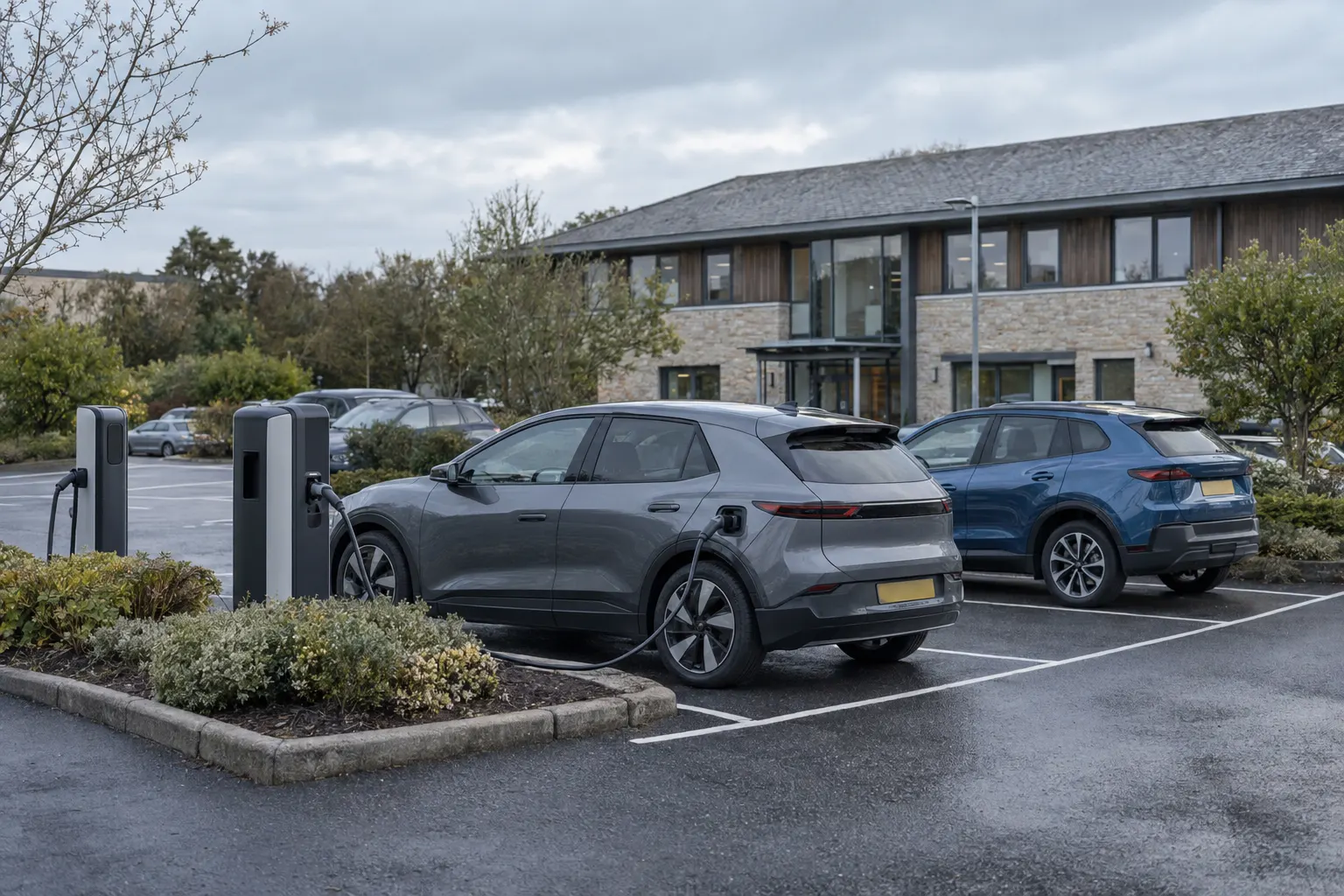
Installing an EV charger in a Falmouth business car park does not, by itself, qualify the premises for business rates relief for EV charging points. The decisive question is how the charging property is assessed for business rates, not simply whether a charger has been installed.
For a holiday park, leisure operator, factory or commercial landlord, that distinction matters when preparing a project budget. Relief may be available for an eligible, separately assessed charging site. It is not a blanket reduction in the rates payable on the wider premises.
The safest starting point is the current rating entry and bill, followed by confirmation from the bodies responsible for assessment and relief.
What is the EV charge-point business-rates relief in England?
The scheme provides 100% business-rates relief for eligible EV charging properties in England. It is a rates measure, not an installation grant, and it does not pay for chargers, cabling or supply upgrades.
The government’s EV charging point relief guidance sets out the eligibility tests. Local billing authorities administer relief and decide whether a case meets them. In Cornwall, billing and relief questions go to Cornwall Council; questions about the property’s rating assessment go to the Valuation Office.
The key test is whether the charging site is separately assessed
A hereditament is the property or unit assessed for business rates. The relief concerns that assessed property, rather than every individual charger fitted at an existing business.
Under the guidance, the property must:
- Wholly or mainly consist of EV charge points and associated bays.
- Be operational and energised.
- Be accessible and open to customers.
- Be separately assessed by the Valuation Office as an eligible EV charging point site.
The guidance identifies Special Category code 718 for EV charging point sites. Ask about the recorded classification rather than trying to infer it from a charger’s location or ownership.
A separate EV charging point rateable value is therefore central. Identifying the cost of chargers within a project budget is not the same as having a separate rating assessment.
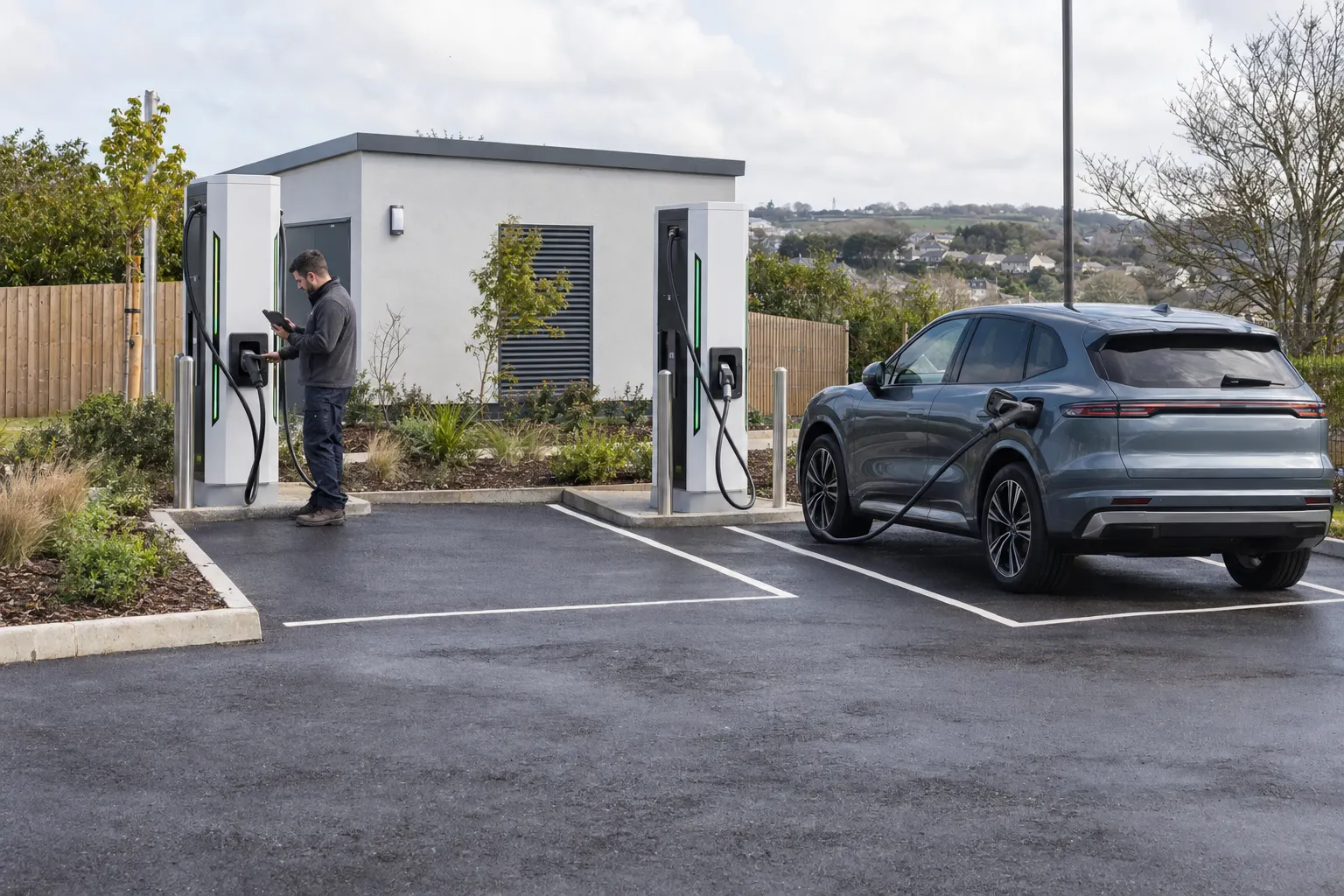
Does a charger in an existing Falmouth business car park qualify?
Charging bays within the main site assessment
If charging bays form part of a larger hereditament and do not have a separate rateable value, the guidance says they are not eligible. Chargers installed in a hotel, campsite or workshop car park cannot be assumed to qualify if they remain within that wider assessment.
That does not mean every charger on a larger site is excluded. The assessment, rather than the type of business, is the key distinction.
A charging area with its own assessment
If a charging area has a separate rating entry, check its classification and the other eligibility tests. A separately assessed EV charging point still needs to meet the operational, access and use requirements.
For proposed chargers, discuss the expected rating position before relying on relief. Questions about when a workplace EV charger becomes public should be considered separately. Customer access alone does not establish rates eligibility.
When a dedicated charging site or EV-only forecourt may qualify
EV-only forecourts are expressly included where the assessed property wholly or mainly consists of charge points and associated bays and meets the remaining criteria.
For a dedicated charging development, ask whether the charging area is itself the property recorded in the rating list. Describing part of a car park as a charging hub does not create a separate assessment.
If a landlord and a separate charge-point operator are involved, establish which rating entry each party is referring to. A commercial agreement about installing or operating chargers is not, on its own, confirmation that the Valuation Office has assessed a separate charging property.
EV-only forecourt business rates relief is not confirmed by a plan alone. A proposed site that is not yet energised and open to customers should not be budgeted as if it already meets the operational requirements.

Relief dates, backdating and Cornwall Council’s approach
Cornwall Council’s 2026 business-rates summary describes relief for qualifying EV charge points and EV-only forecourts from 1 April 2026. It says qualifying relief will be applied automatically and will appear on the business-rates bill.
The detailed government guidance, published on 6 July 2026, describes relief through 31 March 2036. It also allows eligible cases to be backdated to 1 April 2023 where relevant.
Those dates do not mean that every charging site receives the same award period. Ask Cornwall Council which dates apply to your assessment and whether any backdating is relevant.
Automatic application is not the same as automatic eligibility. Check the rating entry and the bill before including an expected saving in a project cash-flow forecast.
What to check with the Valuation Office before budgeting for relief
New 2026 rateable values took effect on 1 April 2026. Start with the current rating entry rather than assuming older paperwork describes today’s assessment.
For an existing or proposed site, work through these checks:
- Identify the rated property. Confirm the address, assessment reference and extent of the site covered by the entry.
- Check any separate EV assessment. Ask the Valuation Office whether the charging property has its own rateable value and how it is classified, including whether code 718 applies.
- Gather operating information. Note whether the chargers are energised, when customer access begins and what the assessed area is used for.
- Confirm the bill and dates. Ask Cornwall Council about eligibility, the relevant relief period and any backdating. Check that the bill shows the relief confirmed.
- Keep a budget without unconfirmed relief. Show a potential saving separately until the assessment and billing position are clear.
Keep a copy of the current assessment and any council confirmation alongside the project estimate. If the rating position is unresolved, make that uncertainty explicit when asking a landlord, finance team or charge-point operator to approve the investment.

Keep rates eligibility separate from the electrical project brief
Rates relief answers a billing question; it does not establish whether the electrical supply can support the proposed charging arrangement. Your installation brief should still cover charger locations, intended users, expected simultaneous demand, cable routes and future expansion.
Before assuming a charger quantity, establish how many EV chargers your site can support. Keep the electrical assessment and any supply-upgrade costs visible even while the rates position is being confirmed.
This is general project-planning information, not tax or rating advice. An installer can discuss electrical scope, but eligibility must be confirmed through the rating and billing process.
Maenporth Electrical Ltd is based at Maenporth and serves Falmouth, Penryn and wider Cornwall. To discuss the electrical scope of a commercial EV charging project, call 01326 250297. For rates eligibility and billing, contact Cornwall Council; for rating-assessment questions, contact the Valuation Office.