
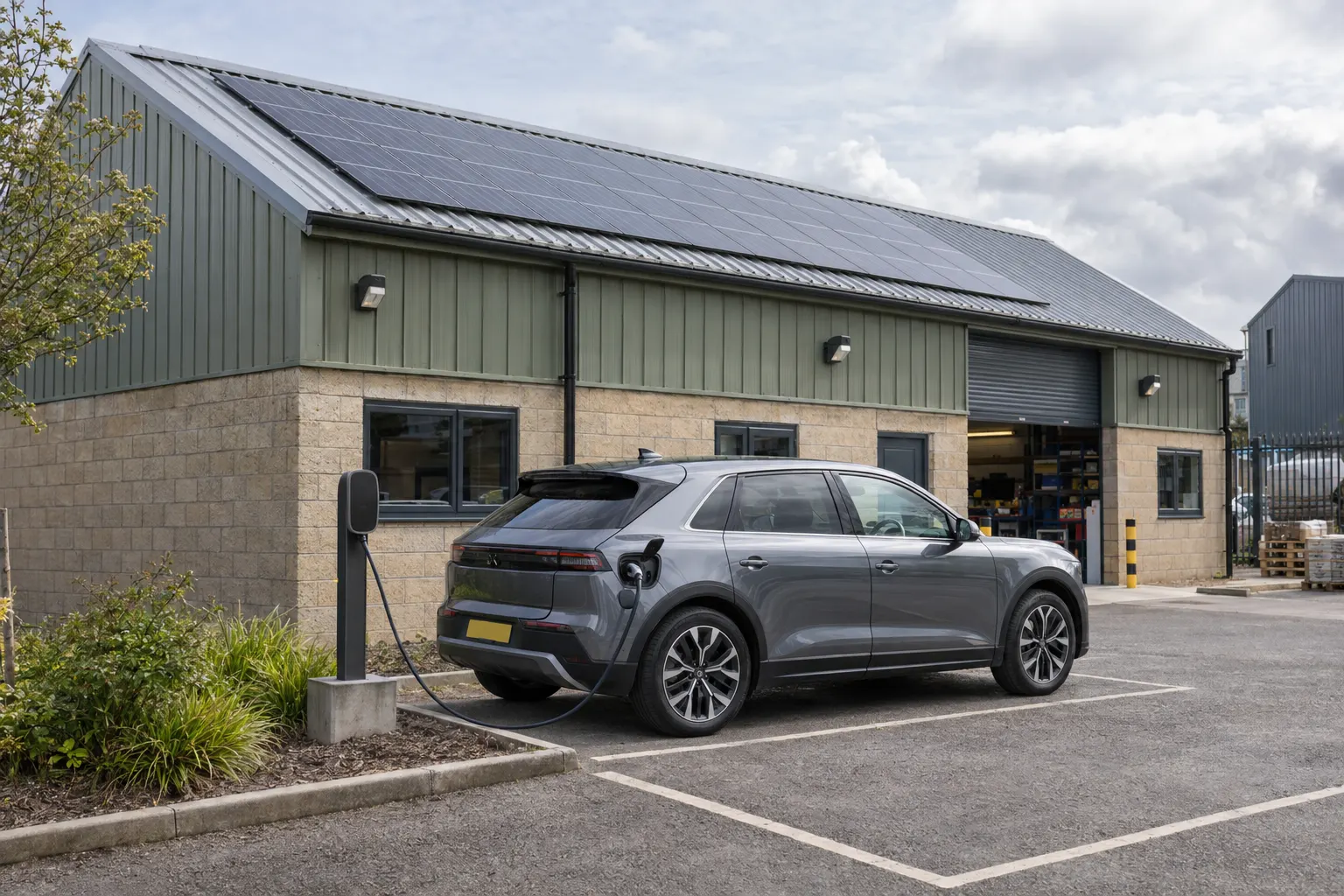
Yes, a Falmouth business can use on-site solar PV to contribute to EV charging. The important qualification is that panels and a chargepoint do not, by themselves, guarantee charging from surplus solar.
For commercial EV charging with solar panels in Cornwall, the useful starting point is when vehicles need energy and what else the site is powering. Matching those demands to generation matters more than treating solar and charging as two separate purchases.
Can a Falmouth business use on-site solar PV for EV charging?
In a suitably designed installation, solar generation can supply some of the site's electrical demand, including EV charging. If generation is insufficient, grid electricity can make up the difference, subject to the site's supply capacity and control settings.
Government guidance on connecting EV chargepoints to the electricity network identifies smart charging, solar PV and battery storage as options for managing demand and prioritising renewable electricity generated on site. It also stresses that sites and fleets have different characteristics.
When planning solar EV charging for businesses, distinguish total generation from surplus generation: what is left after other site loads have been met. A factory may generate well during the day while machinery uses most of that output.
Why solar generation and vehicle charging times do not always coincide
Annual PV output cannot show whether energy will be available during a particular charging session. Solar production varies with daylight, season and weather; the vehicle also has a deadline, whether that is the end of a shift or a morning departure.
Daytime staff parking may offer an opportunity to use solar as it is generated. A van depot where vehicles return in the evening has a different pattern. At a golf or leisure site, daytime visits may overlap with generation, but the available charging window may be shorter.
Also distinguish between a vehicle being parked and being available to charge. Staff routines, fleet movements and whether vehicles are actually plugged in affect the usable window. Build those details into the schedule rather than assuming every occupied bay represents flexible charging demand.
For holiday parks, an overnight booking does not establish when a guest's car will be on site during daylight. The broader questions are covered in our guide to guest EV charging and the Workplace Charging Scheme.
Compare charging windows with generation and site demand across the year, not just a sunny day's performance.

How smart charging can coordinate PV, site demand and grid electricity
The controls need an agreed job to do. Is the aim to absorb spare generation whenever it appears, or to get vehicles ready by a fixed departure time while using solar when available? Those aims are not always the same.
Using surplus solar to charge EVs
A surplus-led approach can adjust charging to the generation left after other site loads are met. As cloud cover changes or a large load starts, the energy available to the charger changes. A fixed daytime timer alone cannot respond to those changes.
Keeping vehicles ready for work
Where departure times matter, the design may allow grid electricity to supplement solar rather than waiting indefinitely for a surplus. Agree which charging needs take priority and how the system should respond when generation falls.
Ask what happens if several vehicles arrive late in the afternoon with urgent charging needs. That is a different operating condition from a quiet car park with spare generation at midday, and it should not be left for staff to resolve by trial and error.
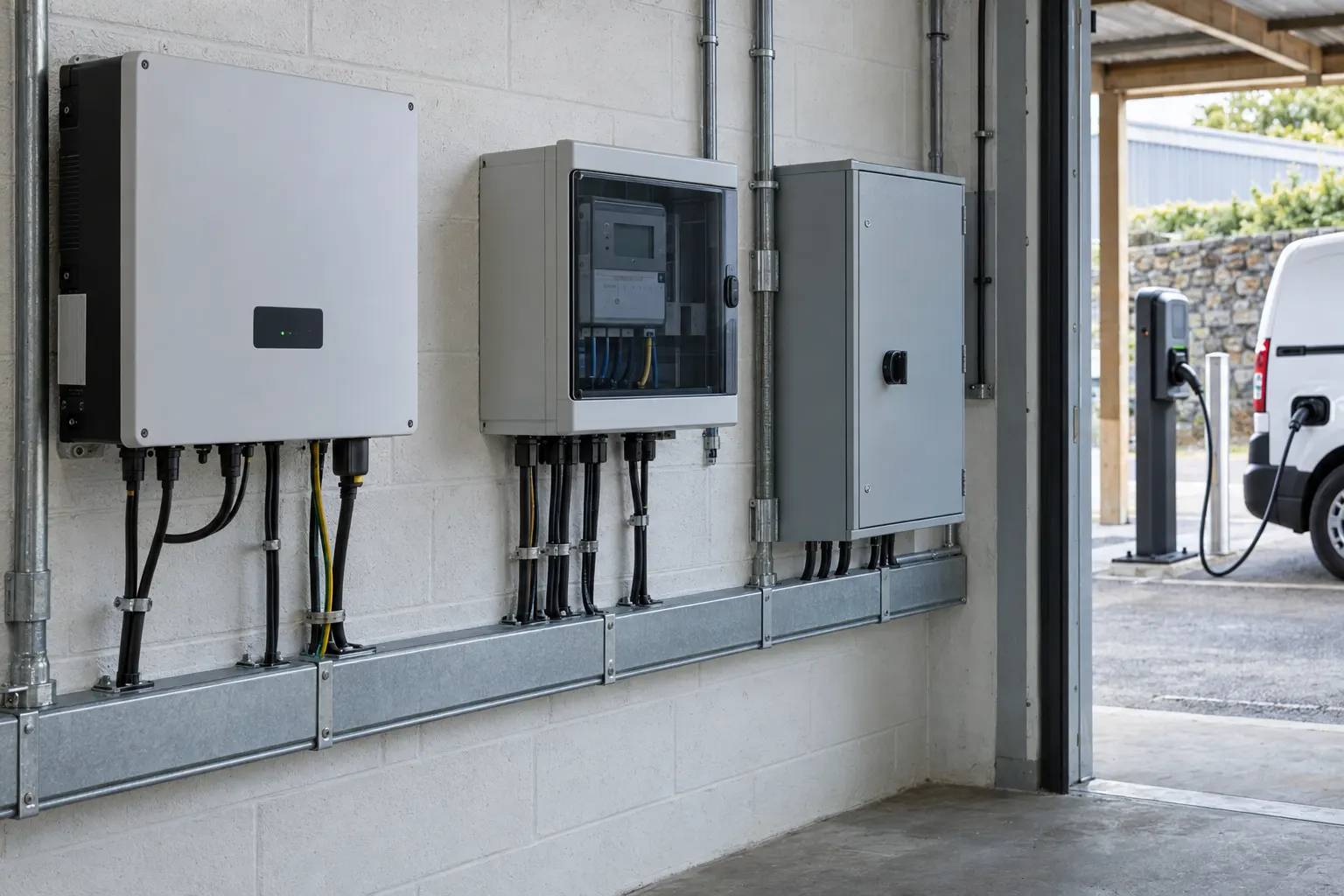
Check the proposed equipment's actual capabilities. Whether additional metering or control equipment is needed depends on the site and the systems already installed. A 'smart' label alone does not confirm that a charger will track PV surplus.
Where battery storage fits and why it is not automatically required
A battery can store solar electricity for use later, potentially helping where generation and vehicle availability do not coincide. It is not automatically required for charging electric vehicles with commercial solar PV.
EV charger and solar battery integration should start with what the battery is expected to serve. Other site loads may also draw on stored energy. Storage capacity, available power and control priorities all affect how much it can contribute to vehicles.
If the aim is to shift solar into the evening, first establish whether there is a regular surplus to store. A battery cannot create extra solar energy where daytime operations already consume most generation.
Compare a no-battery option with a storage option before deciding. If vehicles already stay on site during daylight, smarter scheduling may address the main issue. Where they return later, storage is worth assessing, but it does not guarantee enough solar energy for every charging session.
Should surplus solar be used for charging or exported?
There is no automatic financial winner. Using surplus on site may reduce electricity bought for charging, but it can also mean giving up export income. The comparison depends on the site's actual import tariff, export arrangement and when charging would otherwise take place.
A vehicle that needs charging now presents a different decision from one that could charge later. Use actual tariff and usage information, and include any additional controls or storage costs in the comparison. Do not label the result 'free charging'.
Keep this operating comparison separate from the wider assessment of site capacity and export arrangements.
What to check before integrating EV chargepoints with existing or planned PV
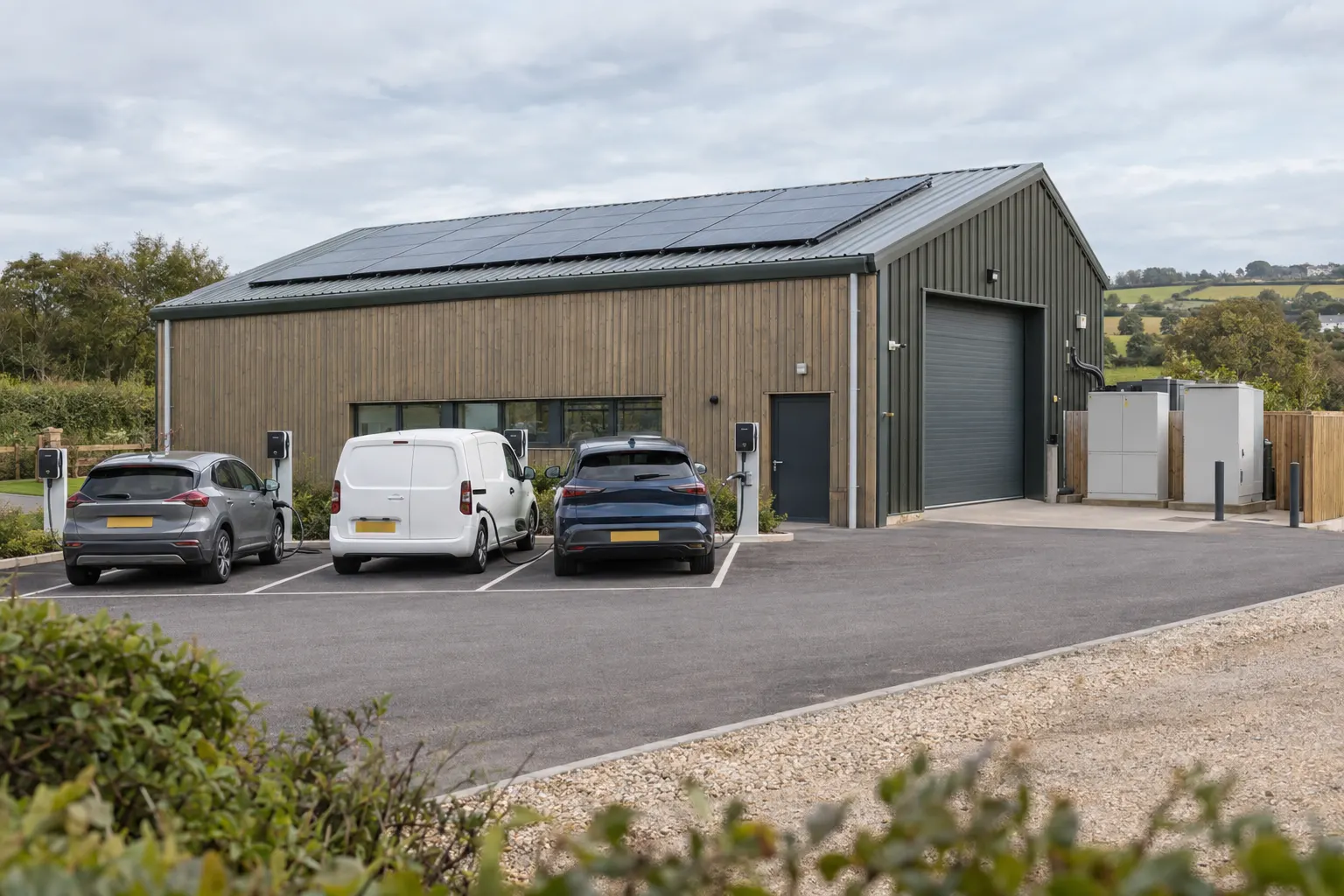
Bring the PV and charging proposals together before specifying equipment. For an existing installation, gather the records you have and ask a competent contractor to assess any gaps.
If solar will be added later, tell the charger designer now. Agree what the initial system will do and what must be reviewed when PV arrives; do not assume it will automatically become solar-responsive.
- Vehicle use. Record arrival and departure times, charging needs and which requirements cannot be delayed.
- Generation and demand. Share available PV output and electricity-use records, including seasonal changes and major daytime loads.
- Existing equipment. Provide inverter, charger and battery details where relevant so compatibility and control options can be checked.
- Operating priorities. Decide when grid-supported charging is acceptable and how charging should compete with other site demands.
- Design responsibilities. Confirm who will assess controls, metering, the supply arrangements and compliance with applicable current requirements.
- Handover and review. Ask how settings and performance will be checked, and who can change charging priorities as site needs develop.
Holiday-park operators should also keep the wider site checks in our guest-charging guide in view; solar coordination does not replace checking the existing site installation.
After commissioning, review whether the chosen settings are delivering the intended charging schedule. Changes in working hours, fleet use or the site's electrical demand can change the balance, even where the panels and chargers themselves are unchanged.
The useful result is a clear operating plan: when solar can contribute, when grid electricity may be needed and which charging needs take priority.
Planning solar-assisted EV charging for your site? Maenporth Electrical Ltd is based at Maenporth and serves Falmouth, Penryn and wider Cornwall. Call 01326 250297 to discuss your PV plans, vehicle schedules and electrical requirements.