
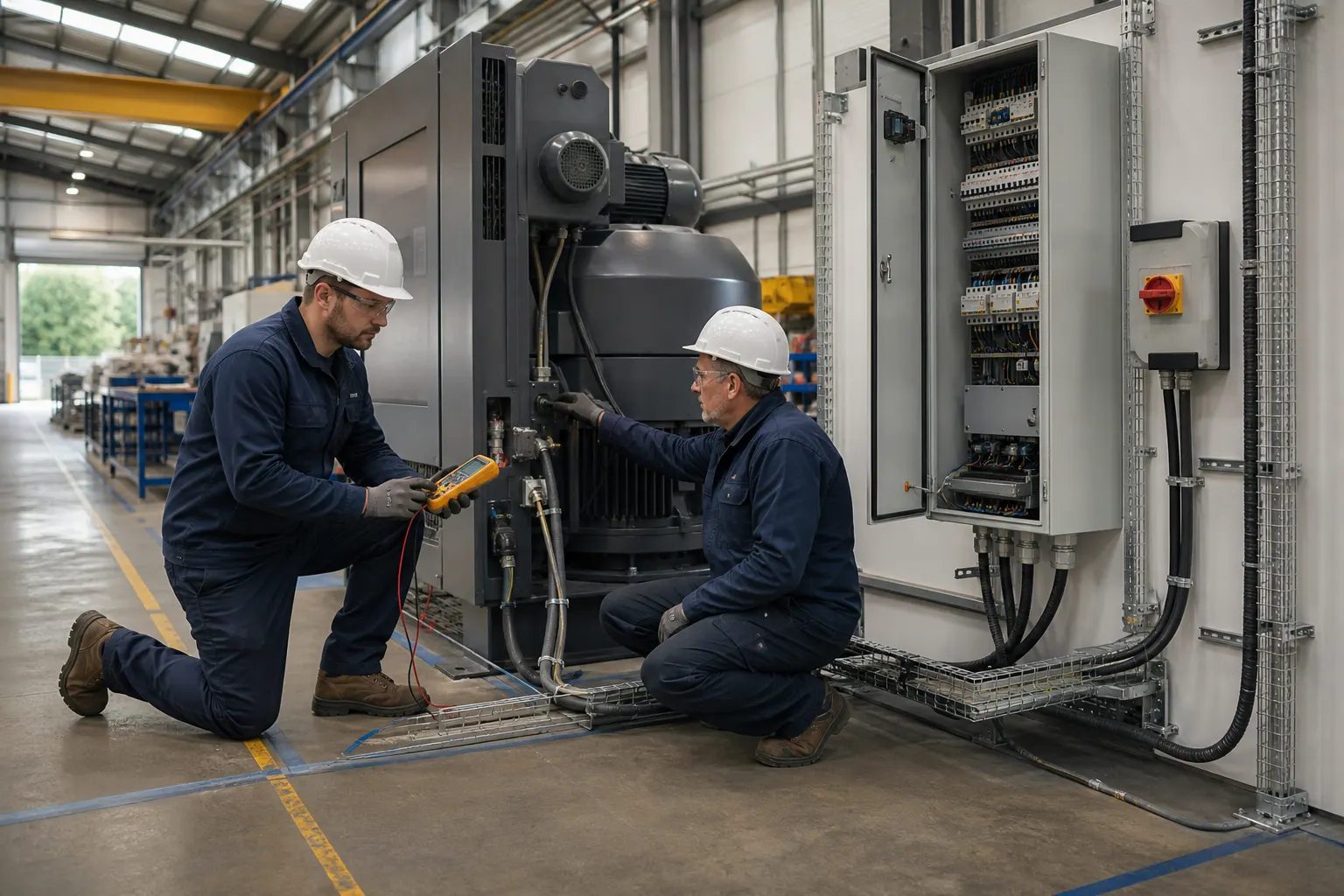
Connecting a new, replacement or relocated machine is not simply a matter of finding a spare circuit and installing an isolator. Before work begins, the site needs to establish what the machine requires, whether the electrical system can support it and who is responsible for each part of installation and commissioning.
For factories, workshops, quarries, processing operations and larger rural sites, these decisions can affect project cost, shutdown planning and the reliability of surrounding equipment. A properly planned machinery power supply in Cornwall therefore starts with information and a site assessment, not assumptions based on the machine nameplate alone.
The question to answer before ordering or moving machinery
The first question is whether the proposed machine can be accommodated safely by the site as it currently operates. That is broader than asking whether three-phase power is present or whether a distribution board has a spare way.
The review should bring together the machine’s electrical requirements, the site’s existing and agreed supply capacity, the distribution route and the operating conditions. It should also establish how the machine will be isolated, installed, tested and returned to service without leaving gaps between contractors, suppliers and the site team.
Start with the machine data, not the proposed isolator
A meaningful design needs information from the machine manufacturer or integrator. Depending on the equipment, this could include:
- required voltage, frequency and phase arrangement;
- rated input, full-load current and duty cycle;
- motor starting or inrush characteristics;
- control supply and external interface requirements;
- manufacturer-specified protective-device requirements;
- environmental and installation conditions;
- the intended commissioning and start-up sequence.
This information is important because two machines with similar headline power ratings can place different demands on a supply. If documents are missing for relocated or older equipment, that uncertainty should be addressed before the final circuit is designed.
Maenporth Electrical’s plant and machinery electrical supplies service covers the fixed electrical infrastructure required to supply industrial equipment, with the precise project scope agreed in advance.
Check the site’s real electrical headroom
A spare switchboard way does not prove that the site has enough capacity. An assessment may need to consider the incoming supply, recorded demand, existing peak loads and the Maximum Import Capacity agreed for the connection.
Maximum Import Capacity is measured in kVA and represents an agreed connection limit. It is not the same as a visual impression of the switchboard or a single current reading taken when production is quiet.
National Grid Electricity Distribution operates the local distribution network in Cornwall. Where proposed equipment changes the site’s load requirements, or could affect voltage quality, the project may need to be discussed with the network operator. That does not mean every new machine requires an application: the need depends on the existing connection and the proposed load.
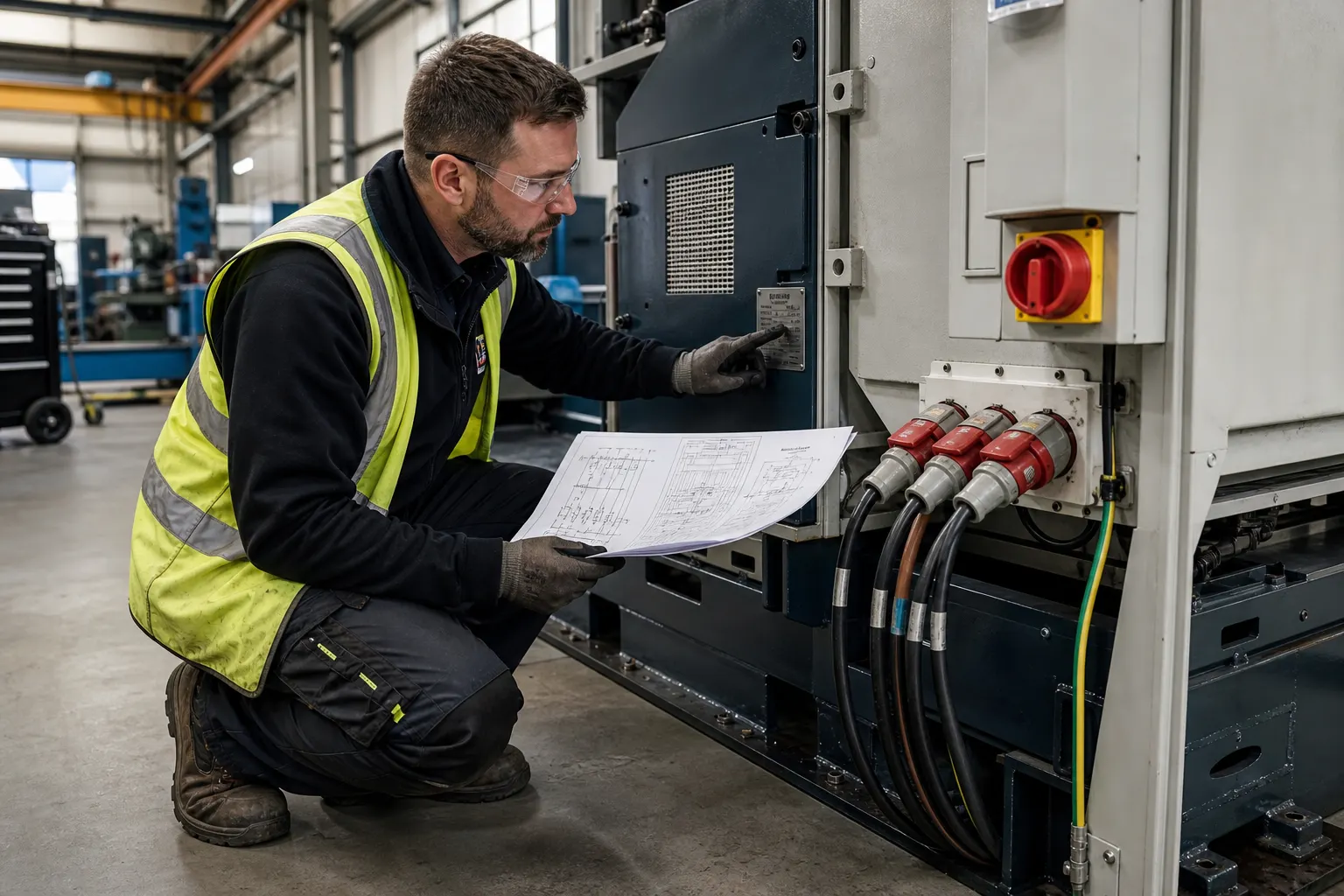
Why motors and fluctuating loads need closer assessment
Motors, welders and other fluctuating loads can create demands that are not captured by a simple comparison of running kilowatts. Starting current, repeated cycling, simultaneous operation and duty pattern may all influence the design.
The assessment should also consider effects on other operations. A machine that appears supportable in isolation may still contribute to voltage disturbance, nuisance operation of protective devices or excessive demand when the wider production process is running.
Review the complete route from switchboard to machine
An industrial machinery electrical installation must be considered from the source to the point of connection. Relevant matters can include switchgear condition and rating, submain capacity, cable route, containment, protective coordination, prospective fault conditions and the site’s earthing arrangement.
The installation environment matters too. Heat, moisture, dust, impact risk, cleaning processes and vehicle movements can influence equipment and containment choices. These are matters for competent survey and design rather than a generic specification.
Where the work affects several boards or exposes wider constraints, reviewing the site’s industrial distribution systems can help prevent a local machine connection from being planned in isolation from the upstream network.
Plan isolation, access and a realistic shutdown
The physical connection may require part of the electrical system to be shut down. The shutdown plan should identify what will be affected, who authorises it, how production will be made safe and how sufficient time will be allowed for installation, inspection, testing and controlled restart.
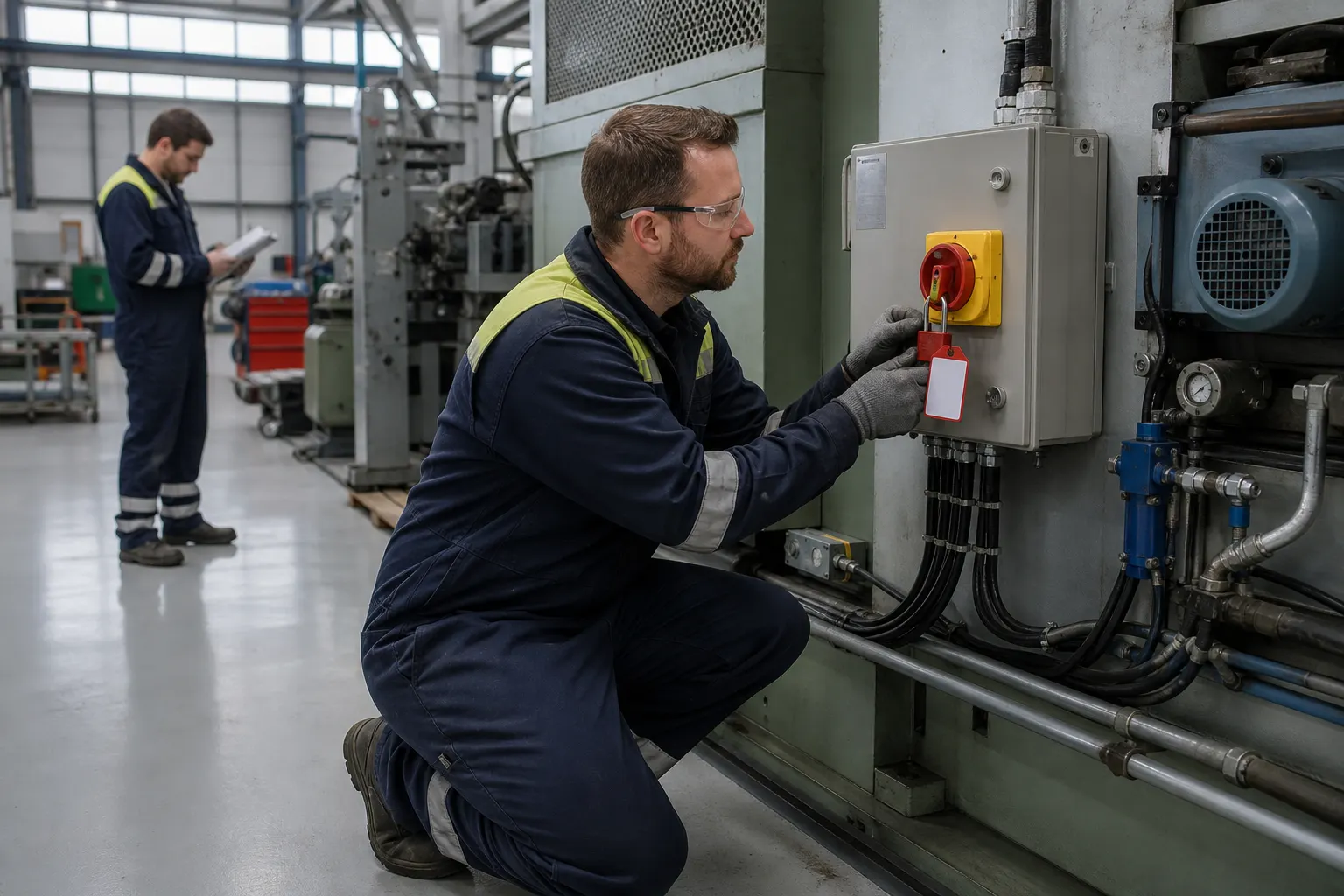
Electrical isolation alone may not make machinery safe to work on. Mechanical, hydraulic, pneumatic or stored energy can also need to be released or controlled. Isolation must be secure so that energy cannot be inadvertently reintroduced while work is taking place.
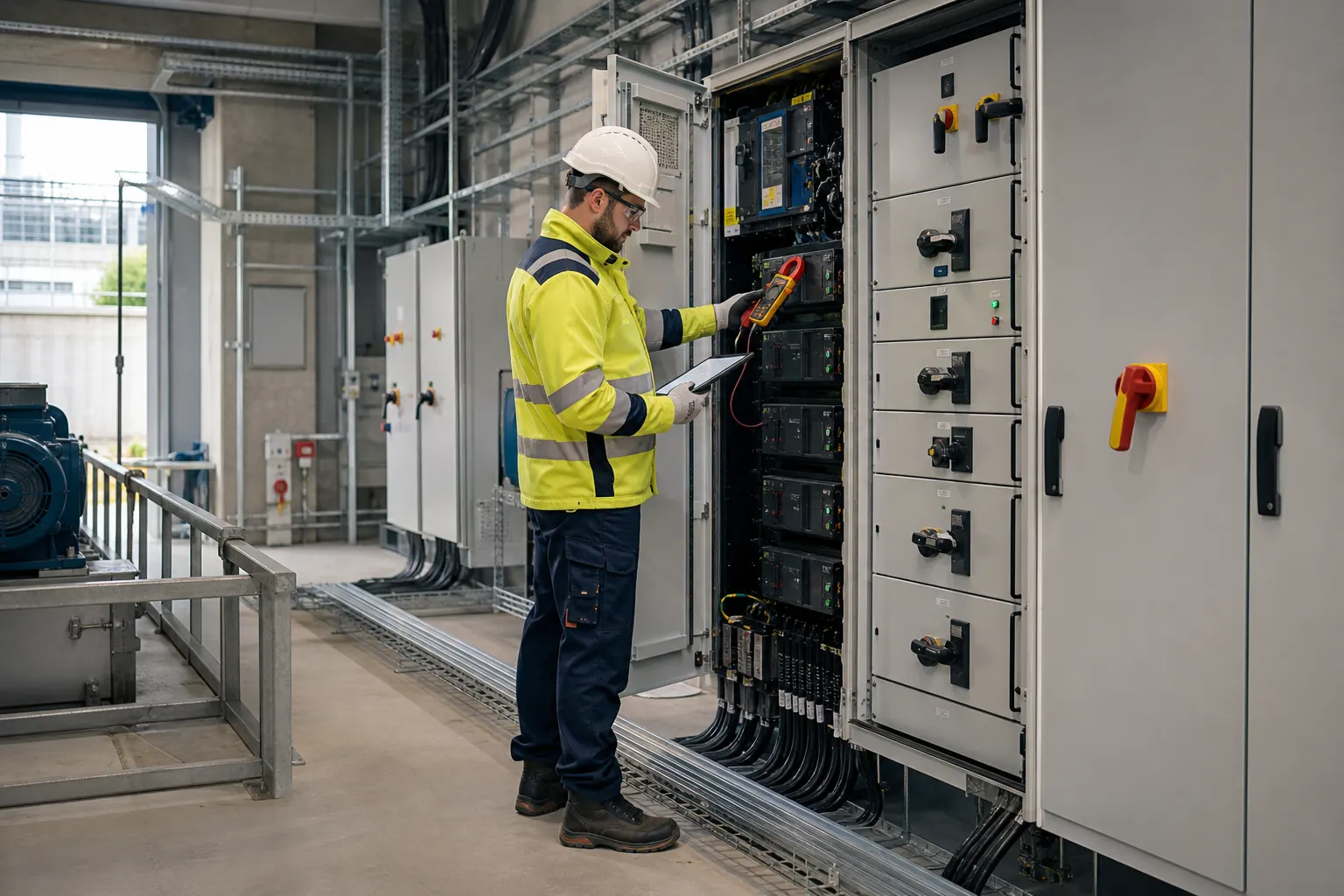
Agree the boundary between every project party
One of the most important pre-project tasks is defining the boundary between the fixed electrical installation and the machine itself.
The electrical contractor may be responsible for an agreed supply circuit, protection, local isolation and electrical installation verification. The machine manufacturer or integrator may retain responsibility for internal wiring, setup, programmed controls, guarding, functional checks and process commissioning. The site dutyholder must also determine who has authority to declare the equipment ready and restart production.
These responsibilities should be recorded rather than inferred. Certification for the fixed installation does not, by itself, declare that the machine’s guarding, control functions, production process or output has been commissioned safely.
Test, inspect and document before return to service
Inspection and testing should be built into the programme rather than treated as something to fit into the final few minutes of a shutdown. Results and certification should clearly match the agreed electrical scope.
HSE guidance on PUWER explains that where work equipment safety depends on installation conditions, it must be inspected after installation and before being put into use. PUWER also covers suitability, controls, isolation and keeping work equipment in efficient working order and good repair.
A controlled handover can then confirm that the fixed electrical work has been completed, the relevant machine-side checks have been undertaken by the responsible party and the site has authorised restart.
When relocation or alteration needs a wider safety review
Moving a machine without changing its intended function is not necessarily the same as substantially modifying it. However, changes to controls, guarding, operating methods or integration with other equipment can introduce new hazards.
HSE states that very substantial modifications can result in equipment being treated as new machinery and requiring conformity assessment under the applicable machinery supply framework. There is no reliable generic answer for every alteration, so the extent and implications of a change require competent assessment.
If a machine is installed in an area involving combustible dust, flammable vapours or gases, the project may also require DSEAR and ATEX considerations with appropriately competent specialist input.
A pre-project checklist for Falmouth industrial sites
Before requesting a final quotation or confirming a delivery date, gather the following information:
- Machine manufacturer, model and available electrical documentation.
- Supply voltage, phase, rated current and starting characteristics.
- Proposed location, cable route and environmental conditions.
- Existing site demand information and agreed supply capacity.
- Relevant switchboard, submain and protective-device details.
- Other equipment that must remain operational during the work.
- Acceptable shutdown periods and site access restrictions.
- Machine supplier or integrator contacts and responsibilities.
- Who will complete machine commissioning and functional checks.
- Who has final authority to approve the production restart.
This information allows an industrial electrician in Falmouth to identify missing data and likely constraints before they become expensive on-site problems.
Plan the electrical connection before the machine arrives
If you are adding, replacing or relocating machinery at a site in Falmouth, Penryn or elsewhere in Cornwall, contact Maenporth Electrical on 01326 250297 to discuss the proposed fixed electrical installation. Early review can help clarify the supply requirements, distribution work and shutdown scope before machinery delivery or relocation is committed.