
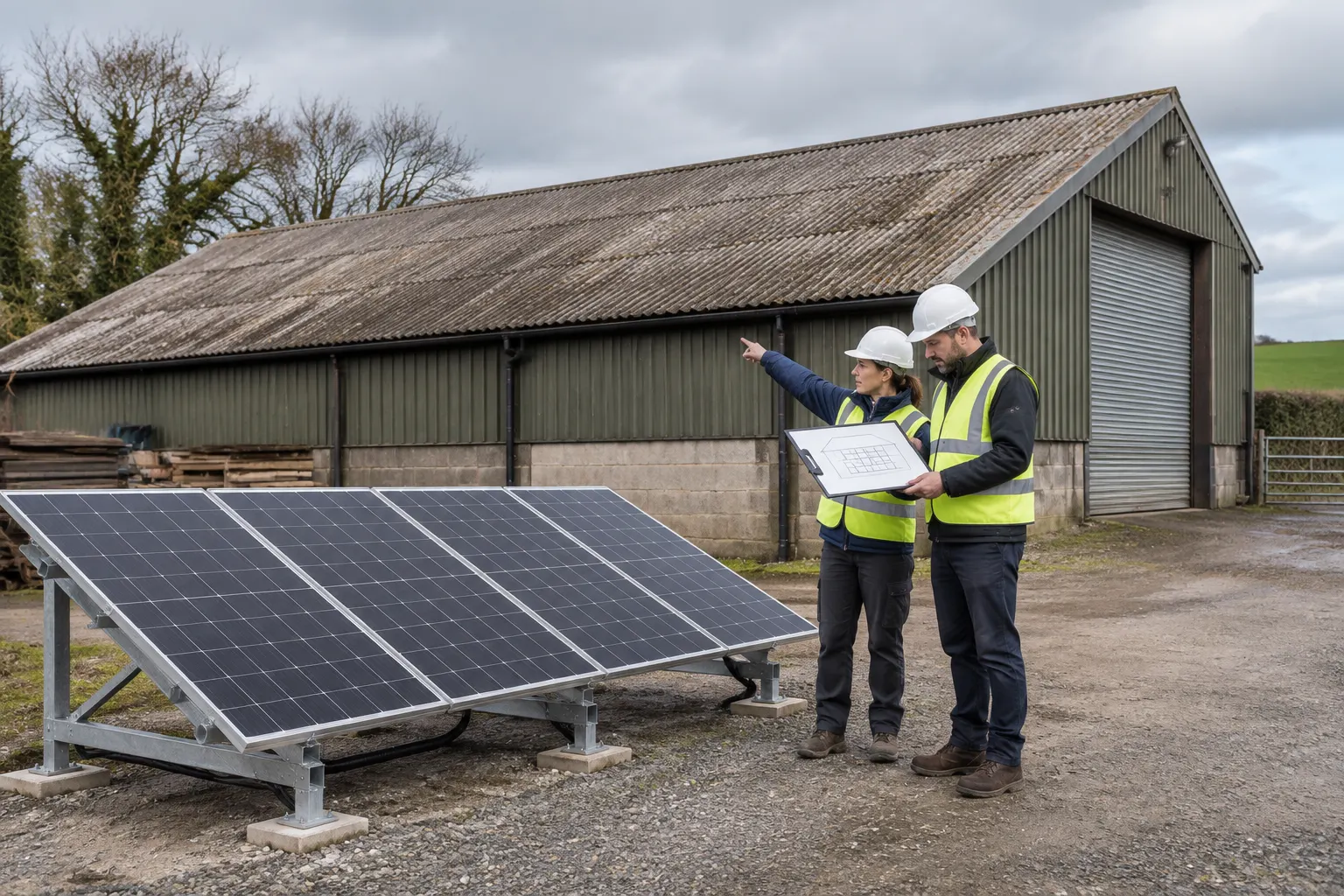
Before committing to solar panels on an asbestos roof, a commercial site needs more than a panel layout and a price. For suspected or confirmed asbestos-cement sheets, the decision depends on three separate issues: asbestos management, fragile-roof safety and structural suitability. A favourable finding on one does not resolve the others.
Cornwall's Local Area Energy Plan identifies structural integrity and asbestos assessment or removal as factors that can add cost and complexity to rooftop PV. That is a reason to assess your own building early, not to assume every older roof needs replacing.
Does asbestos-cement automatically rule out commercial solar?
Not automatically. The material, its condition, the proposed installation and any associated roof works all matter. A viable route cannot be confirmed from roof area or appearance alone.
For commercial solar on an asbestos-cement roof, establish what must be resolved before accepting an installation proposal. Agree who will assess asbestos, access and structure, and how those findings will inform the electrical design. Keep any required enabling roof works visible in the scope rather than assuming they are covered by a standard PV quotation.
Check asbestos records and match the survey to the work
HSE advises assuming asbestos is present in a building built or refurbished before 2000 unless there is evidence otherwise. At a non-domestic site, identify the asbestos dutyholder: this may be the owner, landlord or person responsible for maintenance.
Find the asbestos register, surveys and management plan, including any exclusions. Share relevant information with prospective contractors when requesting quotes, not just when work starts. A report that excludes the affected area is not evidence that it is asbestos-free.
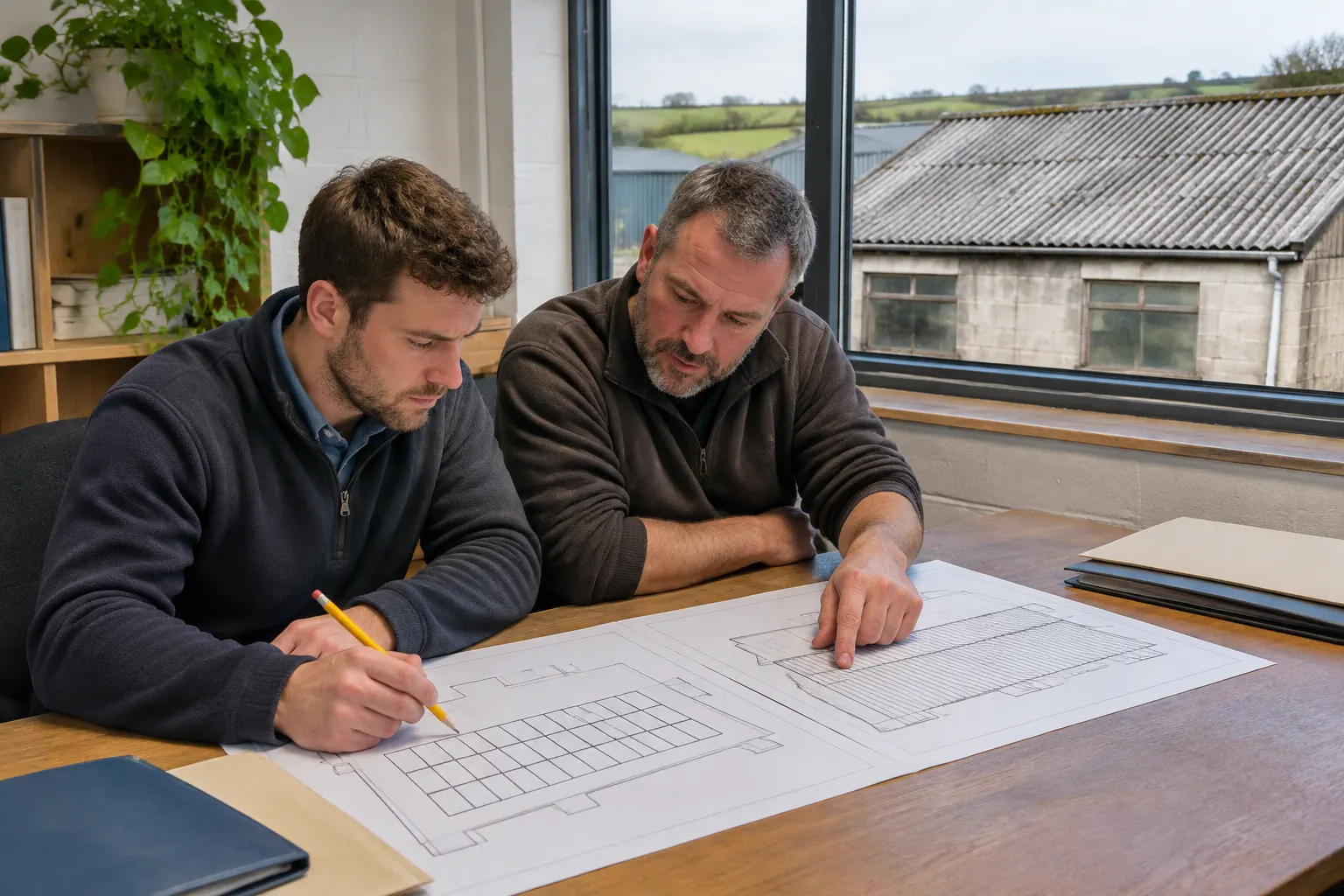
If an asbestos survey before solar panels is needed, its scope should follow the proposed works. A management survey supports routine use of the premises; it may not cover everything affected by installation or roof alterations. Ask a competent surveyor whether a refurbishment survey is needed and what it should cover. The HSE guidance on arranging an asbestos survey explains the different purposes.
Give the surveyor an outline of proposed PV works, including affected roof areas, the mounting proposal and intended cable routes. Ensure the electrical and roofing contractors receive the findings relevant to their work.
Do not disturb suspect roofing or access it yourself to fill information gaps.
Treat fragile-roof access as a separate safety issue
Fibre-cement sheeting can be fragile regardless of asbestos content. HSE identifies non-reinforced fibre-cement sheets as likely fragile and says roofs should be treated as fragile until a competent person confirms otherwise. Even a brief inspection needs precautions.
Planning fragile-roof safety for solar installation means considering inspections, installation and future maintenance, not just the day panels arrive. Ask how the roofing, asbestos and electrical teams will coordinate safe access, fall-risk controls and protection for people below.
On an occupied factory, workshop or rural site, ask the project team which areas below or around the roof would need controlling and how work would fit site operations. Resolve these arrangements during feasibility and pricing.
An asbestos survey does not establish that a roof can support people. A structural assessment does not replace a safe-access plan.
Assess load capacity alongside the roof's repair needs
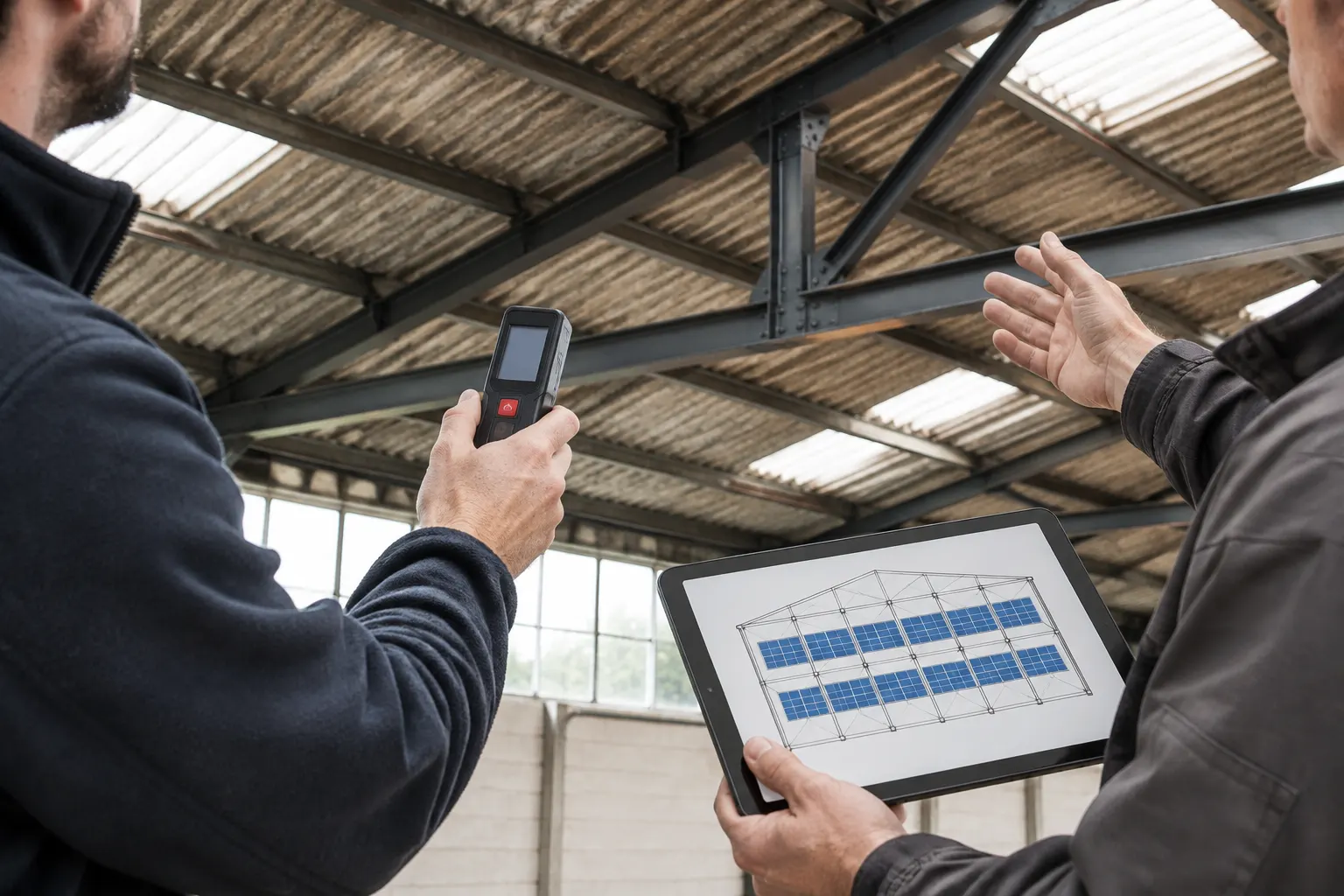
A structural assessment for commercial rooftop solar should establish whether the existing roof can carry the proposed system. It needs to relate to the actual array and mounting proposal; spare roof area does not demonstrate spare load-bearing capacity.
Assess the covering's condition and likely repair needs alongside the load question. If major roof work is expected, installing PV first may mean paying for removal and reinstatement later. The roof's repair outlook therefore belongs in the commercial decision, not just the maintenance file.
Request written findings, including assumptions and limitations. Where the solar route depends on repairs or replacement, identify those works before agreeing an installation scope and budget.
A report should make clear which roof areas and proposals it covers. If a later quotation changes the layout or assumes a different roof solution, ask whether the structural conclusions still apply.
Compare specialist roof works with alternative PV locations
A roof-first route
Refurbishment, roof replacement or overcladding may be options for specialist assessment. None is an automatic route to solar: overcladding, for example, does not settle the underlying asbestos, structural or access questions.
Replacement could let roof works and PV design be planned together, but it is a wider construction project. For any overcladding proposal, establish what remains in place and how future inspection and roof works would be managed.
Not all asbestos-cement work requires a licensed contractor. Classification depends on the task and material condition; substantial damage or break-up can change it. Non-licensed work still requires risk assessment, appropriate controls and trained workers. Leave classification to competent asbestos professionals.
Another roof or ground-mounted PV
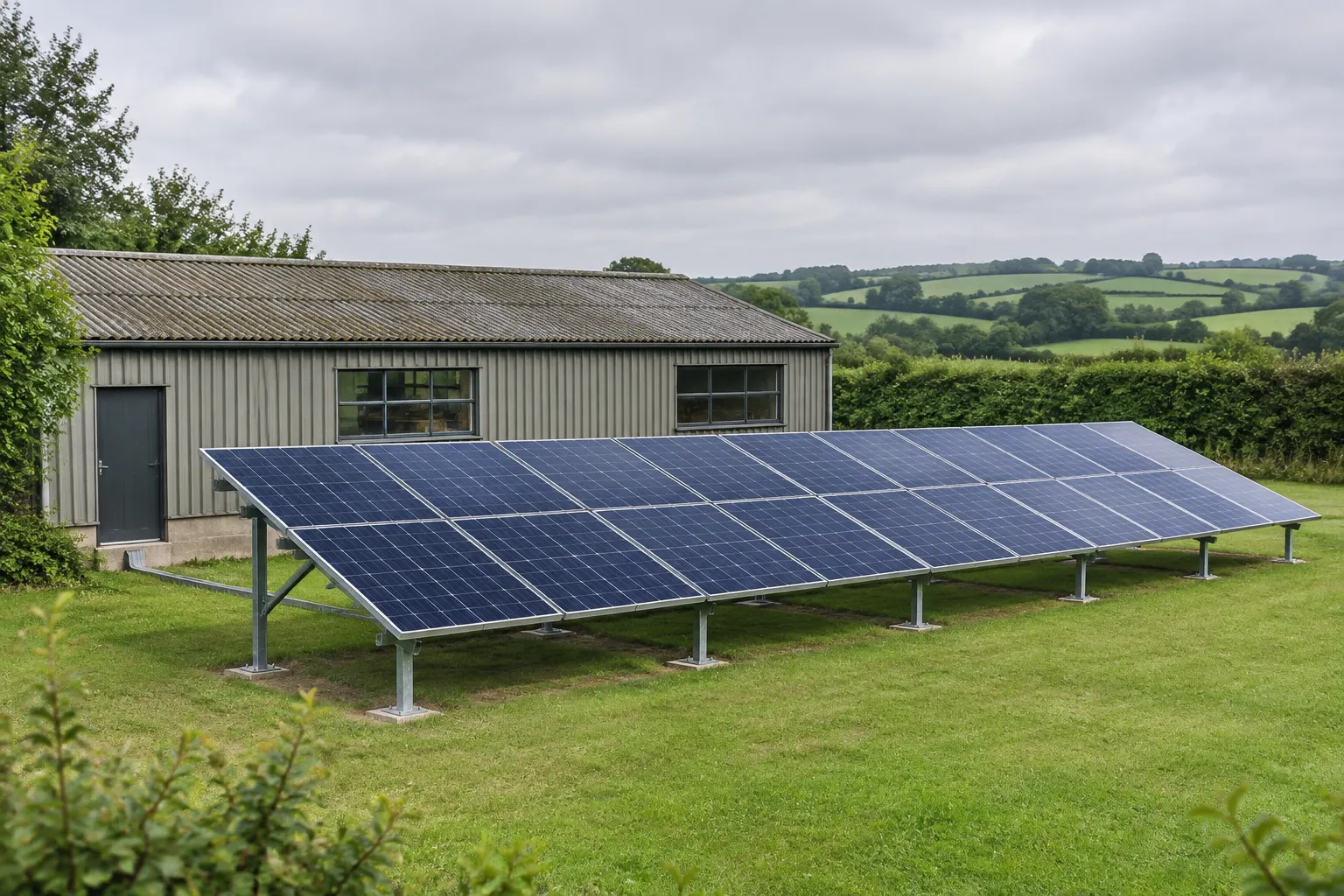
Another assessed roof or a ground-mounted solar alternative may be worth considering if the original roof is unsuitable. Ground mounting avoids that roof, but needs its own checks on land, planning, cable routes and the electrical connection.
Compare complete scopes, including surveys, enabling works, access arrangements and future maintenance. Ask which items remain your responsibility. A low PV-only figure is not a like-for-like comparison with a price that includes specialist roof works and access. Identify the electrical package and enabling costs separately, and state which decisions remain conditional. Neither overcladding nor ground mounting is universally cheaper.
Keep planning, building control and electrical checks distinct
For non-domestic rooftop PV, building regulations will normally apply, including checking the existing roof's ability to carry the load. Permitted development is conditional: check the proposal and site against the relevant limits and conditions rather than assuming planning permission is unnecessary.
Asbestos findings do not provide planning approval or confirm Building Regulations compliance. Equally, a suitable roof does not establish that the site's electrical installation and connection arrangements can accommodate the proposed system. Run the electrical review alongside the roof checks and record unresolved items before commitment.
If ground mounting is being considered, do not carry over assumptions about a rooftop planning route. It is a different proposal, to be checked for that location and layout.
What to have ready for a commercial solar proposal
A useful first enquiry includes:
- Building age, roof construction details and the relevant owner or landlord contact.
- The asbestos register, surveys, management plan and any recorded exclusions.
- Available structural reports, roof-condition information and planned roof works.
- Site access restrictions and operational constraints.
- Electricity-use information and any available electrical drawings.
- Any preliminary PV layouts or quotations, with outstanding assumptions clearly identified.
- Other possible PV locations, including suitable land where relevant.
Missing records do not prevent an initial discussion. Flag what is unknown so the next step can be properly scoped, rather than treating assumptions as an installation-ready design.
For a practical discussion about solar PV services in Falmouth, Penryn or wider Cornwall, call Maenporth Electrical Ltd on 01326 250297. Share the roof information you already hold so the electrical proposal can be considered alongside the necessary specialist advice.