
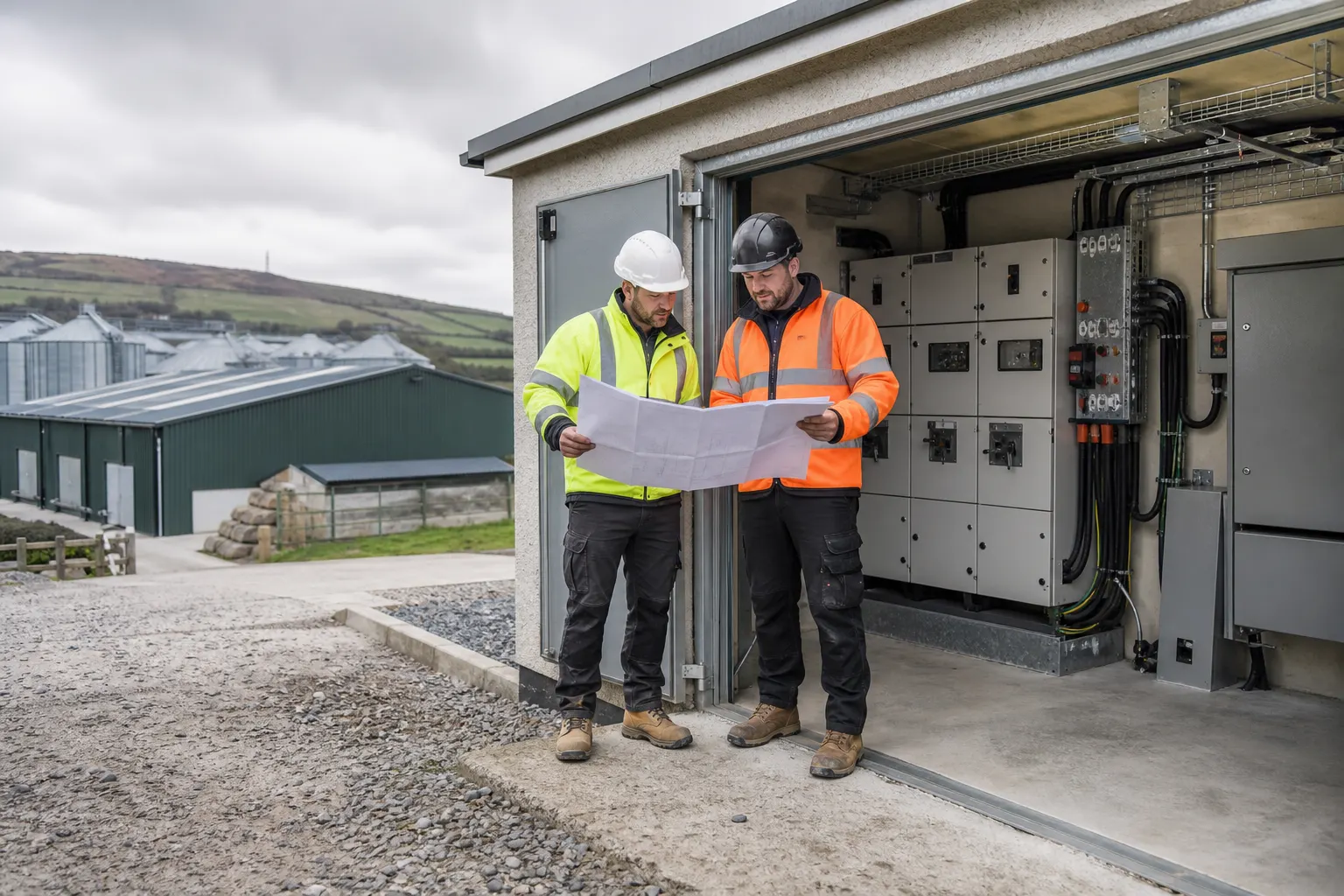
A useful electrical project brief does not need to contain finished drawings or every technical answer. It does, however, need to explain what the site is trying to achieve, what already exists and which operational constraints cannot be ignored.
That is particularly important on larger premises. A factory extension, quarry upgrade, holiday park expansion or renewable energy installation can affect incoming capacity, distribution equipment, cable routes, isolation arrangements and future maintenance. Treating each element as a separate purchase can leave important connections between them unresolved.
This company update explains when to approach Maenporth Electrical, what information helps at the outset and how Cornwall businesses can prepare for a more productive first site discussion.
Why the first project brief matters
An electrical contractor can give more useful input when the purpose of the work is clear. “We need more sockets” describes an output. “We are adding production equipment that must operate from next spring without interrupting the existing line” explains the underlying project.
The second version immediately raises practical questions. What is the equipment load? Is it single-phase or three-phase? Can the existing distribution system support it? Where will it be positioned? When can the affected circuits be isolated? Is further expansion likely?
These questions are not unnecessary complications. They help separate a straightforward installation from work that may require surveys, design coordination, supply enquiries or phased implementation. Businesses considering wider commercial electrical work should therefore make contact before equipment locations, room layouts and construction programmes become difficult to change.
When to involve Maenporth Electrical
At the concept stage
Early involvement is valuable when electrical demand could influence the project itself. This may apply to additional machinery, kitchen equipment, heating, EV charging, battery storage, solar generation, new accommodation units or a substantial building extension.
At this point, the goal is not necessarily to produce a final quotation. It is to identify the questions that need answers before the project can be properly defined. Existing drawings, electricity bills, equipment schedules and photographs can all provide an initial picture, although they do not replace an appropriate site assessment.
Before committing to major equipment
Machinery and electrical technology should not be selected in isolation from the site that will power it. The nominal rating is only part of the picture. Starting characteristics, duty cycles, control systems, protective devices and simultaneous demand may all affect the electrical design.
The same principle applies to renewables and transport electrification. The preferred number of EV charge points, the proposed solar array and the desired battery capacity must be considered alongside site demand, operating hours, connection arrangements and the physical location of equipment.
Before the construction programme is fixed
Cable routes, working access and shutdown windows can influence cost and disruption. If these are examined only after other trades have completed ceilings, drainage, roads or internal finishes, the practical options may be much narrower.
Early coordination is especially useful on occupied premises where production, guests, tenants, customers or essential services must be protected. A technically simple task can become operationally complex if the only available isolation period is a short overnight window.
What to include in your initial enquiry
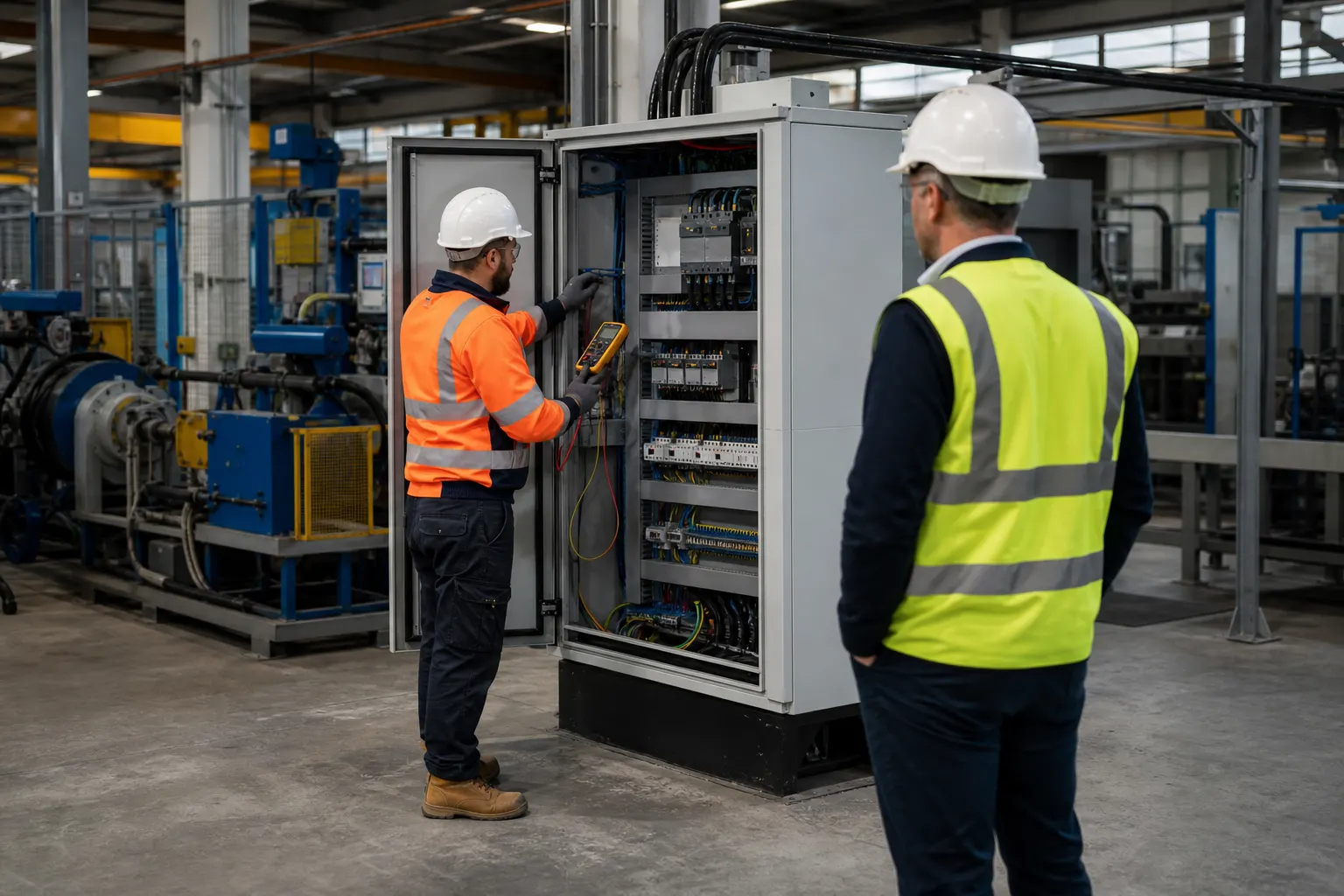
A concise but specific brief is more useful than a large folder of unstructured documents. Begin with the business objective, then add the known site information.
Useful details can include:
- The site and building type including whether the area is occupied, operational or still under construction.
- The reason for the project such as expansion, equipment replacement, maintenance, compliance work, energy generation or fleet charging.
- Known electrical loads with manufacturer information where equipment has already been selected.
- Existing records including relevant drawings, circuit schedules, inspection reports and previous certificates.
- Operational restrictions such as production hours, guest changeover periods, seasonal peaks or processes that cannot lose power.
- Other contractors who will be involved, including builders, mechanical contractors, equipment suppliers and renewable energy specialists.
- The intended programme with any fixed opening date, delivery date, shutdown or funding deadline clearly identified.
- Future plans that could change the required capacity, distribution arrangement or equipment location.
Incomplete information should not prevent an initial conversation. It is better to flag an unknown than to make an assumption that later shapes the wrong solution.
What a site assessment may need to establish
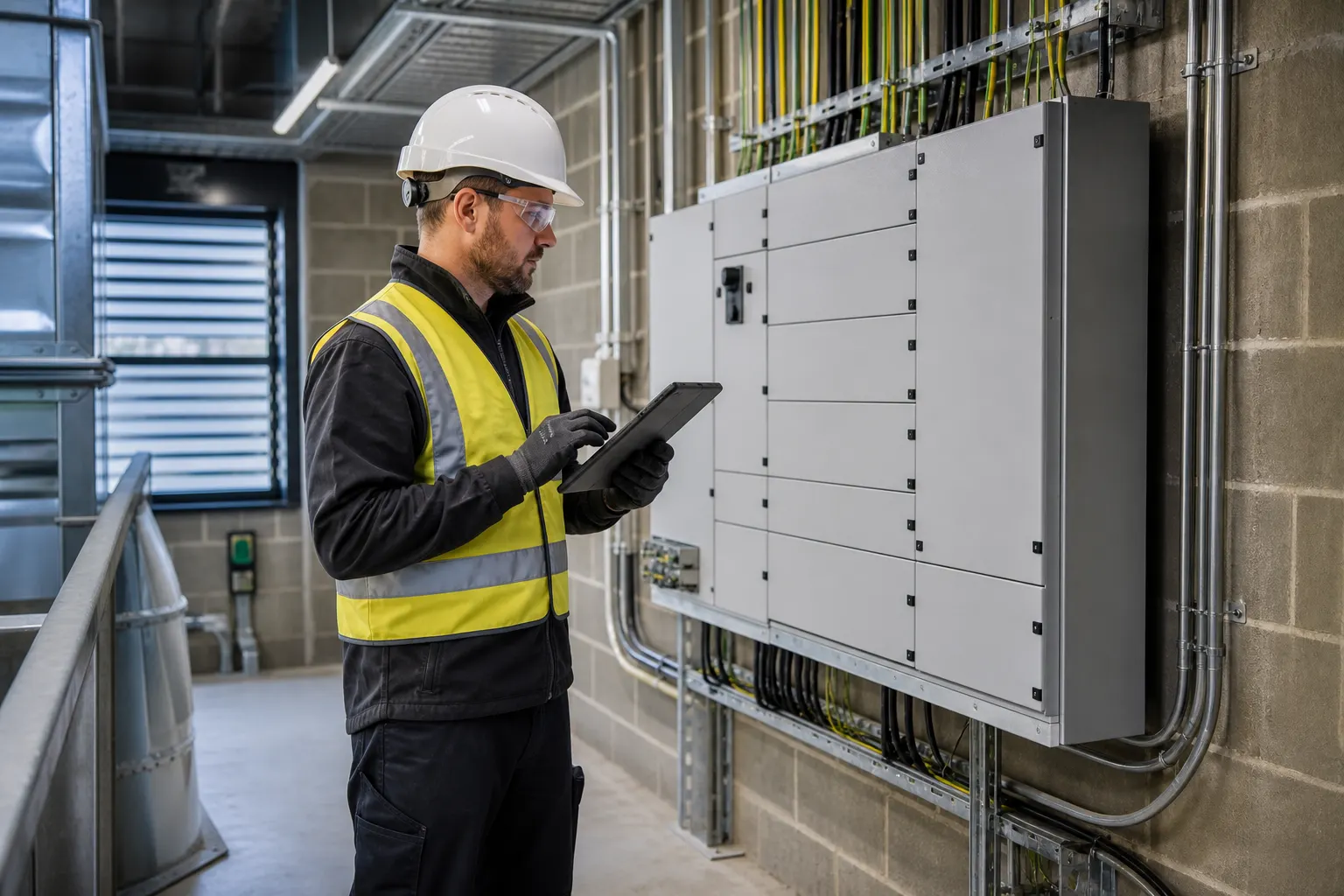
The scope of an electrical site survey should reflect the proposed work. A maintenance issue affecting one distribution board will require a different assessment from a project involving new buildings, generation equipment and an expanded three-phase supply.
Supply and distribution
The existing intake, metering arrangement, switchgear, protective devices, distribution boards and cable infrastructure may all be relevant. Available physical space can matter too. A calculated electrical requirement does not automatically mean there is a practical location for the necessary equipment.
Where records are missing or no longer match the installation, further investigation may be needed. Older sites often evolve through multiple alterations, and labels or drawings should not be assumed to represent every circuit accurately.
Access and operating conditions
Industrial dust, moisture, vehicle movements, livestock, coastal exposure, public access and outdoor working can affect equipment selection and installation planning. The survey should also consider how the electrical system will be accessed safely for future inspection, isolation and maintenance.
A cable route that is convenient during construction may be awkward to inspect once the site is operational. Likewise, equipment positioned without adequate working space can create avoidable problems throughout its service life.
Dependencies outside the electrical work
Groundworks, structural supports, fire stopping, ventilation, communications and utility applications can all sit alongside the electrical scope. Identifying these interfaces early helps the client assign responsibility and establish which information must be provided by each specialist.
Different Cornwall sites create different priorities
There is no single briefing template that captures every commercial and industrial site. The questions should reflect how the premises actually work.
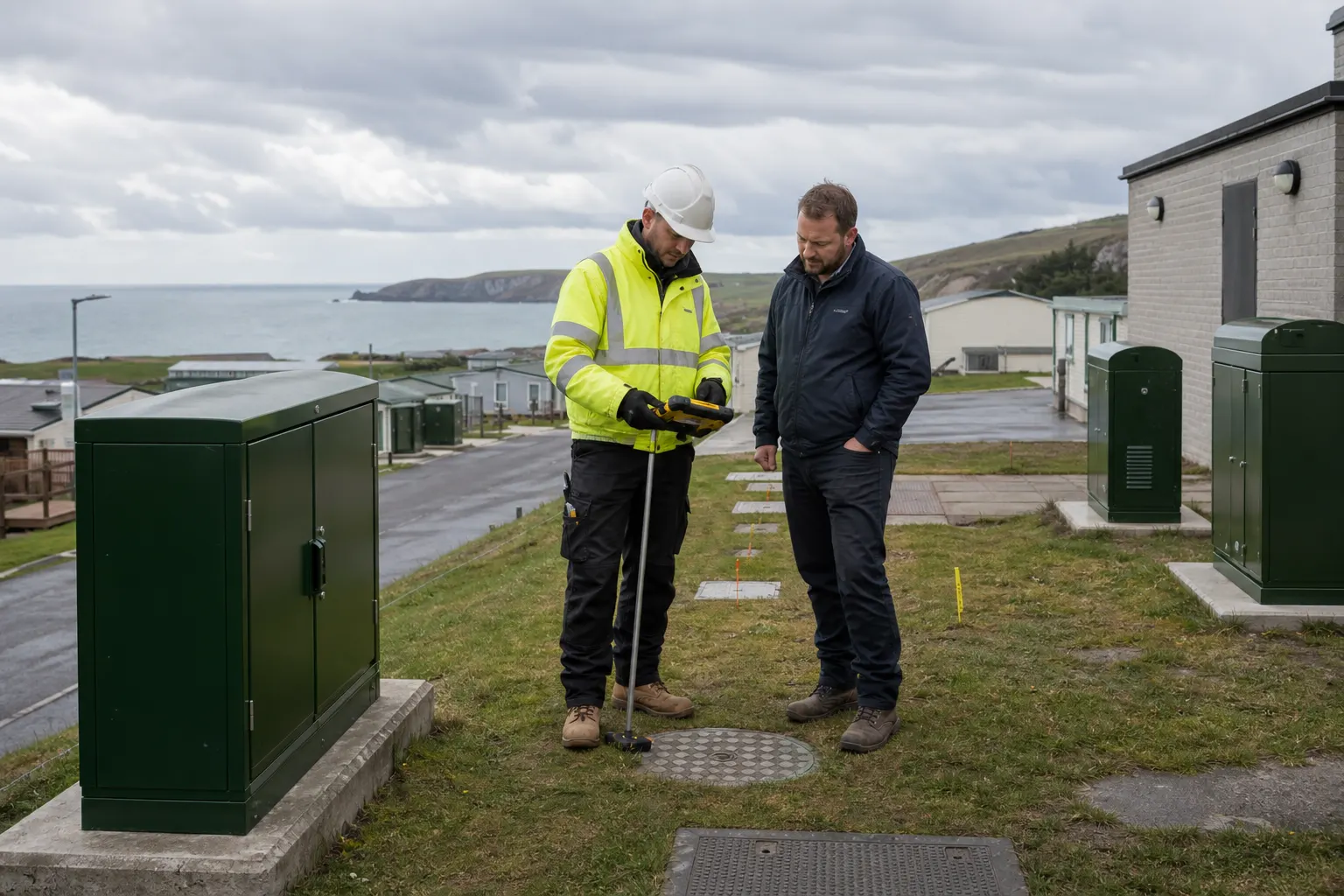
At a holiday park or campsite, seasonal occupancy, pitch distribution, shower facilities, catering loads and future EV charging may need to be considered together. At a golf or leisure site, operating hours, irrigation equipment, kitchens, changing facilities and public access may shape the programme.
Factories and quarries can place greater emphasis on three-phase loads, motor starting, process continuity, harsh conditions and controlled shutdowns. Commercial premises may need work phased around staff, customers or tenants. Larger rural sites can introduce long cable routes, separate buildings, outdoor equipment and limited existing records.
This is why a site-focused brief is more useful than asking for a standard price based solely on floor area or the number of items to be installed.
Project responsibilities should be clear from the outset
Electrical work can form part of a wider construction project, even when it is being carried out in an existing workplace. Commercial clients have duties under the Construction (Design and Management) Regulations 2015, including making suitable management arrangements, allowing sufficient time and resources, appointing appropriately capable parties and providing relevant pre-construction information.
The HSE guidance for commercial clients explains these responsibilities and the additional appointments required where a project involves more than one contractor.
Bringing an electrical contractor into the discussion early does not transfer the client’s duties or automatically define formal project roles. It can, however, help reveal electrical hazards, operational conflicts and missing information while there is still time for the wider project team to address them.
Prepare for decisions rather than just a price
A productive first discussion should help establish the route towards a defined scope. Depending on the project, the next step might involve gathering equipment data, reviewing existing test records, carrying out further investigation, agreeing a shutdown strategy or coordinating with other designers and contractors.
For larger work, it is also worth separating immediate requirements from desirable future phases. Installing every planned technology at once may not be appropriate, but allowing space, capacity or sensible cable routes for later work can avoid unnecessary repetition.
Good preparation does not mean deciding the technical solution before speaking to the contractor. It means arriving with a clear objective, reliable site information and an honest account of the constraints.
Discuss your Cornwall electrical project
Maenporth Electrical supports industrial, commercial, testing, maintenance, EV charging and renewable energy requirements across Cornwall, including Falmouth, Penryn, Newquay, Carnon Downs and surrounding areas.
If you are preparing a larger site project, outline what you need to achieve, where the work will take place and when the site can accommodate investigation or installation. You can contact Maenporth Electrical or call 01326 250297 to start the discussion.