
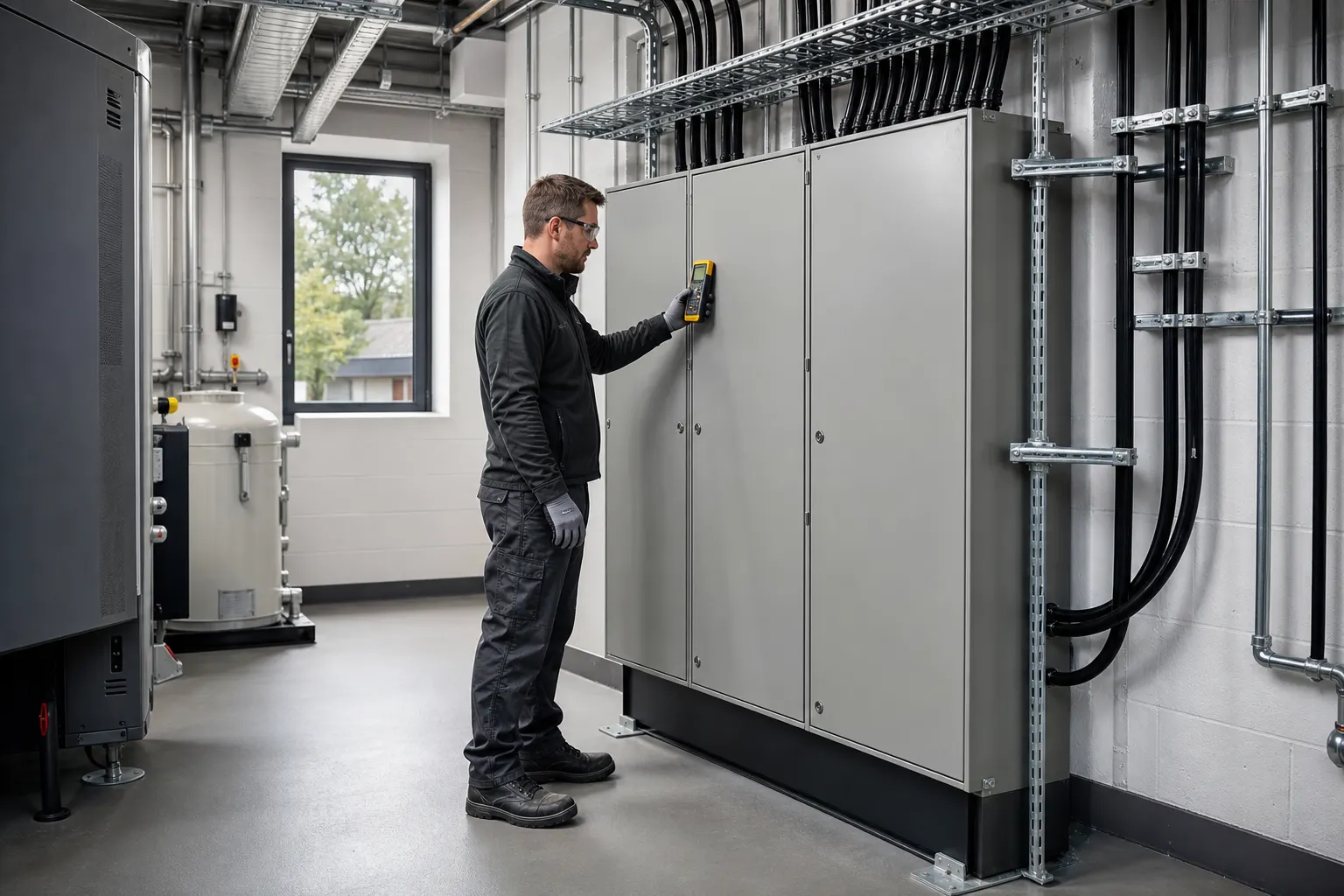
A new commercial kitchen, larger refrigeration system, workshop machine, ventilation plant or bank of EV chargers can change the electrical requirements of a premises significantly. That often raises a straightforward-sounding question: does the site need three-phase power?
The answer cannot be determined from the equipment’s headline power alone. The existing supply, actual peak demand, operating pattern, distribution equipment and plans for future expansion all matter. Establishing those details early can prevent a business from ordering equipment that its installation cannot support or paying for a supply upgrade that was not necessary.
For businesses considering alterations, a survey of the existing installation should form part of the early commercial electrical planning, rather than being left until equipment is ready for delivery.
What three-phase power changes
A typical single-phase low-voltage supply provides 230 V between line and neutral. A three-phase supply normally provides 230 V between each phase and neutral, and 400 V between phases. This allows equipment designed for a 400 V three-phase connection to be supplied and enables electrical demand to be distributed across three phases.
Three-phase supplies are common in commercial and industrial settings, particularly where sites operate motors, pumps, compressors, extraction systems, commercial catering equipment or other substantial loads. However, simply having three phases does not guarantee that unlimited capacity is available.
The rating of the incoming supply, the agreed capacity, the condition and rating of the switchgear, the size of downstream cables and the way loads are shared between phases all remain important. National Grid Electricity Distribution also advises that loads should be balanced as far as possible where more than one phase is provided.
Signs that a three-phase assessment is worthwhile
The clearest reason to investigate is that proposed equipment is specified for a three-phase connection. The manufacturer’s electrical data should identify the required voltage, phase arrangement, current and any particular starting characteristics.
An assessment may also be sensible when a business is:
- adding several substantial electrical loads at the same time;
- expanding production, catering, refrigeration or leisure facilities;
- replacing gas or oil-fired equipment with electrical alternatives;
- planning higher-powered EV charging or renewable energy equipment;
- experiencing unexplained tripping, overheating or operational restrictions;
- dividing, extending or changing the use of commercial premises;
- trying to establish whether an existing three-phase supply has spare capacity.
Tripping or overheating should not automatically be treated as proof that a larger supply is needed. These symptoms may result from a circuit fault, poor connection, damaged equipment, unsuitable protection, phase imbalance or an installation that requires maintenance. The cause should be identified rather than masked by increasing capacity.
Start with the load rather than the supply size
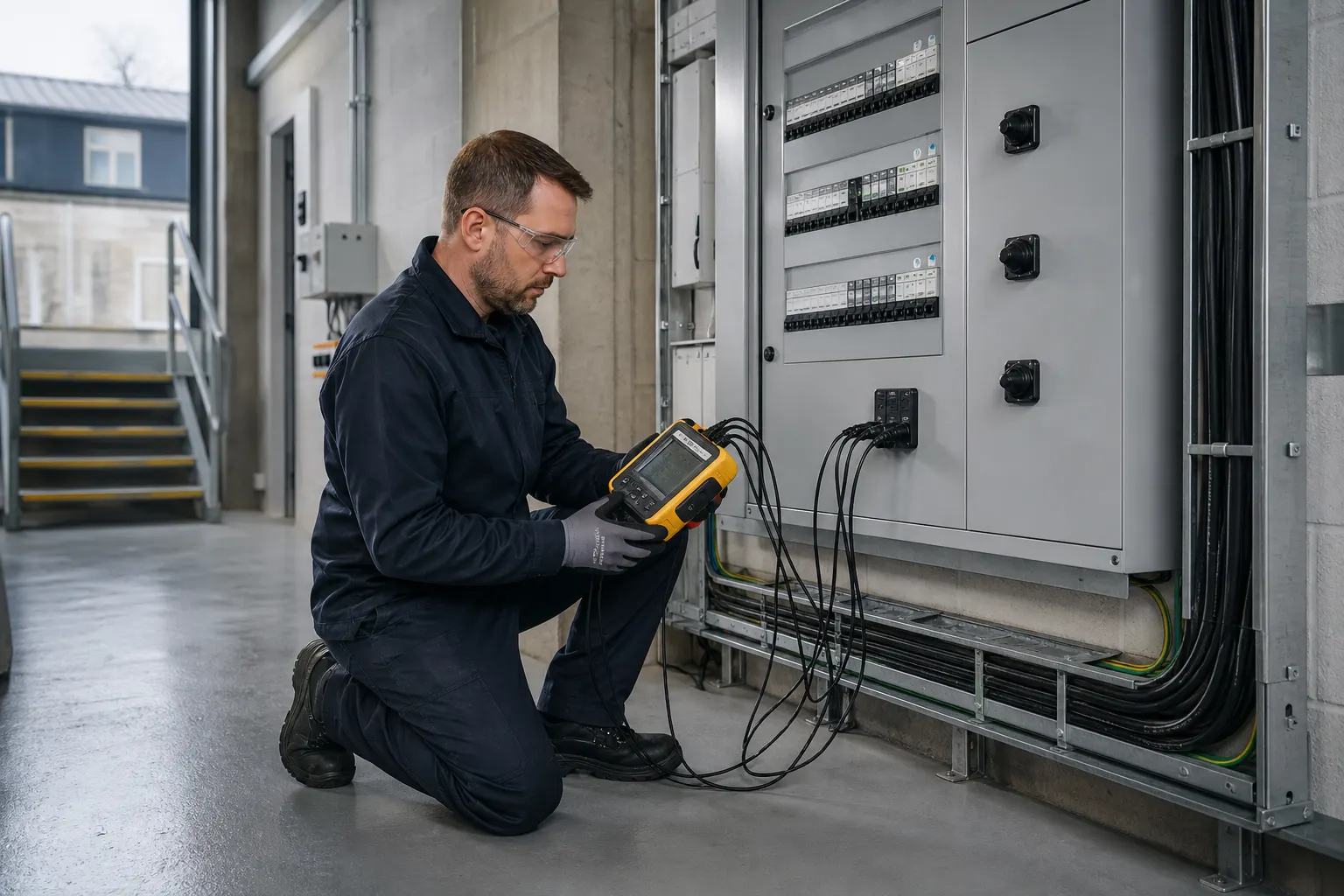
A useful assessment begins with an equipment schedule. This records what will be connected, how much current each item requires and when it is expected to operate.
Adding every nameplate rating together can produce an unrealistic figure if equipment does not all operate at full output simultaneously. Equally, applying generous assumptions about diversity can underestimate demand where several loads regularly coincide. A restaurant preparing for service, for example, may run cooking equipment, extraction, hot water and refrigeration at the same time. A leisure site may experience peaks linked to occupancy, heating and vehicle charging.
Information worth gathering
- Equipment manufacturer and model information.
- Single-phase or three-phase connection requirements.
- Rated current, power and starting current where relevant.
- Normal operating hours and likely periods of simultaneous use.
- Existing and proposed heating, cooling, charging and generation equipment.
- Any planned expansion over the next few years.
- Loads that must remain operational during electrical work.
Where bills or meter data do not provide enough detail, temporary load monitoring may help establish how demand changes through the working day or across a busier operating period. This can be more useful than relying on a single reading taken during a quiet site visit.
The existing installation must also be suitable
Even when an incoming supply has adequate capacity, the installation after the meter may not be ready for a new three-phase load. The assessment should consider the main switch, distribution boards, protective devices, earthing arrangements, cable routes, isolation points and available space for additional equipment.
The proposed environment matters too. Equipment installed in damp, dusty, corrosive or exposed locations needs to be selected and installed for those conditions. This is especially relevant to Cornwall’s larger rural, coastal and leisure sites, where electrical equipment may be located outdoors or in operational plant areas rather than a clean internal switch room.
Commercial electrical systems also need to be maintained so that they do not give rise to danger. The HSE guidance on the Electricity at Work Regulations explains that inspection and, where necessary, testing are essential elements of preventive maintenance. A capacity project is therefore a useful point at which to identify defects or ageing equipment that should be addressed before new demand is added.
When the distribution network operator becomes involved
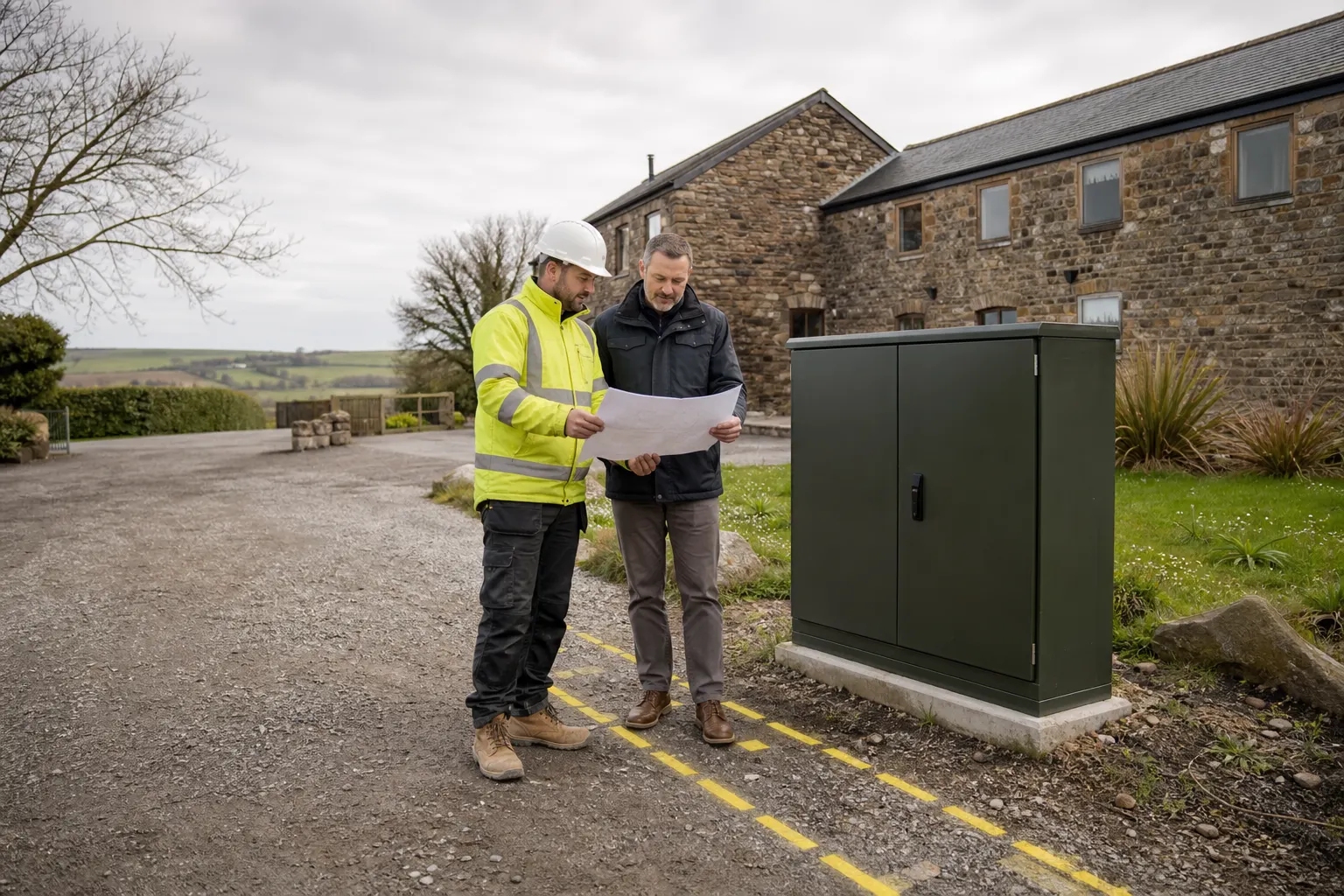
Work within the customer’s installation is separate from changes to the network connection. If the existing service does not provide the required number of phases or sufficient agreed capacity, an application to the distribution network operator may be necessary.
The electrical requirements should be defined accurately before that application is made. An unnecessarily high request may increase the scope or cost, while an undersized request can restrict the completed installation. Network availability, cable routes, excavation and reinforcement requirements can all affect what is involved, particularly at rural or widely spread sites.
The DNO quotation is also not the complete project scope. Metering arrangements, internal switchgear, containment, cabling, distribution and final equipment connections may require separate planning and costs.
Could load management avoid a larger connection?
Some premises can accommodate new equipment by controlling when certain loads operate. EV chargers, electric heating, hot water or other flexible systems may be managed so that they reduce demand when the building is approaching a set limit.
This is not a universal substitute for additional capacity. Equipment that must operate continuously, has a fixed production role or specifically requires a three-phase supply may leave little flexibility. Any control strategy must also reflect how the business works in practice, including busy periods and seasonal peaks.
The decision should compare operational restrictions with the cost and long-term value of an upgrade. A technically possible arrangement is not necessarily useful if staff regularly have to delay essential equipment.
Plan the installation around business operations
A three-phase electrical upgrade may require shutdowns, access to occupied areas or replacement of main distribution equipment. Planning should identify which circuits can be isolated, how long critical operations can be unavailable and whether the work can be divided into stages.
Before committing to a programme, consider:
- Who controls the premises and whether landlord approval is required.
- Which services are operationally or safety critical.
- Whether temporary supplies are appropriate and practicable.
- How other contractors and equipment suppliers will coordinate their work.
- What testing, commissioning and handover information will be required.
- Whether the final design leaves sensible capacity for known future plans.
Future-proofing does not mean specifying the largest possible supply. It means allowing for realistic growth, making distribution equipment accessible and avoiding design choices that make the next alteration unnecessarily disruptive.

Get the electrical requirements clear before ordering equipment
The best time to assess three-phase power is before machinery, catering equipment or building services are purchased. That gives the business an opportunity to compare equipment options, confirm connection requirements and include electrical work in the wider programme.
Maenporth Electrical Ltd supports commercial electrical work across Cornwall, including the assessment and planning of installations for new loads and site changes. To discuss a commercial premises in Falmouth, Penryn, Newquay, Carnon Downs or the surrounding areas, contact Maenporth Electrical or call 01326 250297.