
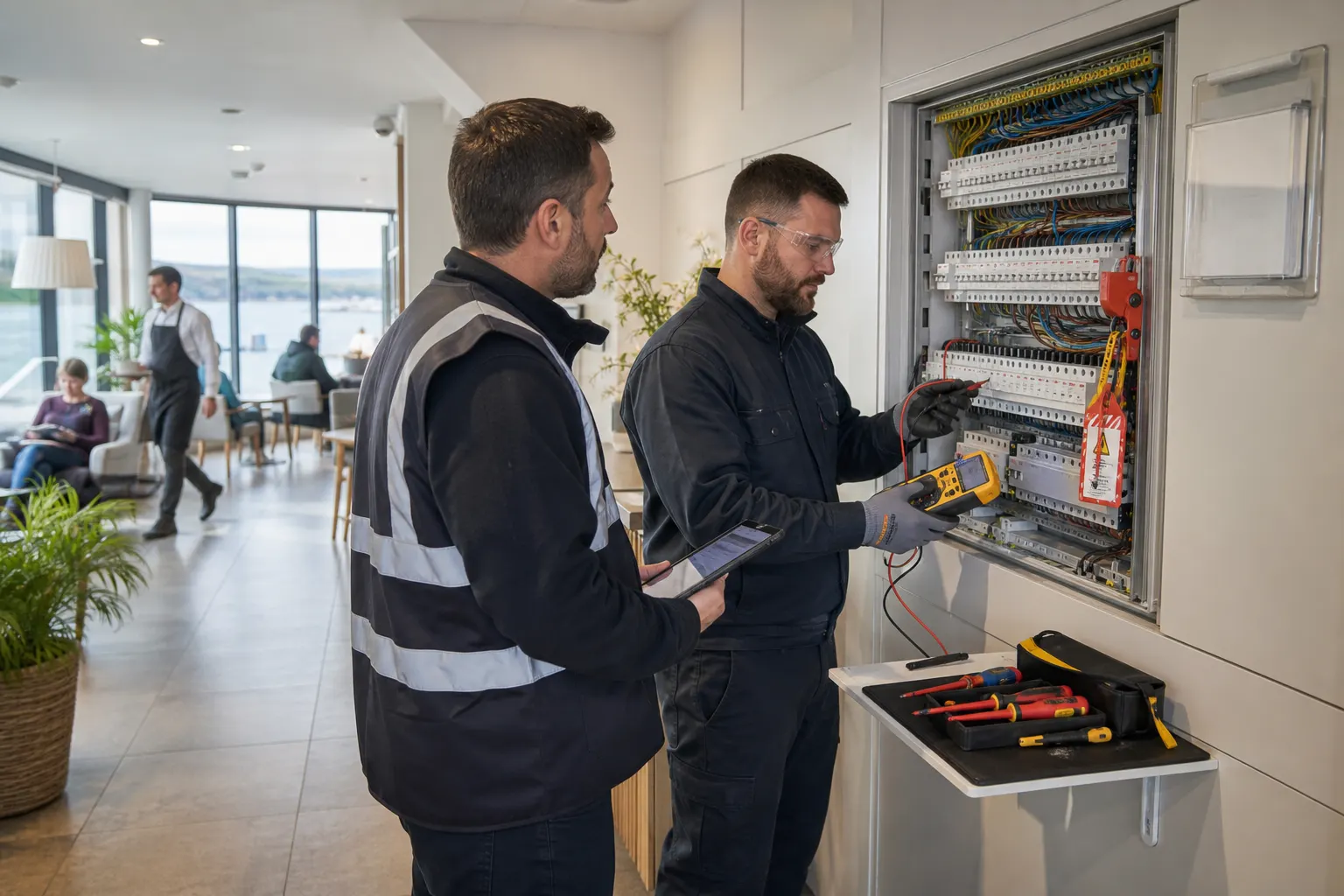
Can a business remain open while its fixed electrical installation is inspected and tested? Often, at least part of the site can continue operating, but there is no responsible one-size-fits-all answer.
A commercial EICR in Falmouth may involve access to working areas, distribution boards and equipment, as well as temporary isolation of individual circuits or larger sections of the installation. The practical aim is not to promise zero interruption. It is to understand the site, identify critical loads and build a safe testing programme around genuine operational constraints.
For shops, offices, workshops, factories, leisure facilities and larger rural sites, good preparation can reduce avoidable disruption while preserving the value of the final report.
Can a Falmouth business stay open during an EICR?
In many cases, testing can be divided into workable stages. One distribution board, area or group of circuits may be dealt with while unaffected parts of the premises continue operating.
That does not mean every circuit can remain energised. Inspection and testing can require safe access and planned isolation. The achievable programme depends on the installation layout, the loads being supplied, available isolation points, site access and the condition found during the visit.
An EICR without closing a business completely may therefore be possible, but it must be established through site-specific planning rather than assumed when the appointment is made.
Why fixed-wire testing can interrupt operations
An EICR assesses the condition of the fixed electrical installation and whether it is suitable for continued use. It is not simply a visual check of a main switchboard, and it is not a general fault-finding exercise.
Inspection may cover distribution equipment, protective devices, wiring systems, accessories, earthing and bonding within the agreed scope. Testing can require circuits to be disconnected or isolated. That can affect lighting, sockets, machinery, communications equipment and building services.
Electrical work should be undertaken dead wherever possible. Any live testing that is necessary must be properly controlled; it is not a substitute for planning safe isolations. This is why commercial electrical testing in Falmouth should begin with an operational discussion, not just a preferred date.
Start with the site map rather than the certificate
Useful information supplied before quoting or scheduling can reveal where disruption is likely. Depending on the premises, this may include:
- previous EICRs, installation certificates and remedial records;
- current distribution-board and circuit schedules;
- site plans showing separate buildings, plant rooms or tenanted areas;
- normal trading, production and cleaning hours;
- known shutdown procedures and authorised site contacts;
- areas with restricted access, keys, permits or specialist hazards;
- details of solar PV, battery storage, generators or other sources of supply.
Records do not remove the need to verify the installation, but accurate information can make the initial scope more realistic. Businesses considering EICR testing should also flag recent alterations, changes of use and equipment that cannot be interrupted without preparation.
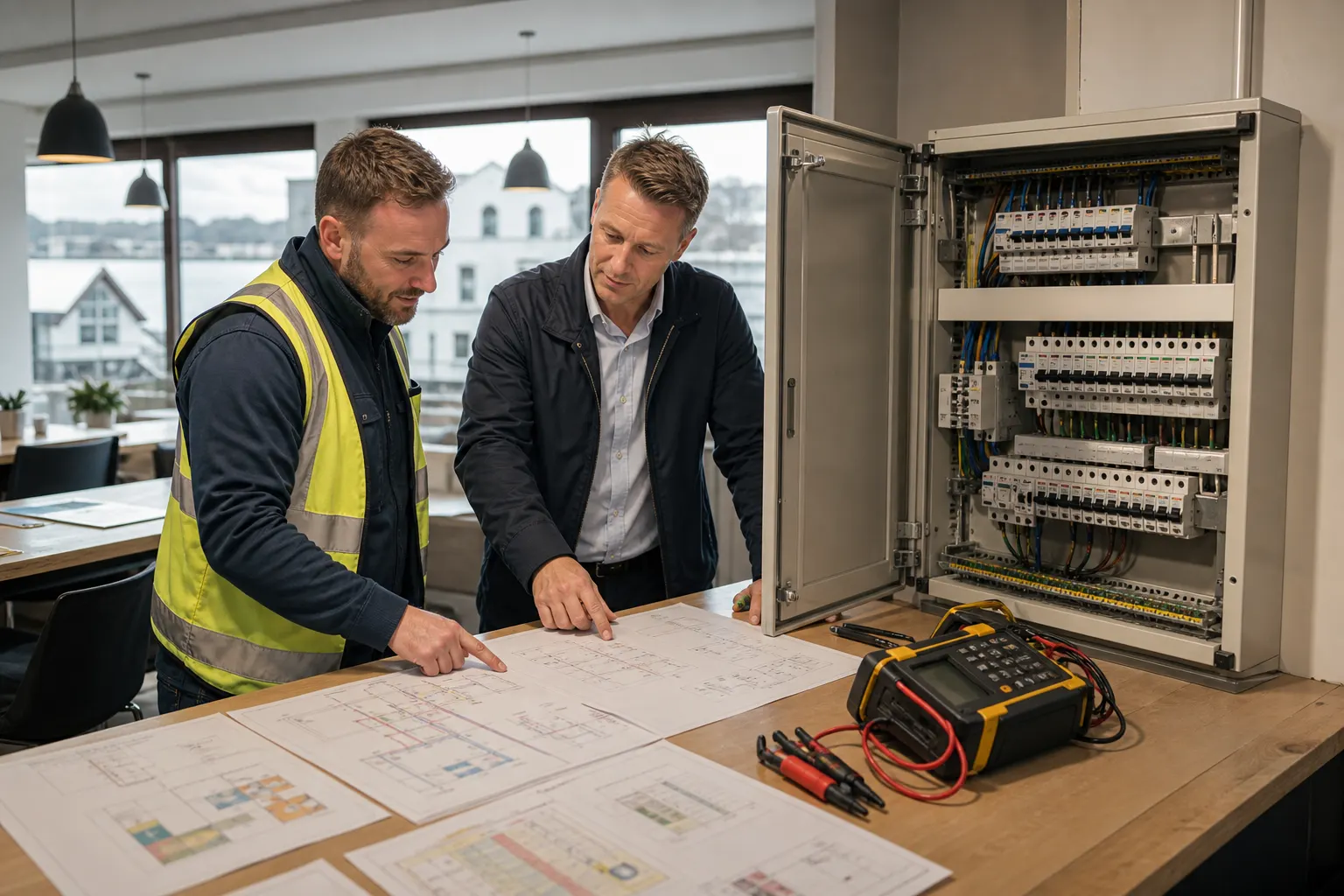
Identify circuits that affect trading, safety and operations
A circuit described only as “sockets” or “plant” may support far more than its label suggests. Before testing begins, the site should identify loads that could create operational, safety or financial consequences if they lose power.
Examples include refrigeration, servers and network equipment, pumps, production machinery, access control, security systems, till systems and specialist environmental controls. Holiday parks and leisure sites may also have booking systems, communal facilities, water services and occupied accommodation to consider.
Fire alarms and emergency lighting must not be casually interrupted. They also have their own inspection, testing and maintenance requirements; an EICR does not replace those regimes. The same distinction applies to portable appliances, machinery, EV charging equipment, solar PV and battery systems. Their electrical supplies and interfaces should be declared during scoping, but separate work may be required.
Plan testing in workable stages
Electrical testing on an occupied site is usually easier to manage when it is sequenced around how the premises actually operate. A programme might separate public and back-of-house areas, production zones, buildings, distribution boards or groups of circuits.
The plan should establish when access is available, which equipment must be shut down correctly and who has authority to approve an isolation. Staff may also need time to save work, stop machinery, protect temperature-sensitive stock or notify tenants and visitors.
Some isolations may be brief, while others can require a wider operational window. If labels or circuit schedules prove inaccurate, the programme may need to change rather than risk disconnecting an unidentified load.
What must be agreed before testing starts?
The scope should define the extent of the installation being inspected and any known limitations. It should also address inaccessible areas, equipment that cannot be opened safely, circuits unavailable for isolation and parts of the premises outside the instruction.
A limitation is not a way to hide inconvenience. It records what could not be inspected or tested and helps readers understand what the report can reasonably conclude. Excessive limitations can reduce the usefulness of the EICR and may leave important questions unanswered.
Responsibilities should also be clear. The parties need to know who will provide access, attend isolations, shut down specialist equipment and confirm that operational systems have been reinstated appropriately. For larger sites, this planning can sit alongside an industrial electrical maintenance programme rather than being treated as an isolated administrative exercise.
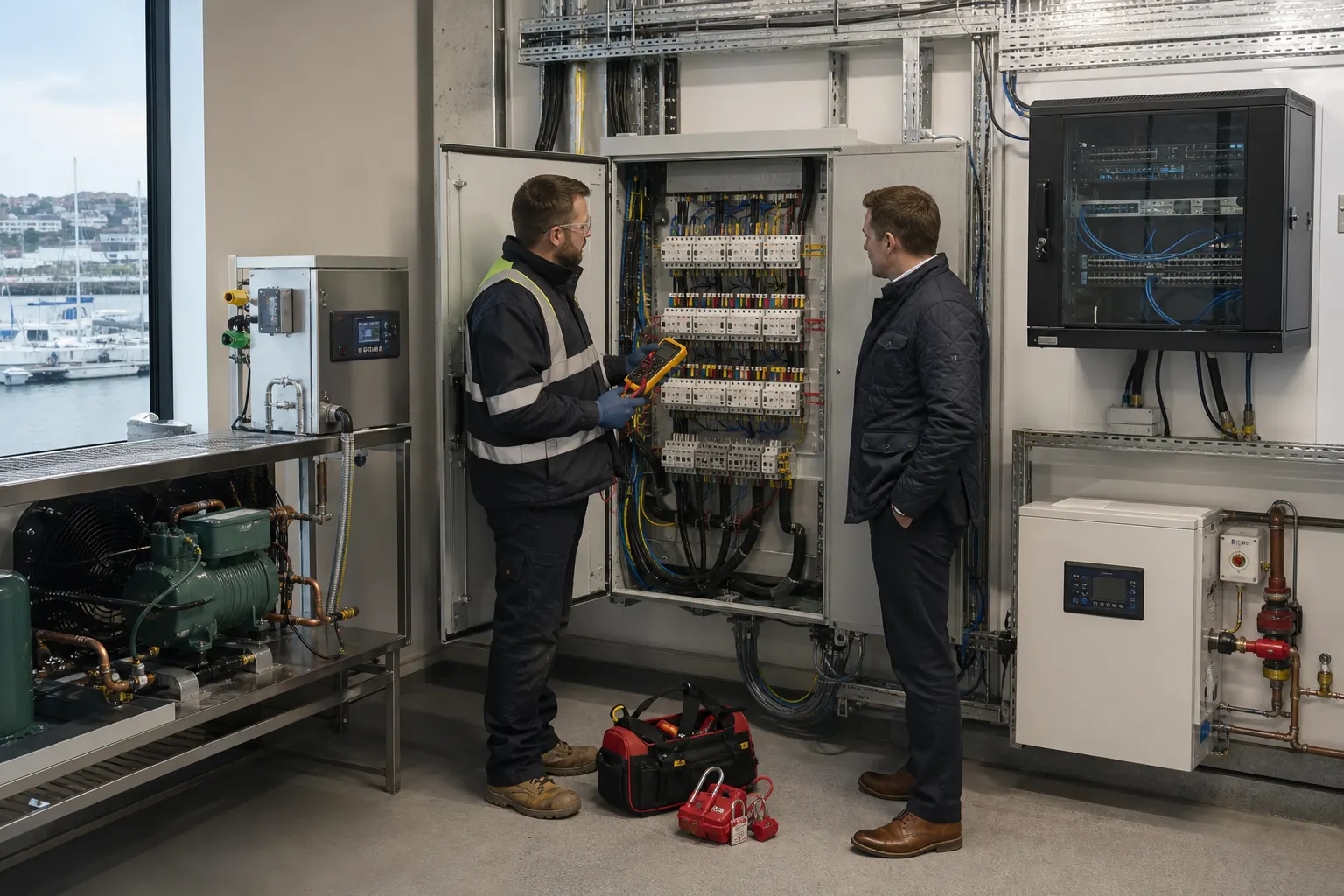
What the EICR can show after the visit
The completed report records the installation condition within the agreed extent and limitations at the time of inspection. It should include observations, test results and a recommendation for when the next periodic inspection should be considered.
There is no single statutory EICR interval applying to every commercial workplace. The recommended interval depends on factors including the installation, its use, maintenance history and external influences. The IET inspection and testing guidance explains this risk-based approach and the observation classifications used on reports.
A C1 observation indicates danger requiring immediate action. C2 identifies a potentially dangerous condition requiring urgent action. C3 recommends improvement, while FI calls for further investigation without delay. These codes communicate urgency; they are not quotations for remedial work.
When a separate investigation or remedial visit makes sense
An EICR may expose a condition that cannot be diagnosed fully within periodic inspection and testing. Further investigation can require additional access, controlled dismantling, tracing or a shutdown that was not included in the original scope.
Separating that work from the inspection can allow it to be planned properly, particularly where plant, tenants or critical services are involved. Remedial work should likewise be defined from the actual observations rather than assumed before the installation has been assessed.
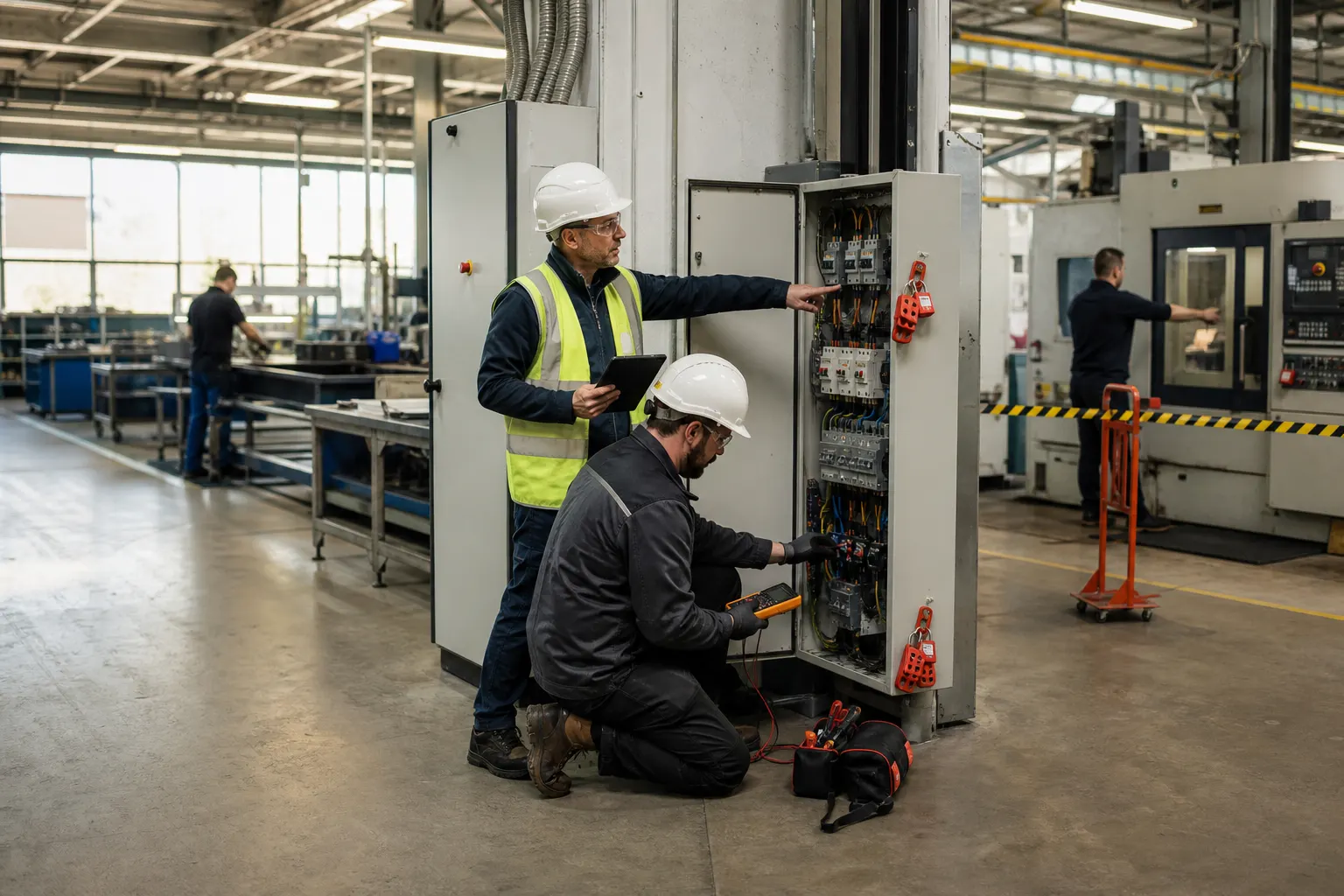
A practical pre-testing checklist
Before arranging fixed-wire testing in Falmouth, confirm:
- which buildings, boards and installations are included;
- where previous reports, certificates and circuit schedules are held;
- which circuits support critical operational or safety systems;
- who can approve shutdowns and provide access;
- when each area can be entered without creating avoidable risk;
- whether machinery needs a controlled shutdown or specialist attendance;
- whether solar, batteries, generators or other supplies are present;
- which areas or circuits may be unavailable and how that will be recorded;
- how staff, tenants or visitors will be notified of planned interruptions;
- who will check operational equipment after supplies are restored.
Discussing a commercial EICR with Maenporth Electrical
If you are planning fixed-wire testing for commercial, leisure or industrial premises in Falmouth, Penryn or elsewhere in Cornwall, early information about the site can help shape a more useful discussion about access, scope and isolation requirements.
Contact Maenporth Electrical Ltd on 01326 250297 to discuss your installation, operating constraints and the next practical step.