

When electrical work is completed at commercial premises, the physical installation is only part of the handover. The certificates, test results and site information retained afterwards can be just as important when the installation is maintained, altered, inspected or handed to a new occupier.
For anyone searching for guidance on commercial electrical certificates in Falmouth, the main point is that there is no single document for every type of work. The appropriate certificate depends on what was installed or changed. On more complex sites, useful handover information can also extend beyond the formal certificate.
Understanding those differences helps business owners, landlords, facilities teams and incoming tenants avoid gaps in their commercial electrical records.
The practical question is what should you receive after commercial electrical work?
A certificate should identify the work it covers and record the relevant inspection and testing. It gives future contractors and site managers a clearer basis for understanding what changed and how that part of the installation was assessed.
The paperwork should match the actual scope. A new circuit, a small alteration to an existing circuit and an inspection of an older installation are different activities. They should not be treated as though the same document proves the same thing in every case.
The IET publishes model electrical forms for the current edition of BS 7671, including Electrical Installation Certificates, Minor Electrical Installation Works Certificates and Electrical Installation Condition Reports.
Start with the work scope rather than a generic certificate request
Before work begins, define whether the project involves a new installation, new circuits, alterations to existing circuits, a distribution-board replacement, remedial work or inspection of the existing system. That scope determines which records are relevant.
This is particularly important during phased refurbishments and commercial electrical fit-outs. Several contractors or trades may be working in the same building, while different areas are completed at different times. Unless responsibilities and boundaries are clear, it can become difficult to establish which certificate relates to which board, circuit, unit or phase of work.
For larger premises, it is sensible to agree how completed stages will be recorded and whether circuit schedules, drawings or other handover information need updating as the project progresses.
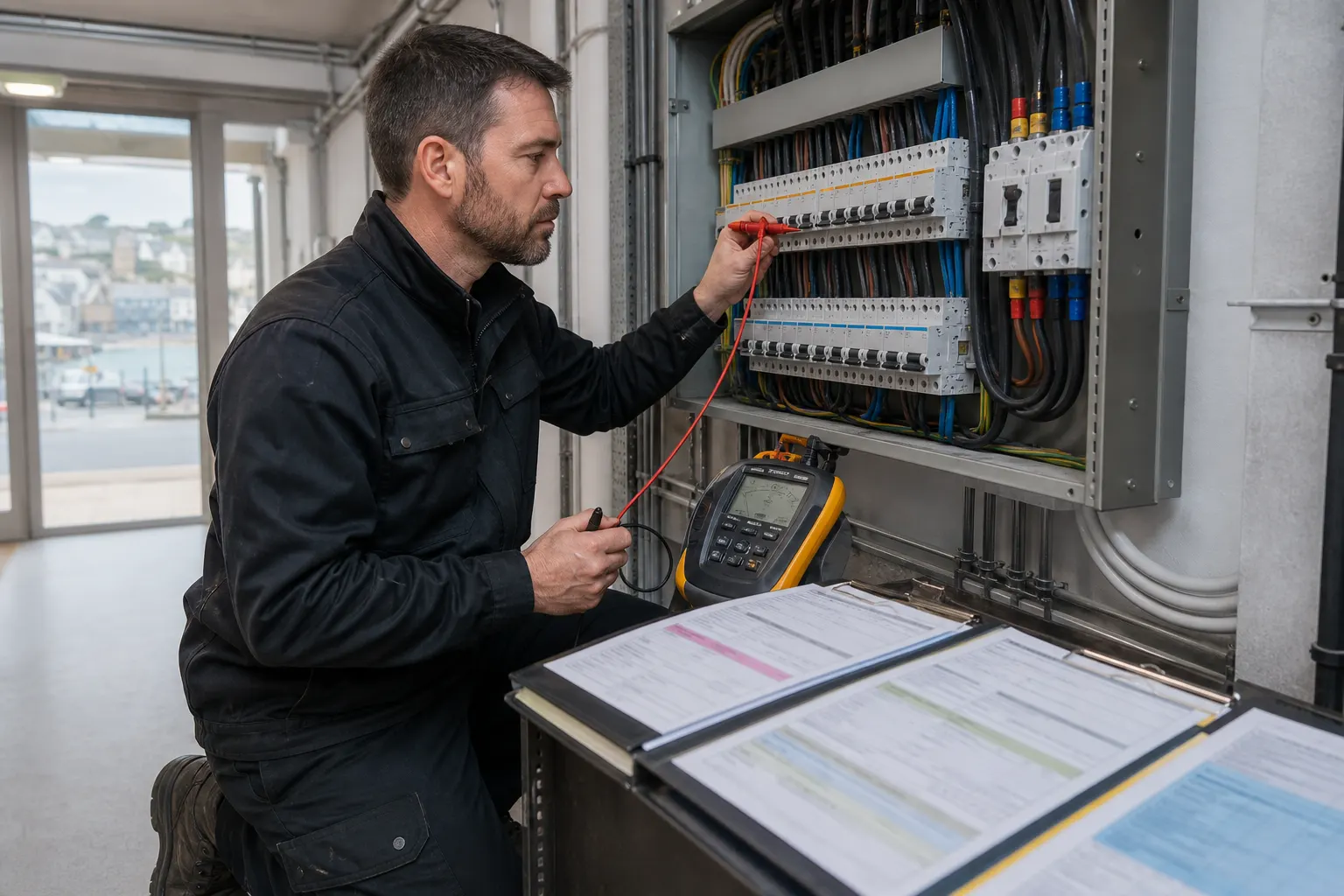
When an Electrical Installation Certificate is normally relevant
An Electrical Installation Certificate, often shortened to EIC, is intended for work such as a new installation, the introduction of new circuits or a distribution-board replacement. It can also cover multiple additions, alterations or remedial works where one EIC is used rather than several minor-works certificates.
The certificate records the extent of the installation covered, together with design, construction, inspection and testing information. Its scope matters: an EIC for a particular alteration should not automatically be read as confirmation of every part of a larger existing installation.
Keep the certificate with its schedules of inspections and test results. Separating the main certificate from its supporting schedules makes the record less useful to anyone reviewing the work later.
What a Minor Electrical Installation Works Certificate can cover
A Minor Electrical Installation Works Certificate is intended for an addition or alteration that does not include a new circuit. It may therefore be appropriate for a limited change to an existing circuit, provided the work falls within that scope and is inspected and tested as applicable.
It is not the appropriate form for a distribution-board replacement or for work introducing a new circuit. The word minor should not be treated as permission to document a larger project on an unsuitable form.
Site managers should also check that the location and extent of the work are described clearly. A vague record becomes difficult to match to the installation after layouts, tenants or equipment change.
Why an EICR is different from completion certification
An Electrical Installation Condition Report assesses the condition of an existing electrical installation and whether it is suitable for continued use. It is an in-service inspection report, not the completion certificate for newly installed or altered work.
This distinction is central to the question of an EICR versus an Electrical Installation Certificate. An EICR can identify observations relating to an existing installation, but it should not be presented as a substitute for the EIC or minor-works certificate appropriate to new work.
If an inspection leads to repairs or alterations, retain the EICR and the subsequent certification for the remedial work. Maenporth’s EICR testing service explains the role of condition reporting in more detail.

The other records that make future work safer and easier
Formal certificates are important, but they may not answer every practical question on a commercial site. Depending on the project and the complexity of the premises, the agreed handover information may also include:
- current circuit schedules and clear distribution-board identification;
- inspection schedules and electrical test results supplied with the certificate;
- agreed as-built drawings or marked-up plans showing relevant changes;
- labels identifying circuits, equipment, supplies and isolation points;
- information about shutdown procedures or operational constraints;
- manufacturer information for installed equipment where relevant;
- records linking completed remedial items to an earlier inspection report;
- asset information useful for planned maintenance and later replacement.
Not every job requires every item on that list. A small alteration and a multi-board refurbishment have different handover needs. The aim is to agree information proportionate to the work and the site, rather than assuming there is a universal commercial electrical handover pack.
HSE guidance explains that electrical systems must be maintained as necessary to prevent danger. Although records are not themselves a universal legal requirement, maintenance records and test results can help a dutyholder monitor maintenance and demonstrate how the system has been managed over its working life.
What a Falmouth business should store together
After a fit-out, alteration or programme of remedial work, keep the final documents in a controlled location that remains accessible when staff or tenants change. A secure digital copy can support the site copy, provided document versions and completed revisions remain clear.
A useful site file might bring together certificates, test schedules, the latest EICR, updated circuit information, relevant drawings and maintenance records. Each document should be identifiable by date, location and the work or installation it covers.
For holiday parks, leisure facilities, commercial premises and larger rural sites, it can be helpful to organise records by building, distribution board or operational area. This is usually more practical than leaving unrelated certificates in one undifferentiated folder.
Where a construction project is subject to the CDM Regulations, relevant electrical information may also need to feed into the project health and safety file through the responsible client, principal designer and principal contractor arrangements. The electrical contractor does not automatically produce the complete health and safety file.

Questions to agree before work starts
A short handover discussion at the planning stage can prevent uncertainty at completion. Useful questions include:
- What installation, circuit or area is included in the electrical scope?
- Which certificate is expected for each completed element?
- Who is responsible for design, construction, inspection and testing?
- Will circuit schedules, labels or drawings need to be updated?
- Are there phased handovers or areas that must remain operational?
- How will remedial work be linked to earlier inspection observations?
- Who will receive and retain the final commercial electrical documentation?
These points are especially valuable where a landlord, tenant, facilities manager and main contractor all have an interest in the finished installation. Clear responsibility reduces the risk of records being sent to the wrong party or omitted between project stages.
When records need updating after later site changes
Electrical records should reflect later alterations rather than remaining frozen at the date of the original fit-out. New equipment, subdivided units, revised layouts and changes to distribution can make old schedules or drawings misleading.
After subsequent work, add the relevant new certificate and update affected site information where the scope requires it. Do not discard earlier records without considering whether they provide useful installation history. A clear sequence of dated documents can make future fault-finding, maintenance and inspection more efficient.
If your Falmouth premises has recently been altered, or you are planning work and want the certification requirements agreed in advance, contact Maenporth Electrical Ltd on 01326 250297. We serve Falmouth, Penryn and commercial sites across Cornwall.