
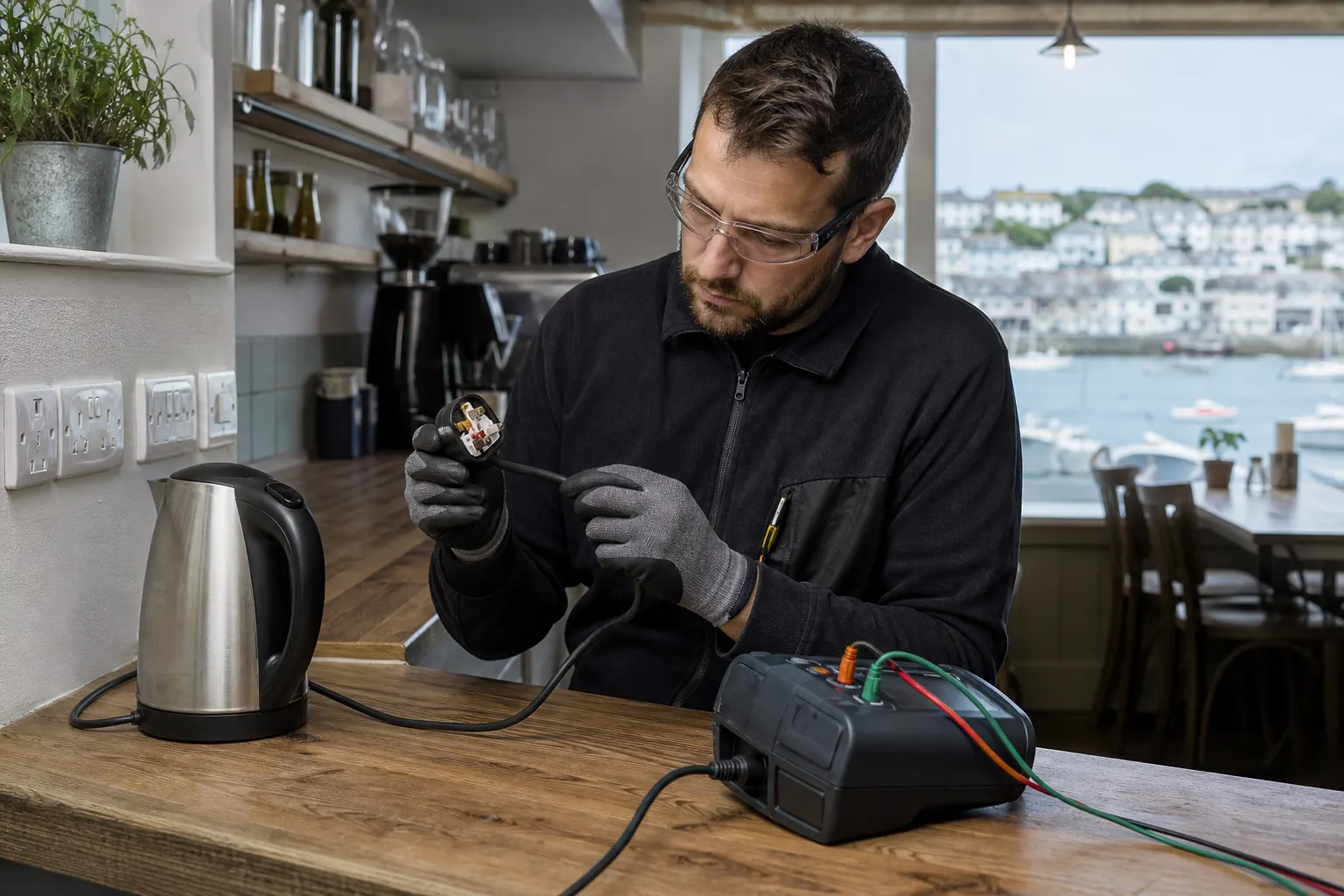
Does every workplace appliance need a PAT test once a year? For Falmouth businesses, the useful answer is not a universal date on a sticker. It is a maintenance programme matched to the equipment, the way it is used and the conditions on the site.
The Health and Safety Executive makes clear that portable appliance testing is not, by itself, a legal requirement. Nor does the law set a blanket annual testing interval. The underlying duty is to maintain electrical equipment so that it does not present danger.
That distinction matters. A small office, a busy workshop and a holiday park do not expose equipment to the same risks. Treating them as though they do can lead to unnecessary testing in low-risk areas while more vulnerable equipment receives too little attention.
Is annual PAT testing compulsory for a Falmouth business?
No. There is no general legal rule requiring every portable appliance in a workplace to undergo a combined inspection and test every year.
The law requires electrical equipment to be maintained as necessary to prevent danger. The appropriate maintenance regime is therefore determined by risk rather than a fixed calendar cycle. The HSE’s answers to common portable appliance testing questions explain that, in many low-risk environments, visual checks and inspections may be suitable for some equipment without a routine portable appliance test.
That does not mean testing is never needed. It means the dutyholder should make a reasoned decision about which equipment requires inspection or testing and how often. Insurance policies, leases, customer contracts and sector-specific site rules can also contain their own conditions, so these documents should be checked rather than relying on a generic assumption.
What PAT testing does and does not cover
“PAT testing” is commonly used to describe the combined inspection and electrical testing of portable or transportable workplace equipment. Depending on the premises, this can include equipment that is regularly moved as well as items that remain in one position but connect through a plug and flexible lead.
It is not a substitute for inspecting the fixed electrical installation. Distribution boards, fixed wiring, protective devices and fixed circuits fall within a different scope. An Electrical Installation Condition Report examines the condition of that installation, whereas a portable-equipment programme addresses relevant appliances, leads and similar equipment.
A satisfactory result in one area does not demonstrate that the other has been maintained. Businesses reviewing their wider arrangements can consider electrical testing and compliance across the site rather than treating a set of appliance labels as a complete electrical safety system.
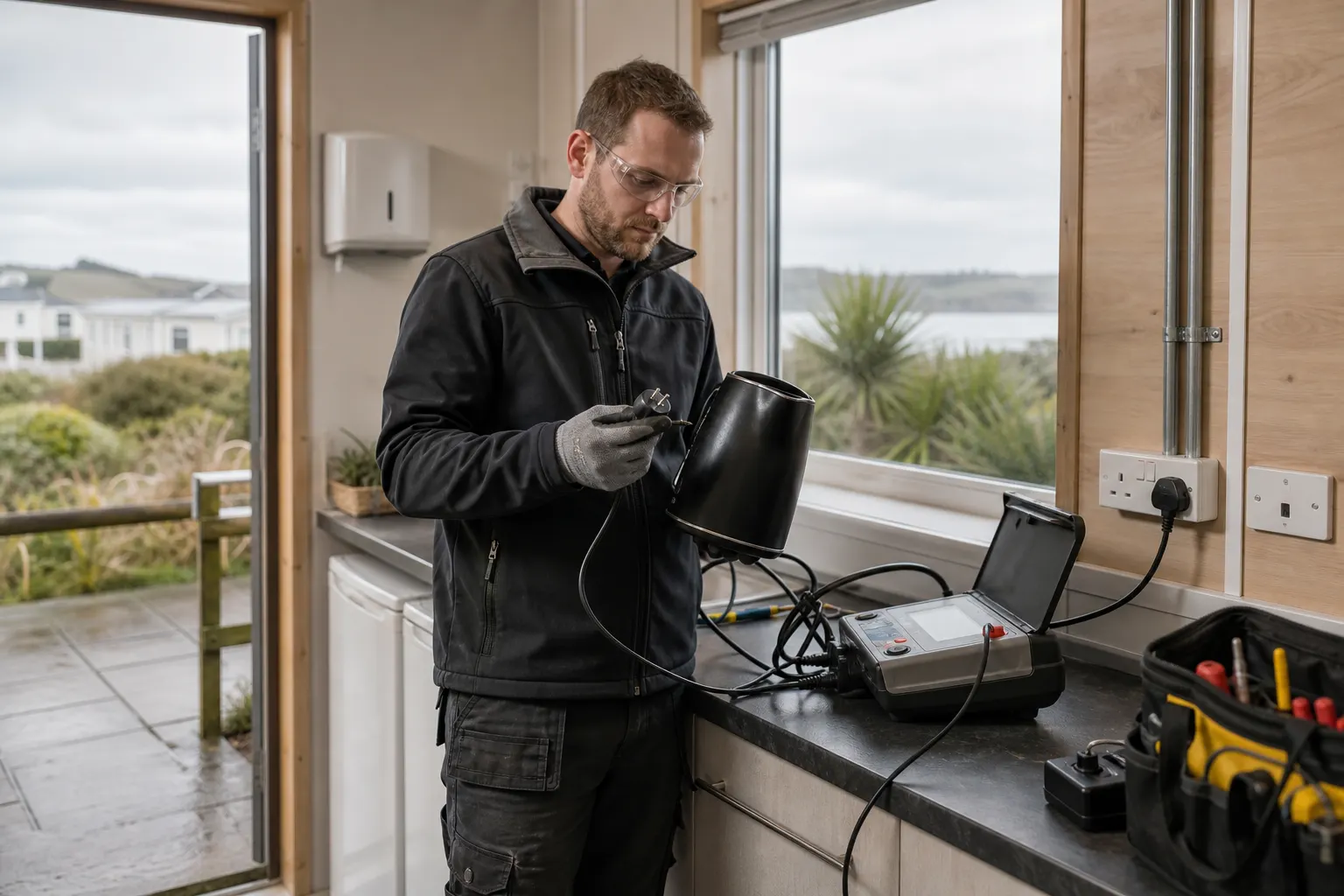
Build the frequency around the site, not the sticker date
A sensible PAT testing frequency for businesses starts with how likely equipment is to become damaged and what the consequences could be. Relevant factors include:
- how frequently the equipment is moved, unplugged or transported;
- whether it is likely to receive rough handling or mechanical damage;
- exposure to moisture, dust, outdoor conditions or other harsh environments;
- the type of equipment and how it is used;
- who uses it and whether faults are likely to be noticed and reported;
- the results of previous inspections, tests and defect reports;
- manufacturer information and any applicable contract or policy conditions.
HSE guidance contains suggested initial frequencies, but these are guides rather than mandatory intervals. Findings should inform what happens next. Repeated damage may support more frequent checks, while a history of sound equipment in a controlled, low-risk setting may point towards a different approach.
Why one programme will not suit every Falmouth site
Offices and commercial premises
Office equipment may spend most of its life in a dry, controlled environment and move infrequently. However, extension leads, equipment in shared areas and items moved during desk changes may have a different risk profile. The fact that an appliance is in an office does not remove the need to consider its actual condition and use.
Workshops and industrial sites
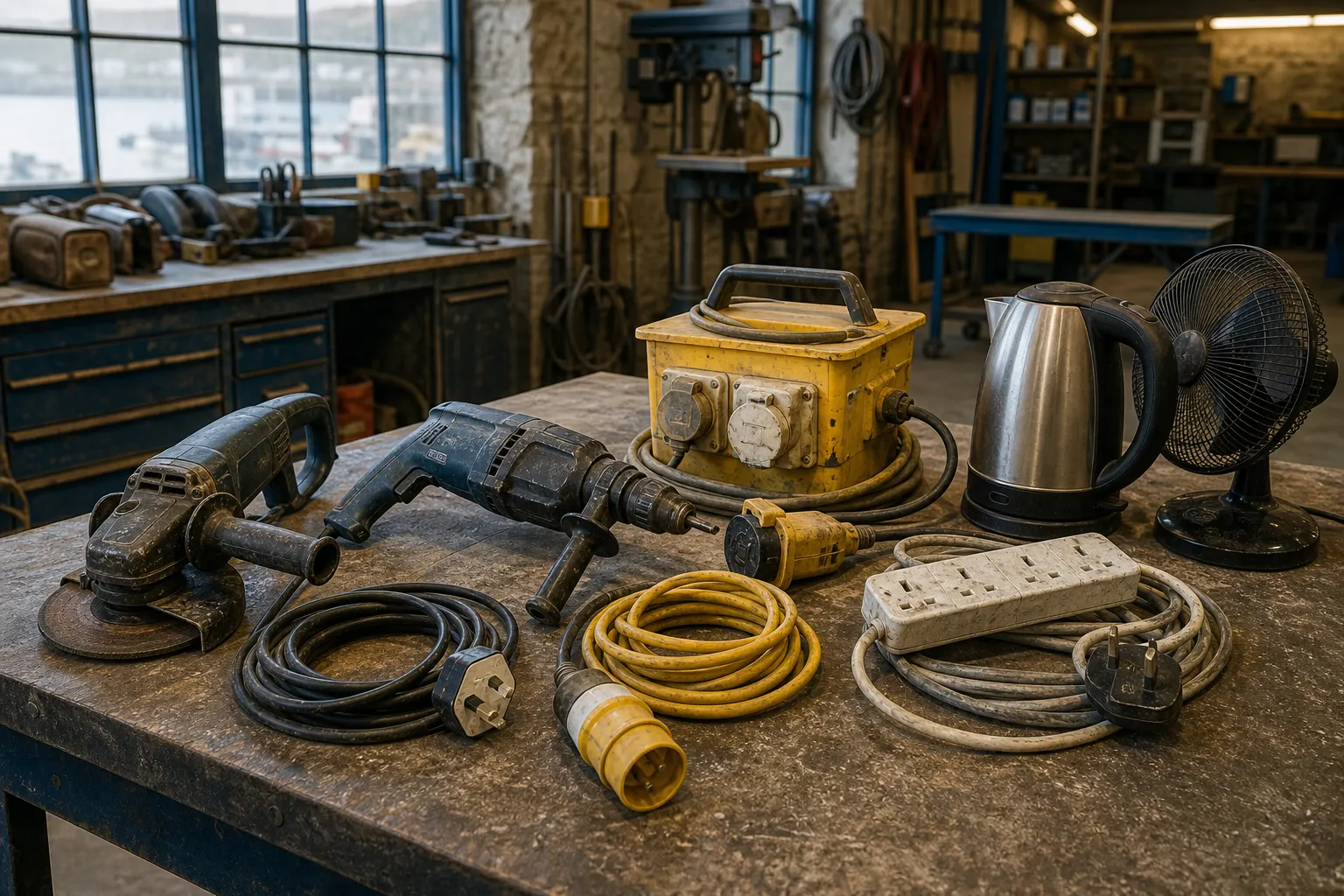
Industrial portable appliance testing may need to account for frequent movement, rough handling, dust and demanding operating conditions. Hand-held or temporary equipment can face different risks from equipment kept in a protected location. A programme should recognise these distinctions rather than assign one interval to everything on the asset list.
Holiday parks, campsites and leisure sites
Holiday park electrical equipment checks can involve seasonal use, multiple buildings, changing users, outdoor areas and equipment brought back into service after quieter periods. Site teams may also need to coordinate access without disrupting guests or operationally important facilities.
These examples do not dictate a particular frequency. They show why the environment, use and history of each equipment group should shape the decision.
The three parts of a proportionate maintenance plan
Workplace electrical equipment maintenance may combine three levels of attention. Not every item will necessarily need each level at the same interval.
User checks
People using equipment can be encouraged to notice obvious signs of damage or abnormal operation before use. This is not a technical inspection or repair task. If an item appears damaged or suspect, the user should follow the site procedure, stop using it where appropriate and report it for competent assessment.
Formal visual inspections
A structured visual inspection can identify defects that an everyday user may miss. The scope and frequency should reflect the equipment and its surroundings. Visual inspection is an important part of the regime because some faults can be found without electrical testing.
Combined inspection and testing
Electrical testing may be appropriate where visual inspection alone cannot establish safety or where the equipment, use and environment justify it. This work should be planned and undertaken by someone competent for the task, with unsuitable equipment dealt with through the site’s defect process.
What a site manager should record and review
Maintenance and test records are not, according to HSE guidance, an explicit legal requirement in themselves. They can nevertheless make a programme easier to manage and help dutyholders monitor whether it remains effective.
A practical record may capture:
- a clear asset or equipment-group identifier;
- the location and normal use of the equipment;
- inspection or test findings and the date completed;
- defects reported and the action taken;
- who was responsible for arranging the next step;
- changes in use or conditions that could alter the risk;
- the basis for the planned review or next inspection.
A register should support active management, not replace it. Labels and certificates are only snapshots. Defects still need action, missing equipment needs to be accounted for, and the programme should change when site experience indicates that the original approach is no longer suitable.
Signs the programme may need reviewing sooner
The planned review date should not prevent earlier action. A site manager may need to reconsider the regime when there are damaged plugs or leads, repeated failures, unexplained faults or changes in how equipment is used.
Other triggers can include refurbishment, temporary equipment, relocation to a wetter or dustier area, increased movement between buildings, a significant change in users or a site incident. Newly introduced equipment should also be brought into the maintenance system rather than left until the next blanket testing visit.
Planning checks with minimal disruption
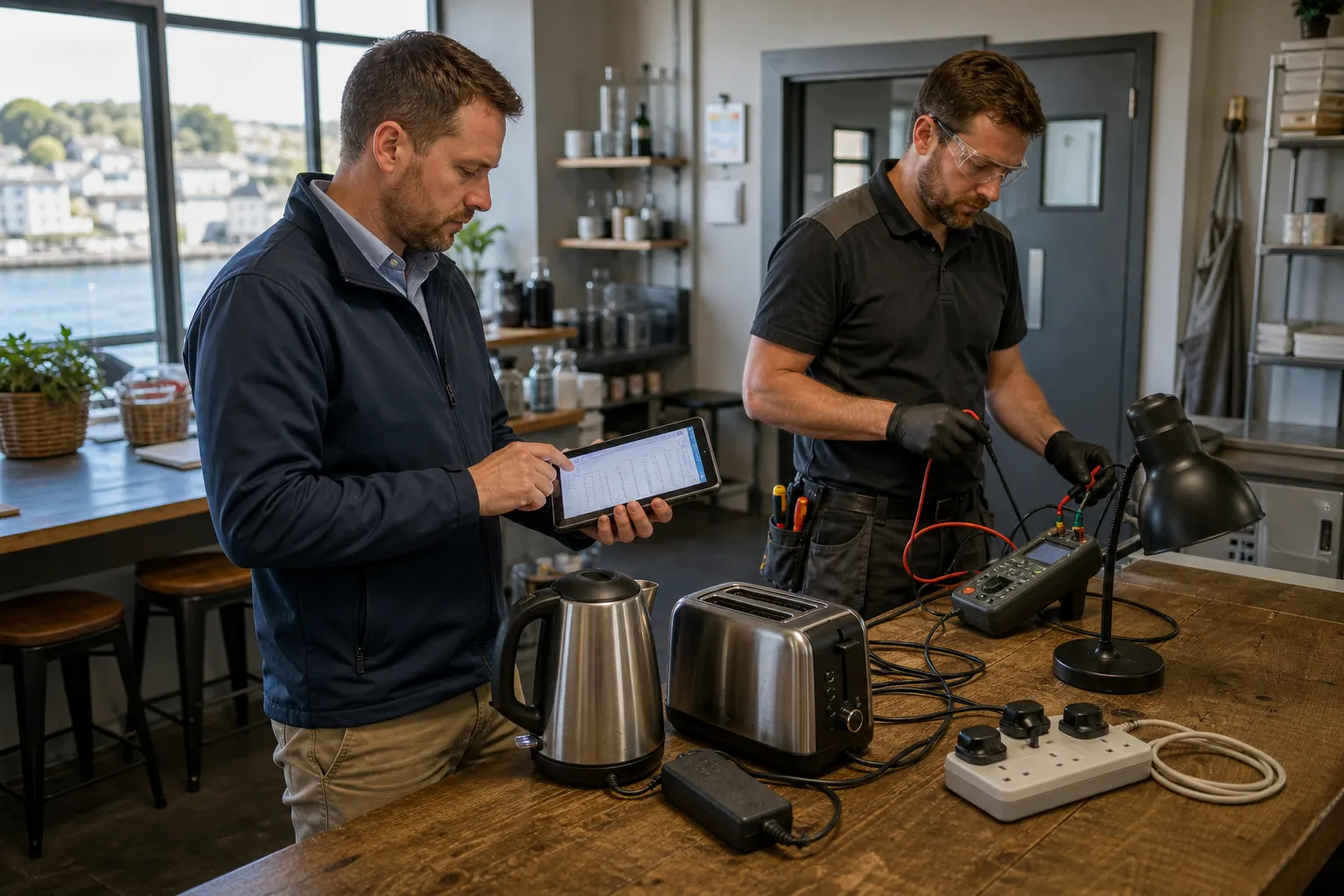
Good preparation can make commercial PAT testing in Cornwall more manageable on an occupied site. Before work begins, identify the equipment in scope, where it is located and when it can be made available. Flag operationally critical items and areas with restricted access so that isolation or downtime can be coordinated.
It is also worth comparing the equipment programme with fixed-installation inspections, remedial work and other maintenance activity. A joined-up planned electrical maintenance approach can reduce duplicated access arrangements and help decision-makers see recurring issues across the premises.
When to ask for competent electrical advice
Ask for advice if the business cannot confidently define the equipment in scope, assess differing site conditions or decide when electrical testing is appropriate. Competent input can also be useful where defects recur, the premises have changed or insurance and contractual requirements need to be reflected in the programme.
Maenporth Electrical Ltd serves Falmouth, Penryn and the wider Cornwall area. To discuss a site-specific approach to electrical inspection, testing and maintenance, call 01326 250297.