
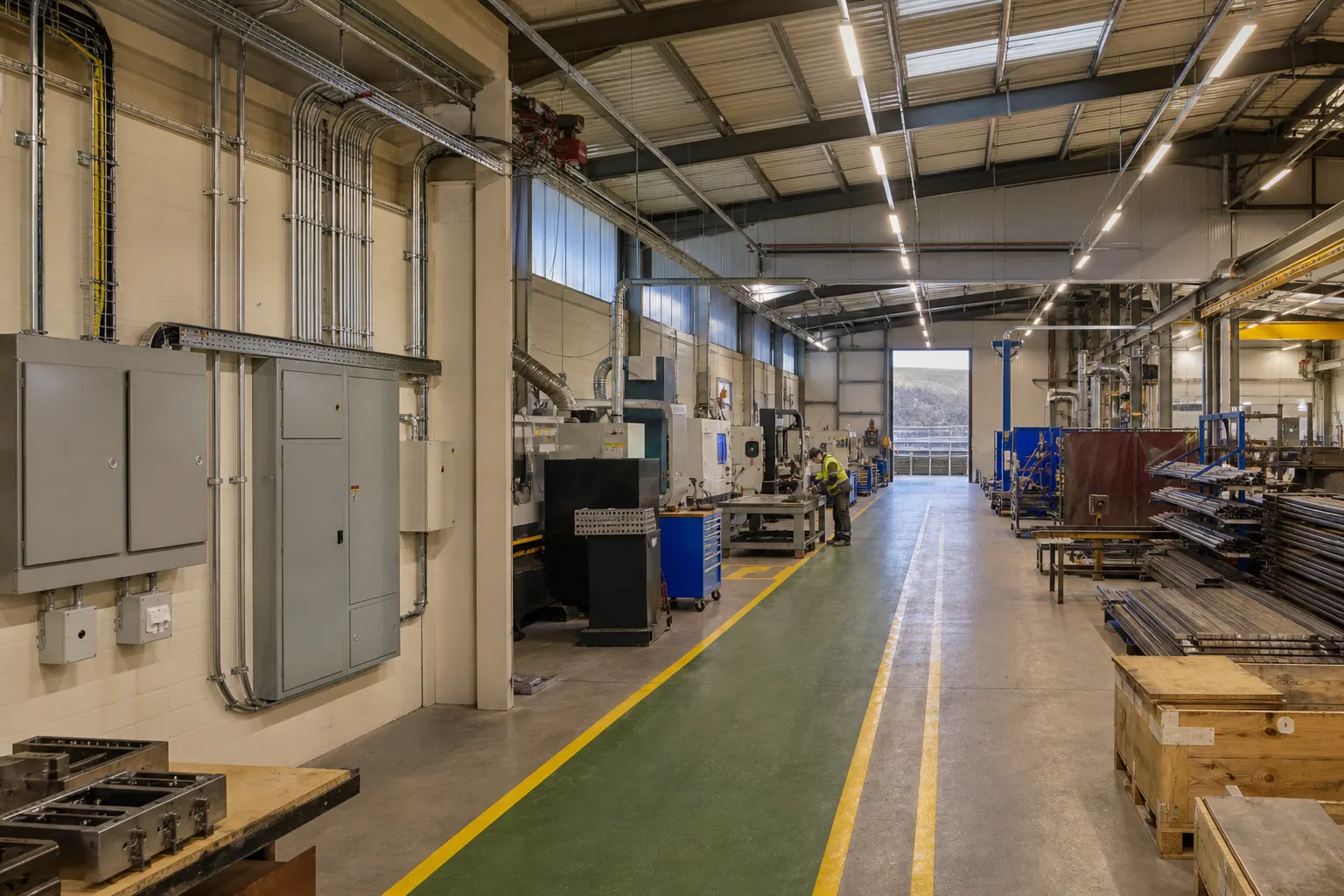
Replacing inefficient fittings is only one part of a successful commercial lighting project. The other question is whether each light operates at the right level, in the right place and at the right time.
That can be difficult on Cornwall sites with changing shifts, seasonal occupancy, several buildings or a mixture of workshops, offices, stores and outdoor routes. A single timer or detector may look straightforward on paper but frustrate users if it does not reflect how the site actually works.
Well-planned commercial lighting controls in Cornwall should reduce unnecessary operation without leaving people in the dark or making routine tasks harder. The starting point is therefore not the sensor catalogue. It is a practical review of the building, its users and its operating patterns.
Lighting controls should follow the work being done
Different areas can require very different lighting conditions. A detailed inspection bench, reception, plant room, warehouse aisle and pedestrian route do not present the same visual demands.
The HSE guidance on workplace lighting highlights factors including the task, colour, contrast, glare and changes between light levels. This is an important distinction because an energy-saving control should never undermine the visibility required for safe work.
Before deciding how lights will switch or dim, the project should consider:
- the tasks performed in each area;
- normal, peak and out-of-hours occupancy;
- the location of workstations, machinery and vehicle routes;
- available daylight throughout the year;
- surfaces or screens that could create glare;
- activities where sudden darkness would create a hazard;
- cleaning, security and maintenance access; and
- planned changes to the building or production layout.
This site-led approach is particularly valuable when planning commercial electrical work for larger sites, where lighting may need to coordinate across several distribution areas or phases of a refurbishment.
Divide the site into useful control zones
One oversized lighting zone often creates waste. If a single switch operates an entire warehouse, office floor or leisure building, every fitting may remain on for the benefit of one occupied corner.
Smaller control zones allow the installation to respond more closely to actual use. A factory might separate production lines, storage aisles, loading areas and inspection stations. A holiday park could divide reception, facilities buildings, stores and staff areas. Golf and leisure premises may need different settings for public opening, cleaning, events and closing routines.
Zoning should also follow daylight. Fittings beside windows or rooflights may be able to dim or switch separately from those deeper inside the building. In a long room, treating every fitting identically can leave the window side overlit while the back still needs artificial light.
However, more zones are not automatically better. Excessive complexity can make the system difficult to understand, alter and maintain. The aim is a logical arrangement that staff can operate without needing specialist knowledge for everyday adjustments.
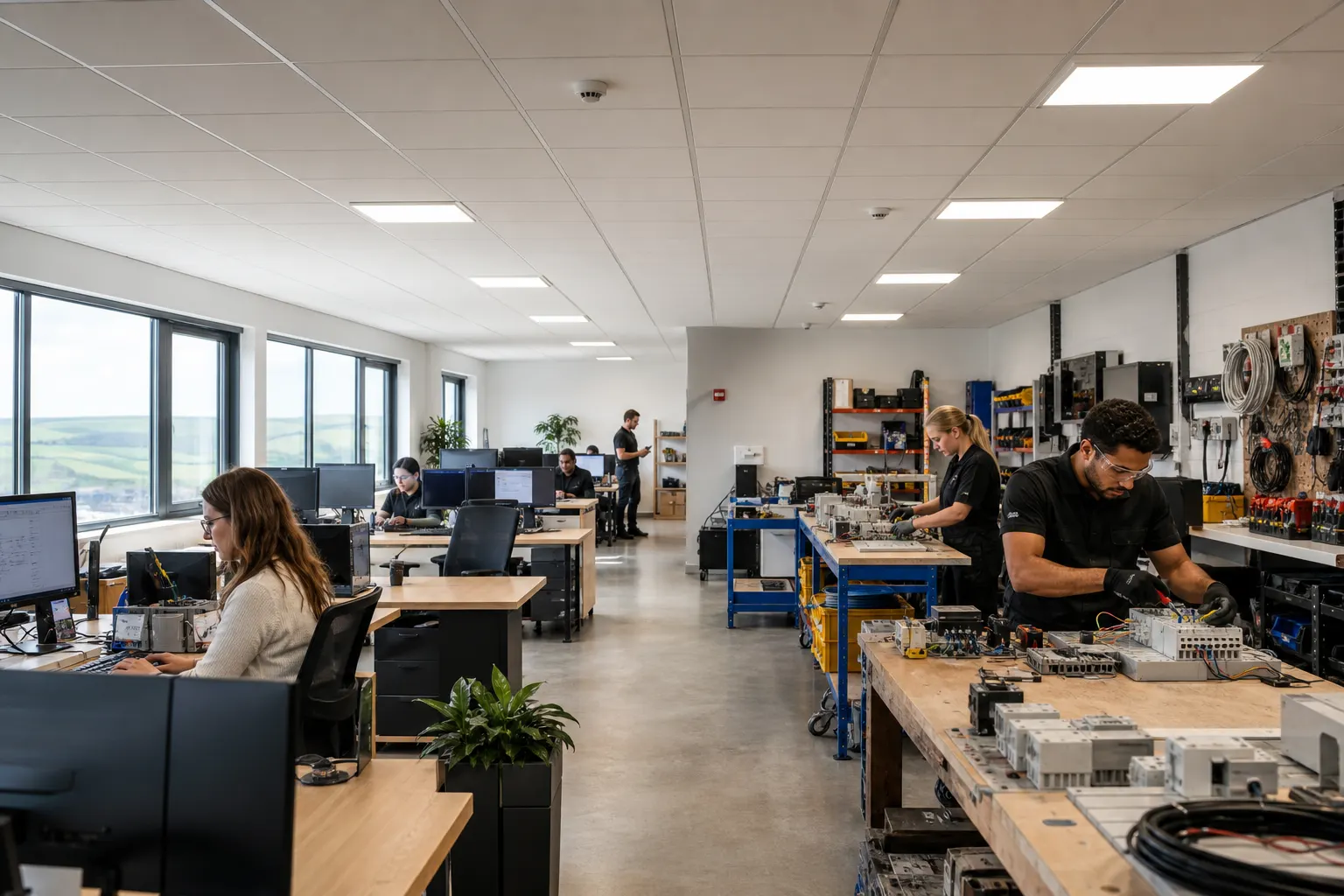
Choose controls that match occupancy patterns
Presence and absence detection
Presence detectors can switch lighting on when movement is detected and turn it off, or reduce the output, after an unoccupied period. Absence detection generally requires a person to switch the lights on manually but can switch them off automatically later.
Manual-on operation can be useful where occupants may not need artificial light every time they enter. Automatic-on operation may be more appropriate for enclosed stores, internal corridors or other spaces where finding a switch would be inconvenient.
Sensor type and position matter. A detector that works well in a compact office may not reliably identify small movements at a workstation or cover a high-bay industrial area. Racking, partitions, open doors and moving equipment can all alter the effective detection pattern.
Timers and operating schedules
Time controls can suit predictable activities such as opening routines, signage or certain external areas. They are less effective when treated as the only answer on a site with variable shifts, late arrivals or seasonal hours.
A practical design may combine schedules with local detection and a clear override. The schedule establishes the normal operating window, while local controls respond to real occupancy. This avoids lighting an empty building simply because a timer assumes somebody is present.
Daylight-linked dimming
Daylight controls monitor available natural light and adjust compatible luminaires accordingly. They can work well near windows, glazed entrances and rooflights, but require careful commissioning.
A sensor seeing direct sunlight may respond differently from one measuring the useful light at the working plane. Changes to blinds, shelving, internal colours or workstation positions can also affect performance. Daylight control is not simply a matter of fitting a photocell and accepting its factory settings.
Keep overrides simple and safe
Automatic controls need a sensible way to deal with unusual but legitimate use. This might include stocktaking, an evening event, security checks, equipment repairs or cleaning outside normal hours.
Overrides should be easy to find, clearly associated with the correct area and configured so they do not leave lighting permanently on by accident. Where appropriate, an override can return to automatic operation after a defined period or at the next scheduled change.
Safety-critical areas need particular attention. Lighting should not switch off because a worker remains relatively still, because equipment blocks the detector or because an activity lasts longer than the assumed delay. Transitions between brightly lit and darker areas should also be considered, especially around warehouses, yards and vehicle entrances.
Emergency lighting is a separate life-safety system with its own design, testing and maintenance requirements. General lighting controls must not compromise its required operation.
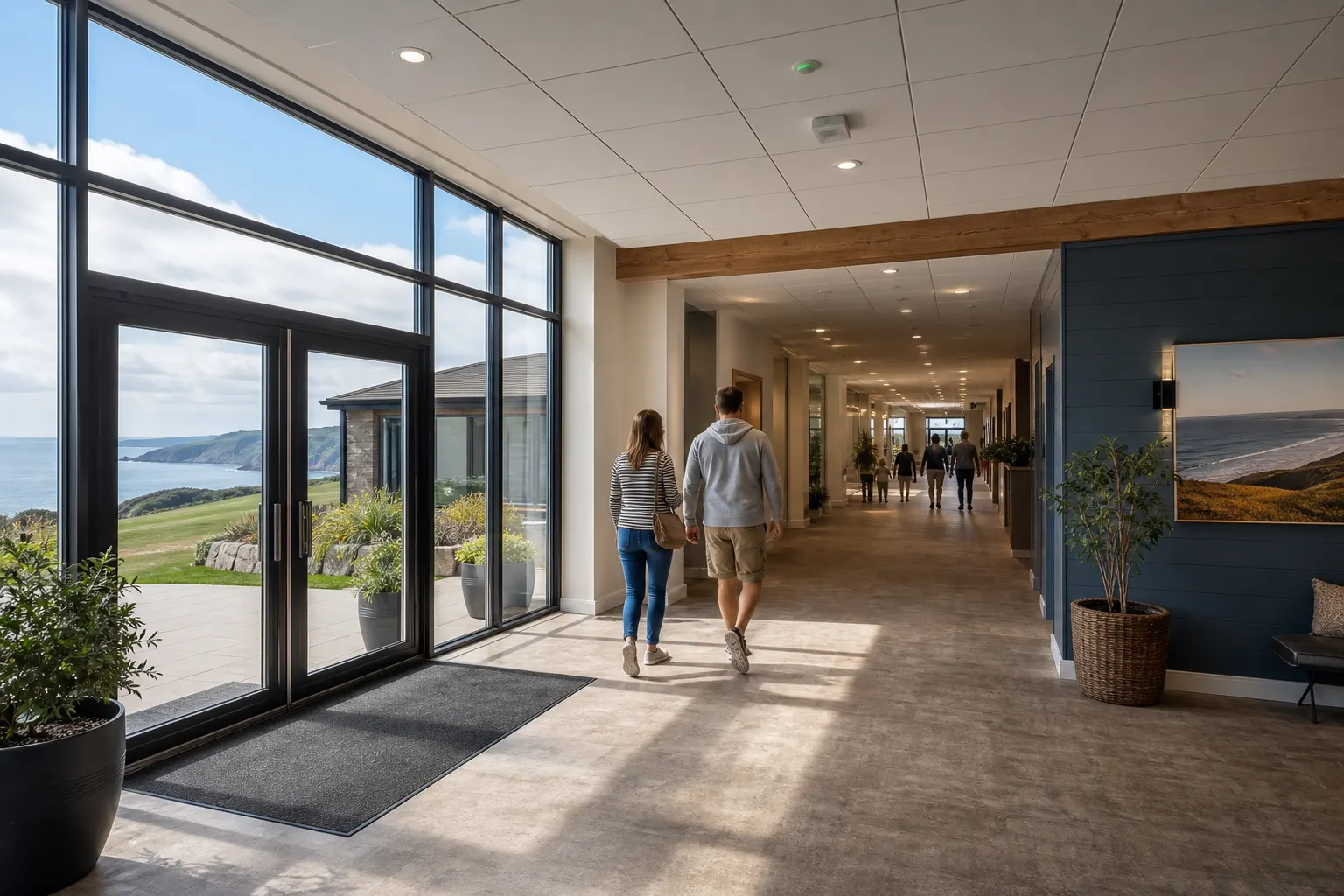
Commissioning determines how the system performs
Even a well-designed control system can disappoint if it is left on unsuitable default settings. Commissioning should test the installation under realistic conditions and confirm how each zone responds.
Useful checks include:
- Confirming that every detector covers the intended occupied area.
- Checking that adjacent movement does not trigger unnecessary zones.
- Setting switch-off delays around the real activity in the space.
- Calibrating daylight thresholds and dimming levels.
- Testing manual switches and authorised overrides.
- Confirming safe behaviour after a power interruption.
- Recording zone names, settings and control locations.
- Explaining normal operation to the people responsible for the site.
It is worth returning to the settings after the building has been used for a period. Staff feedback may reveal nuisance switching, areas that remain lit unnecessarily or sensors that do not detect quiet work reliably. Fine adjustments can make the difference between controls that are accepted and controls that users continually try to bypass.
Plan for maintenance and future changes
Controls become part of the electrical installation and should remain understandable after the original project is complete. Site records should identify which devices serve each zone, how overrides operate and which settings have been selected.
Access also matters. Detectors, control modules and drivers installed above machinery, high ceilings or fixed structures may be difficult to inspect or replace. On harsh industrial or rural sites, the environment may influence equipment selection, including exposure to dust, moisture, temperature changes or physical damage.
Lighting controls should be reviewed when partitions move, production equipment changes or buildings take on a different use. Including them within planned electrical maintenance helps identify damaged sensors, unsuitable settings and controls that no longer match the site layout.
A practical brief for a lighting controls project
A useful initial brief does not need to specify particular products. It should explain what happens on the site.
- Which areas operate continuously, seasonally or only occasionally?
- Where are detailed or safety-critical tasks performed?
- Which spaces receive strong daylight?
- Who needs access outside normal hours?
- Are layouts or operating hours likely to change?
- Which lighting complaints do staff or visitors already raise?
These answers allow the control strategy to be developed around real requirements rather than assumptions.

Discuss commercial lighting controls in Cornwall
Maenporth Electrical Ltd supports lighting and electrical work for commercial, industrial, leisure and larger rural sites across Cornwall. If you are planning new lighting controls, reviewing an existing system or combining controls with a wider LED upgrade, call 01326 250297 to discuss the site and its operating requirements.