
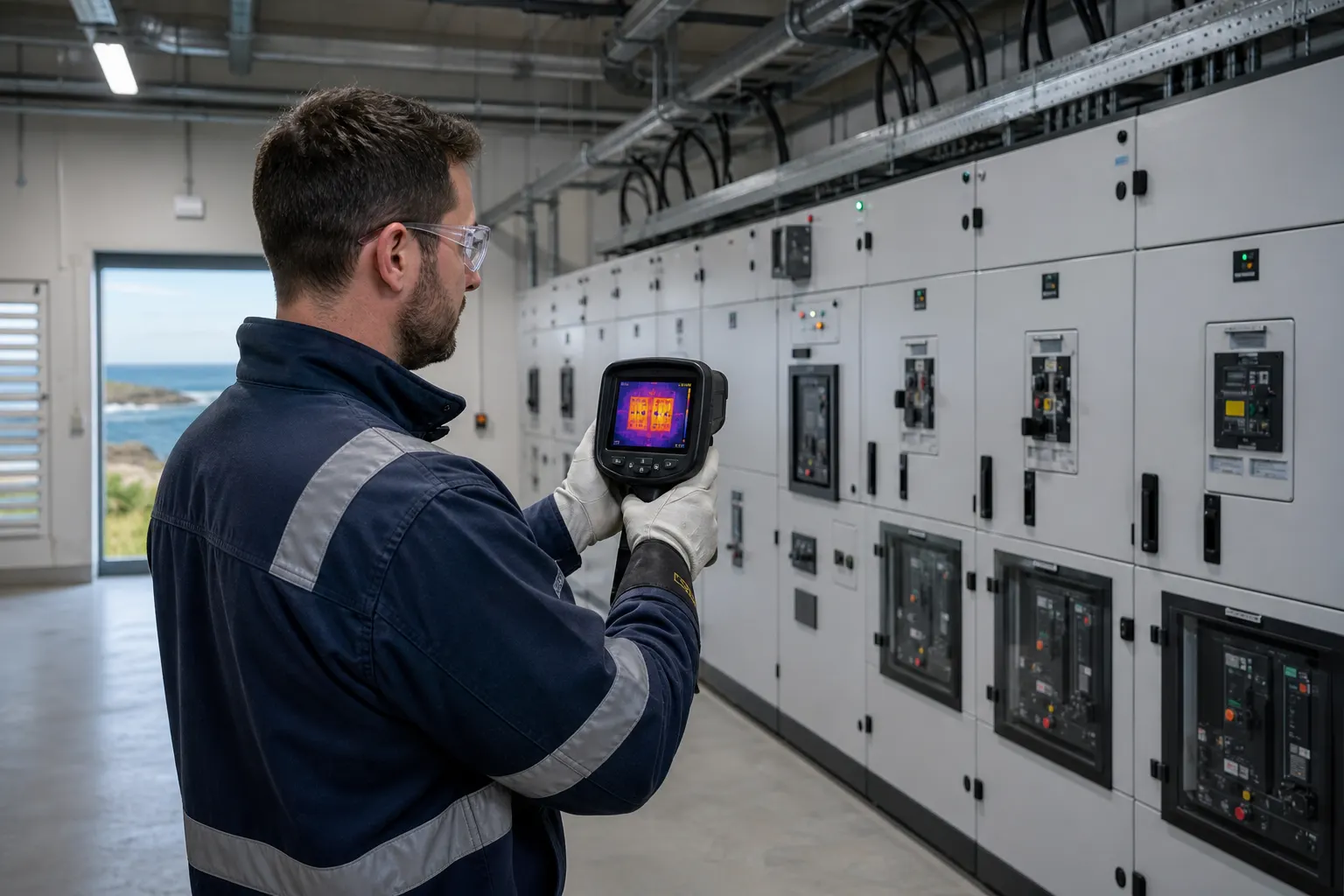
An electrical installation can continue operating while a connection, protective device or loaded circuit is running hotter than expected. There may be no obvious smell, noise or loss of supply. By the time the problem becomes visible, the site may already be dealing with damaged equipment or an unplanned shutdown.
Electrical thermal imaging gives businesses a way to look for abnormal surface-temperature patterns while equipment is operating. Used properly, it can help direct further investigation and make maintenance decisions more focused. It is not a replacement for inspection, electrical testing or competent diagnosis, but it can add useful evidence to a wider electrical testing programme.
What electrical thermal imaging can show
A thermal camera detects infrared energy emitted and reflected by surfaces, presenting the result as a thermal image. When comparable components are operating under similar conditions, an unexpected temperature difference may indicate an issue worth investigating.
In electrical distribution and control equipment, abnormal heating can be associated with several possible conditions:
- Connections with increased electrical resistance
- Circuits or components carrying unexpectedly high current
- Uneven loading across phases
- Deteriorating contacts, fuses or protective devices
- Local heating around cables, terminals and isolators
- Ventilation problems or excessive ambient temperature
A thermal pattern does not prove which fault is present. Similar images can have different causes, so findings need to be considered alongside load measurements, equipment details, visual condition and the way the site operates.
Why operating conditions matter
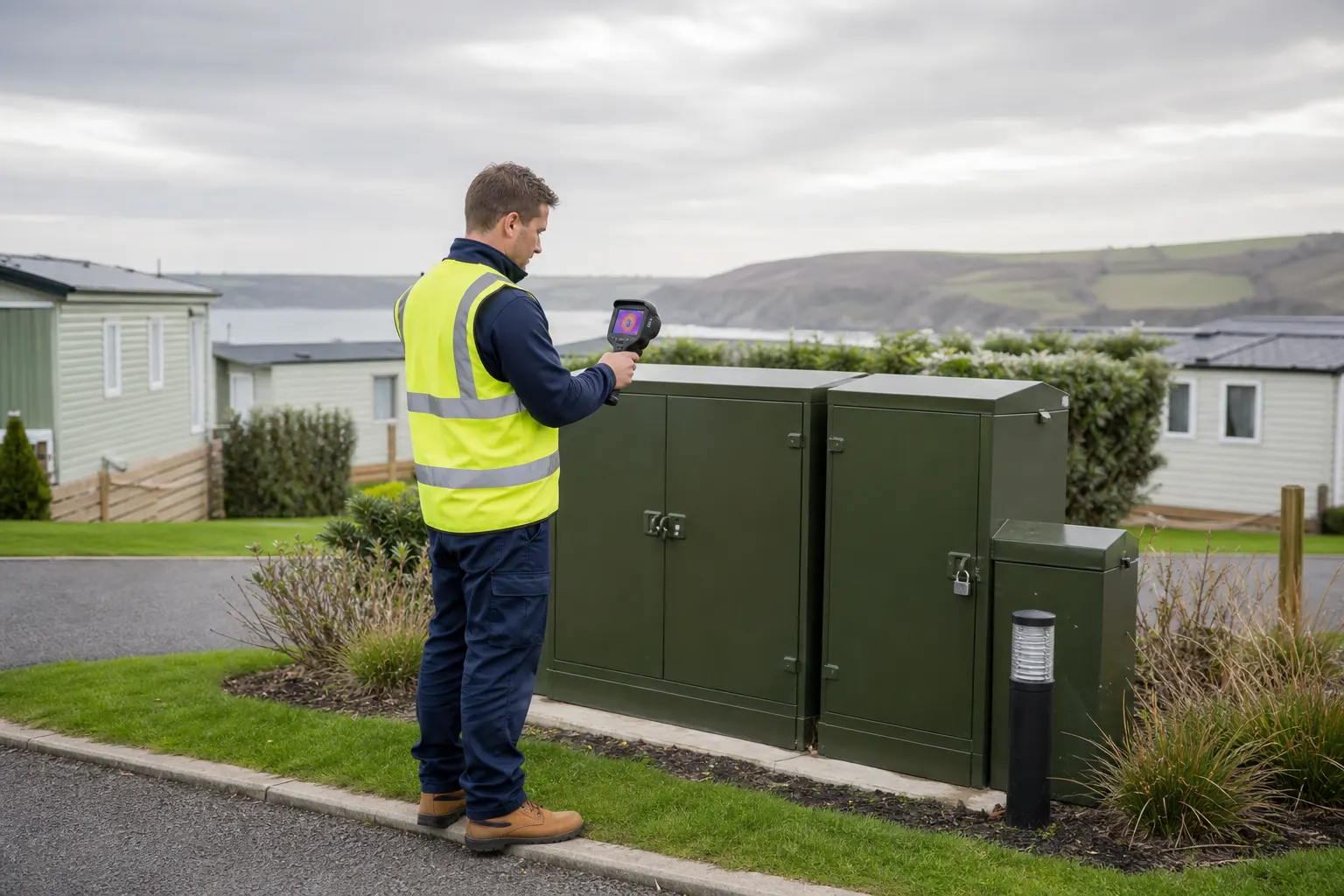
Electrical heating changes with load. A distribution board scanned when machinery is idle may look very different from the same board during normal production. At a holiday park, demand on a quiet winter morning will not represent a busy summer changeover day. A quarry, workshop or leisure site may also have equipment that runs intermittently rather than continuously.
A useful electrical thermal imaging survey therefore starts with questions about the site:
- Which plant and circuits are normally under their representative load?
- When do seasonal or process-related demand peaks occur?
- Are standby systems, pumps or extraction equipment running?
- Has production changed since the previous inspection?
- Can important panels be accessed without disrupting critical operations?
Recording the approximate load and operating state helps prevent a colourful image from being treated as meaningful evidence without enough context. Where representative loading cannot be achieved, that limitation should be made clear in the report.
Where thermography is most useful
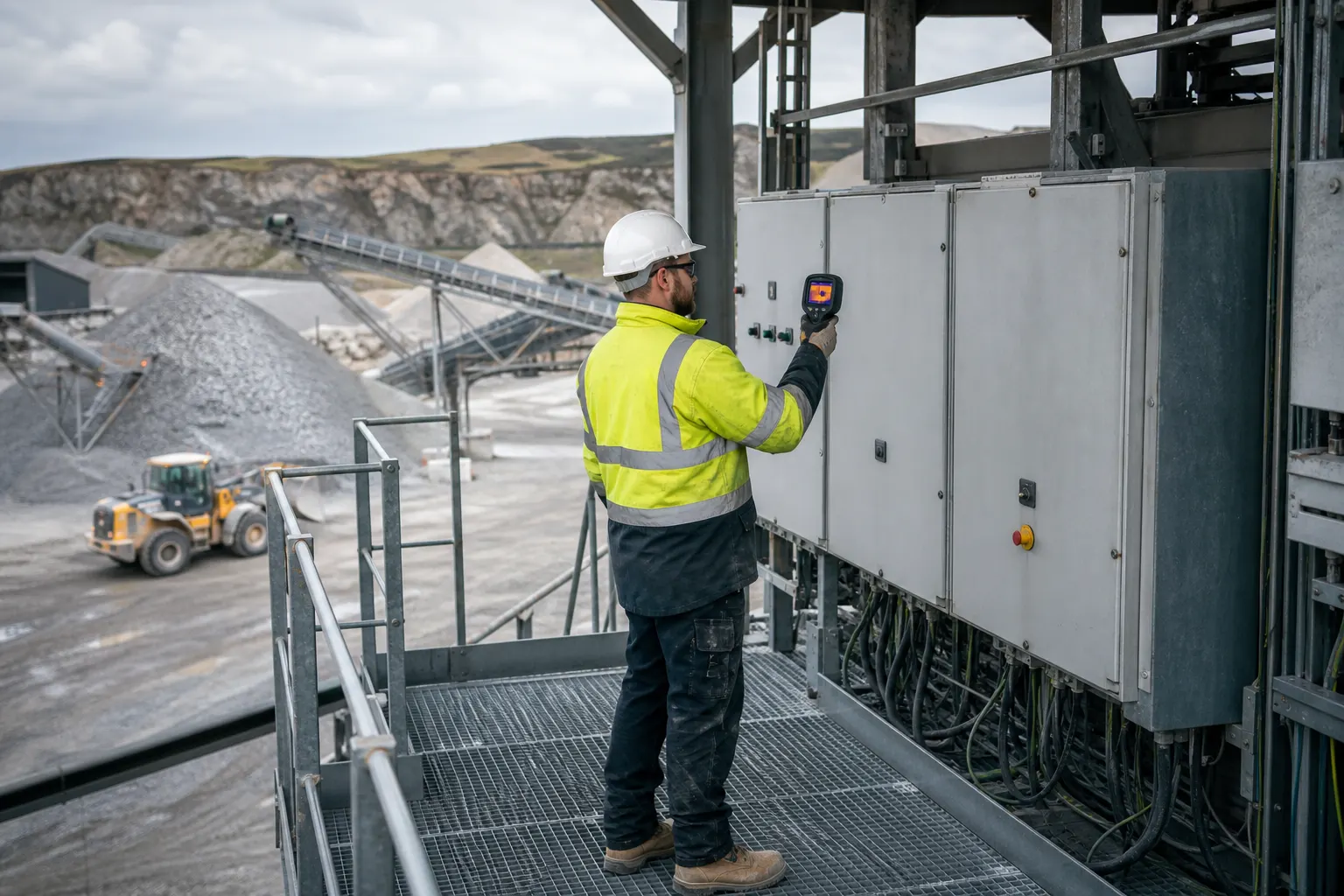
The most valuable inspection points depend on the installation and the consequences of failure. On an industrial site, attention may be directed towards main distribution equipment, motor control centres, drives, isolators and heavily loaded machinery supplies. In commercial premises, it may include main switchgear, distribution boards and plant-room equipment.
Larger rural sites, campsites and holiday parks can have widely dispersed supplies, external enclosures and equipment exposed to changing demand or weather. Solar, battery and EV charging installations add further power-conversion and distribution equipment that may need to be considered within the site’s overall maintenance strategy.
Priority should normally reflect risk and operational importance rather than simply scanning every enclosure in the same way. Equipment feeding essential production, safety systems, refrigeration, water services or guest facilities may justify particular attention because a failure would have wider consequences.
Safe access must be planned
Thermal cameras measure surface conditions and cannot see through solid metal covers. However, removing covers from energised equipment can introduce serious electrical risk. Access must never be improvised merely to obtain a clearer image.
The survey needs to be planned by competent people with the equipment type, condition, available information and safe system of work taken into account. In some cases, the correct decision may be not to open an enclosure while it is live. Existing infrared inspection windows can assist on suitably designed equipment, but they do not remove the need for competent interpretation and safe procedures.
The legal context is broader than thermography itself. Regulation 4(2) of the Electricity at Work Regulations 1989 requires systems to be maintained, where necessary to prevent danger. The associated HSE guidance on electrical maintenance duties explains that inspection and, where necessary, testing are essential parts of preventive maintenance. It also highlights the value of records in monitoring equipment condition and maintenance effectiveness.
What a useful thermal survey report should contain
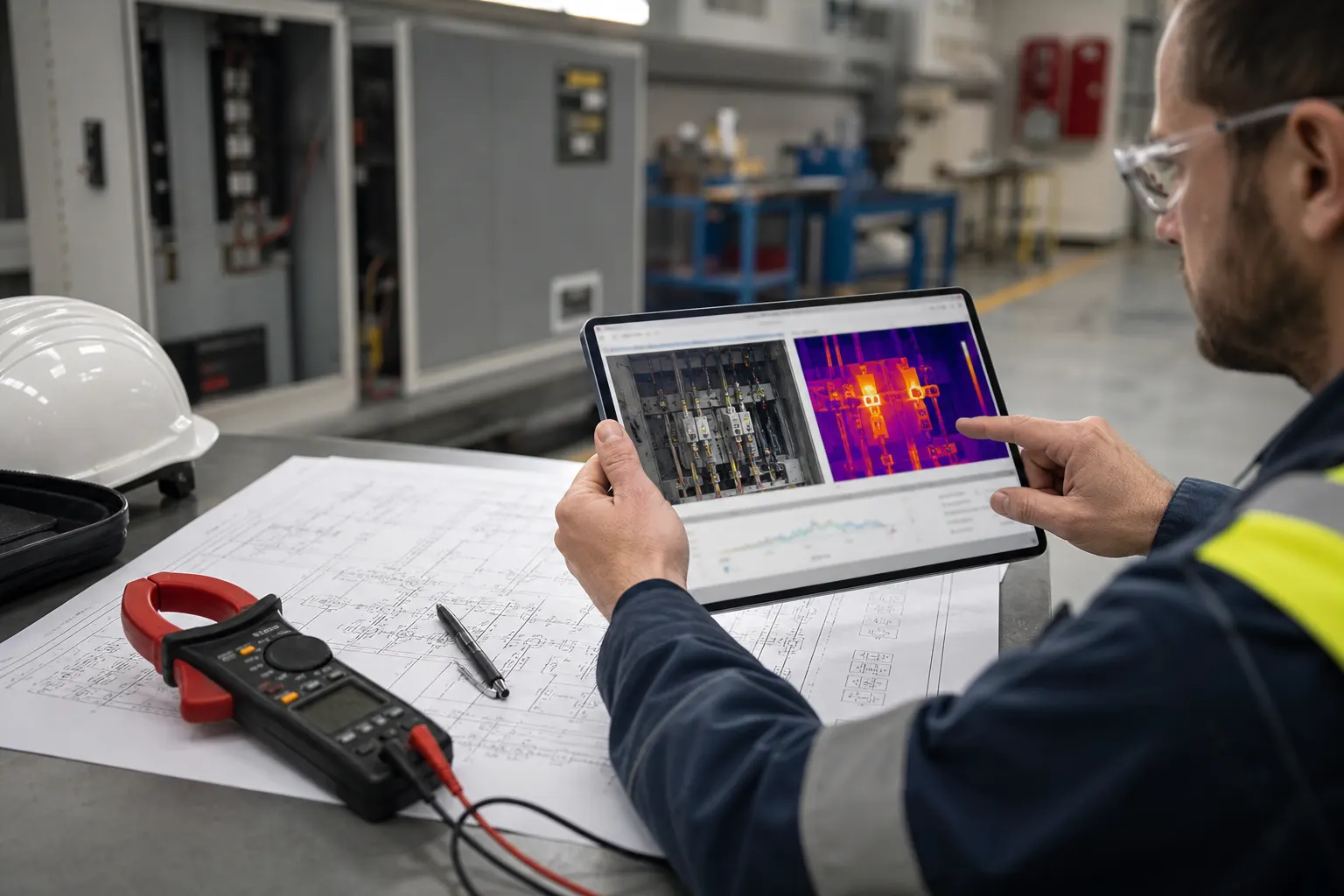
A folder of unexplained thermal images is of limited practical value. The report should allow the site manager or maintenance team to identify the equipment, understand the conditions and decide what happens next.
Useful information can include:
- A clear reference for each panel, circuit or item of equipment
- A normal photograph alongside the corresponding thermal image
- The observed temperature pattern and comparison point
- Available load information and relevant operating conditions
- Ambient or environmental factors that may affect interpretation
- A priority for further investigation based on condition and criticality
- Any access limitations or equipment that could not be assessed
Shiny metals can reflect infrared energy, while airflow, sunlight and nearby heat sources can influence apparent temperatures. Camera settings, viewing angle and the surface being measured all matter. For that reason, an isolated temperature reading should not automatically become a diagnosis or a pass-fail threshold.
Thermal imaging does not replace electrical testing
Thermography is strong at finding temperature differences under operating conditions. It cannot confirm every aspect of electrical safety or installation condition. It does not replace checks such as protective conductor continuity, insulation resistance, earth fault loop impedance, RCD testing or verification of protective-device operation where those tests are required.
It may also miss a developing connection problem if the circuit is lightly loaded during the survey. Conversely, a warm component may be operating normally because of its design, location or duty. The next step could involve electrical measurements, an isolated inspection, reference to manufacturer information or monitoring during a different operating period.
The best results come when thermal findings are combined with test records, defect history, breakdown reports and knowledge of the site. This turns the survey into part of a planned electrical maintenance strategy rather than a standalone set of images.
How often should a survey be carried out?
There is no single interval that suits every Cornwall business. Survey frequency should reflect risk, equipment condition, manufacturer guidance, previous findings, environmental exposure and the operational impact of failure.
A site may also benefit from an additional survey after a major electrical alteration, a significant increase in load or corrective work on an identified hot spot. Repeated surveys conducted under comparable conditions are particularly useful because they can show whether a temperature pattern is stable, worsening or resolved.
Planning thermography around Cornwall sites
Local operating conditions deserve attention. Coastal air, moisture, dust, outdoor equipment, washdown activities and seasonal occupancy can all influence electrical equipment and the way maintenance is scheduled. The important point is not to assume that the same checklist or inspection date will suit a factory, quarry, golf facility and holiday park equally well.
Before booking electrical thermal imaging in Cornwall, identify the equipment that matters most, arrange a representative operating period and gather any existing drawings, test results and maintenance records. That preparation makes the visit more productive and gives the findings a clearer operational context.
Discuss electrical testing and maintenance with Maenporth Electrical
Maenporth Electrical Ltd supports industrial, commercial and larger rural sites across Cornwall. To discuss whether thermal imaging could add value to your testing and planned maintenance arrangements, call 01326 250297. The starting point is understanding your installation, operating pattern and priorities rather than applying a generic survey to every site.