
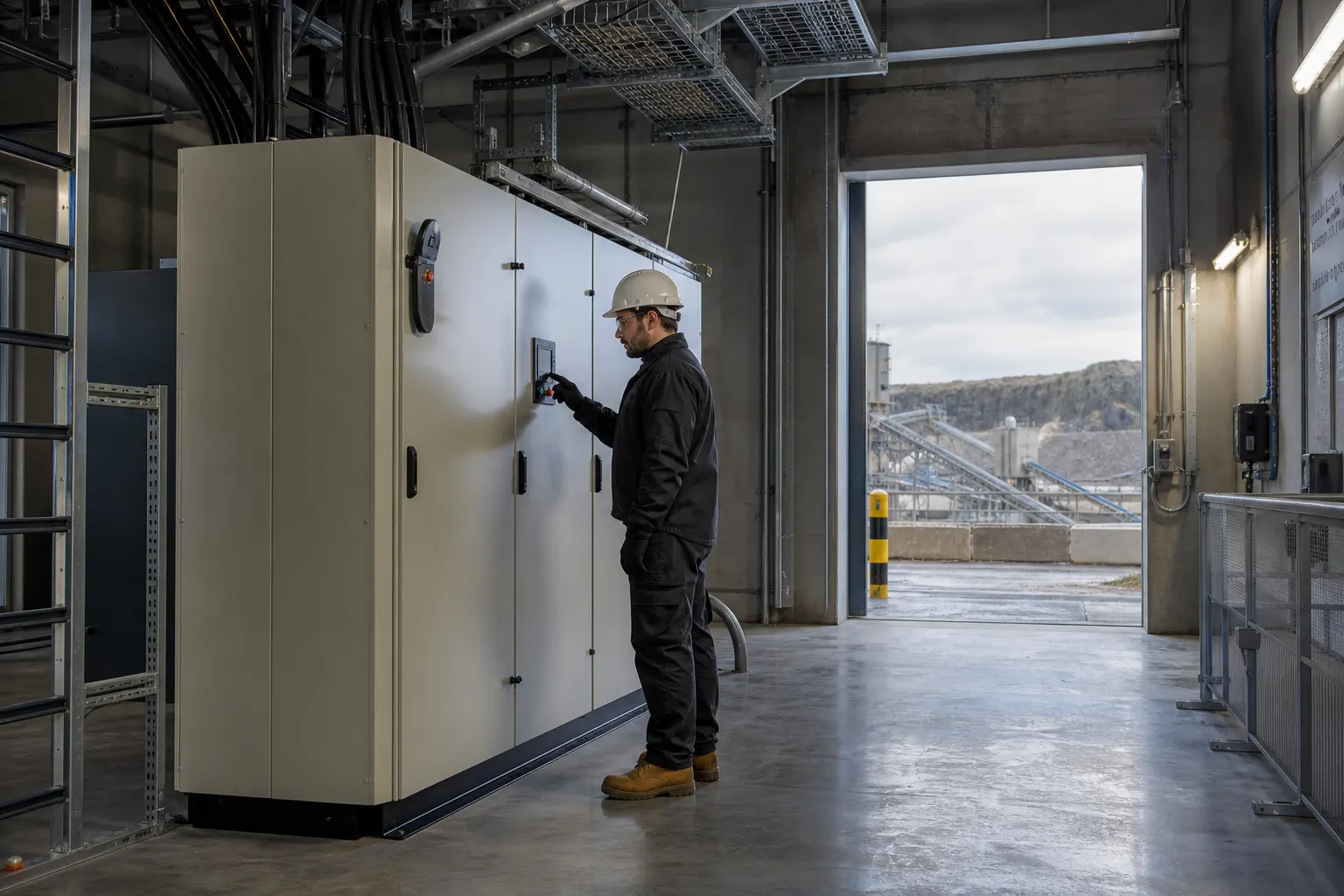
Industrial switchgear can remain in service for many years, but age alone does not determine whether it is safe, dependable or suitable for the work a site now asks it to do. Condition, operating history, available fault capacity, component support and the surrounding environment all matter.
For factories, quarries, processing facilities and larger rural sites, the decision is rarely as simple as fitting a new breaker after a fault. A useful assessment looks at the complete assembly, the connected installation and the operational consequences of another failure. That is the starting point for well-planned industrial electrical work, rather than repeated reactive repairs.
Why switchgear condition becomes a business issue
A main switchboard or motor control centre sits at a critical point in an industrial electrical system. A defect may affect one machine, a production area or the entire site, depending on how distribution has been arranged.
Older equipment is not automatically unserviceable. However, the risk attached to it can change as components become harder to source, records are lost, loads increase or the equipment is exposed to years of dust, damp, vibration and temperature variation.
The Electricity at Work Regulations require electrical systems to be maintained where necessary to prevent danger. The HSE guidance on electrical safety and maintenance also makes clear that equipment and installations should be maintained to prevent danger so far as is reasonably practicable. For an industrial site, that calls for decisions based on evidence rather than appearance or age alone.
Signs that another repair may not be enough
Switchgear problems do not always arrive as a complete loss of power. Smaller defects and operational difficulties can show that the system needs a broader review.
- Recurring heat damage or discolouration: repeated overheating may indicate loose or deteriorating connections, overloading, poor ventilation or an unsuitable arrangement.
- Nuisance operation or unexplained trips: the cause may sit in the load, controls, protection settings or distribution system rather than in the device that operated.
- Obsolete components: breakers, contactors, relays and control devices may no longer have dependable manufacturer support or suitable replacement parts.
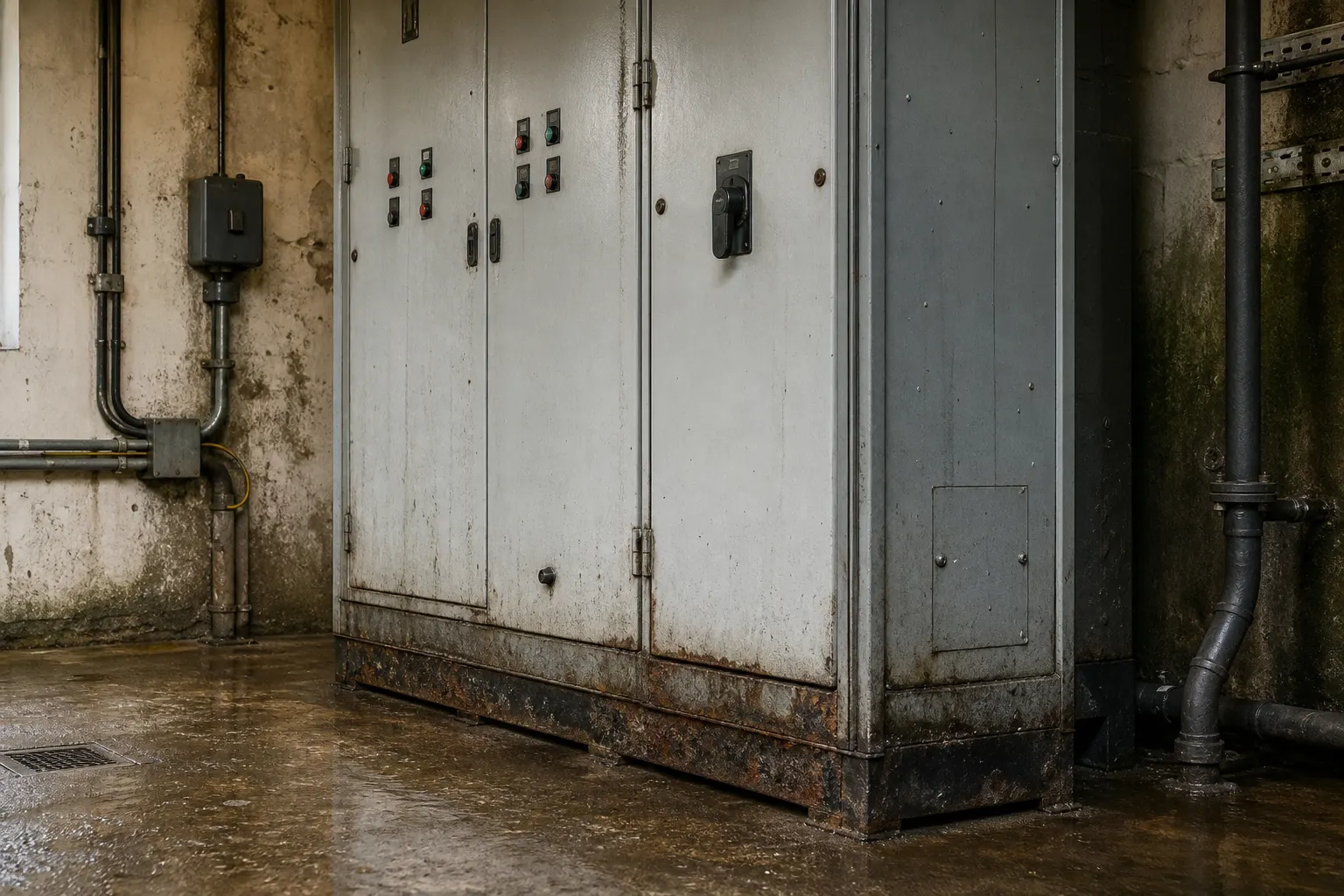
- Damaged enclosures: corrosion, failed seals, missing covers and distorted doors can compromise protection against contact and the working environment.
- Unreliable mechanisms: stiff operation, damaged interlocks or breakers that cannot be maintained in line with manufacturer information need specialist attention.
- Unrecorded alterations: mismatched devices, improvised wiring and undocumented additions make future fault-finding and safe isolation more difficult.
- Changed site demand: additional machinery, generation, storage or altered production patterns may mean the original design assumptions are no longer valid.
None of these points automatically proves that complete replacement is required. They indicate that a structured condition and system assessment is more appropriate than changing individual parts in isolation.
Start with the equipment and the electrical system
Build an accurate asset picture
The first stage is to identify what is installed, including the assembly manufacturer where possible, device types, ratings, available drawings, previous test results and known modifications. Labels alone may not tell the full story, particularly where equipment has been altered over several decades.
The inspection should consider enclosure condition, contamination, signs of moisture, connection deterioration, mechanical operation, earthing and bonding, cable terminations, barriers, interlocks and access for safe operation. Thermal imaging can add useful information while equipment is carrying a representative load, but it is a snapshot rather than a substitute for appropriate inspection, testing and maintenance.
Check protection and loading
The assessment must also look beyond the metalwork. Actual load, phase balance, starting currents, prospective fault current, discrimination and protective-device capability can all influence the correct solution. If a transformer, supply arrangement or on-site generation has changed, previous calculations may need to be reviewed.
This is specialist work. Switchgear should not be opened, operated internally or modified by unqualified personnel, and planned access must follow the site’s safe isolation and permit arrangements.
Choosing between repair, retrofit and replacement
Repair when the assembly remains supportable
A targeted repair may be appropriate where the fault is clearly identified, the rest of the assembly is in suitable condition and compatible parts remain available. The work should address the cause, not simply the failed component. Replacing a contactor, for example, will not resolve persistent overheating caused by a poor termination or an overloaded circuit.
Retrofit when sound equipment has obsolete internals
A switchgear retrofit replaces selected devices or control elements while retaining viable parts of the existing assembly. This can reduce the physical work and shutdown time compared with complete replacement, but it is not a universal shortcut.
Compatibility, ratings, clearances, heat dissipation, interlocking, fault performance and the assembly manufacturer’s information all need consideration. A new component complying with its own product standard is not automatically suitable for installation in every existing switchboard. The modified assembly must be treated as an engineered system.
Replace when limitations run through the assembly
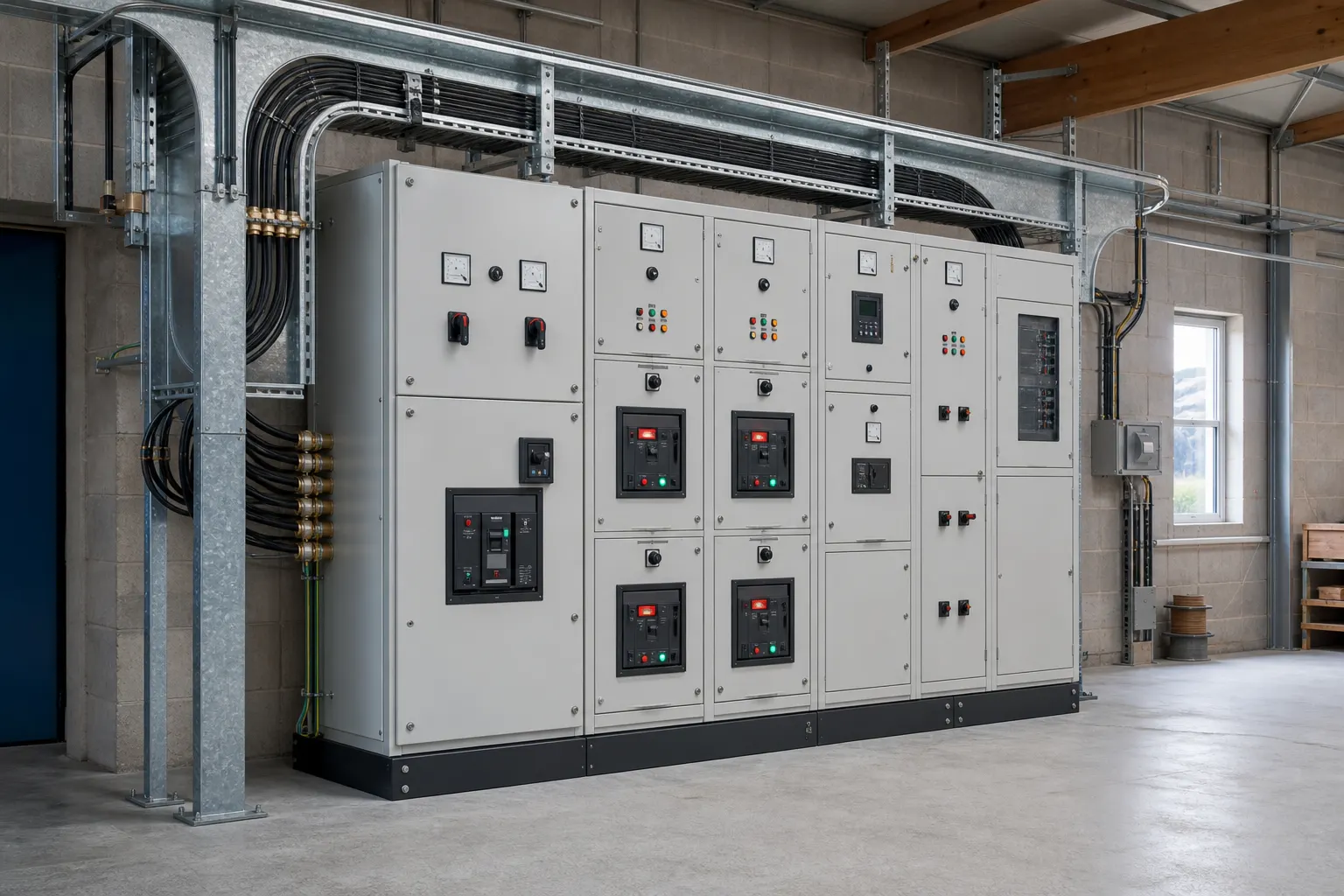
Full switchboard replacement may be the better long-term option where there is widespread deterioration, inadequate fault capability, poor access, extensive undocumented modification or no dependable route to compatible spares. It may also be appropriate when the site requires substantial additional capacity or a fundamentally different distribution arrangement.
New low-voltage power switchgear assemblies are normally specified and verified against the relevant parts of the BS EN IEC 61439 series. The project specification should also reflect the installation, the operating environment and the machinery or processes being supplied.

Allow for demanding Cornwall site conditions
Switchgear selection cannot be separated from location. Dust in quarry and processing environments can enter unsuitable enclosures and settle on components. Damp plant rooms, outdoor compounds, washdown areas and coastal air can accelerate deterioration. Vibration and accidental impact may also be relevant around heavy plant.
An upgrade should therefore consider enclosure protection, ventilation, condensation control, corrosion resistance, cable-entry arrangements and the practical ability to inspect and clean the equipment. Simply choosing the highest available enclosure rating is not always the answer, because restricted ventilation can affect internal temperature. The complete operating environment needs to be assessed.
Plan the shutdown before finalising the design
The electrical design and the shutdown plan should develop together. A technically sound replacement can still cause unnecessary disruption if access, temporary power, controls and commissioning are considered too late.
A practical pre-installation review should establish:
- which loads are genuinely critical and how long they can be unavailable;
- where the system can be isolated and whether every energy source is understood;
- whether temporary supplies are justified and which loads they can safely support;
- how existing cables will be identified, tested, rerouted or extended;
- which control circuits, alarms and interlocks cross the replacement boundary;
- whether supply-authority involvement or metering work is required;
- how protection settings and operating sequences will be commissioned;
- what drawings, labels and maintenance information must be updated.
Linking switchgear work to planned electrical maintenance can also create a better opportunity to inspect connected distribution, test protective measures and correct documentation while the relevant areas are safely unavailable.
Use the upgrade to improve future maintainability
A replacement project should solve more than the immediate defect. Sensible spare capacity, clear circuit identification, accessible isolation, suitable metering and logical separation of important loads can make later maintenance and expansion more manageable.
It is also worth considering known future changes. Additional machinery, electric heating, solar generation, battery storage or vehicle charging can alter loading and protection requirements. Allowing for realistic plans is usually more useful than oversizing equipment without a defined purpose.
Accurate final records are equally important. Updated single-line diagrams, circuit schedules, settings, test results and operating information reduce uncertainty for the people responsible for the site after commissioning.
Discuss an industrial switchgear assessment
Maenporth Electrical Ltd supports industrial and larger commercial sites across Cornwall with practical electrical assessment, upgrade planning and installation work. If ageing switchgear, obsolete components or recurring distribution faults are becoming a concern, call 01326 250297 to discuss the site and the next sensible step.